
The Nika plum is a popular choice for gardeners seeking high-quality fruit at minimal cost. Its frost resistance and ease of care make it suitable for a variety of climates and thrive in a wide range of regions. Proper cultivation techniques will help achieve the best possible results.
History of origin
Breeder A. Voronikhina was involved in developing this variety. It wasObtained through crossbreeding experiments with hybrid forms. The variety was included in the State Register of Russia in 1994.
Introduction to the variety
Nika is a plant with unique dendrological and botanical characteristics. These must be taken into account before planting.
Tree
It grows to 3-4 meters in height. It has a broad, oval-shaped crown of medium density. The branches are covered with dark gray or blackish-gray bark, slightly rough. The shoots are slightly curved, changing color with age from pinkish-brown to brownish-black.
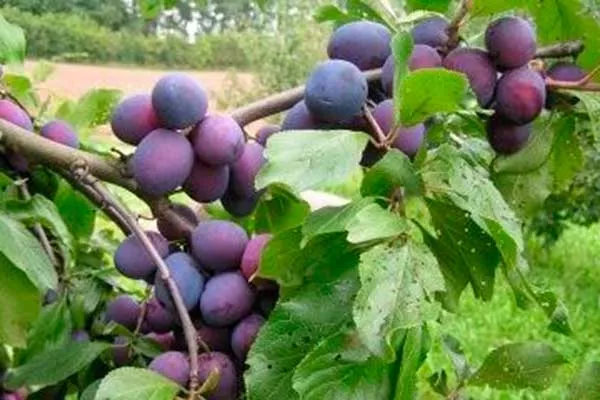
The shoots bear oval leaves with pointed tips. The surface is smooth, shiny, and green. The flowers are white, cup-shaped, medium-sized, with corrugated, rounded petals.
Fruit
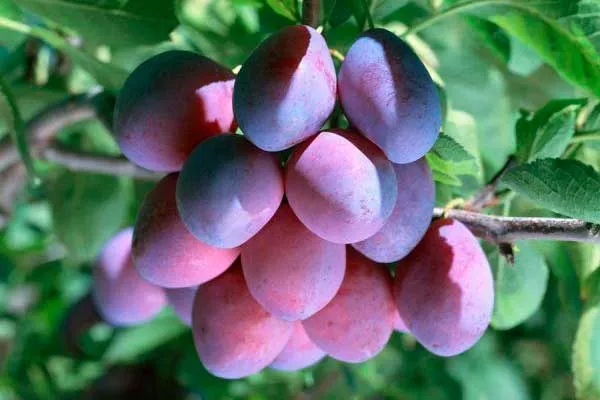
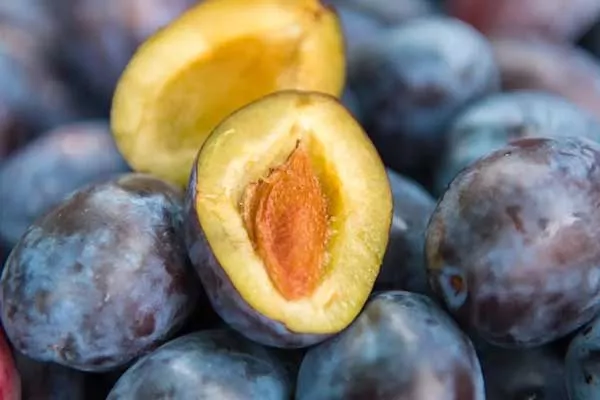
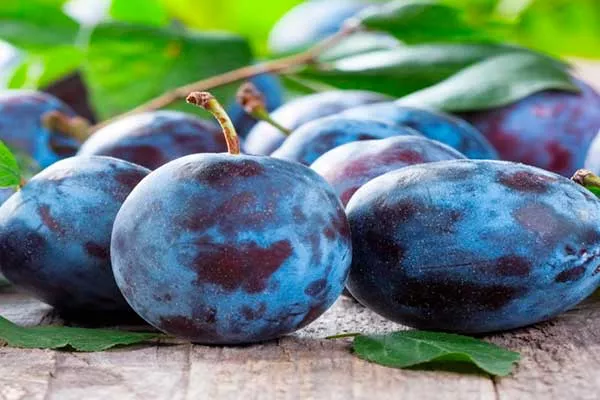
They are oval in shape, with jagged sides and a smooth surface. The skin is thick and tough, with a distinct waxy coating. Initially green, the color turns dark purple with a rich blue tint as they ripen. The pit is elongated and oval, easily separated from the flesh.
Taste and application
The fruits are prized for their excellent taste and commercial qualities. The flesh is brownish-yellow, firm and juicy, yet tender and soft. The flavor is balanced: intensely sweet, with a slight tartness and a subtle hint of tartness. There is no distinct aroma.
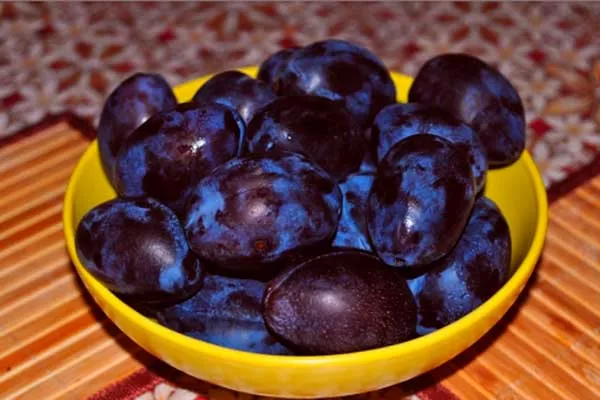
The tasting score is 4.3 out of 5. The fruits are eaten fresh and used to make jams and preserves. Due to their texture, they are not suitable for compotes.
Chemical composition, benefits
Plums are delicious and juicy, and they also help strengthen the immune system. This is due to their content of the following substances:
- Ascorbic acid (vitamin C). Promotes tissue healing and increases the body's resistance to infections.
- Pectins. They improve the functioning of the gastrointestinal tract, help remove toxins and reduce blood cholesterol levels.
- Sahara (glucose and fructose). They are sources of energy for the body.
- Organic acids (apple, lemon). They have a beneficial effect on digestion and stimulate appetite.
- Potassium. Supports cardiovascular health and helps regulate water and salt balance.
- Fiber. Normalizes bowel function and prevents constipation.
- Minerals (magnesium, iron, calcium). Important for bones, muscles and hematopoiesis.
Regular consumption of fruit helps strengthen blood vessels, lower blood pressure, and helps the body detoxify.
When does it ripen and how does it bear fruit?
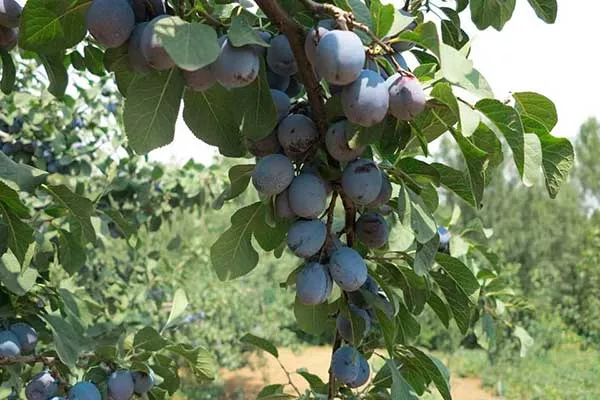
Belongs to the mid-season group of varieties. The first harvest occurs 4-5 years after planting. Fruiting is irregular, and its volume depends largely on weather conditions.
Productivity
Characterized by high productivity. With proper care, the tree can produce a good amount of fruit—up to 22.7 kg per season. With two pollinators, this figure can increase to 35 kg.
Self-fertility and the need for pollinators
This is a self-sterile variety, so to ensure successful fruiting, plant pollinator trees with similar flowering times in your plot.
The best "donor" varieties are considered to be the Donetsk Hungarian, Voronezh, Soviet Greengage, and Pavlovskaya varieties. Bees and other insects facilitate pollination.
Drought resistance, frost resistance
Nika tolerates drought and frost well without harm. During hot periods, the plant thrives as long as the soil is regularly and abundantly moistened.
Growing regions
In the mid-1990s, it was zoned for the Central Black Earth Region. The crop was most widely distributed in the following areas:
- Voronezh;
- Belgorod;
- Kursk;
- Lipetsk;
- Rostov.
In these regions the tree grows successfully, displaying all its characteristic properties.
Landing features
The Nika plum is suitable for perennial cultivation in the garden. Planting the tree requires careful consideration, including consideration of the variety's characteristics and selection of a suitable site and soil. If all recommendations are followed, the plant will ensure rapid growth and a bountiful harvest.
Recommended timeframes
The best time to plant is spring. During the warm season, the young seedling will have time to take root and adapt to the climate. If the plants were purchased in the fall, bury them in the ground and cover them thoroughly for the winter.
Choosing a suitable location
The plant prefers sunny locations that are well protected from drafts and wind. The soil should be moisture-retentive. Grow the tree where the groundwater level does not exceed 2 meters.
What crops can and cannot be planted next to each other?
Apple trees and shrubs make good neighbors for this variety. However, tall, spreading plants that create shade can negatively impact growth and development. Therefore, avoid such neighbors.
Selection and preparation of planting material
These are important steps for successful plant growth and development. Here's what to consider:
- The roots should be healthy, with no signs of rot or drying out. Ideally, the root system should be developed and compact.
- The trunk is straight, without damage or cracks. There should be no signs of disease or pests.
- The seedling must have strong and healthy shoots, without deformations or spots.
- Choose plants that are 1-2 years old. They take root more easily and begin bearing fruit sooner.
- Buy planting material from trusted nurseries or reputable sellers.
- ✓ Check the root system for rot and mechanical damage.
- ✓ Make sure that the trunk of the seedling is straight, without cracks or signs of disease.
- ✓ Choose seedlings 1-2 years old for better survival.
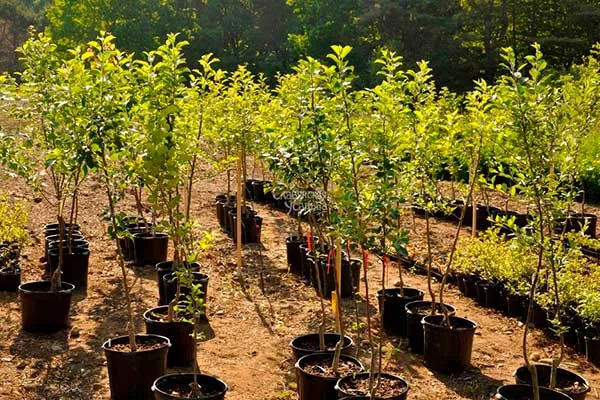
Prepare the tree for planting: remove damaged or dry roots and trim the top. Soak the tree in water for 2-3 hours to improve the root system's ability to absorb moisture.
Landing algorithm
Growing the crop is a simple process that even beginners can handle. It involves several essential steps:
- Prepare the holes in the fall or a couple of weeks before planting. The depth should be 45-50 cm, and the diameter 60-70 cm. When planting multiple trees, maintain a distance of at least 3 m from each other.
- Mix the fertile soil layer from the hole with fertilizer.
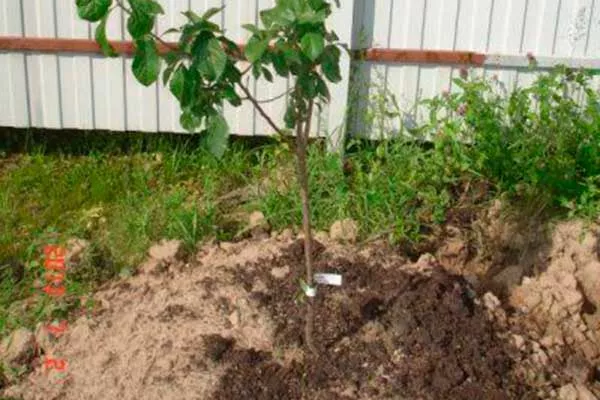
- Place a stake in the center. Place the seedling in the hole so its roots are 5 cm from the bottom. Cover with prepared soil and compact it. Tie the plant to the stake with soft rope.
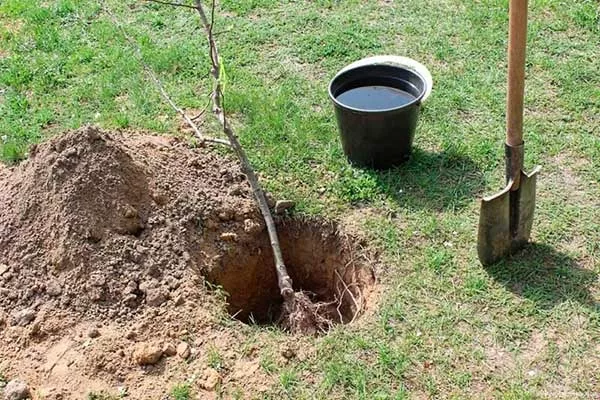
For the first watering, 20-30 liters of clean water is sufficient. Then, mulch the soil surface to retain moisture and protect the roots.
Aftercare of plum
To ensure a fruit tree thrives and produces a productive harvest, it's important to care for it properly. Follow simple gardening practices.
- ✓ Provide the tree with sufficient sunlight.
- ✓ Maintain soil moisture, avoiding stagnant water.
- ✓ Regularly check the tree for signs of disease and pests.
Watering schedule
Maintain the soil around the tree in optimal condition by monitoring its moisture levels. A young tree requires approximately 60 liters of water at a time, while a mature plum tree requires at least 100 liters.
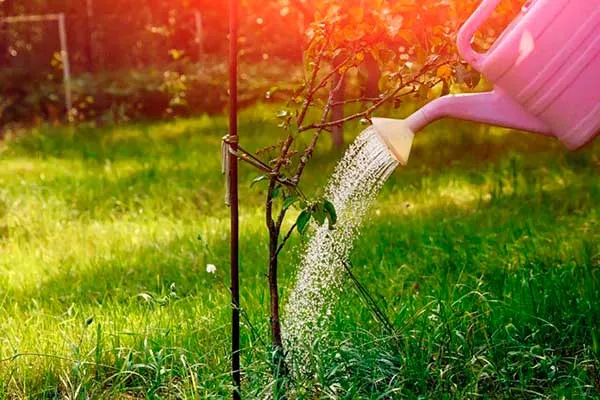
Apply water in increments or use the drip method to moisten the soil to a depth of 40 cm, avoiding excess moisture, which can turn the tree trunk area into a swamp. Perform this procedure in the spring, two weeks before flowering and 14 days after.
Top dressing
Fertilizers are not required for the first 2-3 years after planting. The only exception is the use of nitrogen-based fertilizers if the seedling is showing poor growth.
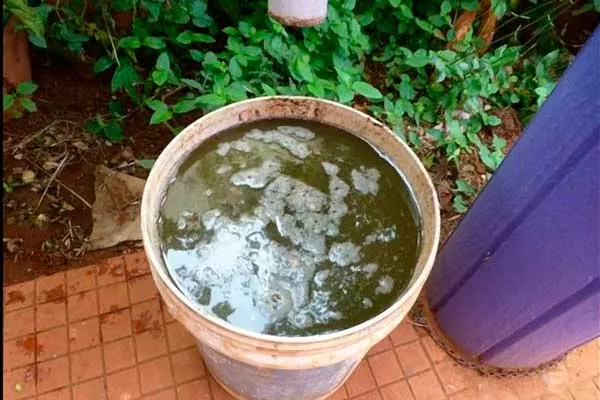
From the 3rd year of life, regularly feed the plants according to the following schedule:
- In the springBefore flowering, apply nitrogen complexes such as urea or chicken manure.
- In summerDuring the fruit ripening period, use compositions containing nitrogen, phosphorus and potassium.
- After harvesting Fertilize the soil with superphosphate and potassium sulfate.
- In the fall Every 3 years, add humus or compost by digging up the soil.
This approach will provide the plum with complete nutrition and promote growth and fruiting.
Trimming
Perform the first pruning immediately after planting. At this point, leave only the strongest shoots, which will form the main tiers. Shorten the branches by a third, keeping them shorter than the central leader.
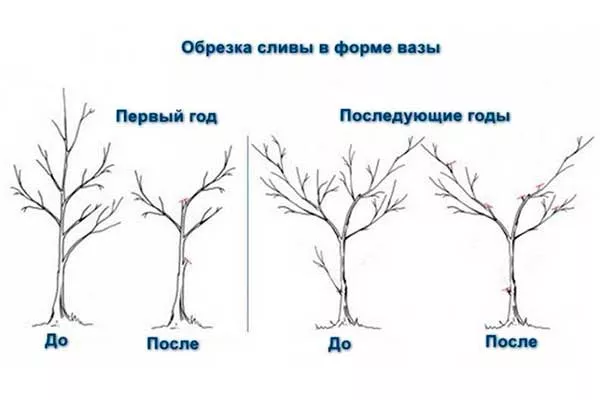
Next, pruning focuses on crown formation. Shorten the main and skeletal branches, remove weak, competing, and crown-thickening shoots. Don't forget about sanitary pruning—remove diseased and damaged branches.
Preparing for the cold weather
The crop is characterized by high frost resistance and does not require special insulation. However, in late autumn, follow these steps:
- Make sure the soil around the tree is well-moistened.
- Loosen the soil in the trunk area to improve its aeration.
- Apply fertilizer if necessary to prepare the soil for next season.
- Cover the tree trunk circle with a layer of mulch (15 cm) made from mown hay, sawdust, peat or humus.
- Wrap the trunk with mesh, roofing felt or other protective material.
Diseases and pests, methods of control and prevention
The plant has a strong immune system. However, if not properly cared for and exposed to unfavorable weather conditions, it may encounter several problems:
- Fruit rot. Use potassium permanganate (30 g per 10 liters of water) for treatment.
- Olive spot. Use the insecticide Acyclovir (40 g per 5 l of water).
- Hole spot. Colloidal sulfur (70 g per 8 liters of water) will help in the fight.
- Powdery mildew. Spray with Bordeaux mixture (50 g per 10 l of water).
- Aphid. To control the problem, use the copper-containing preparation Oxyhom (30 g per 5 l of water).
- Flea. A solution of Khomus (50 g per 7 l of water) will be effective.
- Codling moth. Copper sulfate (20 g per 6 liters of water) will help.
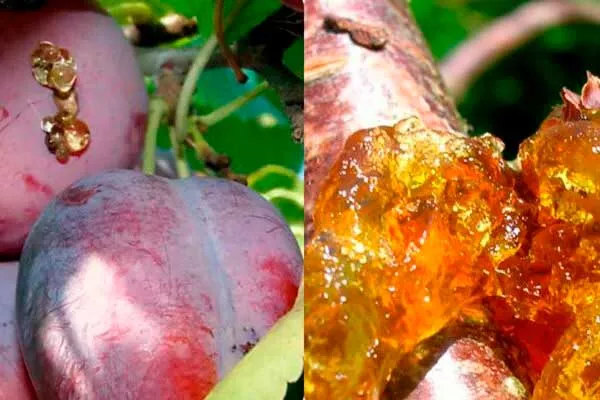
Preventive measures:
- Timely pruning of branches that thicken the crown.
- Regular loosening of the tree trunk circle.
- Weed removal.
- Systematic spraying, both with folk remedies and chemical preparations (insecticides and fungicides).
Use products with caution, strictly following the package instructions. These measures will help protect your crop from diseases and pests.
Harvesting and storing fruits
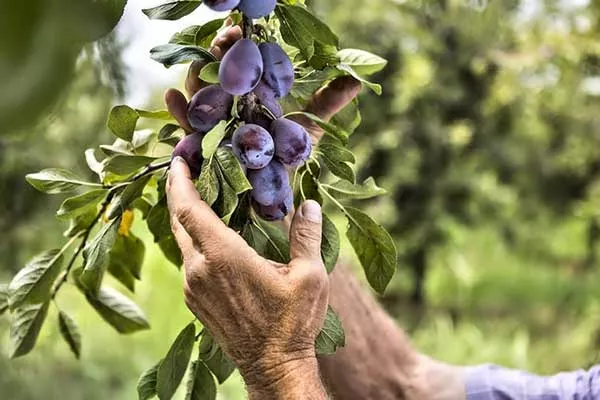
The harvest is in August. Harvest the fruit in dry weather to avoid additional moisture. Store undamaged fruit in single rows in wooden crates lined with paper.
Positive and negative qualities
Research the advantages and disadvantages of a particular crop beforehand to avoid any difficulties. Nika has many advantages:
Gardeners' reviews
The Nika plum is one of the most popular varieties among gardeners, attracting attention with its excellent characteristics. It boasts excellent frost resistance, allowing it to be successfully grown even in northern regions, and boasts a bountiful harvest and low maintenance. The key is to learn the key characteristics and provide proper care.