
The Nenka plum is a versatile choice for gardeners in various regions. These trees require little maintenance, making them popular among gardening enthusiasts. However, to achieve excellent results, it's important to thoroughly understand not only the variety's characteristics but also the basics of its care.
Introduction to the variety
Nenka is recommended for cultivation in Ukraine (the variety's native land), Belarus, and southern Russia. Although the variety thrives in both central and northern regions of our country, its care requirements, particularly its need for winter protection, must be taken into account.
Features of selection
The Nenka variety, introduced in 2007, was developed by Ukrainian specialists in the city of Mliev (Cherkasy Oblast) at the L.P. Simirenko Institute of Pomology and is popular in Russia.
The universal Oda variety (1980) was used for production, which is known for its high productivity, moderate ripening time and high taste quality with light spicy notes.
Description of the Nenka tree
The tree reaches a considerable size, usually between 300 and 400 cm in height. When it first begins to grow, its crown resembles a pyramid, and over the years it takes on an oval shape with moderate density.
There are also other varietal characteristics:
- The root system is strong and flexible, with bark colored in gray-brown tones, but at the same time quite durable.
- The branches are stable and able to withstand the weight of the fruit during a bountiful harvest.
- Cylindrical buds are formed on last year's shoots, which reach a length of 25-35 cm.
- The tree's leaves are elliptical, pointed, and their margins are slightly serrated. The foliage is a rich, dark green. The upper surface of the leaf blades is smooth with prominent veins, while the underside is somewhat rough and has a silvery tint. The leaves grow upright, and the petioles are shortened.
- The tree blooms from April 12-15 to May 6-10, depending on the specific climate and temperature conditions. The flowers are large, white, gathered in clusters of 5-7, and have a delicate, not overly cloying fragrance.
Fruits and their characteristics
The fruits of this universal variety have the following characteristics:
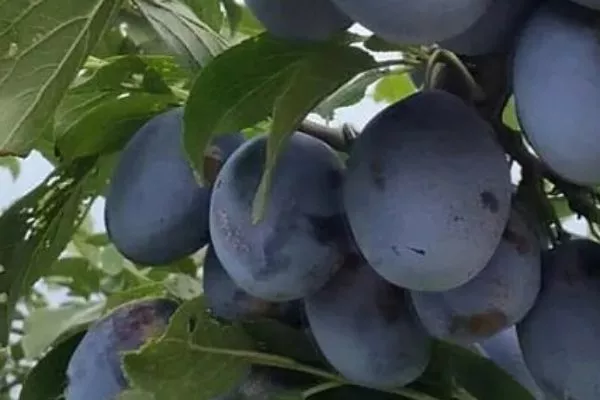
- the shape of the fruit is round, reminiscent of a barrel;
- the weight of an individual fruit ranges from 45-65 g, under the most favorable conditions their mass can reach 80 g;
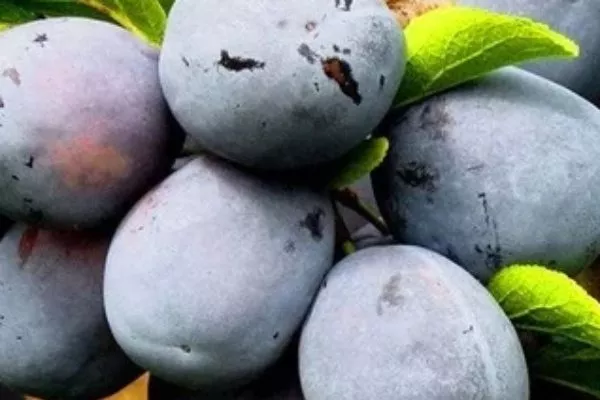
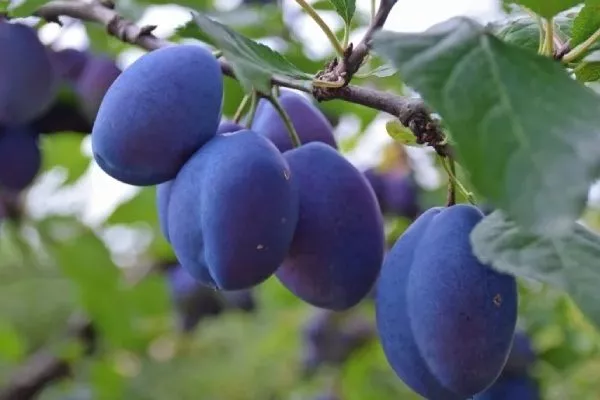
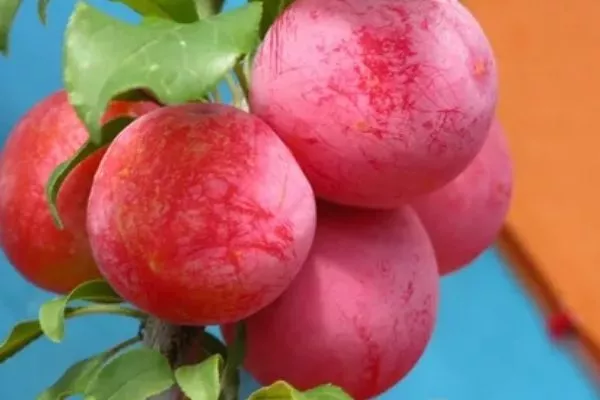
- a fully ripe fruit is a rich purple-blue color and covered with a waxy coating;
- during the period of technical ripeness, plums acquire a green-blue hue;
- the stone is small in size and easily separates from the soft and juicy part of the fruit;
- the plum pulp is distinguished by its increased juiciness, rich aroma and yellow-green color;
- The fruit's skin is dense enough to ensure its reliable transportability.
Taste qualities
The "mother" amuses with its exquisite flavor, as consumers call it. Its flesh is distinguished by its vibrant color, incomparable juiciness, and sweetness with a slight tartness. The flavor of this "mother" amuse is harmonious and pleasant, with a rich aroma.
It has a distinctive flavor—with slight hints of grape. For many gardeners and gardening enthusiasts, the Nenka plum is one of the most appetizing varieties.
Resistance to drought and frost
The plum is quite frost-resistant and can withstand winter temperatures down to -15 degrees Celsius. However, the variety is not drought-resistant; it thrives best with ample moisture.
Pollination, flowering and ripening period
Nenka is a self-fertile variety that doesn't require neighboring plum trees. When cultivated according to guidelines, it produces a consistent harvest every year, regardless of pollinator availability or weather conditions.
The tree begins blooming in early May, with the appearance of snow-white flowers collected in medium-sized heads. The fruits ripen in August, or after July 20th in southern regions. The "Mama" plum tree begins bearing fruit in the third year after planting.
Productivity
The initial yield from a young tree can reach 40-50 kg, and by the age of ten years, productivity increases to 70-80 kg.
Transportability
These fruits retain their appeal even when transported over long distances thanks to their strong, crack-resistant skin and the presence of a stalk that protects the fruit from infection and mold.
Application
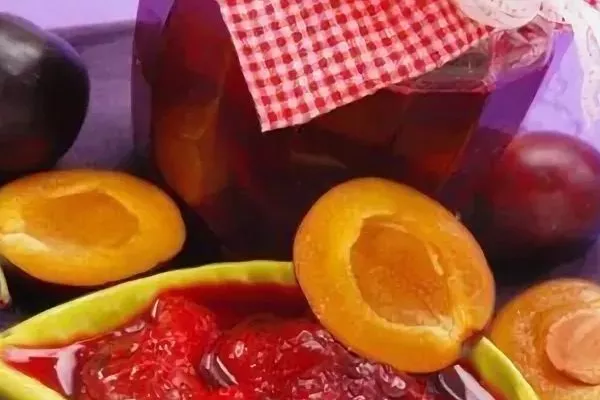
The sweet flavor of Nenka plums makes them ideal for both raw and canned winter storage. Their large, sweet fruits are an indispensable culinary ingredient: they are used for pie fillings, creamy desserts, jellies, pastilles, fruit salads, sauces, and as an addition to meat dishes.
In autumn, plums are used to make aromatic preserves, jams, and juice. Winemakers also create exquisite liqueurs and wines from these plums. Nenka plums retain their shape and aroma well after freezing, making them an excellent choice for long-term storage.
Planting the Nenka plum
For planting, it is necessary to select seedlings that have the following characteristics:
- healthy appearance;
- strong structure, 1-2 years old;
- height from 80 to 100 cm;
- well-developed root system;
- trunk and branches free from damage and signs of rot.
- ✓ The optimal planting depth of a seedling should be at least 50 cm to ensure stability and proper development of the root system.
- ✓ The distance between trees should be at least 3 meters to ensure sufficient space for crown growth and to prevent competition for nutrients.
Choosing a landing site
Before planting the Nenka plum, it's important to choose the right spot in your garden. The tree's success and well-being largely depend on how well you choose its future location.
Tips to help you make the right choice:
- The Nenka plum thrives in sunny areas. Look for a spot where it will enjoy full sunlight all day long.
- Don't forget to protect the plant from gusty winds and cool drafts. Plum trees are very vulnerable to cool winds, so a location protected from them is best.
- Keep in mind that Nenka prefers soil with moderate moisture. It is planted in fertile soil that is well-drained and well-ventilated.
Optimal timing
Rooting can be done in spring or fall. If you choose spring, root the plant before the buds begin to swell, which usually occurs between March 20 and 25. Delaying planting can negatively impact how well the young tree adapts to its new location.
Preparing for landing
To help Nenka establish itself in its new location, it's important to thoroughly prepare the soil. Do this 3-4 months before the main planting. If this isn't possible, at least a couple of weeks beforehand. Key steps:
- Clear the ground of plant debris and stones.
- Then, using a shovel, dig up the soil and gently mix it to the depth of the spade blade. Remember to break up any clods.
- Conduct a soil pH test. Nenka plum thrives in soil with a pH of 6 to 7. If the test reveals that the soil is too acidic or too alkaline, apply the appropriate corrective measures—lime to lower the acidity or sulfurous acid to raise it.
- Add organic matter that the variety responds well to, typically compost or humus. This will strengthen the soil structure, provide it with nutrients necessary for development, and help retain moisture.
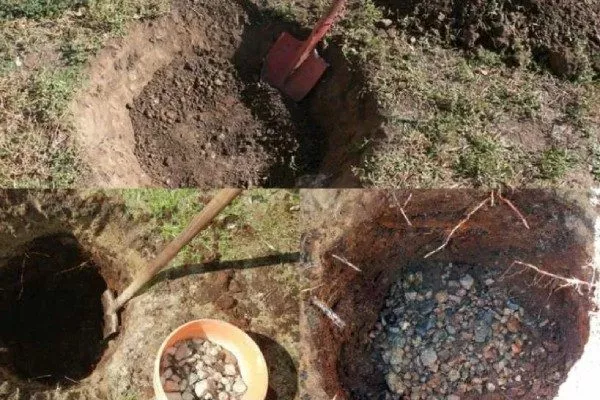
- Prepare holes for the future seedlings. They should be deep and wide enough to allow the plum tree's root system to fully expand. Recommended hole dimensions: 50-60 x 50-60 cm. Make sure the bottom of the hole is well-drained.
- 3-4 months before planting, test the soil for acidity and nutrient content.
- Add corrective additives (lime or sulfurous acid) depending on the analysis results.
- Add organic fertilizers (compost or humus) to improve the soil structure.
Landing
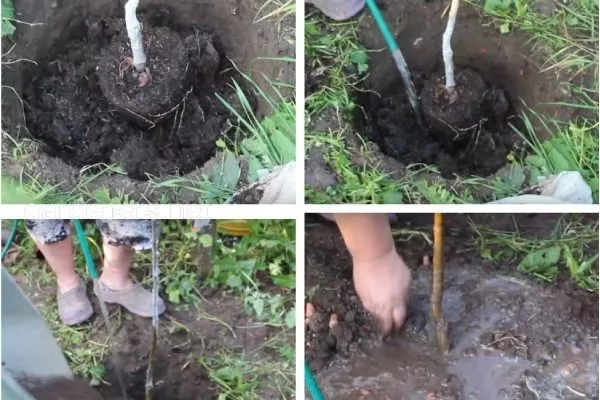
The landing process looks like this:
- “Build” a metal or wooden support into the pre-dug hole.
- Place the planting substrate in the center of the hole and install the seedling, carefully distributing the root shoots.
- Fill the planting area with soil, compacting the soil mixture to prevent the formation of air pockets.
- Tie the plant to the support.
- Water the seedling using at least 15-18 liters of warm water.
- Cover the tree trunk area with organic mulch.
How to care for the Nenka plum?
Nenka can be cared for using standard methods, but to increase the productivity and quality of plums, it is important to take into account the varietal requirements.
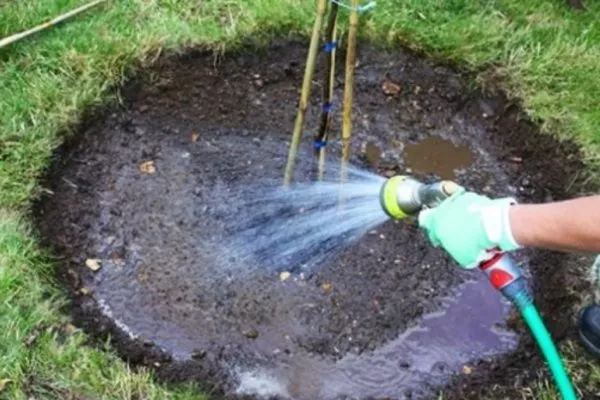
Watering
Young seedlings require one full watering per week during their first year of cultivation. It's important to avoid stagnant soil, focusing on the soil moisture in the root zone and weather conditions. Ideally, water should penetrate to a depth of 40-50 cm.
For mature trees, four waterings are sufficient throughout the growing season. Increase the amount of water as fruit develops.
Fertilizer
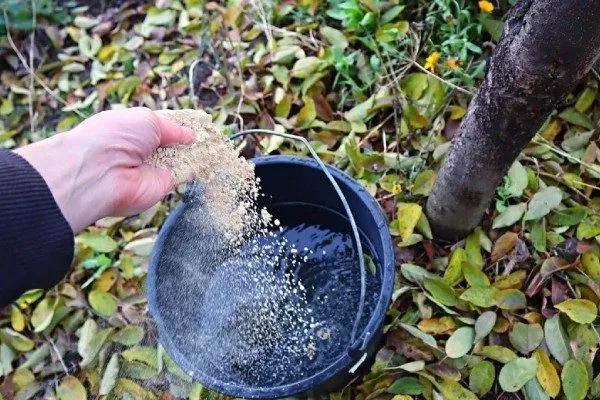
When fertilizing trees that are already bearing fruit, it is necessary to follow these rules and timings:
- In spring, the emphasis is on nitrogen-containing fertilizers;
- in summer, preference is given to organic mixtures applied directly to the soil;
- In autumn, compositions with a high potassium content are used.
Trimming
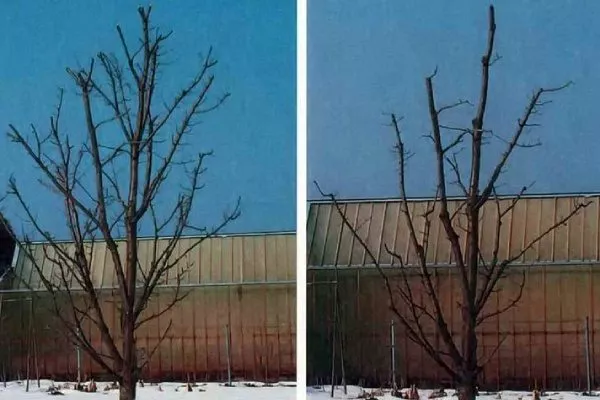
Annual pruning promotes maximum plum tree growth, optimal tree development, and increased yield. Pruning is recommended in early spring: March in the south, April in other regions.
During the process, dried and damaged branches are removed, and the plum tree crown is also shaped, removing excess shoots that prevent sunlight from penetrating the crown.
It is recommended to shorten all stems by a quarter of their length after each pruning, before bud break. All cuts should be treated with garden pitch. If you trim the plant's growth by 40-50 cm, the plum will exhibit maximum productivity due to the laterally expanding crown.
Preparing for winter
This variety has good winter hardiness, but don't ignore the risk of damage due to sudden temperature fluctuations. To prevent potential problems during the cold season, it's recommended to cover the base of the plant with a layer of mulch in the fall and carefully pack down any snow around it during the winter.
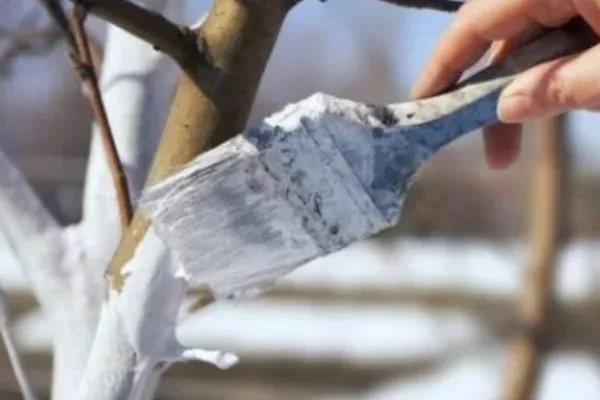
Initially, you need to treat the trunk and large branches with white paint or lime, and also protect the lower part of the tree with a metal mesh from attacks by rodents.
Harvesting and storage
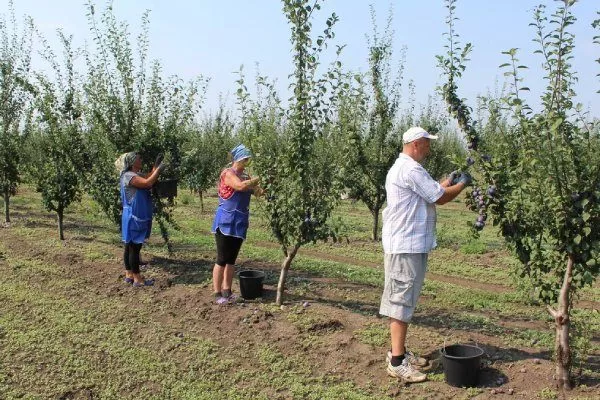
To harvest the fruit for consumption in the coming days, wait until it is fully ripe on the branches. For transportation, the harvest is done 4-7 days before the pulp is fully ripe. Morning is the ideal time to do this, but be careful when picking the fruit to avoid damaging the waxy skin and preserve the stem.
For long-term storage of "Mama" plums, special conditions must be observed:
- the room should be dark, cool and well ventilated;
- the temperature should be +6-8°C;
- It is recommended to maintain humidity at 85-95%;
- healthy, undamaged plums without signs of rot are suitable for storage;
- The fruits are placed in boxes or containers with air holes, forming even and loose layers.
Diseases and pests
Nenka is renowned for its strong immunity to various diseases and pests. However, the crop is susceptible to certain problems:
- Winter moth – In spring, caterpillars damage buds and leaves. An effective control method is the use of Karbofos.
- Moniliosis (rot) – Affects flowers, shoots, and leaves. The optimal solution is treatment with Nitrafen or Fitolavin.
- Codling moth – It feeds on the pulp of fruits, making them unfit for consumption. Control measures include Chlorophos, Iskra, or folk remedies that include pine needles, ash, and wormwood.
- Rust - Affects foliage. Treatment involves removing affected branches and leaves and spraying with Bordeaux mixture.
To prevent possible infections on plum trees, it is important to carry out preventative measures in the fall and spring, including spraying, liming the trunk and lower branches, as well as removing weeds and promptly disposing of fallen leaves and dry shoots in the area adjacent to the tree.
Reproduction
Nenka is versatile in propagation, with four key methods being the most suitable. Each has its own characteristics that are important to consider.
Graft
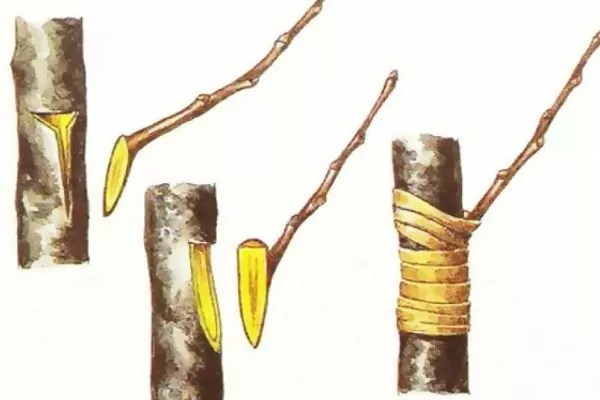
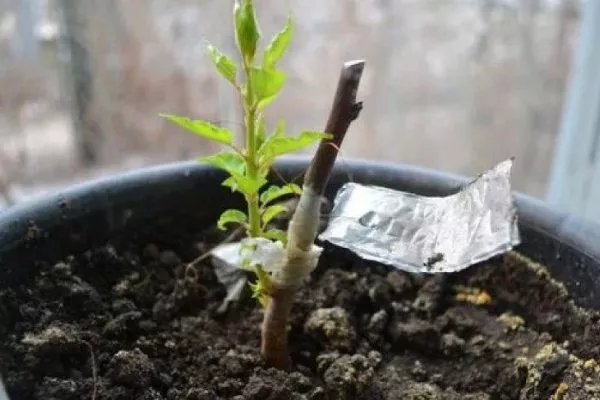
Nenka grafting is done in spring or summer. A diagonal cut of approximately 1.5 cm deep is made on the selected rootstock, and a similar cut is made on the cultivar scion. The scion is then inserted into the indentation, and the grafting site is covered with budding film. Once the scion has successfully taken root, the film can be removed.
The method of propagation by offspring
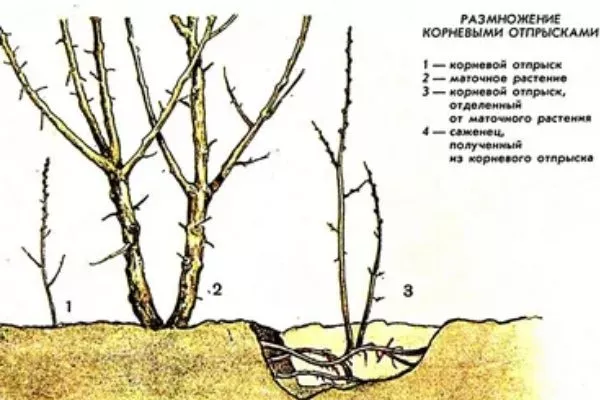
This method is performed exclusively in the spring, when the soil in the area has warmed up well. A lateral shoot is selected from the tree, lifted, and placed in a dug furrow no more than 12-15 cm deep, with the tip of the shoot remaining above ground.
The soil should be kept constantly moist; you can use plastic film to protect the cutting. The appearance of green leaves at the top indicates the development of an independent root system in the offshoot. In late autumn, the cutting can be separated from the mother plant.
Cuttings
In July, green shoots are selected for the establishment of new plants, which are cut from a mature tree. To propagate, take a stem 20 to 30 cm long and divide it into segments with 2 to 4 leaves.
Other features:
- The top end of the cut should be even, and the bottom cut is made at an angle of 45 degrees.
- Before planting, the cuttings are left in water with the addition of a growth stimulator for 15 hours.
- For planting, choose open ground, where a soil mixture of sand and peat with the addition of superphosphate is created.
- The cuttings are planted to a depth of 2.5 cm with an interval of at least 5-8 cm between them and then covered with film.
- It's important to maintain the greenhouse temperature at least at 25 degrees Celsius and provide regular but moderate watering. After 20-40 days, the separated parts will begin to develop a root system, and then the cover can be removed.
Growing from seed
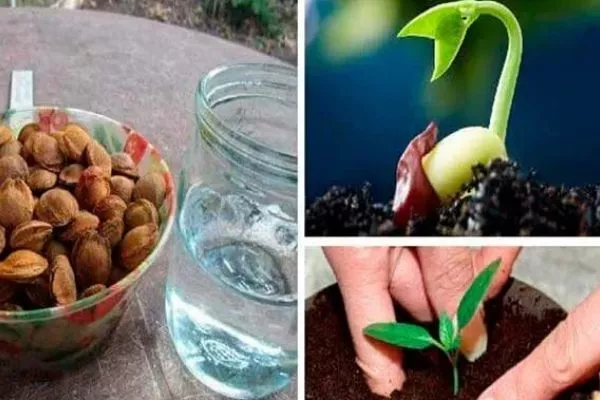
Try using a simple technique for propagating plums using seeds. Seeds can be planted in garden beds or individual pots, and the ideal time for this is from July 25 to August 15. For successful seed germination, stratification may be necessary if you plant them in late fall or early spring.
To plant, dig a hole and fill it with a nutrient-rich substrate consisting of compost, turf, leaf mold, and sand. The depth should be 5-6 cm. Plum seedlings usually appear in May of the following year.
Positive and negative qualities
The variety is famous for its many advantages, among which the following are particularly noteworthy:
Flaws:
What species does it look like?
| Name | Ripening period | Disease resistance | Fruit size |
|---|---|---|---|
| Blue Gift | August | High | 15-20 g |
| Tula black | Mid-September | Strong immunity | Dark blue |
| Early-bearing | The first days of August | Low vulnerability | 30 g |
Experts identify plum varieties that resemble the famous Nenko:
- Blue Gift - This variety produces small (15-20 g) but numerous fruits, renowned for their excellent taste (sweet, suitable for desserts). It ripens in August, and the trees themselves have good disease and frost resistance.

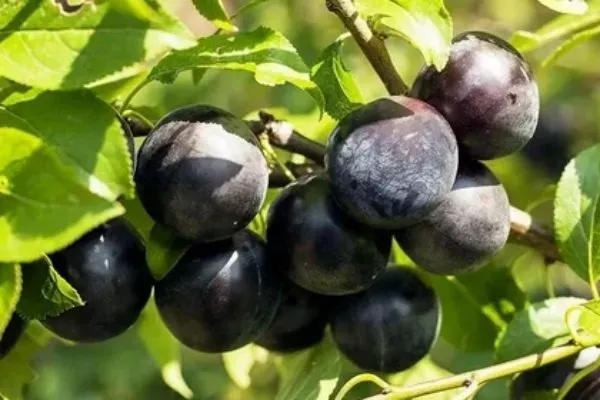
- Tula black - This is a late-ripening variety, reaching maturity by mid-September. It is characterized by frost resistance and strong immunity. The fruits of this variety are dark blue, with a sweet and sour taste.
- Early-bearing – This early-ripening variety begins producing fruit as early as early August. It boasts excellent frost resistance and low susceptibility to disease. It tolerates droughts well, without affecting its fruiting. The medium-sized fruits, approximately 30 g, are reddish-burgundy in color and have a sweet flavor.
Reviews
The Nenka variety has many advantages that are prized by gardeners. These include the excellent flavor of its fruits and their ability to withstand transportation. These characteristics make the crop attractive for commercial cultivation.