
Monastyrskaya (Vengerka Monastyrskaya) is a late-ripening variety of domestic plum. It is popular among domestic gardeners and farmers growing fruit for sale. It is appreciated for its excellent taste and attractive appearance, its shelf life and transportability, its high yield, and its hardiness.
The concept of a plum
This fruit variety belongs to the "Vengerka" cultivar, common in Russia. It is distinguished by its late flowering and ripening. The first plums ripen in late August. Gardeners harvest them throughout September.
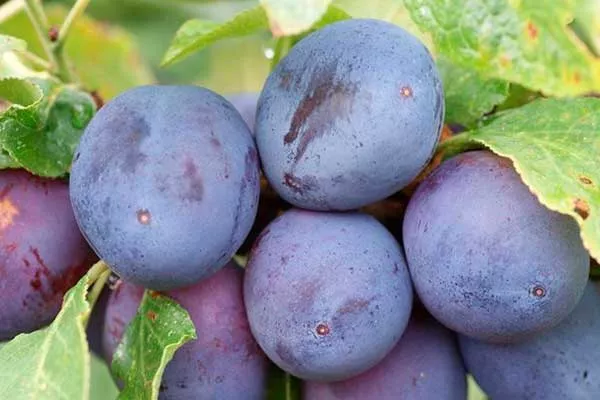
The Monastyrskaya variety is characterized by the following technical indicators:
- high productivity - one tree produces 30-40 kg of fruit per season (50 kg is the maximum figure that can be achieved thanks to enhanced agricultural technology);
- early maturity - trees begin to bear fruit in their third year of life, and in the second year they may already begin to flower and produce their first fruits;
- long lifespan - trees bear fruit for 30 years after they are planted in the garden;
- average resistance to diseases and pest attacks (the variety requires preventative treatment of the crown against infections and insects);
- increased frost resistance - trees can withstand temperatures down to -34°C in winter and thrive when grown in winter hardiness zones 4-5;
- average heat resistance.
The appearance of the tree
Plants of this cultivar are medium-sized. A description of their appearance includes the following characteristics:
- "height" - 3-4 m;
- dense, broadly pyramidal crown;
- strong, curved shoots covered with grey-brown bark;
- medium-sized, lanceolate leaves with a corrugated surface, dark green on the outside, light green on the back, slightly pubescent;
- snow-white flowers of medium size.
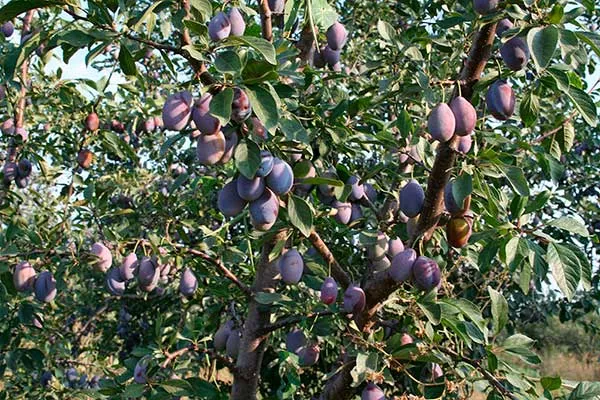
Monastyrskaya plum trees are partially self-fertile. They produce fruit without the need for other pollinating varieties in the area. Experienced gardeners increase their yield by planting other fruit varieties nearby:
- Imperial;
- Zarechnaya;
- Eurasia;
- Peaceful;
- Kuibyshev blackthorn.
Fruits and their taste characteristics
The harvest of the Hungarian Monastery variety is distinguished by its attractive appearance and excellent consumer qualities.
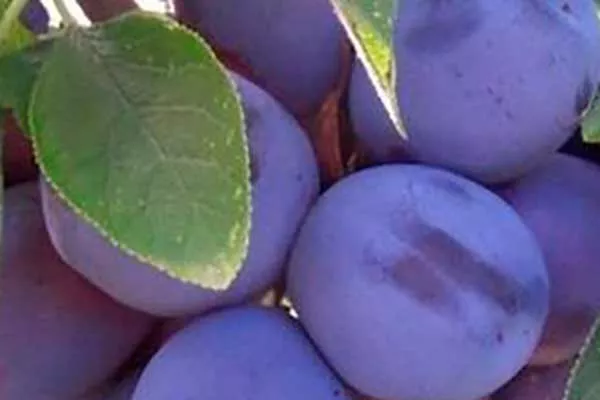
The fruits have the following characteristics:
- weight - 14 g;
- rounded-elongated shape with a weakly defined abdominal seam on the side;
- diameter - 2-4 cm;
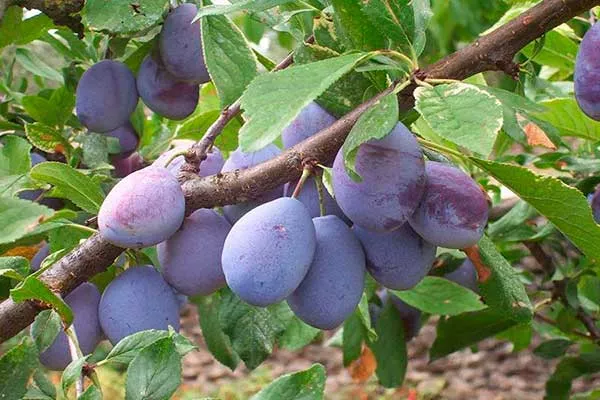
- smooth blue skin, dense, with a waxy coating on its surface;
- barely noticeable subcutaneous points;
- dense greenish-yellow pulp with a fibrous structure, juicy and aromatic;
- small stone that is easily separated from the pulp.
Plums have excellent flavor. Their flesh is pleasantly sweet with a distinct tartness, juicy, and quite tender.
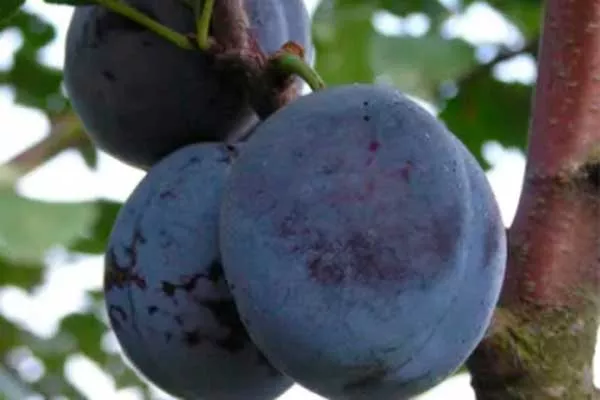
The harvest is suitable for fresh consumption and home cooking. The fruits can be used to make desserts, juice and puree, compote, jam, preserves, marmalade, tkemali sauce, and pie filling. They can also be canned and dried for winter storage.
Monastyrskaya fruits have excellent shelf life, with a shelf life of 10-14 days. They are suitable for long-distance transport. For this purpose, they are picked from the tree 2-3 days before full ripening. This variety is attractive for commercial cultivation.
Care and cultivation
Choose a suitable location on your garden plot to plant fruit crops:
- located in the southern or southwestern part of the garden;
- windless, protected from drafts (gusts of wind provoke the blowing away of pollen, preventing high-quality pollination of the plum and its fruiting at the specified time);
- elevated (a homemade mound is best for growing this variety);
- with groundwater levels at a level of 1.5-2 m and deeper;
- with fertile, loose soil that has good air and water permeability;
- located in the sun or partial shade.
Prepare the planting hole in advance. It should be 0.6 m deep and 0.7 m in diameter. Dig it in the fall or 2-3 weeks before planting the plum tree. Combine garden soil with humus (2:1). Pour the resulting soil mixture into a mound at the bottom of the hole.
- ✓ Check the root system for rot and mechanical damage.
- ✓ Make sure that the trunk of the seedling is straight, without cracks or signs of disease.
- ✓ Give preference to seedlings with a well-developed root system and several lateral branches.
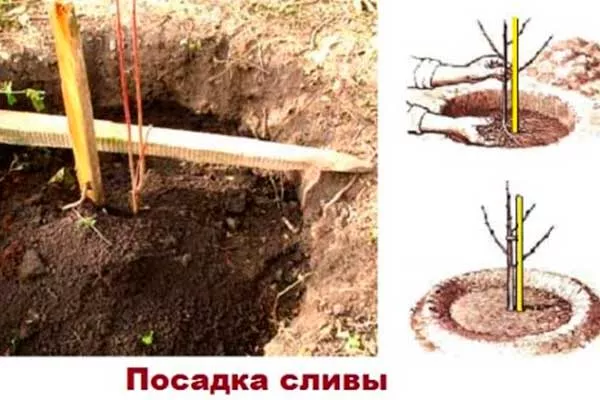
Plant the Monastyrskaya plum tree following the recommendations of experienced gardeners:
- inspect the planting material, check the roots, trunk and branches for breaks and rot;
- Before planting, soak the roots of the seedling in water, leave them in it for at least 2-3 hours;
- Drive a stake into the hole, it will serve as a support for the seedling;
- Place the seedling in a hole at the top of a mound formed from nutritious soil mixture so that its root collar rises 4-6 cm above the ground;
- the tree should stand vertically without tilting;
- cover its roots with soil and compact it around the trunk;
- water the plum tree using 30 liters of water;
- mulch the tree trunk circle with peat, sawdust, straw;
- Tie the seedling to the support with twine.
Provide the Monastyrskaya fruit variety with proper care to obtain abundant and high-quality harvests:
- water the tree;
- loosen the soil underneath it and remove weeds in the area around the tree trunk;
- trim its crown periodically;
- feed regularly;
- carry out preventative treatments against diseases and pests;
- Prepare the plant for winter properly.
Fruit trees thrive on moisture. They require watering in summer and autumn, at least 3-4 times per season. Use at least 50 liters of sun-settled water per tree.
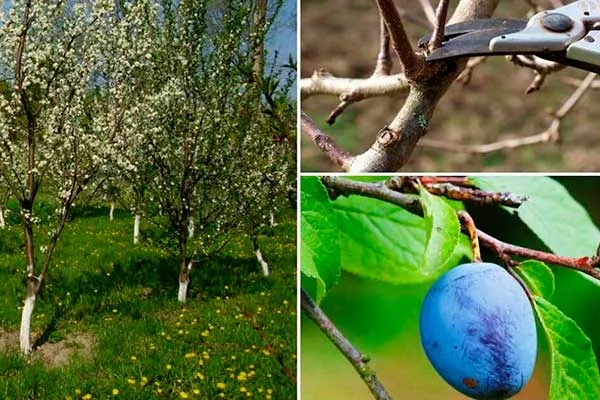
This variety requires careful pruning. Do this in the spring (after the weather warms up) or in the summer, when the leaves have already emerged.
The sanitary procedure consists of removing unproductive branches:
- extra (thickening the crown);
- dry;
- frozen;
- sick;
- affected by pests;
- damaged.
Prune the Monastyrskaya plum tree for formative purposes. Begin shaping the crown immediately after planting. Experienced gardeners create a sparse, tiered, or vase-shaped crown.
Fruit trees don't need fertilizer for the first few years after planting, provided organic and mineral fertilizers have been added to the hole. Start feeding them in their third year. The nutrient mixtures added should be rich in nitrogen, phosphorus, potassium, and magnesium.
Feed the plum tree according to the following scheme:
- in early spring (before flowering), feed the tree with a solution of bird droppings, cow manure or urea;
- during fruit ripening, use potassium monophosphate, potassium salt, double superphosphate;
- After fruiting, fertilize the plum tree with organic matter (manure, wood ash, bone meal) or potassium sulfate.
To prevent fruit tree diseases, treat the tree crown with copper sulfate and Bordeaux mixture (1% concentration) in early spring. Follow with fungicides, such as Skor.
Reviews
The Hungarian Monastic plum is beloved by Russian gardeners for its early fruiting, winter hardiness, ease of care, good yield, beautiful fruit appearance, and refreshing summer flavor. Strict adherence to cultivation practices is the key to maintaining the tree's health and producing a bountiful harvest.