
The Honey Yellow plum produces delicious and nutritious fruits. Its weather resistance and high productivity make it a reliable choice for both experienced and inexperienced gardeners. With proper care and attention, you can enjoy delicious fruits for many years to come.
History of selection
The White Plum originates from Ukraine and was developed by the talented scientist L. I. Taranenko. Due to the bright yellow color of its fruits, the cultivar is often called the Honey Yellow Early or White Ukrainian.
The official name assigned by the breeder upon registration is "Honey White." All other names are common names. It has become widespread in all republics of the former Soviet Union and is successfully grown in private gardens.
The concept of a plum
Plum is highly prized for its excellent varietal qualities. Its low maintenance requirements allow it to be grown in virtually all regions of the country, including the Urals, the Far East, and Siberia.
The appearance of the tree
A tall plant with a spreading, dense, and vigorous crown, reaching 4-5 m in diameter in mature specimens. It grows to 5-8 m in height. The shoots are moderately foliated, numerous, and extend upward from the central trunk.
The leaves are typical of plums: dark green, oval, elongated, with jagged edges and a pointed tip. The veins, especially the central one, are clearly visible. They are attached to flexible but strong petioles.
Fruits and their taste characteristics
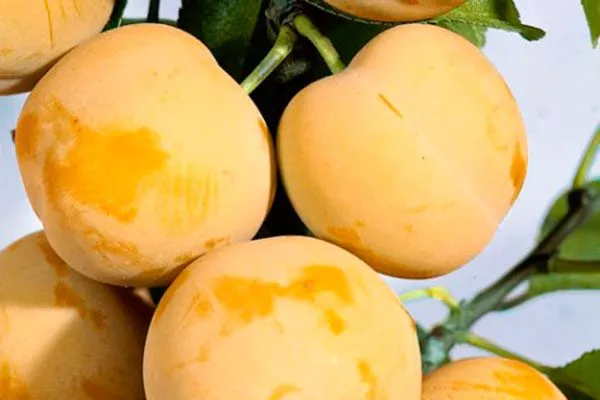
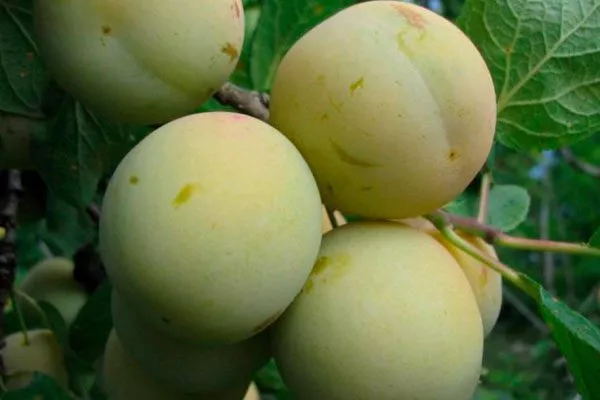
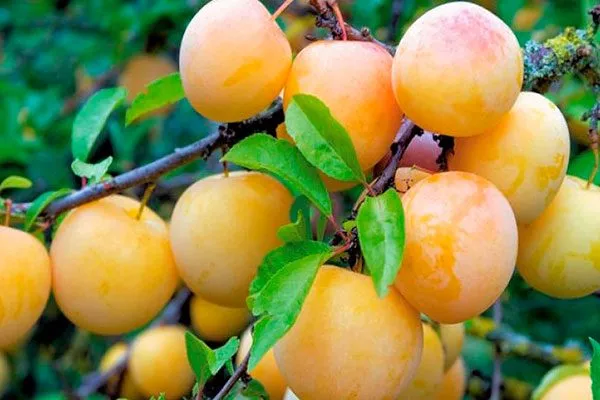
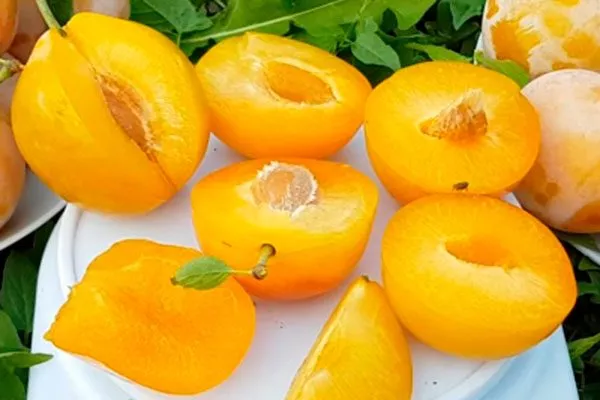
The fruits are round, large, and firm, resembling cherry plums in appearance. The skin is yellowish-orange, sometimes with a slight pink blush, and is firm with a slight bloom. The pit is small and easily separated. The flesh is yellow, juicy, with a pleasant honey aroma and a slight tartness.
Tasting score: 4.5 points.
Are there any differences from Honey White?
The Honey White and Honey Yellow plums are two names for the same variety. The fruits have yellowish-orange skin, sometimes with a pinkish blush, which explains the second name.
Drought resistance, frost resistance
Characterized by excellent winter hardiness and high drought tolerance, the yield and flavor of the fruit remain consistent regardless of climate conditions. Despite its good drought tolerance, the plant prefers abundant watering.
Growing regions
The variety was bred in Ukraine and initially adapted to local conditions, but over time it spread throughout the post-Soviet space, including Moldova and Transcarpathia. In Russia, it is successfully cultivated in the Kaluga region, the Central Black Earth Region, the Belgorod region, and even in the Altai Mountains.
Self-fertility and the need for pollinators
This variety is self-sterile, so pollinators are needed to produce a harvest. The varieties "Vengerka" and "Renklod Kuibyshevsky" are considered the most suitable. For pollination, plant any related plum species nearby.
Yield and ripening time
The fruits reach technical maturity in mid-summer. A plot of 1 hectare yields up to 17 tons of fruit, and a single tree yields approximately 30-40 kg.
Flowering, fruiting
In the spring, in mid-April or early May, small, white, single flowers appear, with up to four buds forming from a single bud. The plant begins to bear fruit four years after planting, but this depends on proper agricultural practices and climatic conditions.
Landing features
Growing this fruit tree doesn't require any special knowledge. However, a simple planting of a seedling may not yield the expected harvest. To grow a good fruit tree, it's important to follow simple farming practices.
Recommended timeframes
Planting time depends on the region's climate. In most regions, this is done in April or early May, when the soil has warmed and the threat of frost has passed. This allows the plant to adapt and establish roots before the hot weather sets in.
In autumn, plant in September or early October, when the leaves begin to yellow, but before the first frost. This allows the tree to establish roots before winter. Proper planting time promotes good plant development and a bountiful harvest in the future.
How to choose a site for planting?
Choose a location that receives at least 6-8 hours of direct sunlight per day. This promotes fruit development and sweetness. Make sure the site is protected from strong winds, which can damage the trees. Plant a hedge or shrubs to create natural screens.
The plant does not tolerate waterlogging. Avoid low-lying areas or areas with a high water table. Ensure good drainage. Light loam or chernozem soils are ideal. Avoid heavy, clayey soils. Ensure the pH is between 6 and 7. Add lime if necessary.
What crops can and cannot be planted next to each other?
The White Honey plum grows well alongside cherry plum and other plums, which act as pollinators. In colder regions, grow it alongside the Opal plum, as they share similar characteristics. Both varieties are frost-hardy, tall, and have a spreading crown.
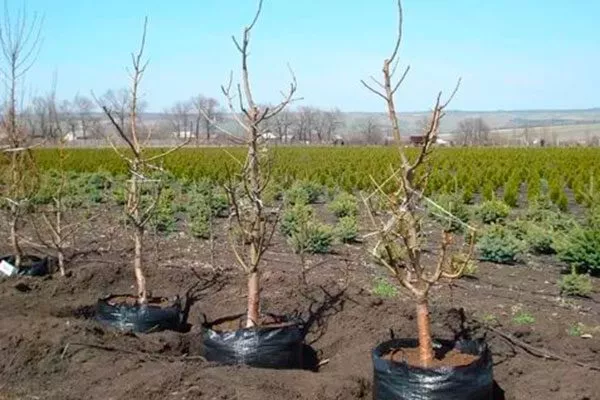
Selection and preparation of planting material
Buy one- or two-year-old seedlings. They take root better and begin bearing fruit sooner. They should have healthy, strong stems and a well-developed root system. Avoid plants with damaged or rotten roots. Leaves should be green and unblemished, indicating health.
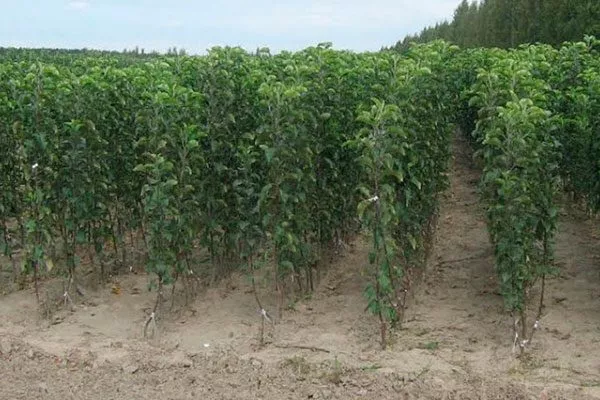
Before planting, inspect the roots. If they are dry, soak the seedling in water for several hours. Trim long roots to 20 cm and remove any damaged ones. This will help the plant adapt to the new conditions more quickly. Treat the roots with a growth stimulant (such as Kornevin) or potassium permanganate for disinfection.
Planting sequence
Cultivate according to generally accepted guidelines. Dig out a fertile layer of soil about 30 cm thick and set it aside. Remove the remaining soil from the hole; it won't be needed. The hole should be sized to accommodate the seedling's root system; typically, a depth and width of 60 cm is sufficient.
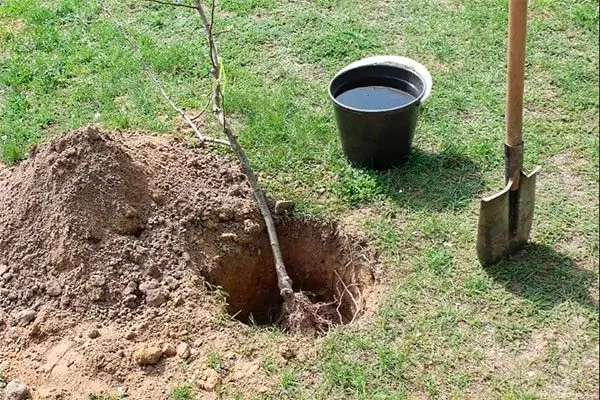
If the seedling has bare roots, drive a wooden stake into the center of the hole to support the plant. If the site has heavy black soil or clay with poor drainage, fill the bottom of the hole with small stones.
Step-by-step instructions:
- Mix the reserved fertile soil with 10 kg of cow manure and 500 g of ash. Add 100 g of superphosphate and 85 g of potassium chloride.
- Place a thin layer of prepared potting mix at the bottom of the hole. Carefully place the seedling in the hole, spreading out the roots.
- Fill with soil so that the root collar is 5 cm above ground level.
- Water the seedling generously. After the soil settles, add a little more soil and tie the trunk to the stake.
- ✓ The optimal planting depth for a seedling should be such that the root collar is 5 cm above ground level, which prevents it from rotting.
- ✓ For mulching the tree trunk circle, it is better to use peat or humus in a layer of at least 5 cm, which helps retain moisture and protect the roots from overheating.
Finish planting by mulching the area around the tree trunk, using peat moss. Mulch will help retain moisture and create favorable conditions for rooting.
Aftercare
Success in achieving a bountiful harvest depends directly on proper tree care. Follow simple gardening practices that even a novice gardener can easily handle.
Watering frequency
The plant requires regular watering. Apply warm water to the roots five times per season:
- After flowering has finished.
- Two weeks after the formation of the ovary.
- Two weeks after the second watering.
- When the fruits ripen.
- After harvesting.
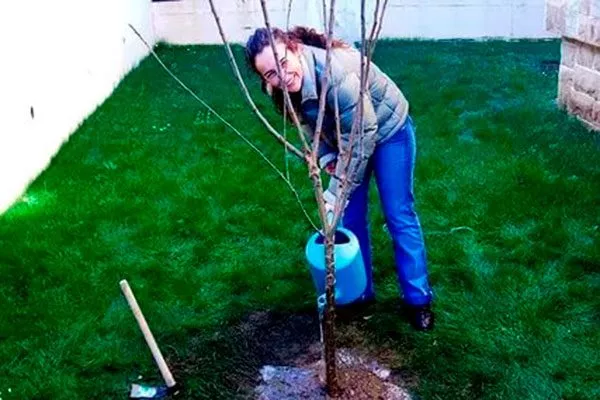
For one watering the tree, 30 liters of water is enough.
Fertilization
Once the plant reaches two years of age, it requires annual fertilization with urea in the area around the trunk at a rate of 20 g per 1 sq. m.
After fruiting begins, apply additional fertilizer in the following amounts:
- 15 kg of manure;
- 20 g urea;
- 30 g Superphosphate;
- 200 g of ash.
Fertilize the crop in the fall and thoroughly dig up the soil afterwards.
Weeding, mulching, loosening
These are important aspects of plum tree care, as they determine the yield. Weed removal serves as a preventative measure against diseases.
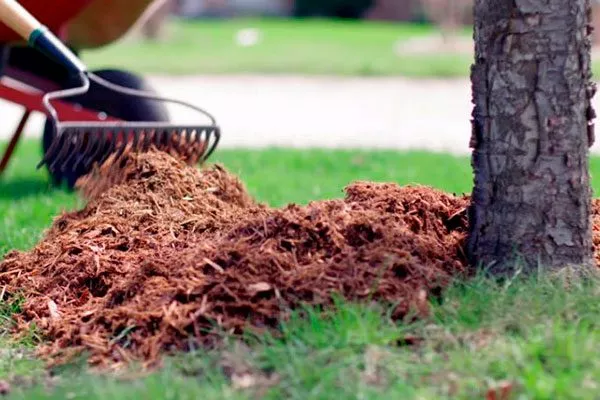
Loosen the soil from May to June and after each watering. This procedure improves soil aeration, reduces moisture evaporation, and prevents crust formation. Mulching the tree trunk area helps reduce excess evaporation and control weed growth.
Pruning and crown shaping
A year after planting, in early spring, begin pruning the plant. To do this:
- remove diseased or damaged branches;
- leave a base of 6-7 of the strongest shoots, located at an angle of 45° to the trunk;
- The following year, prune upward-growing branches and slightly shorten older shoots.
The tree's bottom tier should consist of three of its strongest branches, each pointing in different directions. Subsequent tiers may include two shoots at different heights, with a minimum distance of 20 cm between them.
Preparing for winter
In early September, it's important to protect your plants from frost. Follow these instructions:
- Remove moss, dead bark and lichen using metal scrapers.
- Treat with whitewash.
- Wrap in paper and burlap.
To prepare a whitewashing solution, use 400 g of copper sulfate, 10 liters of water, 2 kg of lime and 100 g of glue.
Tips and recommendations for growing
If you're planning to grow plums in your garden, it's important to follow certain guidelines. Here are the main ones:
- Water the soil carefully. The variety requires adequate moisture during flowering and fruit ripening.
- After harvesting, apply 30 g of superphosphate and potassium sulfate under each tree.
- Protect the seedling from strong winds, especially from the north side.
- Plant suitable crops nearby.
Although most plum varieties are native to southern climates, there are some that adapt well to temperate climates. These include the Honey Yellow plum.
Methods of control and prevention of diseases and parasites
The plant has a strong immune system, but it can be susceptible to various challenges. If not properly cared for, it can lead to the following problems:
- Plum sawflies. Insect caterpillars nest in the fruit. To prevent them, spray with a solution of Karbofos before flowering and Rogon or Gordon afterward.
- Plum codling moth. Easily recognized by dark spots on fruit and wilted appearance. To control it, use a Chlorophos solution (30 g per 10 liters of water).
- Comma scale insects. They feed on plant sap. To eliminate them, treat the tree with Fitoverm or Novaktion.
- Aphid. It sucks the juices out of plums. Actara is effective for preventative purposes.
- Fruit rot. Characterized by brown spots that grow larger. To combat the disease in the spring, before buds open, use a Horus solution. In the fall, copper sulfate will help.
- Rust. Damaged leaves develop distinctive pads between the veins. Remove diseased branches or leaves, burn them, and then spray with Topaz.
- Hole spot. In spring, brown spots appear on the leaves. To remove them, spray ferrous sulfate (300 g per 10 liters of water).
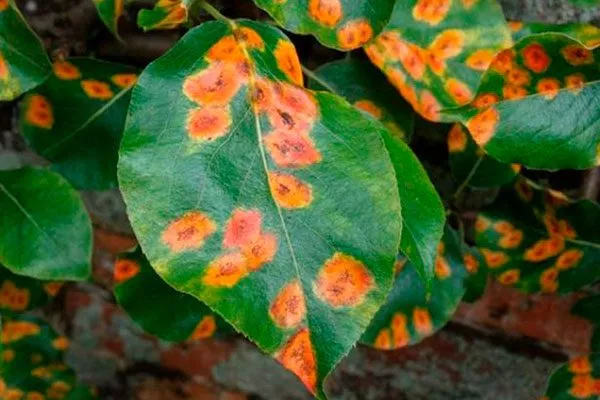
- ✓ The appearance of gum on the trunk and branches indicates a possible disease or damage to the bark.
- ✓ Leaf color changing to pale green or yellow may indicate a nutrient deficiency or disease.
Regularly inspect the plant for signs of disease or pest attack to begin treatment promptly and prevent death.
Harvesting and storage
Harvest the plums in dry, windless weather, picking them with the stems attached. After harvesting, store the plums in wooden crates in a ventilated area at a temperature of approximately 1°C (33°F) and constant humidity. Under these conditions, the plums will stay fresh for about two months.
Positive and negative qualities
Before planting a crop in your garden, it's important to understand its advantages and disadvantages. This will help you avoid potential problems in the future. This variety has many advantages:
Among the negative qualities, some gardeners note the large size of the crown, which requires regular pruning to limit growth.
Reviews
The Honey Yellow plum boasts excellent flavor and good yield. This variety was developed in the post-war years, when vitamin supply was particularly pressing. This fruit tree adapts to various climates and produces consistent yields even in unfavorable years. Proper care is key.