
Mashenka is a rare plum variety with a mid-season ripening season. It is cultivated primarily in the central regions of the country. Gardeners who grow it appreciate its early maturity, disease resistance, and undemanding climate. Its fruit is also highly rated: large, beautiful, and delicious.
The origin of the plum
This plum variety belongs to the Chinese type (Chinese plum, cherry plum). It is the brainchild of Russian breeder V. P. Yagunov. The scientist developed it at the Suzdal State Variety Testing Station (Vladimir Region). He obtained the new variety by open-pollinating a seedling of the Eurasia-21 variety.
Features of wood
This fruit crop is characterized by vigorous growth and powerful roots. It has the following external features:
- a rather sparse crown with a rounded-pyramidal shape (requires regulatory pruning in the first years after planting the seedling);
- gray bark covering the trunk and skeletal branches;
- strong shoots, distinguished by their medium size and grey-brown colour;
- Foliage: dark green, oblong, with a flat surface;
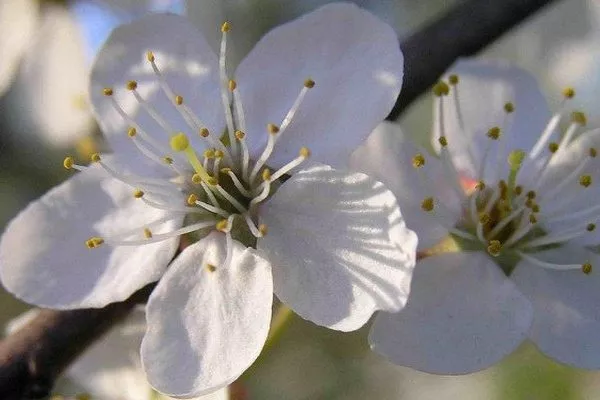
- flowers: white, numerous.
Varietal characteristics of fruits
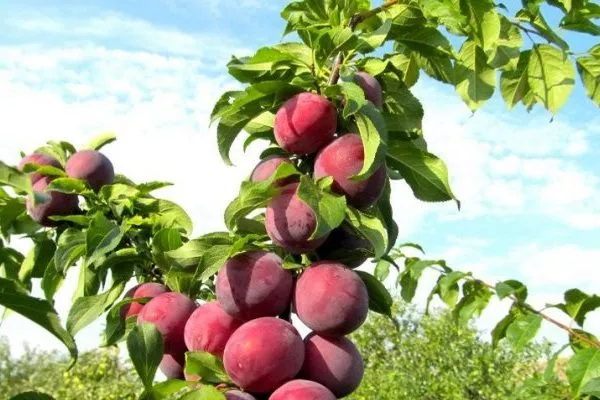
The Mashenka plum is a favorite among gardeners familiar with it due to its large fruit and high commercial quality. The fruits have the following characteristics:
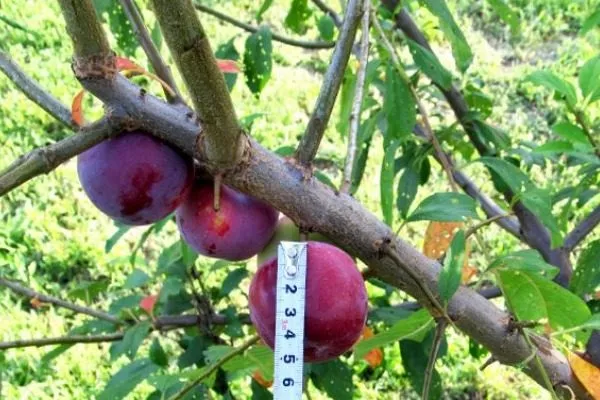
- larger than average in size - 35-42 g (with enhanced agricultural technology, the fruits reach a weight of 60 g, and some specimens - up to 90 g);
- rounded-equal-sided shape with a pronounced ventral suture and a small but wide funnel;
- thin and delicate, but quite strong skin of a brownish-purple color, on which there is a strong waxy coating of a bluish color;
- yellow-orange flesh, dense, very juicy and tender, melting in the mouth;
- a small bone that easily separates from the pulp.
The taste of this plum variety delights the eater. The fruits are sweet with a noticeable, pleasant tartness.
Fruit tends to remain on the branches for a long time. Even when ripe, it doesn't fall off the tree. Overripe specimens don't crack and are resistant to rot. The harvest is shelf-stable and easy to transport.
Characteristics of the variety
This fruit variety is winning the hearts of Russian gardeners thanks to its many excellent characteristics. Check out the technical specifications if you're planning to plant it in your garden.
Resistance to cold and drought
Mashenka is characterized by its hardiness. It can withstand short periods of drought and tolerates the frosts of the central zone. Its winter hardiness ratings are as follows:
- high degree - frost resistance of the tree;
- above average - resistance of flower buds to winter cold.
Pollination and fruit ripening time
| Name | Ripening period | Disease resistance | Fruit size |
|---|---|---|---|
| Mashenka | average | high | 35-42 g |
| Lighthouse | early | average | 30-35 g |
| Early ripening red | early | high | 25-30 g |
| Greengage | late | average | 40-50 g |
| In memory of Timiryazev | average | high | 30-40 g |
Mashenka is popular with gardeners for its early fruiting. Its trees begin to bear fruit in their third or fourth year. They bloom in April. The first fruits ripen mid-season—the second half of July. The mass harvest occurs at the end of the month and in the first week of August.
Plum is self-sterile. To ensure abundant fruiting, fruit trees of other varieties must be grown nearby. Experienced gardeners use the following species as pollinators:
- Lighthouse;
- Early ripening red;
- representatives of the Renclode variety;
- In memory of Timiryazev.
Yield of the variety
This variety pleases growers with its high fertility. Its yield figures are as follows:
- 35-45 kg - yields 1 tree on average;
- Up to 50 kg is the maximum productivity of a plum tree that has reached ten years of age.
Scope of application of berries
Mashenka's harvest is for table use. The fruits are eaten fresh. They are also processed into juice. Housewives make compotes, preserves, marmalades, liqueurs/wine, and preserve them for the winter.
Planting operations
Whether the tree will take root in your garden, grow quickly, and reach fruiting age depends on the correct planting procedure.
- ✓ The presence of at least 3 main roots with a length of 20 cm.
- ✓ No mechanical damage to the trunk and roots.
- ✓ The seedling should be no more than 2 years old for better survival.
Landing rules
When carrying out planting work, adhere to the following rules:
- do the planting in spring (before the buds open on the tree);
- the optimal time is the end of March, first days of April;
- the air at the time of the procedure must be warmed up to +10°C;
- If you have purchased several seedlings, dig planting holes at a distance of 4-5 m from each other;
- give preference to a two-year-old seedling (at this age, the plant is no longer afraid of frost and is less susceptible to negative environmental influences);
- the tree should have a well-developed root system, its optimal height is 0.5-0.6 m, and there should be no damage or signs of disease;
- dig a planting hole in the fall, giving it dimensions of 0.8 m/0.6 m (diameter/depth);
- Fill the hole 1/3 full with a mixture of topsoil and humus, enriched with potassium sulfate (30 g), superphosphate (250 g), and slaked lime (300 g);
- When planting, make sure that the root collar is raised above the ground by several centimeters (it cannot be covered with soil);
- At the end of the procedure, be sure to water the plum tree and mulch the soil underneath it with peat or sawdust to prevent moisture evaporation.
Growing conditions
To successfully grow the Mashenka plum, choose a suitable area in the garden:
- sunny (lack of light negatively affects the health of the crop, reduces its yield, and worsens the quality of the fruit), there should be no tall buildings or trees creating shade nearby;
- windless and protected from drafts (in a windy place the tree has an increased risk of branches breaking);
- located on a hill, with groundwater levels of 1.5 m;
- with light loamy soil, having neutral acidity, loose and fertile.
The landing process
Plant Mashenka by following the following sequence of actions:
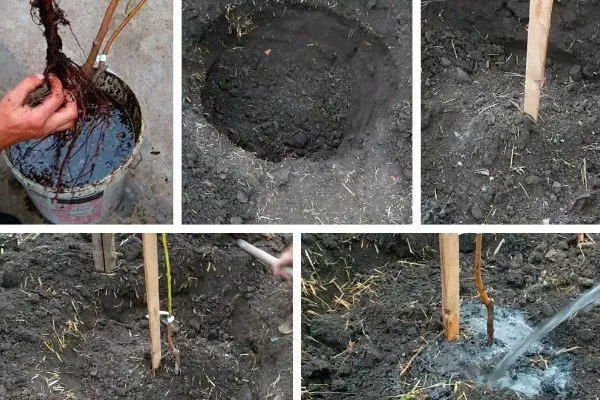
- Place a stake in the center of the hole. Around it, mound a soil mixture consisting of garden soil, mineral fertilizers, and organic matter.
- Place the seedling on the mound and spread out its roots.
- Cover them with garden soil without adding fertilizers.
- Compact the soil around the trunk.
- Tie the tree to a stake.
- Water the plum tree. Use 30-40 liters per 1 seedling.
- Mulch the tree trunk circle.
Aftercare of plum
After planting your plum tree, care for it properly. Following proper cultivation practices will ensure the following results:
- rapid establishment of a seedling in a new location;
- its proper development and rapid growth rates;
- strengthening the immune system;
- abundant fruiting at the appointed time.
Watering and fertilizing
Plums thrive on moisture. Water the fruit tree at least three times per season. During dry summer periods, irrigate the soil once every 30 days.
Be sure to complete the procedure within the following timeframes:
- during the tree's flowering period;
- during the period of formation of fruit ovaries;
- 20 days before removing ripe fruits from the branches.
Provide additional nutrition for the plant. Fertilize starting when the plum tree is three years old. Fertilizer applied at planting will last for several years. Follow this plan:
- Before flowers bloom on the tree, use ammonium nitrate (consumption - 15 g per 1 sq. m);
- during the budding period, water the plum with a solution of potassium sulfate (36 g per 10 l), enriched with urea (24 g);
- during the formation of fruit ovaries, apply nitroammophosphate in the form of an aqueous solution (42 g per 10 l);
- After fruiting has completed, apply Superphosphate (consumption rate: 51 g per 1 sq. m of tree trunk circle).
The Mashenka plum responds well to nitroammophoska fertilizer. Apply the fertilizer in the spring. A young plant will need 20 grams of dry fertilizer, while a mature tree (over 5 years old) will require 40 grams.
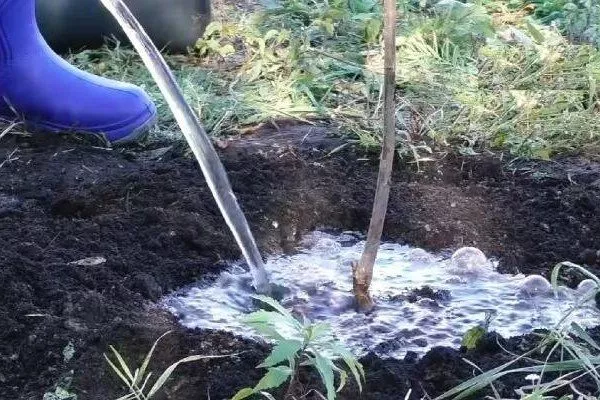
After applying fertilizer, be sure to water the fruit tree, using 20 liters of settled, warm water per trunk. Then, mulch the area around the trunk with humus or compost. Apply a 5 cm layer of organic matter. Mulch will prevent soil compaction, retain moisture, and slow down weed growth.
Soil care
In addition to watering and fertilizing your plum tree, also take care of the soil around the tree. This includes the following:
- loosening, carried out in order to prevent the formation of a dense, air-impermeable crust on the soil surface;
- weeding (timely removal of weeds - prevention of fruit crop diseases and damage by pests);
- mulching the soil with organic matter.
Trimming
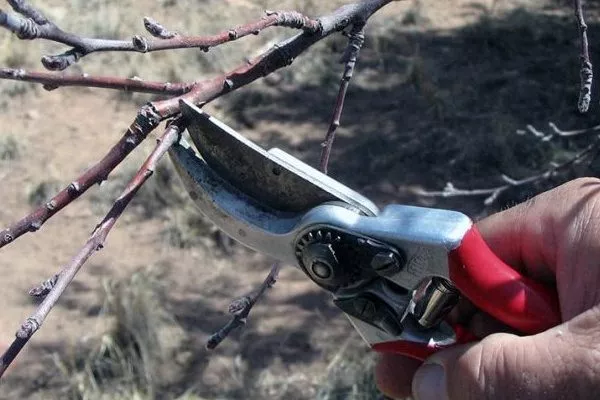
Mashenka plum requires regular pruning. It tends to actively form lateral shoots, which thicken the crown and prevent proper fruit formation. Pay particular attention to this procedure in the first few years after planting, when branches develop quickly and unevenly.
Prune the tree for the first time immediately after planting it in your garden. Shorten the main shoot (trunk) to 0.7 m if it's taller than this. In the fall, you'll need to prune the side shoots by 2/3, and trim the tree itself by 1/3.
The further formative pruning of the plum tree is reduced to the following manipulations:
- shortening of perennial skeletal shoots;
- pruning young branches;
- removal of branches growing into the crown and protruding far beyond it.
Preparing for winter
Although the Mashenka variety is resistant to the damaging effects of winter cold, it's a good idea to insulate the tree in the fall. Frost protection is essential for young seedlings and mature plants grown in areas with harsh climates.
Preparing plums for winter includes the following activities:
- Insulate the trunk with thick burlap. Do not use hay or straw for this purpose. Natural materials attract hares and rodents to the garden.
- Mulch the tree trunk area with humus (10 cm thick). To retain soil heat, cover it with fallen snow.
Methods of control and prevention of diseases and parasites
The Mashenka plum is renowned for its good resistance to major fruit tree diseases and insect damage. If not properly cared for and exposed to adverse weather conditions, the tree can be susceptible to fungal attacks:
- powdery mildew;
- fruit rot (moniliosis).
If you detect signs of disease in your garden crop, treat it with the following:
- a solution of Bordeaux mixture (40 g per 10 l of water) - if the plum is affected by powdery mildew;
- with a solution of potassium permanganate (2 g per 10 l of water) or Bordeaux mixture (200 g per 10 l) - if there are symptoms of fruit rot.
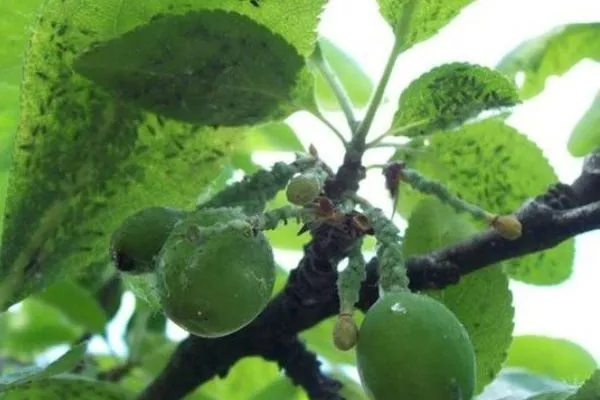
Plum trees with weakened immune systems can be susceptible to pests such as flea beetles, aphids, and codling moths. To control these pests, use colloidal salt or Oxyhom.
Pay attention to disease and pest prevention. Take the following measures:
- removal of root shoots and sanitary pruning to prevent the proliferation of parasites;
- whitewashing the trunk in spring and autumn to protect it from pests;
- spraying the crown with fungicides to prevent the occurrence of diseases;
- seasonal treatment of the crop with Oxychom, Abiga-Peak, Horus, which helps protect trees from pests.
Positive and negative qualities
Reviews
Mashenka is an excellent mid-season plum variety, ideal for growing in the central non-chernozem regions of Russia. Gardeners appreciate it for its low maintenance, good winter hardiness, and abundant annual fruiting. Its harvest is distinguished by its attractive appearance and dessert-like flavor.