
The Sultan's Favorite plum is an ideal choice for those seeking an abundance of sweet and juicy fruits. Its incredible aroma and long-lasting freshness make it a favorite among gardeners and fruit connoisseurs. This variety, renowned for its other positive qualities, belongs to the Rosaceae family.
The concept of a plum
This variety is distinguished by its productivity. The berries ripen in late summer or early autumn, depending on weather and climate conditions, and are harvested in one go.
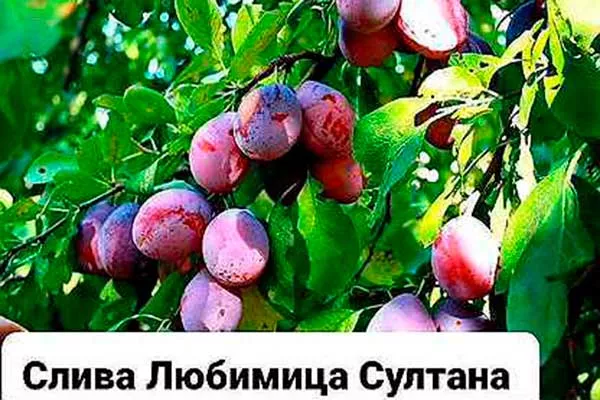
Please also pay attention to other characteristics:
- It is also distinguished by its resistance to various diseases and pests, as well as its ability to withstand adverse weather conditions.
- It has a long shelf life of products.
- Plums are widely used in various cooking dishes. They are used to make jam, compotes, preserves, and other sweet dishes. Plums are also excellent for eating fresh.
- It is widespread throughout Russia, particularly in the Volga Plain and Central Russia. It is also found in Siberia, the Urals, and the Far East. This widespread distribution is due to its high frost resistance and undemanding cultivation conditions.
- Cuttings and grafting are used for propagation. These approaches ensure the preservation of the variety's unique characteristics and the growth of healthy, robust plants. As a result, gardeners can expect a bountiful harvest and excellent flavor.
- The fruits are characterized by their transportability and ability to remain fresh for a long time.
- One of its key features is its self-fertility, which eliminates the need for additional donor trees. However, pollination is still required to produce a bountiful harvest, and the Renclode Altana variety is suggested as a successful pollinator.
- Flowering begins in April, which allows you to expect the first fruits as early as July, provided that the planting is correct and the climate is warm.
- The tree begins to bear fruit in the third or fourth year after planting and continues to bear fruit for 20-25 years.
Story
The plum variety Lyubimitsa Sultana is of Russian origin. It was created by crossing the Hungarian Prevaya and Gagarinskaya 25 plums, resulting in a hybrid that combines the advantages of both parent varieties.
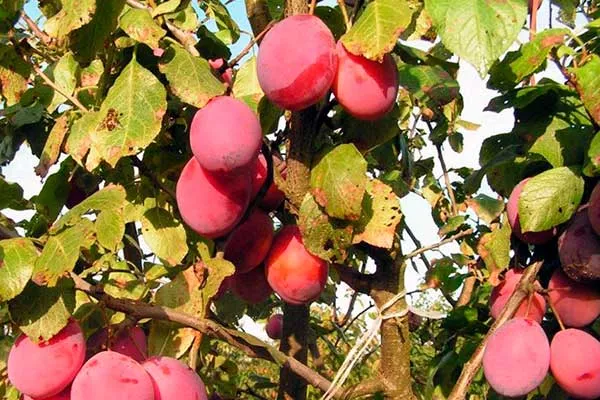
Peculiarities:
- The variety's name carries a historical connection. Sultan's Favorite was named after the Turkish ruler, who, according to legend, was a great connoisseur of plums and associated the fruit with fertility and prosperity.
- The cultivation of Sultan's Favorite is the result of many years of research, whose goal was to create a variety characterized by high productivity, excellent taste, and the ability to withstand adverse weather conditions.
The plum was officially introduced into agricultural production in 1979 and has since earned the love and respect of gardeners. Seeds and young plants are available only in specialized stores and garden nurseries, while plums themselves can be found at markets and retail chains.
The appearance of the tree
The tree reaches a height of 100 to 500 cm and is characterized by a moderately compact habit. Its crown is rounded and fairly dense. The leaves are medium-sized, rich green with a slight sheen.
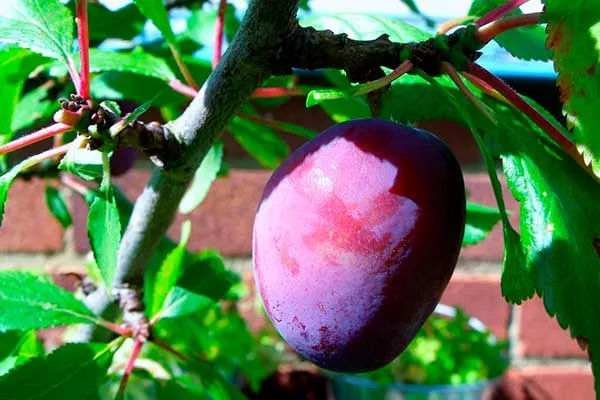
Among the features that allow you to recognize this variety, the following traits stand out:
- the bark of the trunk has a grayish tint;
- shoots of medium size, colored grey-brown;
- the leaves are oblong and slightly corrugated;
- the petioles of the leaves are long and covered with pubescence;
- The root system is well developed and expands horizontally.
The inflorescences are small white flowers, grouped in clusters of three to five. The branches are arranged horizontally or slightly drooping.
Fruits and their taste characteristics
The fruits of the Sultana's Favorite variety are round with a slight indentation at the top. The skin is smooth, dark blue, and covered with a waxy film. The flesh is sweet, juicy, slightly tart, and has a pleasant aroma.
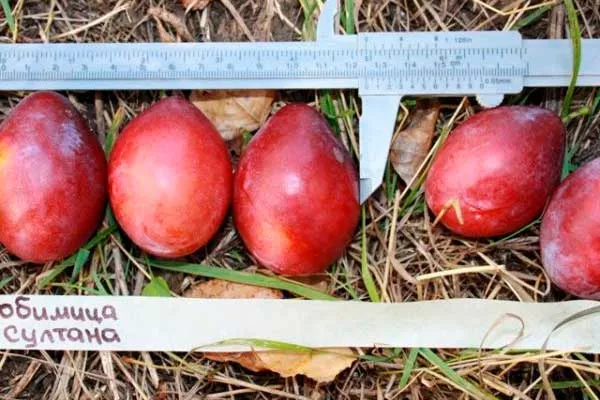
More information:
- In the center of the fruit is a stone that is easily separated from the pulp and is distinguished by its large size.
- The fruits are initially adorned with dark red skin, later taking on a rich purple hue. It's covered with a thick waxy layer, which adds appeal and protects the skin. As they ripen, the wax begins to crack slightly, making the fruits even more appetizing.
- The weight of each reaches from 80 to 120 g.
- The flesh is light golden in colour and has a mild aroma.
- The flavor of these fruits can be described as sweet and refreshing. Their tartness adds a unique touch.
The Sultan's favorite is not only delicious but also renowned for its excellent nutritional value. It's rich in vitamins B and C, which are essential for a strong immune system and healthy bones.
These plums are rich in fiber, which has a beneficial effect on the digestive system and maintains stable cholesterol levels in the blood.
| Parameter | Characteristic |
|---|---|
| Sugar content | 12-14% |
| Acidity | 0.7-0.9% |
| Dry matter | 16-18% |
| Vitamin C | 8-10 mg/100 g |
| Energy value | 46-49 kcal/100g |
How to plant correctly?
To achieve maximum yield, it's important to choose the right seedling. Follow these key guidelines:
- Preference should be given to seedlings that are at least two years old. These plants have increased frost resistance and are already able to withstand adverse environmental conditions.
- Focus on the root system; it should be developed, and the height of the seedling should fluctuate around 50-70 cm.
- The fruit tree should not have any signs of damage or other defects.
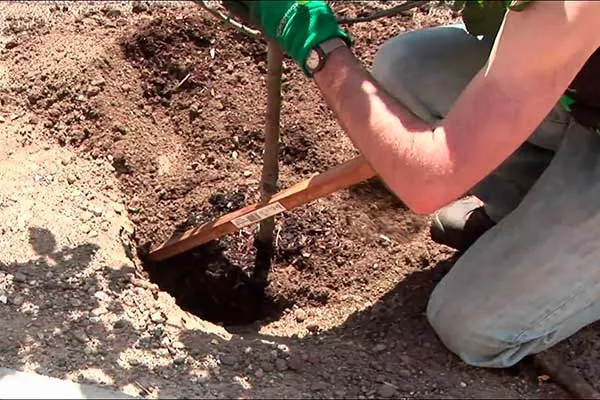
Landing rules:
- A few weeks before planting the tree, it is recommended to dig a hole and add 8-12 kg of compost to it, which will subsequently have a beneficial effect on the growth of the tree.
- The root system must be carefully distributed along the edge of the hole and filled with soil, compacting it to eliminate voids.
- After this, it is necessary to moisten it with 10 liters of water.
- It is advisable to install a metal ballast or stake next to the seedling to provide reliable support for the young tree.
The distance between plantings should be large enough, no more than 3-4 m.
The hole parameters – in diameter and depth it should be slightly larger than the root system of the tree.
Care Features
| Age of the tree | Watering rate | Frequency |
|---|---|---|
| 1 year | 20-30 l | Once every 10 days |
| 2-3 years | 40-50 l | Once every 2 weeks |
| 4-7 years | 60-80 l | 3 times per season |
| 8+ years | 100-120 l | 2 times per season |
One of the key advantages of this variety is its ease of care. To maintain the tree's health, follow a few basic rules:
- regularly moisten, preventing the trunk area from drying out too much;
- clear the soil around the trunk of fallen leaves, branches, and weeds;
- provide nutrients (organic and mineral complexes are excellent);
- At the beginning of March, sanitary pruning should be carried out to protect the plant from various diseases and pests;
- During the growth process, it is important to regularly adjust the height of the support to ensure its stability.
- Early spring: 30 g of ammonium nitrate per 1 m²
- Before flowering: 20 g superphosphate + 15 g potassium salt
- After flowering: 2-3 kg of rotted manure
- July: 10 g of potassium salt per 1 m²
- Autumn: 40 g superphosphate + 30 g potassium salt
Feeding schedule
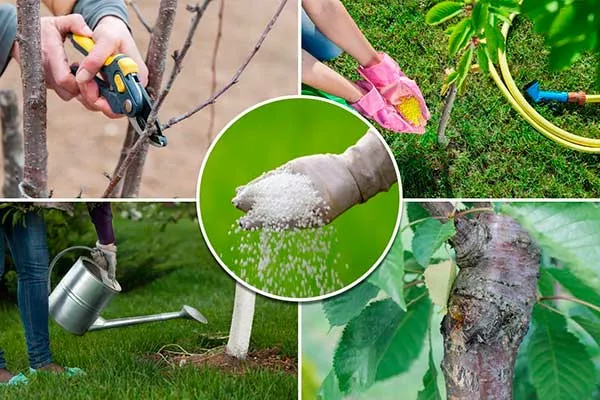
Diseases and pests, prevention
Protecting your plum tree from pests is not difficult, but it is a necessary condition for its well-being:
- One of the main enemies of this fruit tree is the leaf roller. To combat this threat, pesticide treatments are recommended during the period before budding and immediately after flowering. Fufanon or Kemifos are effective in controlling leaf rollers.
- If the tree is infested with aphids, then Actellik, Fitoverm, Kinmiks or Inta-Vir are used to destroy them.
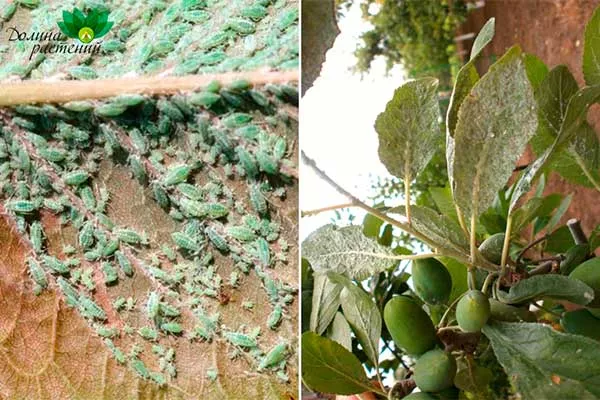
The three most common diseases in plants are:
- Pockets. It is important to be careful and remove fallen berries, and it is also recommended to prune branches where affected fruits were found.
- Clusterosporiasis – This is a disease that can be effectively controlled with a 1% Bordeaux mixture applied at the stage of early flowering and bud formation.
- Smallpox (sharka) Requires the use of sterile pruning tools. This disease is spread by pests, so it's important to remove them promptly.
Caring for fruit trees and taking timely preventative measures will help ensure a healthy harvest. Keep the following guidelines in mind:
- If dry branches are found, they should be removed immediately, as they greatly thicken the already dense crown, which attracts pests;
- the affected areas of the tree must be treated and the leaves must be removed;
- regularly whitewash not only the plum tree trunk, but also its branches;
- promptly remove fallen tree elements and vegetation;
- Water properly, avoiding drying out or over-watering.
Positive and negative qualities
Plums are a rich source of vitamins, minerals and a number of other active components that have a beneficial effect on human health.
But this variety also has other advantages:
The variety is resistant to diseases and pests, but in the presence of unfavorable factors it is easily affected, which is considered a disadvantage.
Reviews
The plum variety "Sultan's Favorite" is an ideal choice for lovers of this delicious and healthy fruit. It stands out for its productivity, disease and pest resistance, and attractive fruit appearance. With proper care, this sapling promises to reward you with juicy, large berries for many years to come.