
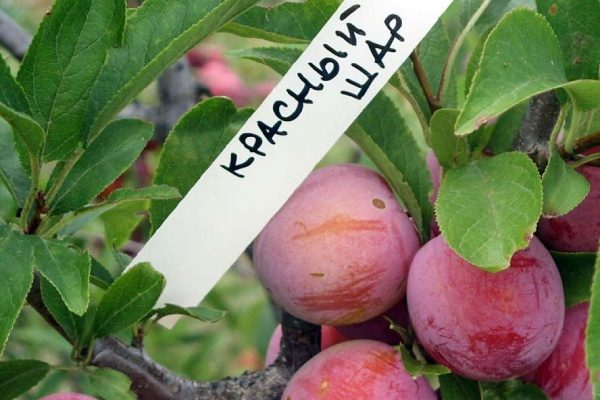
Red Ball is the name of an early-ripening variety of Chinese plum (Juiling, Kitayka). Domestic gardeners love it for its large fruits, beautiful appearance, and pleasant taste, as well as its excellent shelf life and transportability. Its popularity is also due to the trees' increased ornamental value, hardiness, and frost resistance.
History of selection
A varietal variety of Chinese plum was developed in the 1980s by staff at the All-Russian Scientific Research Institute of Horticulture and Fruit Growing. The authorship belongs to Russian breeders:
- H. K. Yenikeev;
- S. N. Satarova.
Scientists crossed the Chinese-American Burbank plum with the Ussuri Red plum. The result was a fairly winter-hardy, high-yielding variety, Julingki, adapted for cultivation in the climate of the country's central regions. It was added to the state register in 1989.
The appearance of the tree
The Red Ball plum variety is medium-sized and compact. Its external characteristics include:
- trunk height - 2.5-3.5 m;
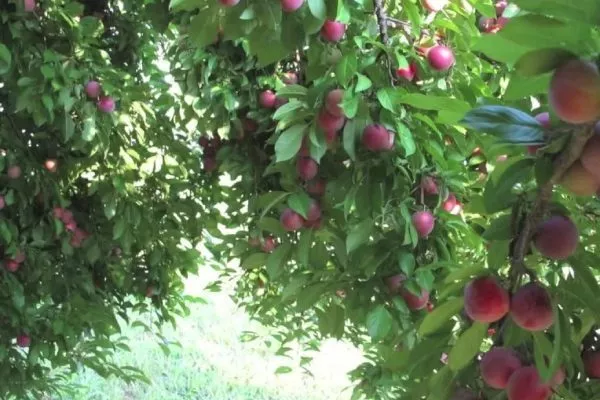
- rounded, drooping crown, quite spreading, of medium density;
- smooth, brown-brown bark covering the trunk and skeletal branches;
- large green foliage with a matte surface;
- flowers are pink or white, numerous.
A plum tree in full bloom is incredibly beautiful. Its crown resembles a fragrant white-and-pink globe, so densely dotted are its delicate flowers. They completely conceal the branches. Due to its exceptional ornamental value, this variety is widely used in landscape design.
Fruits and their taste characteristics
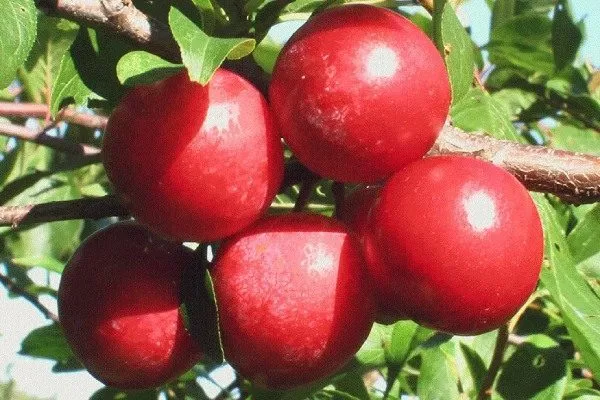
The Red Ball Juling bears fruit on one-year-old shoots and bouquet branches. Its harvest is attractive and fully lives up to its name. The fruit description includes the following characteristics:
- large size;
- weight - 40 g;
- correct spherical shape;
- bright red (raspberry) skin with a bluish coating;
- yellow fibrous pulp, slightly loose, filled with a large amount of juice, very aromatic;
- a small stone that is difficult to separate from the pulp.
The flavor of this variety's Chinese apples is pleasant, combining sweetness with a refreshing tartness. The tasting score is 4 out of 5.
Characteristics
The Red Ball, like other varieties of Julingka, has a number of characteristics that distinguish it from the common garden plum:
- abundant early flowering;
- the small height of the tree makes it easier to care for and harvest;
- increased decorativeness;
- large-fruited;
- fibrous texture of the fruit pulp;
- their extreme juiciness and rich aroma;
- the rich vitamin content of fruits and their healing properties;
- excellent yield;
- relatively short lifespan, which does not exceed 15-20 years;
- good cold resistance;
- average or above average resistance to diseases, in particular to fungal infections;
- tendency to damping off;
- shelf life and transportability of the crop.
In addition, Chinese trees are well adapted to various climatic conditions, making its varieties very popular among gardeners in Russia, Ukraine, and Moldova.
Beneficial properties
Juling plum is a source of many substances beneficial for human health:
- vitamins (C, B group, A, E, PP);
- minerals, particularly potassium and calcium;
- fruit acids;
- flavanols;
- antioxidants;
- fiber, in particular pectin.
Eating fresh Red Ball fruit helps strengthen the immune system, improve health, and increase vitality. Including them in your daily diet will provide numerous other healing benefits:
- improve your metabolism and support brain activity thanks to the phosphorus, sulfur, and chlorine contained in the pulp of the Chinese cabbage;
- Increase your body's defenses against viruses and improve your sleep thanks to the abundance of vitamins C and B in plums;
- strengthen your nervous system, heart, and bone tissue thanks to the presence of magnesium, potassium, and calcium in the fruit;
- restore the condition of your skin, nails and hair, thanks to the presence of zinc, iron and vitamin E in plums;
- You will normalize the digestive process and get rid of constipation thanks to the abundance of fiber in plum pulp.
Drought resistance, frost resistance
The Red Ball variety delights gardeners with its hardiness. Its trees are drought-resistant, easily surviving severe frosts down to -45°C. The fruit buds have satisfactory winter hardiness.
Due to the very early flowering, the buds are often damaged by frost and fall off, which affects the crop's yield. The Chinese variety tolerates frost better than thaws. Short-term warm spells and temperature fluctuations in winter increase the risk of frost damage.
Plum pollinators
The Julingka variety is almost completely self-sterile. Without nearby pollinators, you risk failing to produce a harvest. A typical domestic plum tree is unsuitable for this purpose. To ensure abundant fruit production, grow the following fruit crops nearby:
- Chinese plum of other varieties (Ksenia, Skoroplodnaya, Superior, Alyonushka);
- hybrid cherry plums like Zlata Scythov and Kuban Comet.
Productivity and fruiting
The Red Ball is an early-ripening garden plum variety. The first fruits ripen by the end of June. The harvest begins in August. Trees reach 2-3 years of age. A mature Chinese plum tree produces 18-20 kg of fruit per season.
Application of plums
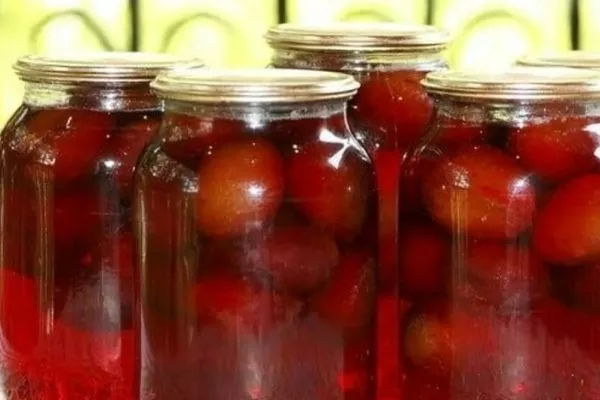
The varietal variety of julingka is considered a table fruit. Its fruits are suitable for both fresh consumption and processing. Homemakers use the Red Ball harvest in the following ways:
- plums are used to make compote, jam, preserves, pastilles, and jelly;
- they make juice, liqueur, and wine from them;
- used as a filling for pies, pastries, and other pastry products;
- added to summer desserts such as fruit salads;
- canned.
Resistance to diseases and pests
This variety boasts good immunity. Its trees are resistant to gummosis, clasterosporium leaf spot, and moniliosis. Other diseases require preventative crown treatments. Without this, plums can be susceptible to fruit rot, rust, and milky spot.
The Chinese variety is susceptible to insect attacks. If agricultural practices are not followed, it is actively attacked by pests:
- plum aphid;
- codling moth;
- plum codling moth.
Transportability and shelf life
The Red Ball harvest is characterized by excellent shelf life. The fruits retain their marketable appearance and excellent flavor for several weeks to two months when stored in the refrigerator or cellar. Their tough skin makes them easy to transport, and they withstand long-distance shipping well.
Landing features
Plant Chinese plum trees in your garden correctly, following the recommendations of experienced gardeners. Proper planting practices will determine whether the tree will thrive in your garden, grow quickly, and begin bearing fruit.
Recommended timeframes
You can plant grafted Red Ball seedlings in spring or fall. In central Russia, this is best done in April, before the buds open; in the south, in autumn.
How to choose a site for planting?
When choosing a location in your garden to grow julingka, choose a site with the following characteristics:
- sunny (Chinese plum does not grow and bear fruit well in shady areas);
- having protection from gusty winds and drafts;
- located on a hill (this could be a homemade embankment);
- not prone to flooding, with groundwater depth of 1.5 m;
- with well-drained soil, loose, fertile, not saline, characterized by neutral acidity (pH 6.5-7.5).
Prepare the selected site for planting the plum tree in advance. In the fall, carry out the following activities:
- dig the soil to a depth of 30-40 cm;
- clear it of stones, weeds and their roots;
- fertilize with compost or humus.
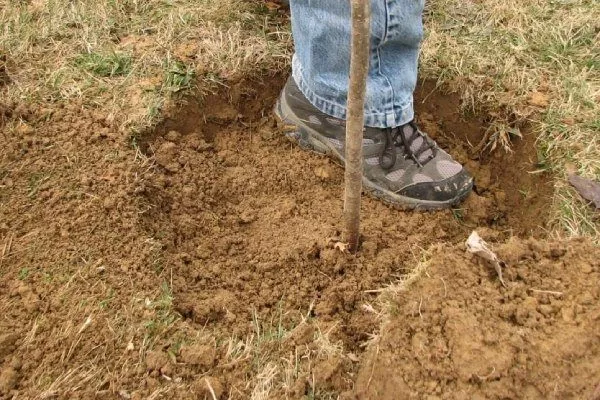
Dig a planting hole. Its depth and diameter should be twice the root mass of the seedling. Optimal dimensions are 50 x 60-80 cm. If you plan to plant julingka in groups, maintain a distance of 2.5 m between holes. Leave 3 m between plum rows.
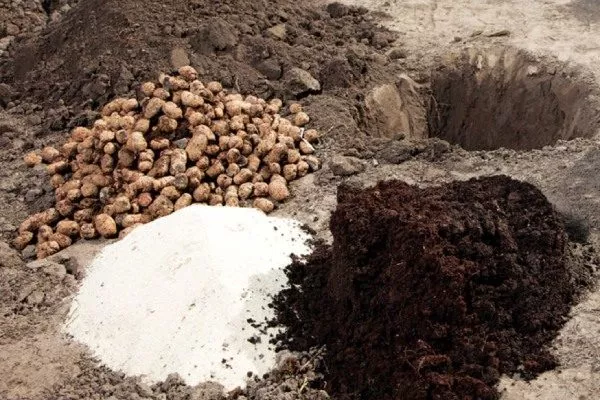
Partially fill the planting hole with nutrient-rich potting soil, piling it up into a mound. To make the filler, combine the following ingredients:
- top (fertile) soil layer;
- humus;
- Superphosphate (200 g per 1 hole);
- wood ash (500 g).
What crops can and cannot be planted next to each other?
Cherry plums and any other Chinese plum make good companions for the Red Ball tree. They will ensure abundant fruit production. It will benefit from proximity to cherries, black currants, raspberries, and gooseberries. Elderberry nearby will protect it from aphids.
Do not grow julingku near fruit trees:
- pear;
- apricot;
- peach;
- common plum (western varieties of garden crops do not get along with eastern ones).
Nightshades are also bad neighbors for plum trees. Avoid planting tomatoes, peppers, eggplants, and potatoes near them.
Signs of healthy seedlings and preparation of planting material
Purchase Red Ball planting stock from a reputable nursery. Choose a seedling with a well-developed root system and healthy leaves.
When choosing, focus on the tree's appearance. It should have the following characteristics:
- be one or two years old;
- height from 1-1.3 m;
- healthy, without signs of rot or drying out;
- with a trunk thickness of at least 2 cm;
- with vaccination;
- with light roots without spots or damage.
Planting sequence
Plant the Red Ball Chinese plum tree step by step:
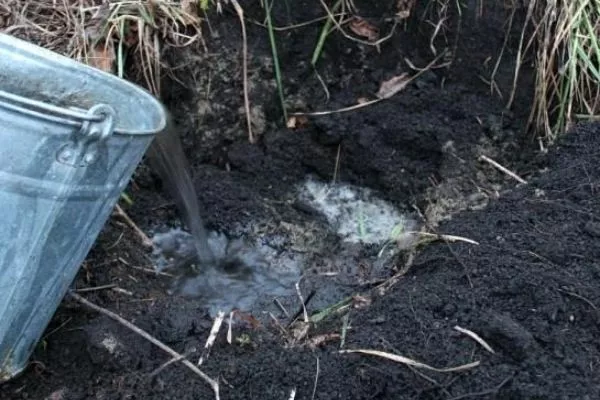
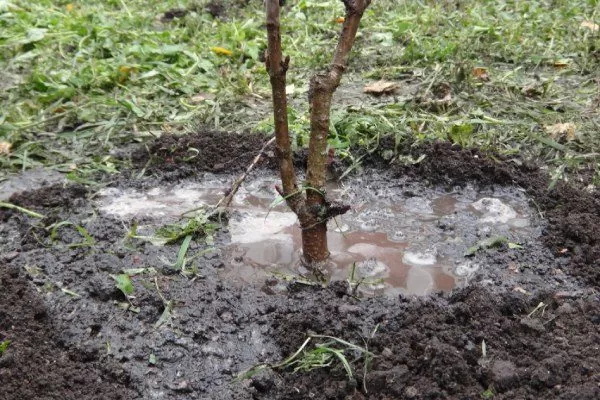
- Water the hole generously. Wait until the water is absorbed into the soil.

- Place the seedling on a mound of nutritious soil mixture.
- Cover its roots with soil. The root collar of the tree should be above the ground. Tamp the soil around the trunk.
- Create a mound of soil around the edge of the tree's trunk to retain water during watering. Water the seedling again.
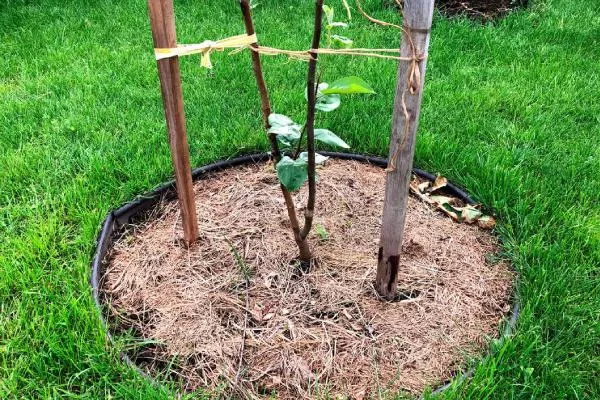
- Tie it to a wooden stake. Mulch the soil under the plum tree with peat or humus.
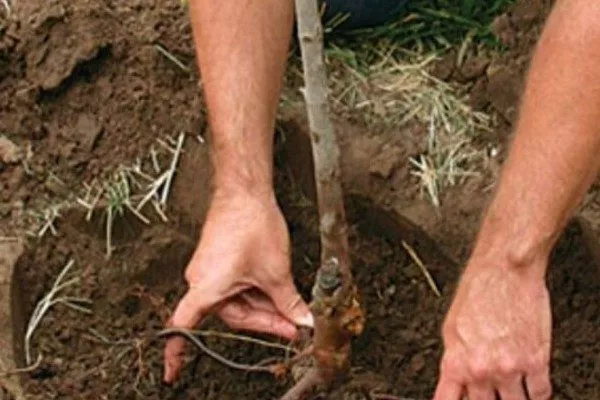
- ✓ The seedling planting depth should be such that the root collar is 3-5 cm above the soil level.
- ✓ The distance between seedlings should be at least 2.5 m to ensure sufficient space for the root system to grow.
How to care for the plum tree further?
Provide your Chinese plum with proper care so that it grows strong, healthy, and resilient, producing abundant fruit on time.
Pruning and crown shaping
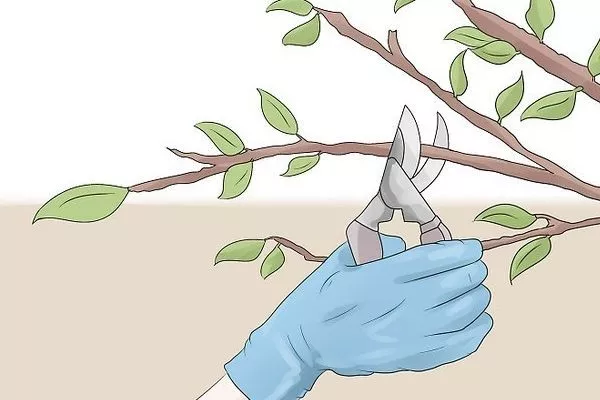
The Red Ball Juling plum tree requires careful formative and sanitary pruning. Shorten the main shoot of the seedling immediately after planting. For the next 2-3 years, do not prune the young plum tree; remove only dead and broken branches.
Once the tree has sufficient branches, prune them by 2/3 of their length. Ensure that the buds on the remaining shoots do not project into the crown. Give it a cup-shaped form. Prune the plum tree after harvesting. Thin out the crown to reduce the risk of disease and pest infestation.
Perform sanitary pruning annually. This involves removing unproductive shoots from the Chinese orchid:
- dried up;
- frozen;
- sick;
- affected by pests;
- deformed;
- broken.
Watering plum trees
During the season, the fruit crop requires at least 3 waterings, carried out at the following times:
- until the buds open;
- 14-20 days after flowering;
- 14-20 days before removing ripe fruits from the branches.
Observe the water consumption rate, which varies depending on the age of the tree:
- up to 5 years - 80 l;
- from 5 to 10 years old - 150 l;
- more than 10 years - 200 l.
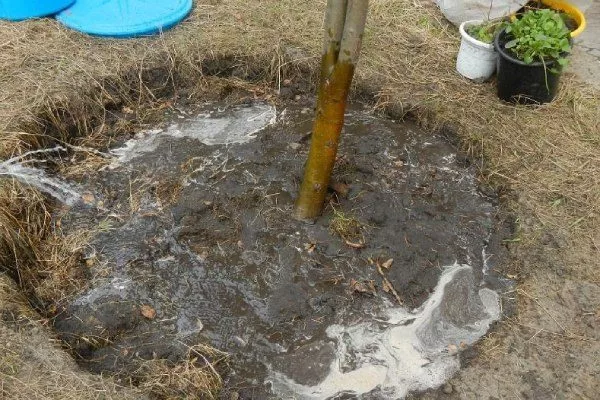
Use warm, settled water to water your plum tree. Do this in the morning or after sunset. After the soil has absorbed the moisture, it's a good idea to gently loosen it and cover it with a layer of mulch.
Fertilizers and dressings
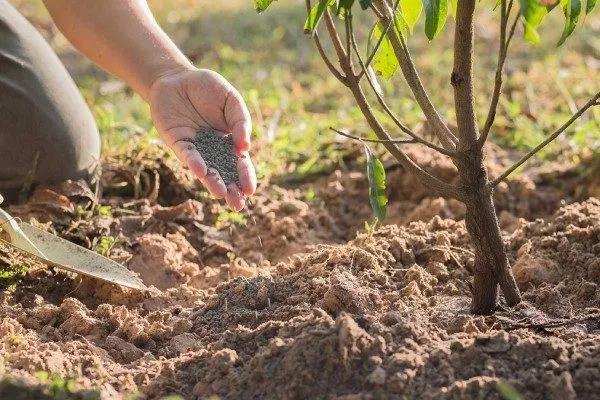
Start fertilizing your plum tree in its second year. Apply nutrient mixtures three times during the season, following this schedule:
- During flowering time Use urea and potassium sulfate. Dissolve 24 g of each fertilizer in 10 liters of water. Use 30 liters of fertilizer per trunk.
- At the moment of fruit ripening Water the plum tree with a urea solution (24 g per 10 liters of water) with nitrophoska (45 g) added. The recommended application rate is 20 liters per tree.
- After harvesting Feed the fruit crop with a superphosphate solution (51 g per 10 l) enriched with potassium sulfate (24 g). Use 40 l of nutrient solution per plant.
Caring for the tree trunk circle
Don't forget to periodically loosen the soil beneath your plum tree. This will make the soil lighter and more permeable to air and moisture.
Don't neglect weeding. Remove weeds as they appear. They harbor fungal spores, pathogens, and insect pests.
Preparing the Red Ball plum for winter
The Chinese plum cultivar is renowned for its good winter hardiness, but it is susceptible to damage from frosts returning after a thaw. Mature plums overwinter in southern and temperate climates without shelter.
Young seedlings and trees growing in regions with harsh winters require protection from the cold:
- wrap the trunk with non-woven material;
- mulch the soil in the area around the tree trunk with organic matter (mulch layer thickness - 10-15 cm).
Protecting plum trees from rodents
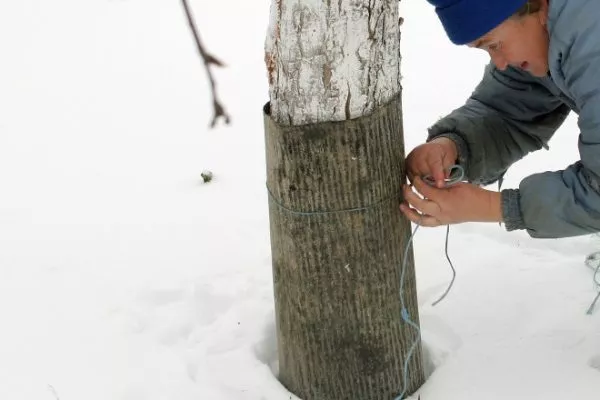
The most common and affordable way to protect the trunk of a fruit tree from rodents is to wrap the tree and low-lying skeletal shoots in autumn with natural materials:
- spruce branches with needles facing down;
- juniper branches;
- fruiting raspberry shoots.
Spring care for plum trees
Spring care for plums involves the following mandatory procedures:
- sanitary pruning;
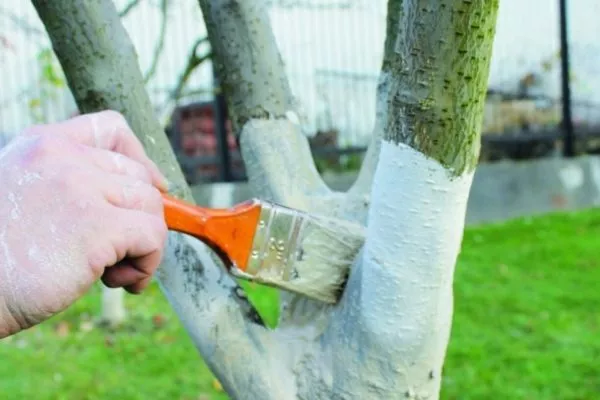
- preventive treatment of wood against infections and pests;
- application of fertilizers.
Carry out your first gardening work in early spring, immediately after the snow melts and the ground thaws. Begin by clearing the plum tree's trunk of accumulated plant debris. Collect this debris and remove it from the site. This debris can harbor pathogens of various diseases.
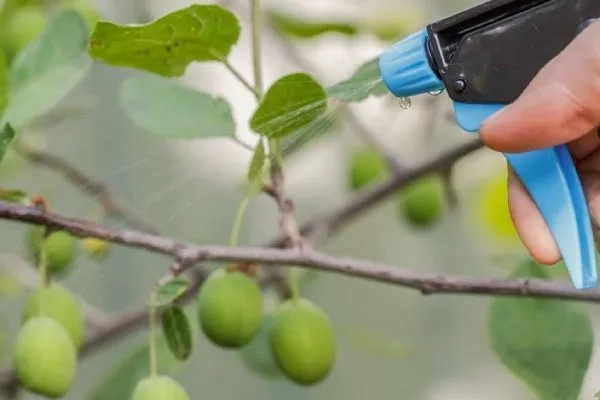
Then, begin pruning frost-damaged branches. Don't neglect fungicide and insecticide treatments. Use Fufanon, Skor, Horus, copper sulfate, and the insecticide Aktara. This will prevent plum diseases in the summer. Apply urea and potassium sulfate during flowering.
Methods of control and prevention of diseases and parasites
With proper care, the Red Ball plum rarely gets sick or is pest-free. Under unfavorable growing conditions, it can be susceptible to fruit rot, rust, and pests such as plum aphids, codling moths, leaf rollers, and sawflies.
To prevent diseases and pests, spray the crown of your succulent plant with fungicides and insecticides. Apply the following treatments four times per season:
- Before the buds open in the spring, use Bordeaux mixture with a concentration of 3%, and carry out the treatment immediately after the arrival of spring warmth;
- when buds appear, spray the plum with Fufanon;
- After the Chinese orchid has finished flowering, treat the crown again with Fufanon, and after 24 hours - with Bordeaux mixture at a concentration of 1%;
- After harvesting, repeat the treatment with Fufanon and Bordeaux mixture (1%).
Inspect plum trees periodically. When the first signs of disease or pest infestation are detected, treat with fungicides and insecticides.
To prevent succulent plant diseases and attacks by harmful insects, also carry out other preventive measures:
- Get rid of weeds in the tree trunk area in a timely manner;
- remove plant debris from under the tree and burn it outside the garden area;
- Perform sanitary pruning of the plum tree annually;
- fertilize it;
- water the tree properly;
- Use iron sulfate (1%) to prevent fungal infections of plums.
Harvesting the Red Ball plum
Harvest the fruit as it ripens. Remember that overripe plums quickly fall from the tree. Pick rotten fruit and store it in a separate container. These will need to be destroyed to prevent infection. Harvest healthy plums carefully, without damaging the waxy layer.
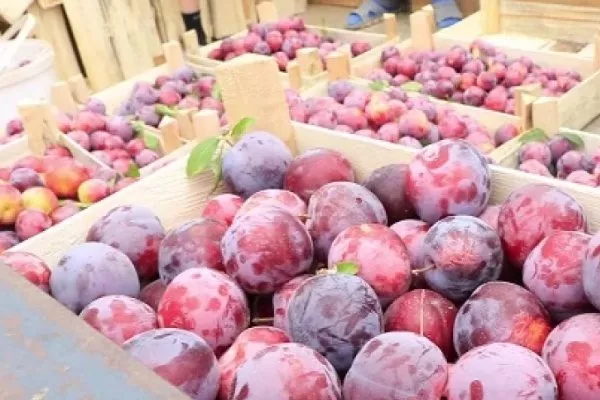
Remove plums intended for long-term storage or sale from the branch, stem included. This method will help the plums stay firm, juicy, and delicious longer. Place them in a box in 3-4 layers, interleaving each layer with parchment paper.
Storage of fruits
Store the harvest in the refrigerator. It will stay fresh for several weeks in the crisper drawer. At room temperature, plums will last no more than 5-7 days.
Methods of reproduction
Propagate the Chinese plum Red Ball in one of the following ways:
- Sowing seedsRemove the pits from ripe fruits. Wash them, soak them in water for 2-3 days, then dry. Stratify the pits before planting. Plant them in the garden at the end of April, spacing the holes 10 cm apart.
- By vaccinationUse a one-year-old cherry plum or Chinese plum seedling as a rootstock. Cut the grafting shoot from a Red Ball tree. Graft it in April or May.
- Root shootsIn the fall, cut the root connecting the shoot to the parent tree. In the spring, dig it up and transplant it to a new location.
- Root cuttingsIn spring, dig up the soil 1 m from the julingka trunk. Expose its roots to collect root cuttings. These should be 1.5 cm thick and at least 15 cm long. In early May, plant them in garden soil mixed with sand and peat. Water the planting site and cover with plastic wrap.
The seedlings will need to be watered and fed with slurry. When they reach 1.5 meters in height, transplant them to their permanent location.
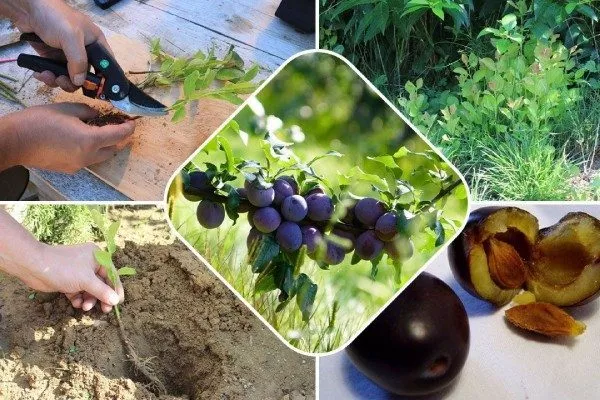
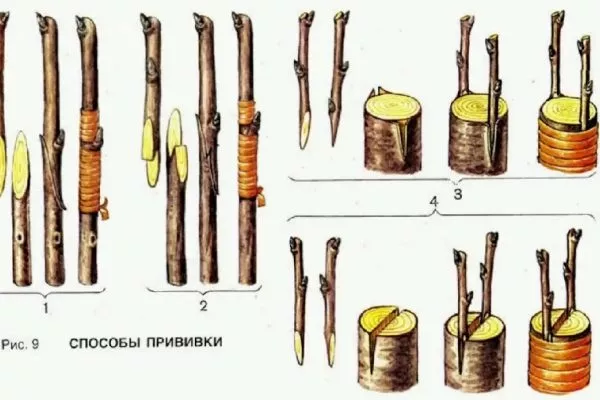
Experienced gardeners prefer to propagate julingka by grafting. They grow the rootstock themselves from a seed. After 1-2 years, they graft a cultivar onto this seedling. The easiest way to do this is by cleft grafting. Perform this procedure in the spring, when the sap is actively flowing.
Follow these steps:
- Cut the stem of the seedling at a height of 10-15 cm from the ground.
- Cut it lengthwise to a depth of 2 cm.
- Cut a scion from the Chinese tree - a branch with 2-3 buds.
- Use a knife to sharpen its lower end into a wedge shape.
- Insert the scion wedge into the rootstock cleft. Wrap the graft site with film.
Positive and negative qualities
The Chinese Red Ball is popular among domestic gardeners due to its numerous advantages:
The variety is not without its drawbacks:
Reviews
The Chinese plum "Red Ball" is beloved by Russian gardeners for its decorative qualities, cold resistance, early fruiting, beautiful fruit appearance, and pleasant flavor. This variety requires quite a bit of care, but strict adherence to proper fruit cultivation practices is key to maintaining the tree's health and producing a bountiful harvest of healthy fruits.