
The Konfetnaya plum is a domestically bred variety with delicious, "marmalade-like" fruits. This early-ripening and easy-to-grow variety is very popular, making it a common sight in gardens, homesteads, and dachas.
Who and when developed the Konfetnaya plum?
The Konfetnaya plum was developed by Russian breeders at the I.V. Michurin All-Russian Research Institute of Hydrogeology and Plant Protection. Author: Doctor of Agricultural Sciences G.A. Kursakov. The variety was developed for the Central region, but can also be grown in the northern regions and the Urals.
Description of the tree
The plum tree is fairly low-growing, considered medium-sized, reaching 2.5-3 meters in height. Its crown is spreading, rounded to oval. Through training, it can be shaped into a bush or standard tree.
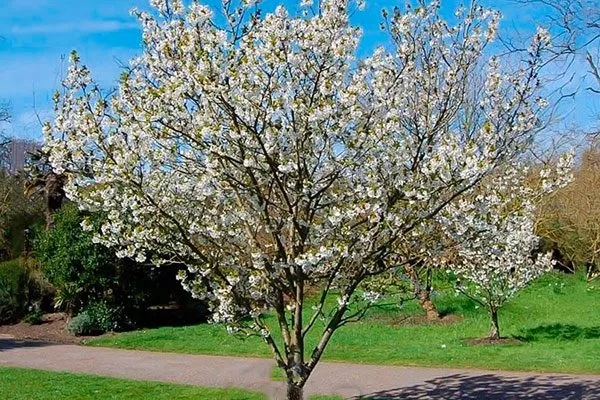
The shoots are erect, strong, and brownish-gray. The foliage is medium, with bright emerald leaves, small, oval-elongated, and lacy. The root system is shallow and superficial. The flowers are small, white, and fragrant. The inflorescences are very lush, abundantly covering the tree's crown.
Fruit
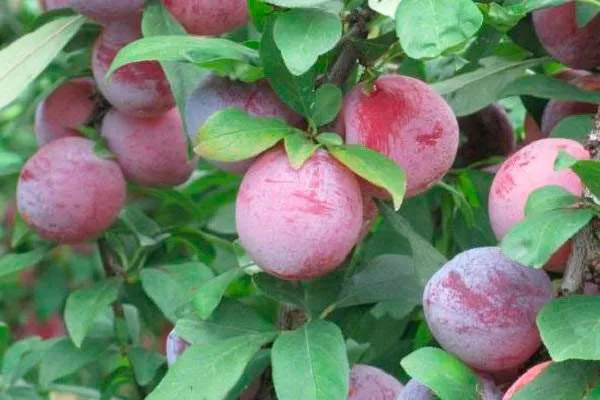
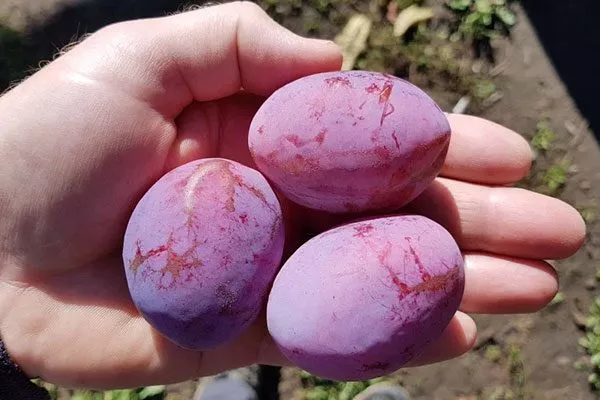
The Konfetnaya plum's fruits are small and perfectly smooth. They have small stones that separate easily from the pulp.
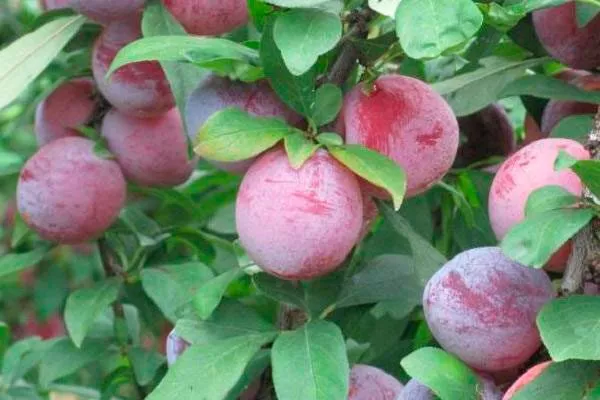
Description of fruits:
- weight - 30-35 g;
- shape - round;
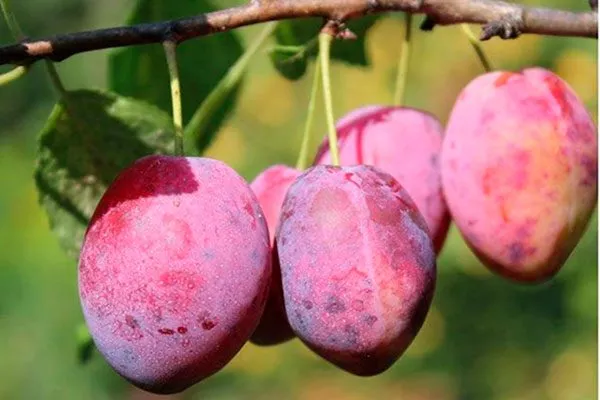
- the peel is thin, shiny and has a waxy coating;
- peduncles - medium-elongated;
- the bones are small and elongated;
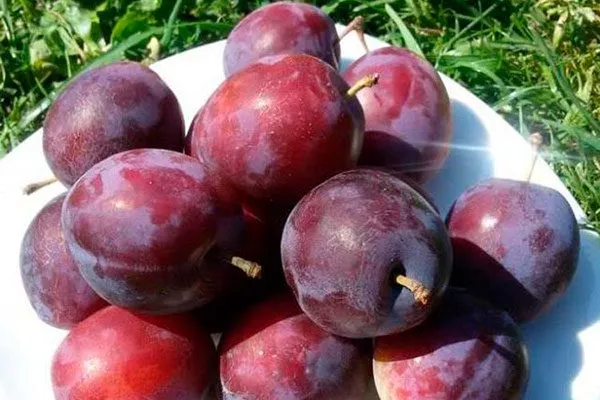
- color - greenish-yellow at the ripening stage, ripe fruits become dark red with a purple tint or lilac-red, the bloom gives them a slight silvery tint;
- The pulp is yellow-amber, jelly-like, tender and juicy, moderately dense.
Taste and purpose
The fruit has a sweet, marmalade-like, and very rich flavor. Tasters rate it a 5 out of 5. The aroma is pleasant and dessert-like.
Characteristics
The Konfetnaya plum is an early variety and is self-sterile. It requires pollinators. The best choices are the Kolkhoz Renklod and the Zarechnaya Rannaya.
This variety has good winter hardiness and disease resistance, and begins bearing fruit in the fourth year after planting. The plum tree blooms in early May.
Fruiting occurs annually, without interruption. Ripening occurs in the third ten days of July (the exact timing depends on regional climate conditions). The fruits ripen simultaneously and may fall off when ripe. Yield is 20-25 kg per tree.
Pros and cons
The Konfetnaya plum's main advantage is its excellent flavor, which tasters have praised. However, it does have some drawbacks, which amateur gardeners should be aware of before planting.
How to plant a Konfetnaya plum?
Planting can be done in either spring or fall. However, the latter option is only suitable for southern regions; fall planting is not recommended in areas with harsh winters.
Landing features:
- It is recommended to use 1-2 year old seedlings for planting.
- For planting, choose a spacious, well-lit area without drafts or gusty winds.
- The maximum height of groundwater is 1.2-1.5 m.
- The best neighbors are fruit and berry bushes. Plums can be planted next to raspberries, gooseberries, and currants. Undesirable neighbors include birch and poplar. Leave at least 3-4 meters between them and adjacent plantings.
- Any soil is suitable, but the Konfetnaya plum grows best in fertile, loose loams and sandy chernozems. The soil should be slightly acidic or neutral; it does not thrive in acidic soils.
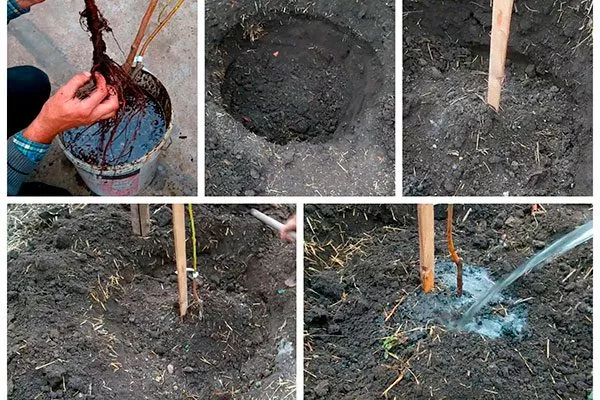
- To plant, dig a hole measuring 70 x 60 cm. Add a drainage layer of gravel, crushed rock, etc. to the bottom. Top with a nutritious soil mixture made from the topsoil mixed with fertilizers such as peat, humus, and superphosphate.
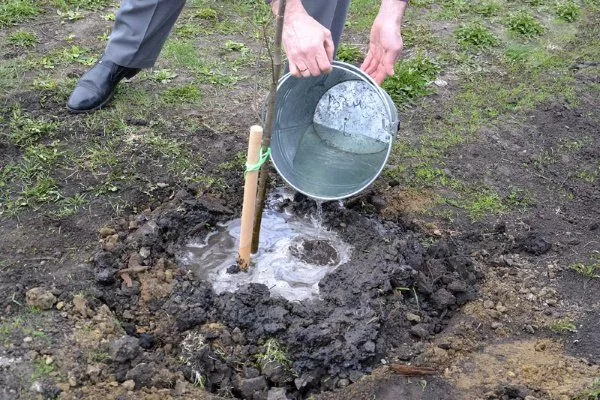
- The seedling is prepared for planting by soaking its roots in water or a growth stimulant for 24 hours. The tree is placed in the hole on a mound of earth, and the roots are carefully spread out. The root collar should be 3-4 cm above ground level after planting. After planting, the soil is compacted, watered, and mulched with peat.
How to care?
To obtain a good harvest from the Konfetnaya plum, certain care is required. The tree must be watered, pruned, sprayed, prepared for winter, and undergo other standard agricultural practices.
Care features:
- A planted seedling is watered weekly (if the weather is favorable). In hot weather, every 2-3 days; in damp weather, once every 2 weeks. A mature tree needs to be watered much less frequently—3-5 times throughout the season.

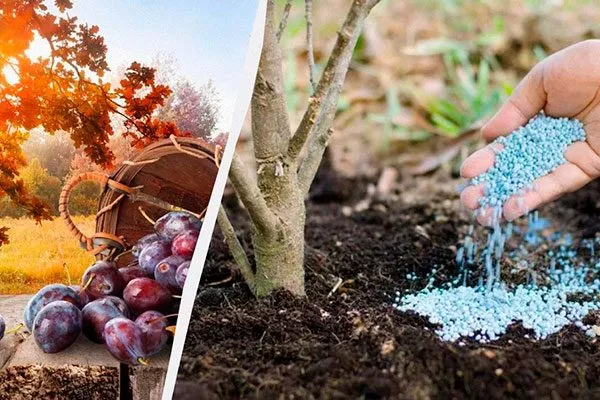
Use warm, settled water for irrigation. The recommended watering rate for a seedling is 20-30 days, and for a mature plum tree, 80-100 liters. The soil should be soaked to a depth of 40-50 cm. Watering is especially important during flowering and fruit formation. - During the first two years, plum trees don't need fertilization; the young trees thrive on the nutrients added at planting. Subsequently, fertilize 3-4 times per season. In the spring, apply urea, ammonium nitrate, or other nitrogen compounds. During flowering and fruit formation, the tree is fed with potassium salts, superphosphate, or wood ash.
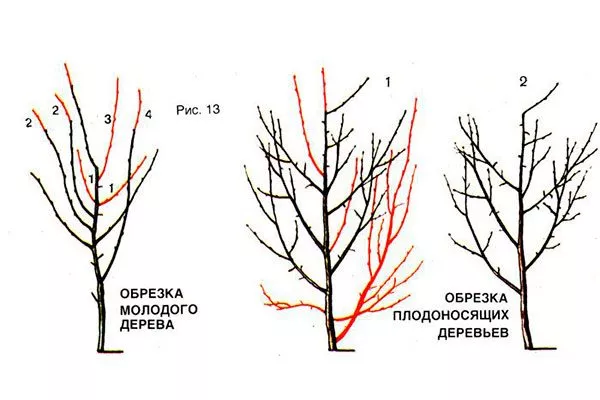
- In spring and fall, sanitary pruning is performed. All dry, broken, and frozen branches are removed. In spring, the crown is shaped.
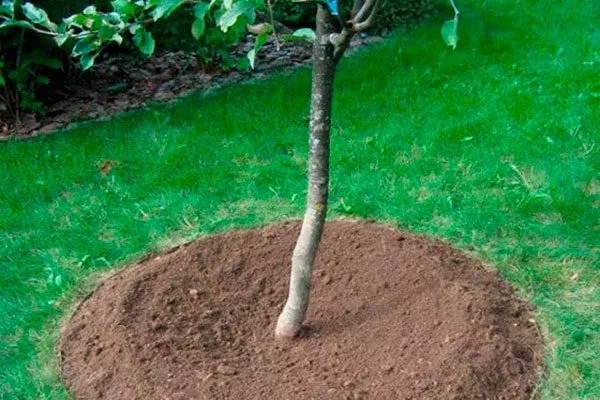
- Once every 4 years, the tree trunk circle is thoroughly dug up (but not too deeply, so as not to damage the surface roots), adding compost during the digging.
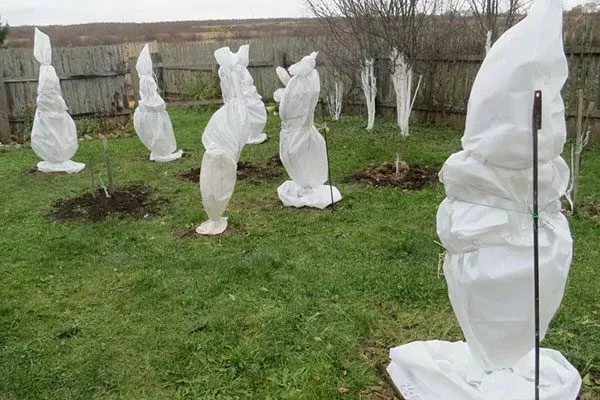
- In regions with frosty winters, cover the tree with agrofibre. Spruce branches or burlap can also be used. The area around the trunk is mulched with a thick layer of humus or peat. Avoid using polyethylene or other materials that do not allow water and air to pass through.
It is important to regularly remove root shoots, weed, and loosen the soil around the tree trunks to ensure oxygen reaches the roots.
Pest and disease control
The Konfetnaya plum is quite resistant to diseases and pests. To prevent them, a number of preventative measures are necessary.
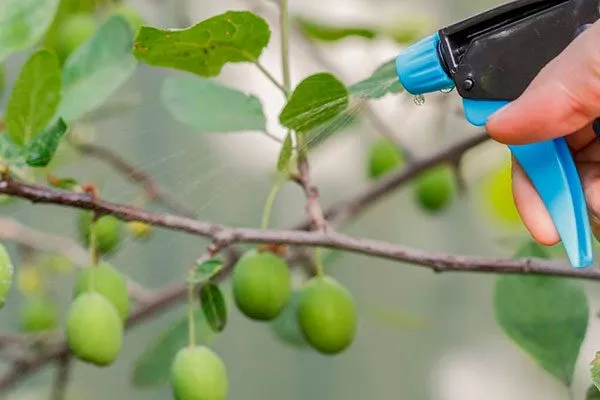
The following preventive measures are recommended:
- Regularly trim all damaged branches and remove plant debris from the trunk area.
- Whiten the trunk and skeletal branches to prevent sunburn and pest attacks.
- Spray the crown with fungicides in early spring and autumn for preventive purposes.
Despite its good immunity, the Konfetnaya plum can be affected by some diseases and pests under unfavorable circumstances.
Most often, the Konfetnaya variety faces the following problems:
- Moniliosis. This fungal disease causes browning and softening of fruits, leaves, and shoots. Nitrofen is used for treatment.
- ClusterosporiasisIt is accompanied by the appearance of brown spots on the leaves and deformed fruits. It is treated by spraying the tree with Bordeaux mixture.
- Codling mothThe caterpillars of this butterfly attack fruits, boring into them and eating away the pulp. Chlorophos is used to kill the pests.
- Plum aphid. It settles on the undersides of leaves, which curl and dry out. Spraying with Karbofos is recommended for treating the tree.
Harvesting
Plums are harvested when they reach the appropriate size for the variety, become covered with a waxy coating, and begin to separate easily from the branches. If the fruit is left unharvested for too long, they will begin to fall off. Plums must be picked carefully, without squeezing or damaging the waxy coating, otherwise they can quickly spoil.
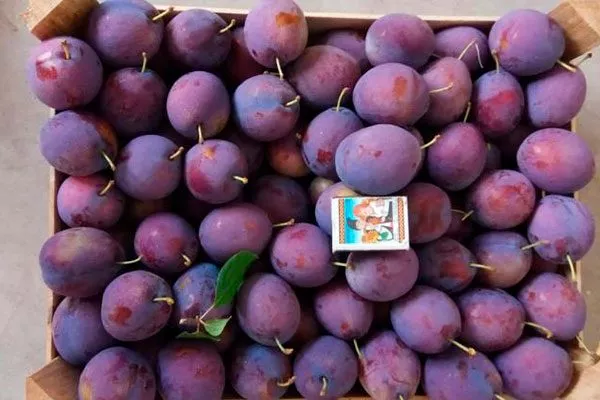
Harvested plums, regardless of their intended use, are placed in paper-lined crates or boxes. The maximum number of layers is 3-4. Plums can be stored in a cellar, refrigerator, or frozen.
Reviews
The Konfetnaya plum is a well-known and proven variety with unique flavor. This "marmalade" plum will be a worthy addition to any garden or summer cottage. However, it is definitely not suitable for long-distance transportation, which should be taken into account when growing plums for sale.