
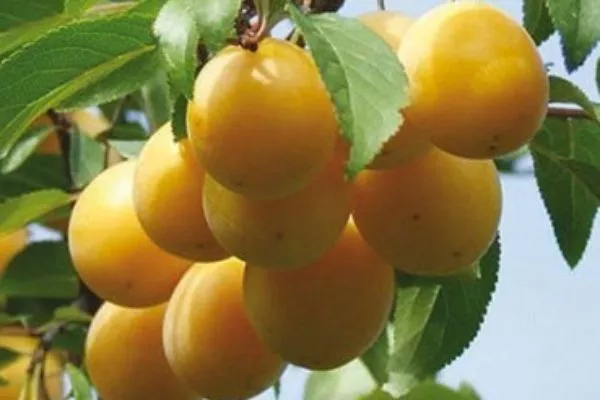
Svetlana is the name of a yellow-fruited, late-ripening plum variety that has been in cultivation for 50 years. Domestic gardeners have come to love it for its excellent yield, attractive fruit appearance, wonderful dessert flavor, good shelf life, and easy transportability. It is very popular in the Samara region, but is also found in many other regions of the country.
History of origin
The Svetlana fruit variety was born in 1973 thanks to the efforts of Samara breeders and employees of the Zhiguli Gardens Research Institute of Horticulture and Medicinal Plants:
- Minina A. N.;
- Ivanova P. P.;
- Tyuzhina E. V.;
- Rykalina F. N.
After successfully passing variety trials in 2006, it was included in the Russian Federation State Register two years later (2008). It was approved for cultivation in the Middle Volga region.
Introduction to the variety
This plum variety is classified as a late-ripening variety. The fruits ripen in the last days of August. They are harvested in early September (the first week). Svetlana's other technical characteristics include the following:
- entering the fruiting age - starting from 5-6 years (young trees produce 15 kg of plums);
- average yield is 30 kg from 1 tree that has reached ten years of age;
- peak productivity is 12-15 years (trees produce up to 36 kg of fruit);
- self-sterility: for the Svetlana plum to bear fruit, it needs pollinator varieties of the same flowering period (Zhiguli, Pamyat Finaeva);
- high consumer qualities of the harvest;
- the shelf life and transportability of the fruits are average;
- the purpose of the crop is universal;
- excellent winter hardiness;
- drought resistance - average;
- the risk of contracting moniliosis in an epiphytotic year is increased;
- low resistance to codling moth infestation.
Description of the tree and fruits
This fruit crop is distinguished by its rapid growth rate. Svetlana's trees have the following characteristics:
- "height" - 2.5-3 m;
- medium-dense spreading crown;
- gray bark with a smooth surface covering the trunk and skeletal branches;
- medium-thick shoots, straight, bare, dark red in color;
- Foliage: elliptical in shape with a pointed tip and serrate-dentate margin, light green in colour, with a smooth and glossy surface, devoid of pubescence.
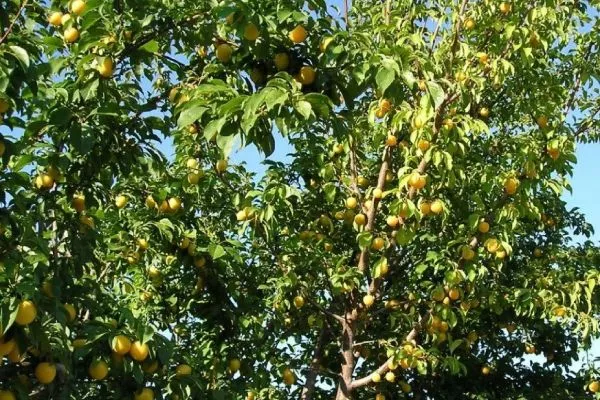
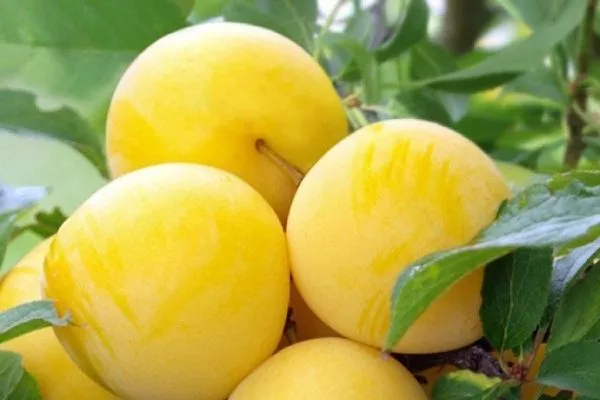
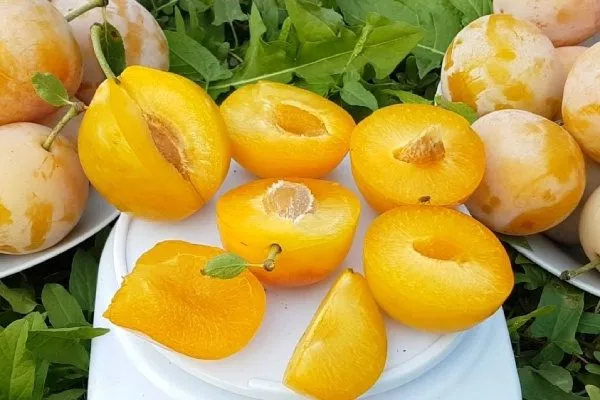
Svetlana's harvest is uniform and attractive. The fruits are medium-sized and rounded, irregular in shape, with a distinct, medium-deep ventral suture. They are attached to the branches by a short stalk that easily separates from the shoot. Other distinctive features include:
- weight - from 20.5 to 23 g (with enhanced agricultural technology and favorable growing conditions, the weight can reach 27-35 g);
- the color of the base and cover coat is yellow;
- the skin is medium-coarse with subcutaneous white dots, covered with a thick layer of waxy coating;
- the pulp is yellow, tender, abundantly saturated with juice;
- stone: medium in size, difficult to separate from the pulp.
Plums of this variety delight the eater with their pleasant flavor, which experts describe as dessert-like. It's predominantly sweet, with a distinct, refreshing tartness. The tasting score is 4.3 out of 5.
The remarkable taste of the fruit is due to the ratio of the main substances, the content of which in the pulp is as follows:
- sugars - 13.38%;
- acids - 1.58%;
- dry matter - 22.6%.
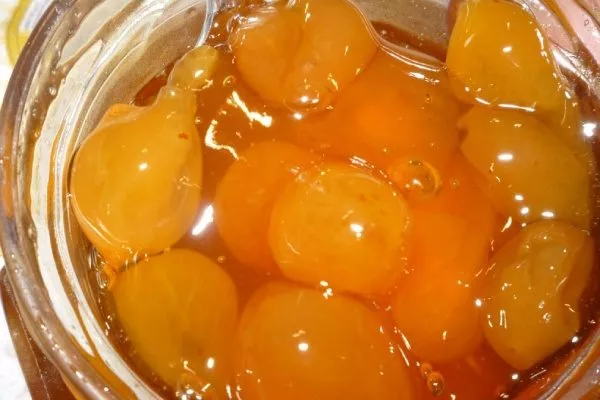
The fruits of this variety are eaten fresh, added to desserts and fruit salads, and used to make compotes, jams, marmalades, and confitures.
Plums make an excellent filling for pies and pastries. They are also suitable for processing into puree and juice for baby food and canning.
Beneficial properties
Plum is a healthy fruit, containing in its pulp many substances valuable for the health of the eater:
- vitamins (C, B group, A, E, PP);
- minerals, particularly potassium and calcium;
- fruit acids;
- flavonols;
- fiber, including pectin.
Svetlana's yellow fruits are rich in carotene and ascorbic acid (12.19 mg/100 g of pulp)—vitamins that help strengthen the immune system, increase the body's defenses against infections, relieve stress and nervous tension, and improve skin condition.
They also have other healing properties:
- removal of excess water and toxins from the body;
- restoration of water-salt balance;
- getting rid of edema;
- stimulating digestion, improving appetite;
- improving visual acuity;
- mild laxative effect;
- strengthening the heart and blood vessels;
- reduction of cholesterol plaques;
- improvement of the condition in arrhythmia, hypertension;
- prevention of thrombus formation;
- toning the body;
- recovery after illness (the product gives strength and energy).
Despite its health benefits, plums can also be harmful. They are contraindicated in people with stomach ulcers, acute gastritis, and pancreatitis. Plums are also not recommended for those with diabetes, obesity, gout, rheumatism, or kidney stones.
Healthy people should also avoid overindulging in this summer delicacy. Overeating can lead to poor health:
- bloating;
- diarrhea;
- intestinal colic.
Frost resistance characteristics
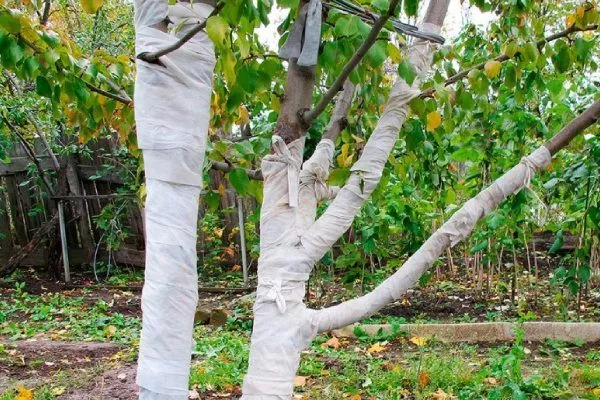
The variety is considered frost-hardy. Svetlana trees can withstand winter temperatures down to -25°C. The wood and flower buds are naturally cold-resistant. If properly prepared for winter, the plum tree can withstand temperatures as low as -30°C. Without protection, there is a risk of freezing to the snow line.
Svetlana's flower resistance to early spring frosts is average:
- inflorescences are able to withstand slight sub-zero temperatures (up to -2°C) for 3 hours without negative consequences;
- at frosts of -4°C up to 30% of buds are damaged;
- At -6°C the flowers fall off completely and the harvest is completely lost.
Landing
A fruit tree seedling purchased from a nursery must be planted correctly in your garden. If done correctly, the tree will quickly establish itself in its new location, begin to grow, and within five years, delight you with its first harvest.
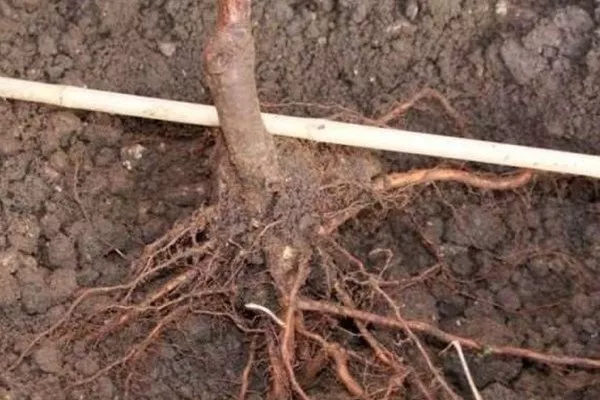
- ✓ Check the root system for rot and mechanical damage.
- ✓ Make sure the seedling has at least three well-developed branches.
Optimal timing
Plant yellow plum in the garden within the following timeframes:
- in the spring, from mid-April to May 20 (until the buds swell) - planting in cold climates;
- in the fall, from the second ten days of September to mid-October - in a warm and moderate climate, where the seedling can safely survive the winter.
Required soil
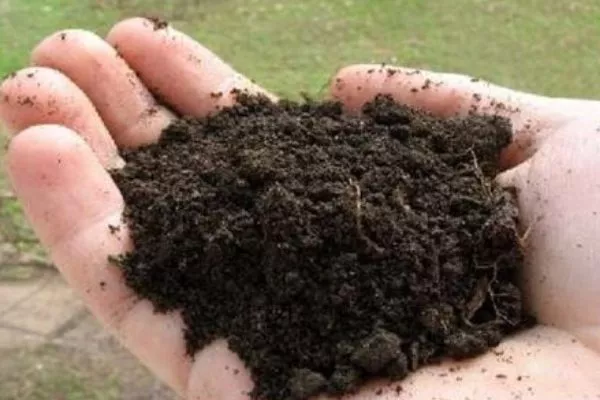
Grow the Svetlana fruit variety in a plot with normal-quality soil, preferably black soil or loam. It should be fertile, loose, well-drained, moderately moist, but not waterlogged. The soil should be neutral or slightly alkaline.
Size of the planting hole
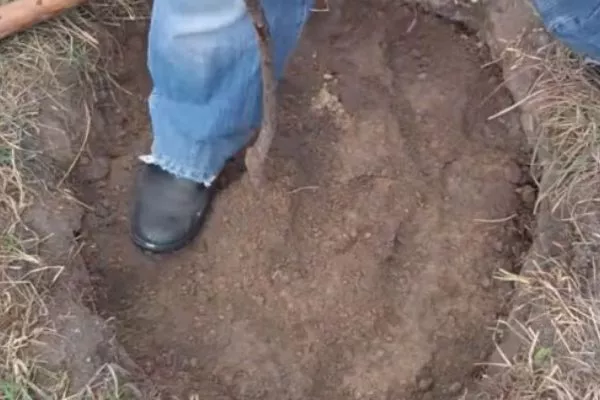
Plant the plum tree in a pre-prepared hole. The optimal dimensions are:
- depth - 50-60 cm;
- length - 60 cm;
- width - 60 cm.
Line the bottom of the planting hole with a 20 cm thick drainage layer. Use gravel or expanded clay. Top the drainage layer with garden soil (the top fertile layer) mixed with sand and clay in a ratio of 3:2:1. Add 300 g of superphosphate and ash to the soil mixture. Form a mound out of it.
Landing site and algorithm
Plums thrive in sunny garden areas. They produce their maximum yield only if they receive no more than 2-3 hours of shade per day. They do not tolerate drafts, gusty winds, marshy areas, or low-lying areas where damp, cold air stagnates. The groundwater level should be at least 1.5 meters.
Plant the Svetlana plum tree by following these step-by-step instructions:
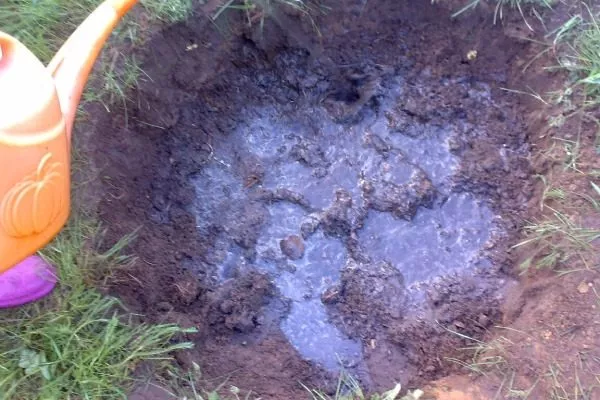
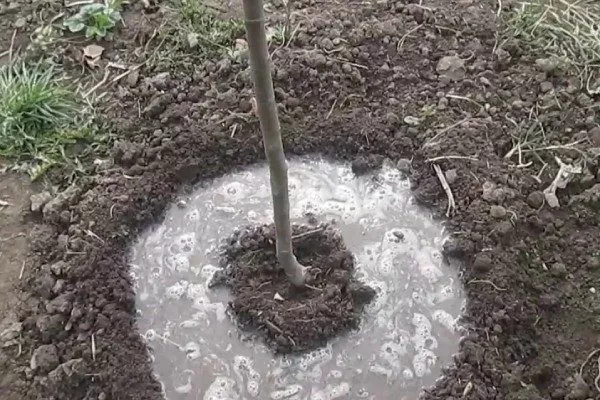
- Water the hole. Wait until the moisture is completely absorbed into the soil.

- Place the seedling on a mound formed from the soil mixture and fertilizer. Its root collar should be 3 cm above the ground.
- Fill the hole with garden soil. Firm it around the plum tree trunk, making sure there are no air pockets.
- Water the tree. Mulch the soil underneath with sawdust, straw, or peat.
Agricultural technology
Provide proper care for this yellow-fruited garden plant to grow a strong, healthy tree that produces abundant harvests. This includes watering, pruning, fertilizing, disease prevention and treatment, and pest control.
Watering
Water Svetlana's trees according to the following rules:
- irrigation frequency - at least 4 times per season (for adult plants);
- water consumption: 40-60 liters per 1 young tree, up to 100 liters per fruiting tree;
- moisten the soil to a depth of 40 cm;
- If the summer is dry, be sure to water the plum tree before flowering, during the formation of fruit ovaries and 3 weeks after the second watering, as well as during the ripening period of the harvest.
Trimming
Prune yellow plums according to the rules and advice of experienced gardeners:
- use a sharp instrument (it is advisable to disinfect it before use);
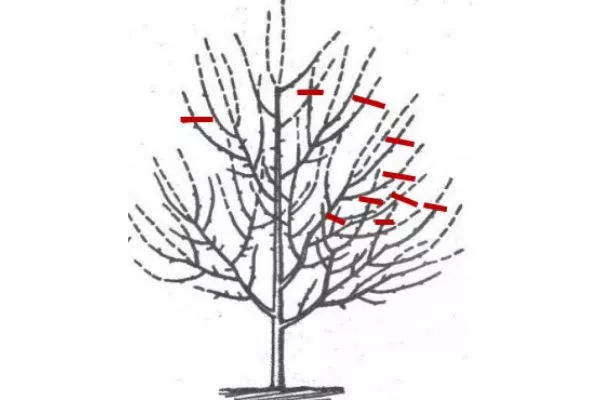
- shorten the branches to healthy tissue (the wood color will be white);
- cut the shoots to the outer bud;
- do not allow them to cross;
- remove each dead, weak and diseased shoot, cutting it off at the base to form a ring (the “cuttings” will need to be collected and burned away from the area);
- If a bud produces several shoots at once, leave one and remove the rest;
- try to make the cut even and smooth, do not leave any split stumps;
- At the end of the procedure, treat each cut with garden pitch.
Feeding step by step
The nutrients added to the planting hole will last the Svetlana variety for several years. Begin fertilizing the fruit tree when it's three years old. Apply the fertilizer in stages, following the following schedule:
- Fertilize the plum tree for the first time on May 10th.Water the roots with urea dissolved in water (40 g per 10 l). This amount of nutrient solution is enough for one tree.
It's best to apply the fertilizer into a trench dug around the trunk (measure the radius based on the size of the tree's crown). The trench should be 10-15 cm deep. First, water the trench with clean water, then add the fertilizer. Then, fill it with garden soil. - Carry out the second feeding in early June. Water the tree again with the urea solution (its concentration is the same as last time).
- Schedule the third fertilization for June 20th.Water the plum tree with a mineral solution containing nitrogen, phosphorus and potassium dissolved in water.
- Schedule the fourth feeding for the second half of August (15th-20th of the month). Incorporate powdered wood ash into the soil around the tree trunk. Use a hoe for ease of application. Apply 200 g of ash per square meter. Don't forget to water the plant afterward.
- Feed the plum tree for the fifth time at the end of September. Use a trench fertilizer application method. Apply monopotassium phosphate dissolved in water (60 g per 10 l).
Methods of reproduction
If you plan to propagate the Svetlana plum, do it in one of the following ways:
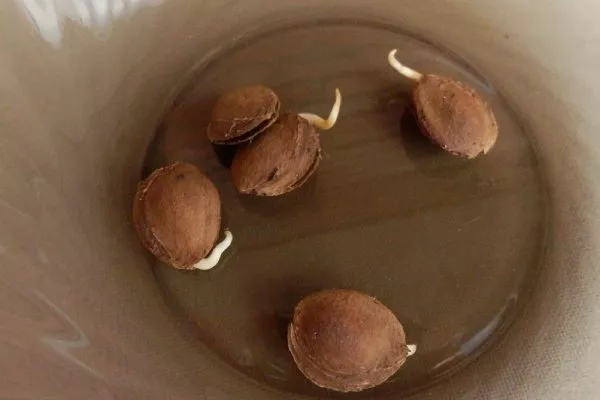
- SeedsRemove the pits from fully ripe, beautiful, and healthy fruits. Rinse them and soak them in water for 4 days. Then dry them. They will need to be stratified before planting. Plant them in the garden in the fall or in late April, spacing the holes 10 cm apart.
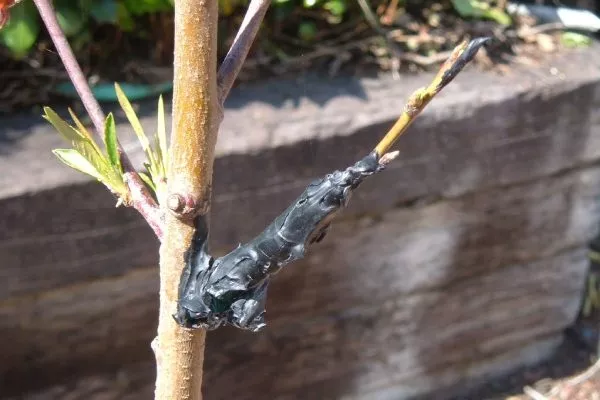
- By vaccinationUse a winter-hardy plum variety, a one-year-old sapling, as the rootstock. Cut the scion for grafting from your Svetlana tree. Begin grafting in April or May, when the sap is actively flowing.
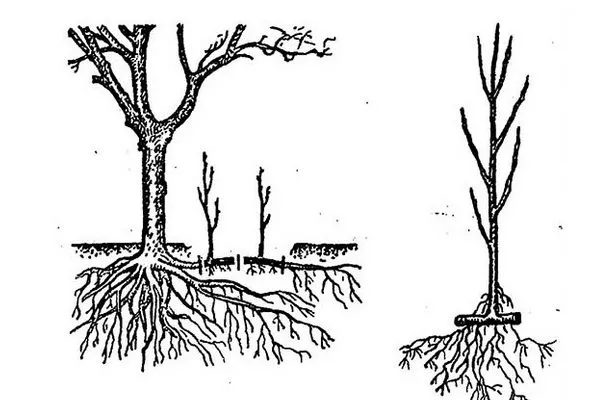
- Root shootsIn the fall, cut the root connecting the shoot to the mother plant. In the spring, dig it up along with the roots and replant it in a new location.
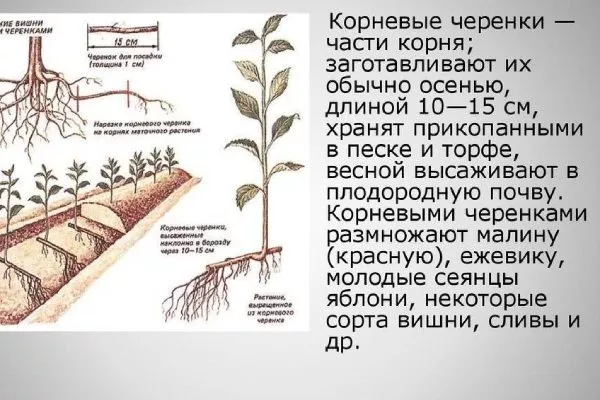
- Root cuttingsIn spring, dig up the plum tree roots 1-1.5 m from the trunk. They should be 1.5 cm thick and 15 cm long. In late April or early May, plant them at an angle or vertically in soil mixed with sand and peat. Space the cuttings 5 cm apart. Water the planting, mulch with peat, and cover with plastic wrap.
The seedlings will need to be watered and fed with organic matter such as slurry. It's best to transplant them in the fall for further growth. When they reach 1.5 m in height, move them to the garden.
Diseases, pests
The Svetlana variety exhibits good resistance to fruit diseases, with the exception of moniliosis, to which it is susceptible. Unfavorable growing conditions and poor care are the main causes of plum fungal infections:
- rust;
- fruit rot or monilial burn;
- gray mold;
- holey spot (clasterosporium).
If signs of disease are detected, apply fungicides and treat the plum tree with Bordeaux mixture. Dig up the soil around the trunk, prune off any diseased shoots, and burn them away from your garden.
The same reasons provoke the defeat of yellow plum by pests:
- codling moth (the most dangerous enemy of garden crops);
- sawfly;
- plum aphid pollinated;
- geometer moth.
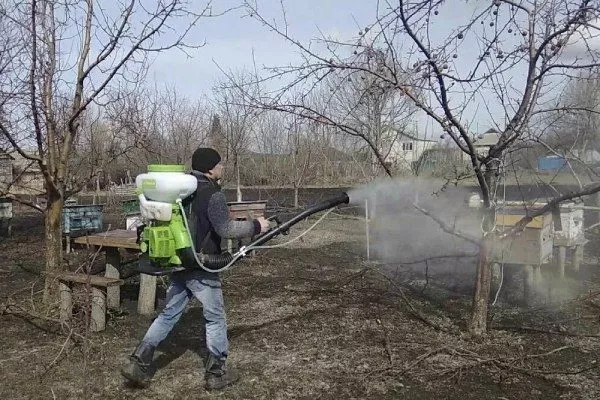
To prevent diseases and attacks by harmful insects, take preventative measures:
- Get rid of weeds in the tree trunk area in a timely manner;
- perform plum pruning;
- fertilize it;
- water the tree properly;
- inspect it regularly to detect the first symptoms of disease or the presence of parasites;
- in the spring, spray the crop prophylactically with Bordeaux mixture at a concentration of 3% (carry out the first treatment after the arrival of spring warmth, the second - on swollen buds; the next - before and after flowering, using a composition with a concentration of 1%);
- Use iron sulfate (1%) to prevent fungal infections of plums.
Gardeners' reviews
The Svetlana plum has become popular with Russian gardeners for its excellent yield, relatively high cold tolerance, beautiful yellow fruit, and wonderful flavor. This variety is considered quite demanding in terms of care, but strict adherence to proper cultivation practices will help you grow a healthy tree and reap a bountiful harvest of fruit.