
The Chinese plum is a rare sight in our gardens—despite its long history, this fruit tree is only just beginning to win the hearts of amateur gardeners. Let's find out how this exotic tree differs from ordinary plums, and whether it can be grown in harsh climates.
Features of Chinese plum
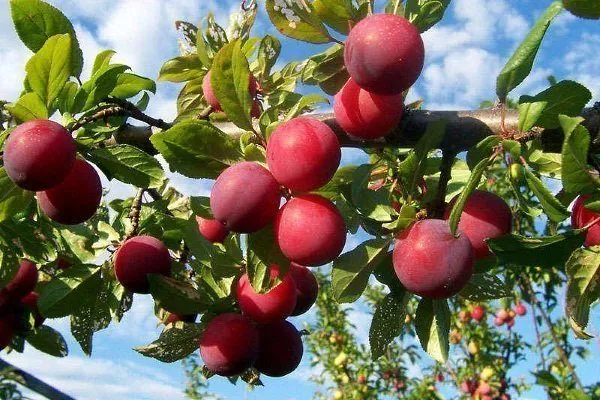
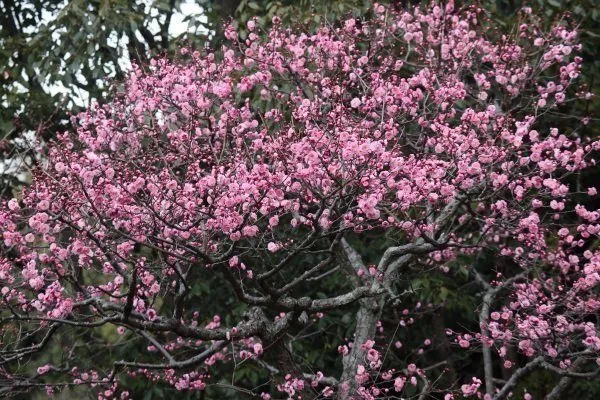
The main features of the Chinese plum are its unique winter hardiness and captivating blooms. This tree can be grown in virtually any climate zone in Russia, so cold-resistant is it. And when in bloom, the Chinese plum rivals the famous sakura in beauty. Flowers appear on the branches before the leaves emerge, transforming the tree into a blossoming globe.
History of selection
This Chinese plum truly is from the Middle Kingdom. This amazing tree's homeland is the mountainous regions of Manchuria. In China, it's called the three-flowered plum or willow-leaved plum. The Chinese have been cultivating various varieties of this tree for several millennia. Emperors ate the plum's fruits, and the tree held a place of honor in the imperial gardens.
In the 16th and 17th centuries, the Chinese plum arrived in Japan. The Japanese appreciated the beauty of the plum blossoms and the taste of its fruit. Before reaching Europe and Russia, the Chinese plum first reached the United States, where it was brought from Japan.
Russian breeders have spent considerable time developing varieties adapted to Russian winters. I. Michurin once crossed Chinese plums with domestic plums, seeking to create varieties that combined frost resistance and pleasant flavor. Modern varieties thrive in regions with harsh winters.
Abundant flowering of the Chinese plum does not guarantee a large harvest – it depends on the quality of pollination.
Description and characteristics
The Chinese plum blossoms and bears fruit early. This advantage often comes at a cost: since the tree blooms early in the spring, there's a high risk of poor pollination.
Botanical description:
- Tree. A low-growing tree with a rounded, spreading, spherical crown. This compact tree resembles a sphere, especially during flowering.
- Leaves. Elongated, large, shiny, completely smooth.
- Fruit. They are usually round or heart-shaped, smooth, and have juicy, fibrous flesh. Elongated varieties are rarer. Fruit colors include yellow, scarlet, burgundy, and red, as well as combinations and shades of these. The skin is very strong and dense.
- Flowers. Each flower bud bears 3-4 flowers. This is why the tree is densely covered with buds.
Agrotechnical characteristics:
- Beginning of fruiting. The first harvest appears 2-3 years after planting.
- Productivity. One tree produces from 10 to 40 kg of plums.
- Weight of fruits. Plums weigh on average 30-40 g. The best varieties weigh up to 70-80 g.
Fans of Chinese plums highly value their taste. However, many consumers find the fruits of the humble garden plum to be tastier than Chinese plums—dense, firm, with cartilaginous flesh. It's fair to say that the fruits of this variety are for "connoisseurs."
Comparison of Chinese plum
Differences between Chinese plum and regular varieties:
- Abundant flowering. The branches are densely covered with pink flowers. It's a beautiful sight, but it ends very quickly. The tree remains in its pink ball shape for only a few days.
- Low altitude. All varieties of Chinese pine are short, no more than 2 m tall. These trees are easier to care for and harvest.
- Smooth bark. Many plum varieties have a small fluff on the bark, but the Chinese variety does not have it – Chinese plums are completely smooth.
- Oblong leaves. Unlike the common garden plum, the Chinese plum's leaves are not round, but oblong.
- Fibrous pulp. The flesh of the Chinese apple is rather hard, making it very difficult to separate the stone from it.
- Specific aroma. The pulp of the fruit smells like either apricot or melon.
- Spherical crown. The Chinese plum tree develops a spherical shape even without pruning.
- High calorie content. 100g of regular plums contain 40-42 kcal, while 100g of Chinese plums contain 70-80 kcal.
Advantages and disadvantages
Advantages of Chinese plum:
- High frost resistance. Tolerates temperatures down to -45-55°C.
- Good transportability. Thanks to their fibrous flesh and thick skin, the fruits can withstand long journeys. Even under normal conditions, they last for half a month longer than many garden plum varieties.
- Early fruiting. The tree grows quickly and bears fruit early. The first fruits appear a couple of years after planting. The yield increases each year.
- Consistently high yields. When the weather is favorable, the branches are laden with fruit—they have to be propped up to prevent them from breaking.
- Versatile. The fruits are delicious fresh and canned. They are used to make wine and in baked goods.
- High immunity. Resistance to most stone fruit diseases. Chinese varieties are less susceptible to pests.
Disadvantages of Chinese plum:
- Early blooming. Flowers open a couple of weeks earlier than regular plums, in early May. When grown in temperate climates, the tree is often subject to recurrent frosts, which damage the buds. Frosts lead to crop losses, as frozen buds die and fall off.
- Poor pollination. The tree blooms early, and if the weather is cool and damp, pollinating insects are absent, which negatively impacts yield.
- The tree's short lifespan is 15-20 years.
- Susceptibility to rot. The tree often rots due to root rot. To prevent this, the tree should be properly prepared for winter.
- Self-sterility. Most varieties require pollinators. Even self-fertile varieties benefit from pollinators to increase yield.
- Nutritional value. Chinese plums are comparable in calorie content to grapes and twice as high as regular plums. They are not suitable for dietary use.
Varieties of Chinese plum
The Chinese plum is represented by a multitude of varieties that retain the best qualities of their ancestor—cold resistance, hardiness, and productivity. Let's look at the most popular varieties, which differ in ripening time, fruit quality, tree height, and other characteristics.
| Name | Tree height | Fruit weight | Productivity |
|---|---|---|---|
| Sissy | 2.5 m | 25 g | 40 kg |
| Oryol souvenir | 3 m | 30-35 g | 20 kg |
| Early-bearing | 2 m | 26-30 g | 35 kg |
| Alyonushka | 2 m | 35 g | 20 kg |
| Golden Ball | 4 m | 55-65 g | 30 kg |
| Manchurian Beauty | 1.8 m | 15-20 g | 10 kg |
| Red ball | 2.3-2.5 m | 45 g | 18 kg |
| Superior | 2.5 m | 70-75 g | High |
Sissy
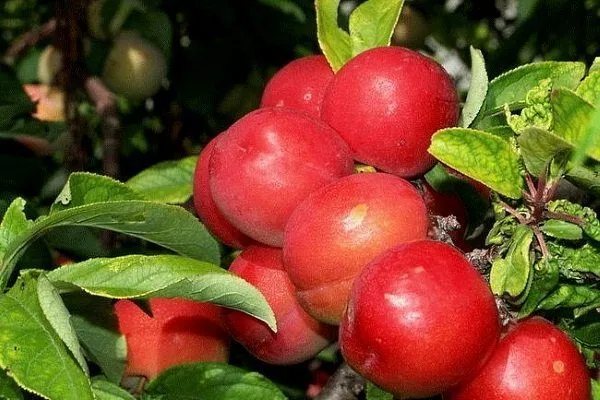
This variety is distinguished by its delicate, delicious fruits. The tree is slightly taller than average, reaching up to 2.5 m. It bears fruit late, 5 years after planting. The fruits are round and bright scarlet. They begin to ripen in mid-August. This variety is frost-hardy and productive, yielding up to 40 kg of plums per tree. The tasting score is 4.5 points. Fruit weight is 25 g.
Advantages:
- the stone is easily separated from the pulp;
- the stalks are easily separated from the fruit without damage;
- high yield;
- pest resistance.
Flaws:
- tendency to crumble;
- low fertility;
- inability to self-pollinate.
Oryol souvenir
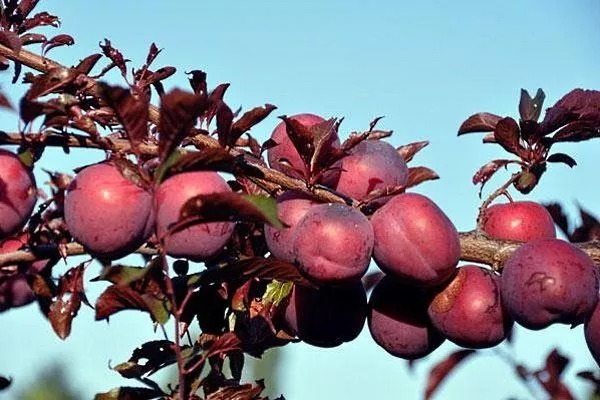
A mid-season variety developed in the Oryol region, where it is primarily found. The tree height is 3 m. The crown is spreading and sparse. Fruit weight is 30-35 g. The color is blackish-purple, with a bluish-gray bloom on the skin. The flesh is amber, sweet and sour. Tasting score: 4.0-4.2. The fruits are not firm, but slightly dry. Ripening occurs in the first ten days of September. The first harvest occurs five years after planting. The yield per tree is up to 20 kg. In particularly fruitful years, the yield can double.
Advantages:
- resistance to clasterosporium;
- large-fruited.
Flaws:
- Partial self-fertility – pollinators are needed;
- insufficient juiciness of fruits;
- may be affected by moniliosis.
Early-bearing
This is one of the most famous and popular varieties of Chinese plum. The tree grows up to 2 m tall. The plums are round, weighing 26-30 g. They are colored yellow, orange, and come in combinations and shades. The plums have a sweet and sour taste, with firm flesh. The yield per tree is up to 35 kg. Fruiting begins in mid-August and continues until mid-October. Recommended pollinators are cherry plum or Red Ball. It can withstand temperatures down to -30°C.
Advantages:
- early fruiting – the first fruits appear in the second year after planting the seedling;
- adaptation to any climatic conditions.
Flaws:
- self-infertility;
- difficulty separating the seeds from the pulp.
The gardener made a short review of the "Skoroplodnaya" variety:
Alyonushka
The tree grows just over 2 meters tall. The fruits are lilac-burgundy, sweet and sour in taste, with small seeds. The yield is 20 kg per tree. The best pollinator is the Skoroplodnaya variety. Its frost resistance is average, compared to the most cold-hardy Chinese varieties – it can withstand temperatures down to -30°C. The tasting score is 4.2 out of 5.
Advantages:
- Unlike the regular Chinese plum, the pits of the Alyonushka plum are easily separated from the pulp, making the variety convenient for preserving;
- large-fruited – fruits weigh about 35 g.
Flaws:
- 'Alyonushka' attracts aphids more than other varieties;
- self-sterility – it is necessary to plant pollinator varieties.
A video review of the Alyonushka variety can be seen in the following video:
Golden Ball
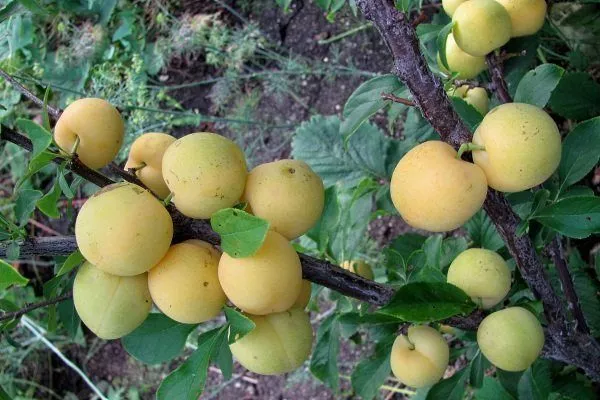
An early-ripening variety, it ripens in early August. This variety boasts the highest tree height, reaching up to 4 m. The fruits are bright yellow, round, and have sweet, juicy, and soft flesh. The yield is high—the branches are covered with fruit. A single tree produces approximately 30 kg of plums. The fruit weighs 55-65 g.
Advantages:
- beautiful and tasty plums;
- aesthetic beauty of wood;
- large-fruited.
Flaws:
- possible fruit shedding;
- self-infertility;
- fruit shrinkage in lean years.
Manchurian Beauty
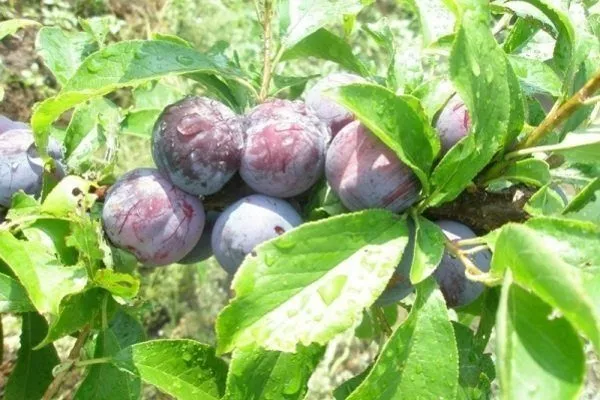
This variety developed spontaneously, without the help of breeders. The tree grows to a height of 1.8 cm. The fruits are round, flattened, dark burgundy with a blue tint, weighing 15-20 g. They have juicy, soft flesh and a slightly tart flavor. The fruits ripen in late August. Ideal pollinators are the Ussuriysky variety or cherry plum. The yield is 10 kg per tree.
Advantages:
- universal fruits;
- drought resistance;
- good transportability.
Flaws:
- the tendency of the root system to become damp;
- self-infertility;
- low yield;
- tendency of fruits to fall off.
Red ball
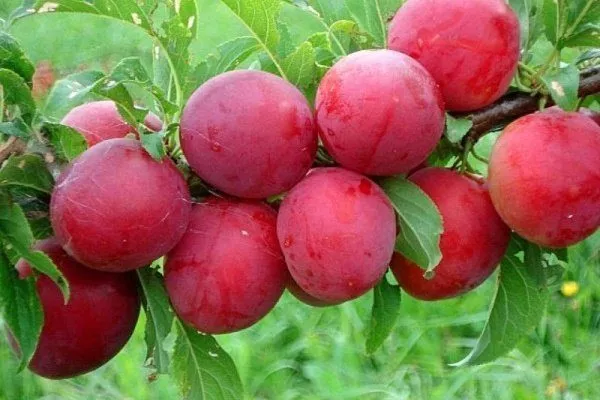
A product of Soviet selection. A universal table variety. The tree height is 2.3-2.5 m. The crown is spherical. The fruits are large – up to 45 g, bright scarlet, and round. The flesh is lemon-yellow. Flavor – 4-4.2 points. Self-fertile, but pollinators are welcome. Frost resistance is average. Yield – 18 kg per tree.
Advantages: practically not susceptible to clasterosporium.
Flaws:
- poor taste;
- difficulty separating the stone from the pulp.
Superior
A variety developed by Japanese breeders. It is partially self-fertile. Pollinators such as cherry plum or any variety of Chinese plum are needed nearby. Yields are consistently high. Harvesting begins in the second ten days of August. Fruit weigh 70-75 g. Tasting score: 4.7 points. Fruit color is pastel yellow or orange, with a possible pink blush on the sun-exposed side. Tree height: up to 2.5 m.
Advantages:
- large fruits;
- dessert taste;
- the stone is separated from the pulp;
- resistance to smallpox (sharka) and codling moth.
Disadvantages: needs pollinators.
You can watch a review of the "Superior" variety in the video below:
When and where to plant?
Prepare the site for planting Chinese plums in advance. Dig the soil to a depth of 70 cm. If the soil is acidic, add compost, sand, and dolomite flour.
- ✓ pH level should be between 6.0-6.5 for optimal growth.
- ✓ The depth of the fertile layer is not less than 40 cm.
Landing site requirements:
- Soil. Prefers fertile alkaline soils.
- Groundwater. Not less than 1.5 m from the surface.
- Lighting and wind. Sunny, well-protected from the wind area.
It is strictly forbidden to plant Chinese plum in lowlands.
Unlike regular plum trees, Chinese plums are usually planted in the fall. This frost-hardy tree, having established strong roots over the winter, devotes all its energy to growth and development in the spring.
The Chinese plum isn't popular in the southern regions—Crimea, Kuban, and the Krasnodar Krai. Here, particularly sweet varieties with enhanced flavor are preferred. Furthermore, the Chinese plum doesn't tolerate drought well—much worse than frost. However, it is prized in regions with harsh winters—in addition to the Central Region, it is grown in the Urals, Siberia, and the Far East.
Chinese plum varieties recommended for growing in different regions
| Region | Region's areas | Suitable varieties |
| Central Black Earth | Tambov and Oryol Lipetsk Kursk, Voronezh and Belgorod |
|
| Central | Tula Smolensk Ryazan Moscow Kaluga Ivanovskaya Vladimirskaya Bryansk |
|
| Far Eastern | Khabarovsk Krai Seaside Sakhalin Oblast Magadan Kamchatka Amur |
|
Planting diagram and step-by-step process
Planting pattern:
- The dimensions of the pit are 70x70 cm.
- The distance between adjacent pits is 1.5 m.
- The distance between rows is 2.5 m.
- Soak the roots of the seedling in water for 4-6 hours before planting.
- Trim damaged roots back to healthy tissue.
Step-by-step instructions for planting a seedling:
- The planting hole is prepared three weeks in advance.
- Immediately before planting, damaged roots and dry shoots are cut off from the seedling.
- Mix the top layer of soil with manure (10 kg), superphosphate (300 g) and potassium salt (50 g).
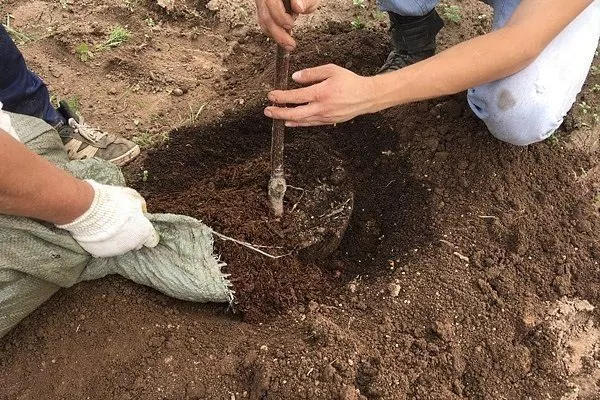
- A mound is formed in the hole. A support for the seedling is inserted into it – a stake that should protrude 70 cm above the ground.
- Place the seedling into the hole, straighten the roots and fill 1/2 of the hole.
- Compact the soil and pour 10 liters of water into the hole. This is done to eliminate all air pockets, otherwise the tree's roots will dry out.
- Fill the hole with the remaining soil and make a hole near the tree trunk – approximately 40 cm in diameter.
- The seedling is tied to a peg and watered with three buckets of water.
- After the water has been absorbed, a layer of peat, 5 cm thick, is poured into the hole.
- A couple of weeks after planting, the seedling is watered.
Plum tree care
The Chinese plum is hardy and undemanding, but like any fruit tree, it requires some care. It's important to prevent the root collar from becoming damp, as this can kill the tree. To avoid this problem, create a mound around the tree—40 cm high.
When and how to water?
All plums love moisture, and Chinese varieties are no exception. Trees require regular, systematic watering. It's especially important to provide moisture during drought. Provide the tree with enough water to penetrate the soil to a depth of 40 cm. After watering, the area around the trunk is loosened to a depth of 5 cm and mulched with compost, sawdust, and peat. During extreme heat, the recommended watering rate is 10 liters of water per square meter. The watered area is the projection of the tree's crown.
Fertilizing
No fertilizer is required during the first year of planting—there's enough already in the planting hole. However, the following year, the tree needs nitrogen fertilizer—it's essential for the formation of new shoots.
Preparation of a mixture for spring feeding, based on 10 liters of water:
- mullein – 2 kg;
- urea – 25 g;
- ammonium nitrate – 25 g.
In the summer, when the fruit ripens, the tree is fertilized again. Apply the following fertilizer per square meter to the roots:
- wood ash – 200 g;
- phosphorus – 60 g;
- potassium – 20 g.
Chinese plum reacts negatively to chlorine; this element should not be included in fertilizers.
The third feeding of the season is done in the fall, after the fruit has been harvested – the tree is fed with potassium fertilizers – 100 g per adult tree.
Tree pruning
The Chinese plum tree is pruned for the first time during planting. Once the seedling is buried, it is shortened by approximately half its height. This pruning helps the tree quickly adapt to its new conditions.
Pruning is typically done in early spring, removing dead and damaged branches and shaping the crown. As soon as the last frost has passed, all vertical and thickening shoots are trimmed. Last year's shoots are also cut back by half. In regions with mild winters, pruning can be done in the fall.
In winter, pruning should be carried out at temperatures no lower than -15°C. Tools must be disinfected, and the cut must be sealed with garden pitch.
Preparing for winter
Immediately after the first autumn frosts, collect all fallen leaves – they can be composted. Here's how to insulate a Chinese plum tree:
- Once the average temperature drops below 0°C, wrap the tree in burlap, 2-3 layers at a time. Other covering material can be used, as long as it's breathable.
- During warm and snowy winters, snow is raked away from the trunk to expose it. This is done to prevent root collar rot.
- Snow is regularly shaken off the branches to prevent them from breaking under its weight.
- In spring, remove meltwater from the tree trunk area—it should not be allowed to stagnate. The water is diverted by digging channels.
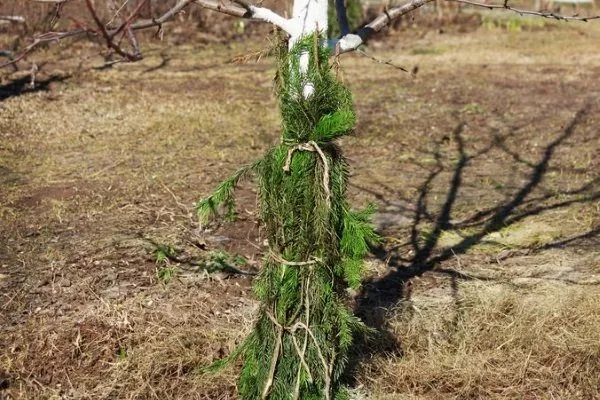
Preparing a tree for winter: wrapping the trunk with spruce branches
Diseases, pests and prevention
Compared to common varieties, Chinese plum is much more resistant to diseases and pests. However, it can still be affected by certain diseases.
Diseases and pests of Chinese plum
| Diseases and pests | Symptoms of damage | Control measures |
| Clusterosporiasis | affects the above-ground parts of the plant - reddish-brown spots appear | Treatment with 3% Bordeaux mixture. |
| Moniliosis | rotting of fruits and drying of leaves | Treatment with 3% Bordeaux mixture. Whitewashing the trunk with copper sulfate. |
| Codling moth | the larvae eat away the pulp of the fruit | Spraying with insecticides. Immediately after flowering, and then in early July. Pheramone traps are also installed. |
What are the methods of reproduction?
Chinese plums are propagated by seed cuttings or grafting. The former is only suitable for propagating the typical variety. To ensure the tree retains its varietal characteristics, grafting is used.
Reproduction options:
- With a bone. When propagating by seed, select ripe fruits that have fallen from the tree. The seeds are removed from compacted fruits, the pulp is removed, they are dried outside, and then taken to a dark place to mature. In the fall, the seeds are planted in the ground and the planting area is covered with mulch.
- By vaccination. The survival rate with this propagation is 50%. Grafting options:
- from spring to the end of summer by cuttings;
- in early spring – by the bark;
- before the sap starts to flow - into the cleft;
- in late autumn – by cutting into the crown.
Reviews
Most gardeners with experience growing Chinese plums speak highly of this fruit crop. Along with the fruit's flavor and aroma, gardeners are drawn to the Chinese plum for its unique agricultural characteristics. However, some have also noted its drawbacks. Specifically, some gardeners have noted that the plant does not tolerate winters with thaws well and can be susceptible to spring frosts.
If you don't want to be left without a harvest, plant one of the Chinese plum varieties in your garden. This crop has excellent agronomic characteristics, allowing it to be grown in the harshest conditions.