
The plum is one of the most popular fruit trees in the garden, delighting with a bountiful harvest of fragrant and juicy fruit. However, for the tree to thrive, avoid disease, and produce consistently, it requires proper and timely care, including regular watering. This directly affects the development of the root system, shoot growth, and the quality of the harvest.
The effect of irrigation on growth and fruiting
Insufficient moisture leads to root dehydration, weakening the plant, and reducing its vitality. However, overwatering is just as harmful – it can cause root rot and worsen the overall health of the tree.
The quality of the harvest also depends on the soil moisture level. If there's not enough water, fruit growth slows, and they become small and sour. Excessive moisture, on the other hand, can cause plums to crack or promote rot.
Basic rules for watering plums
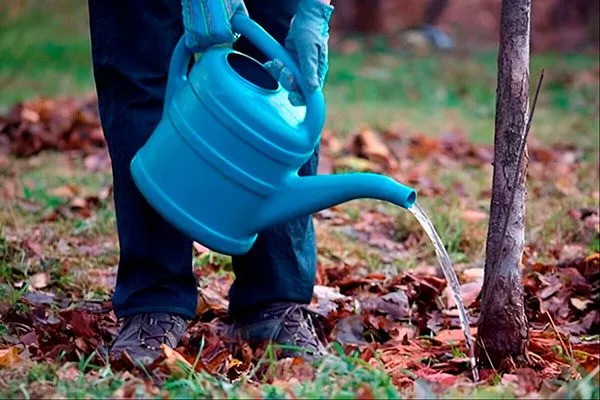
Watering frequency depends on many factors: climate, season, soil composition, and plant age. Helpful tips:
- Young seedlings require more frequent watering than mature trees. However, it's important to avoid overwatering.
- Pay attention to the condition of the soil and foliage: if the soil is dry and the foliage turns yellow or wilts, it means the plant does not have enough moisture.
- Avoid over-watering during hot daytime to prevent leaf burn. It's equally important to keep the leaves dry overnight to prevent fungal infections.
Factors Affecting Humidification Frequency
The frequency and volume of plum tree watering depend not only on the tree's age or weather conditions, but also on a number of other factors. Below, we'll examine in detail two key parameters that significantly influence irrigation schedules.
Soil type and its influence on irrigation
Soil composition and structure play a crucial role in moisture retention and distribution. Consider your soil type:
- Sandy loam and sandy soils Because soil drains quickly and retains moisture poorly, trees growing in such areas require more frequent but moderate watering. It's important to prevent the top layer from drying out, especially during hot weather.

- Clay soilsOn the contrary, they absorb water slowly and retain it for a long time. Trees in such soil should be watered less frequently but more thoroughly to ensure moisture reaches the deep roots. However, excessive watering can lead to stagnation, which can lead to root rot.
- Loamy soils are considered optimal for growing plums—they retain moisture at the right depth, ensuring stable nutrition for the roots. In this case, watering should be moderate and regular.

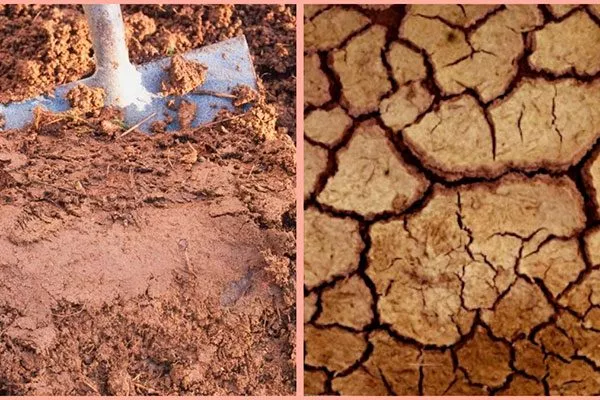

When planning your watering schedule, be sure to consider the soil's permeability and water holding capacity, and also monitor its condition over different periods.
Seasonal changes in watering schedule
The schedule should vary depending on the season and weather conditions. Basic rules:
- In the springPlum trees require adequate moisture, especially during the period of shoot awakening and active growth. If the spring is rainy, watering can be reduced to avoid overwatering.
- In summer, especially on hot and dry days, watering should be regular. It's important that water penetrates to a depth of at least 40 cm—that's where the main roots are. A lack of moisture during this time directly affects the size and flavor of the fruit.
- In the fallAfter harvest, irrigation intensity is reduced. However, before frost sets in, a moisture-recharging irrigation is necessary – this helps the tree better survive the winter and reduces the risk of root freezing.
- In winter Moistening is not required, but it is important that the area does not suffer from excess melt water in early spring.
Choosing the optimal time
The best time to water plum trees is early morning or evening, when the sun is less intense. During this period, water doesn't evaporate too quickly and has time to penetrate the deep soil layers where most of the roots are located.
This approach ensures effective hydration and promotes better water absorption by the plant. Watering should be regular, especially during dry periods, to ensure the soil remains evenly moist. Maintaining a balance is essential.
How to properly water plum seedlings?
It's important to check the soil moisture. The optimal time to water is when the top layer of soil is slightly dry. Constant dampness, as well as extreme dryness, are harmful to the plant and can stunt its growth.
Follow these recommendations:
- Choose the right time for watering: morning or evening hours are considered the most favorable. At these times, the air is cooler, and the water has time to soak into the soil without evaporating too quickly.
- Be moderate with watering. Young trees need moisture, but too much water leads to stagnation and the risk of root rot. Water seedlings regularly, but avoid overwatering.
- Pay special attention to the root zone. Watering the base of the tree promotes the development of a strong, deep root system, which improves the plant's nutrition and stability.
- Consider weather conditions. During periods of heat and drought, increased watering may be necessary to compensate for increased moisture loss.
Methods of watering plums
There are different methods for hydrating crops, and each is suitable depending on growing conditions and the age of the tree. The main methods are:
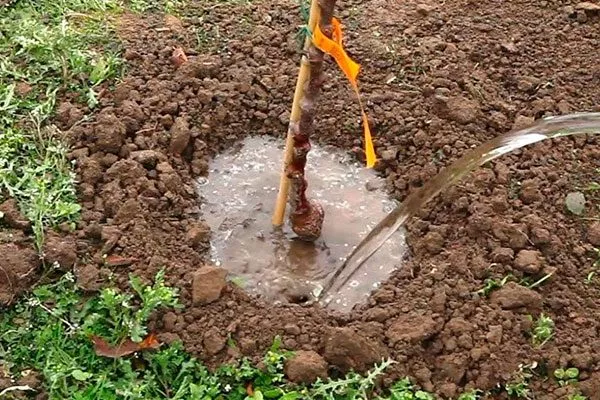
- Watering at the roots. With this approach, water is evenly distributed around the tree's trunk. It's important to keep in mind that as the tree matures, its root system expands, and the watering zone should gradually increase to cover the entire active root zone.
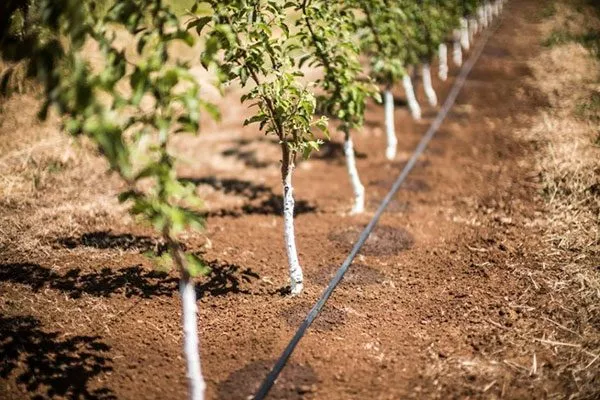
- Drip method. It's especially convenient when growing plums in large areas or in hot climates. The drip system allows for precise watering and delivers it directly to the root zone. This reduces water consumption, minimizes evaporation, and ensures uniform moisture distribution across each tree.
Signs of water deficiency and excess
To properly adjust the watering regime for your plum tree, it is important to regularly monitor its condition and be able to recognize signals indicating a lack or excess of moisture.
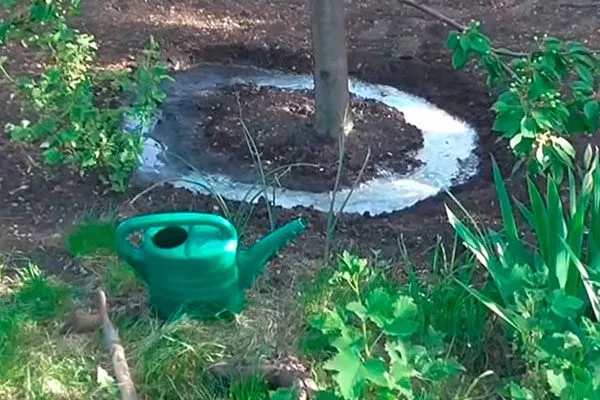
Signs of water deficiency:
- the leaves become dry, lose elasticity, the shoots look wilted;
- the fruits become smaller and may fall off prematurely;
- The tree's growth slows down, the flowers wither and fall off.
Signs of overwatering:
- the leaves turn yellow and fall prematurely;
- signs of rot appear on the roots, dark, damp spots are possible on the bark and branches;
- the soil in the tree trunk area remains constantly damp, air exchange is disrupted, and water stagnation occurs.
Early detection of these signs will help adjust watering and maintain the health of the plum tree.
Maintaining optimal humidity
Plum trees thrive on moisture, but overwatering is just as dangerous as drought. For the tree to thrive, bloom, and produce a high-quality harvest, it's essential to maintain a stable moisture level in the root zone. This is especially important during periods of active growth, flowering, and fruit ripening.
Mulching to retain moisture
This is one of the most effective ways to retain soil moisture. A layer of mulch prevents rapid evaporation, reduces soil temperature fluctuations, and helps prevent the topsoil from drying out.
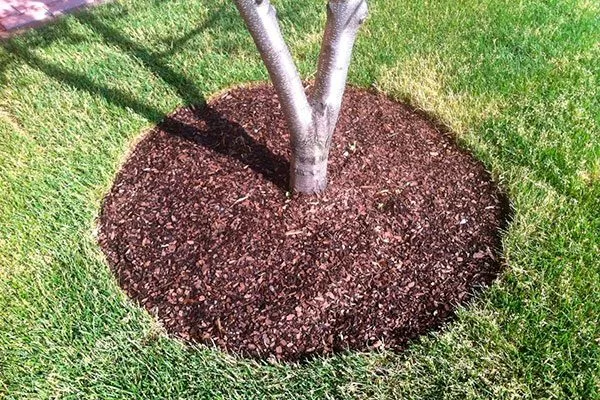
Key recommendations:
- You can use rotted sawdust, grass clippings, straw, compost, bark, or peat moss for plum trees. Just be sure not to place the mulch too close to the trunk to prevent rot.
- The optimal thickness is 5-8 cm. In the spring, after the soil has warmed, the mulch can be renewed, and in the fall, it can be replaced to prevent pest accumulation.
- Mulch not only retains moisture, but also suppresses weed growth, improves soil structure and promotes the formation of beneficial microflora.
Soil moisture control
Regular moisture monitoring helps accurately determine watering needs. Key requirements:
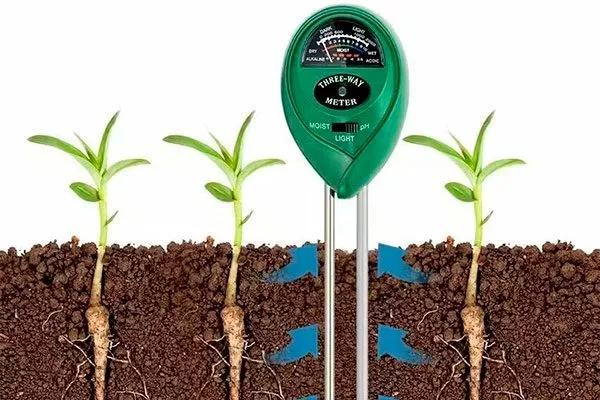
- The soil should be slightly moist at a depth of 10-15 cm. You can use a simple test: squeeze a handful of soil – if the lump holds its shape but doesn't stick to your hands, the moisture level is considered normal.
- For a more accurate assessment, moisture meters that measure moisture at different depths are suitable. This is especially useful in gardens with varied soil types.
- Yellowing, wilting, leaf drop, and stunted growth are signs of water imbalance that cannot be ignored.
Calculating the amount of water
Young plum seedlings require up to 60 liters of water at a time, while mature, actively fruiting trees require up to 100 liters of water.

When watering with a hose, consider the water flow rate—it's best to use a moderate flow rate, allowing the soil to absorb the moisture without creating puddles. Drip systems allow for precise dosing, directing water directly to the roots.

What to do if the soil is too dry?
When caring for plum seedlings, it's especially important to maintain stable soil moisture. However, in dry conditions or with irregular irrigation, the soil can dry out, which is dangerous for young trees.
To avoid negative consequences, you should take measures in a timely manner:
- If the soil becomes dry, water the seedlings more frequently than usual. Regular watering helps maintain healthy roots and prevents stress on the plant. It's important to water thoroughly so that moisture reaches deep into the root system.
- A layer of organic mulch (grass, sawdust, straw, compost) around the tree's trunk will help retain moisture in the soil and prevent rapid evaporation. Mulch also protects the roots from overheating on hot days and improves the soil structure.
- Setting up a drip irrigation system is one of the most effective ways to combat dryness. It allows for slow and even soil moisture distribution, without unnecessary water loss. This is especially useful when regularly tending to a large number of trees.
How to water seedlings immediately after planting?
After planting, the soil remains loose and needs to be compacted slightly to ensure better root contact. This can be achieved by evenly watering with small amounts of water.
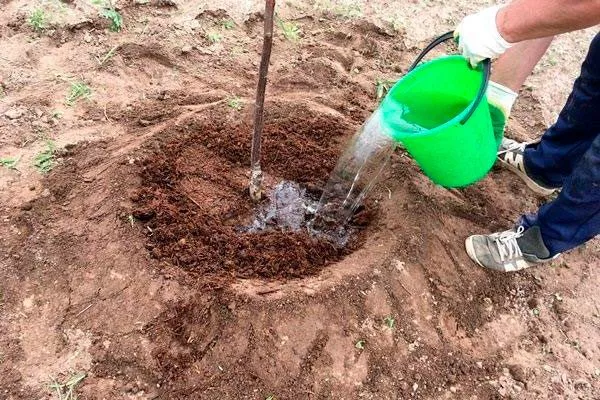
It is recommended to water the seedling at least once a week. The optimal amount is approximately 40 liters of water per watering or over several hours using a sprinkler.
Do plum trees need to be watered in winter and how should planted trees be watered in autumn?
Plums are moisture-loving plants, so they require ample watering in the fall, especially before the onset of cold weather. This stage is important for preparing the tree for winter and saturating the soil with moisture.
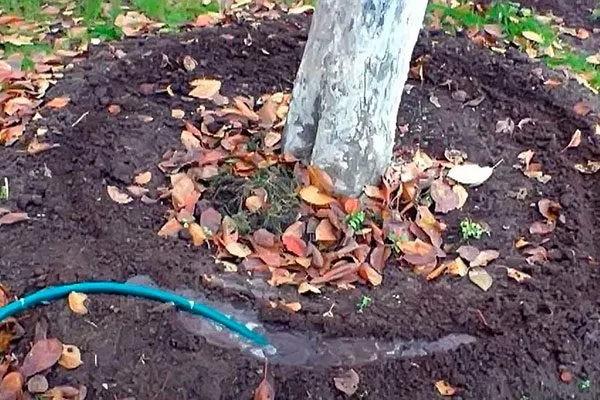
Along with watering, it's recommended to apply suitable fertilizers to strengthen the root system. Use at least 35 liters of water per tree. Continue watering until the first frost sets in.
To achieve the effect, follow the basic rules:
- Avoid frequent and shallow watering. Watering in small portions leads to over-moistening of the top layer of soil, but does not reach the roots, which weakens the tree.
- For mature trees It's important for moisture to penetrate the soil to a depth of 1-1.5 m—this is where the main feeder roots are located. The minimum soaking depth should be at least 60-70 cm.
- Young seedlingsTrees planted this or last season require less water. Typically, 40 liters per tree is sufficient to moisten the root zone.
Mistakes when watering plums and how to avoid them
Proper irrigation of plum seedlings is key to their full development and future yield. Improper watering can cause serious problems, slowing the plant's growth and weakening its immune system.
Main mistakes:
- Consequences of lack of moisture. Insufficient watering leads to tissue dehydration and reduced seedling viability. Growth slows, and shoots become weak. Leaves turn yellow, lose their turgor, and drop prematurely. The crown develops poorly, making the plant vulnerable to weather stress.
- Danger of overwatering. Excessive moisture is also harmful and can create conditions favorable for disease. This increases the risk of root and basal rot. A damp environment promotes the growth of fungi and mold.
Moist soil attracts pests and encourages the growth of weeds that compete with the tree for nutrients. - Negative consequences of irregular watering. An erratic watering schedule disrupts root development. Roots develop unevenly and remain weak. The plant's resistance to drought, sudden temperature changes, and other adverse factors decreases.
The seedling takes root worse and enters the fruiting phase more slowly.
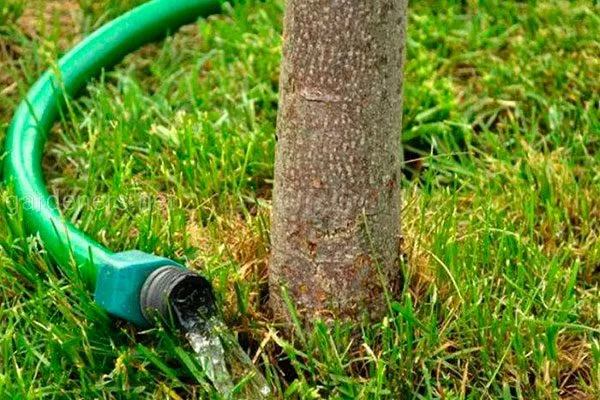
Proper watering is the foundation for healthy plum growth. Adhering to the recommended watering schedule, as well as paying close attention to the condition of the soil and the tree itself, can help avoid major problems. By promptly noticing signs of moisture deficiency or excess, you can adjust your care and thereby lay a solid foundation for successful fruiting for years to come.