
The Giant plum is an ancient American variety that truly lives up to its name. It produces truly large fruits, which also have a remarkably pleasant flavor and aroma.
The history of the creation of the Giant plum
The Giant plum belongs to the "domestic" variety and received its name for its large fruits. It was developed in the 19th century by American breeders by crossing the Hungarian plum of Ajan and a seedling of Ponda. L. Burbank is considered the originator. It has been in state variety testing since 1947.
The Giant plum inherited drought resistance and a dessert flavor from the Hungarian plum, and hardiness and undemandingness from a semi-wild seedling. This American variety is primarily widespread in North America, from where it was brought to Europe and Asia, where it also gained widespread recognition.
Description of the tree
The tree is strong and vigorous, reaching a height of 4 m. Its crown is dense and pyramidal in shape. The leaves are dark green, and the flowers are large and white, with a pleasant scent.
Description of fruits
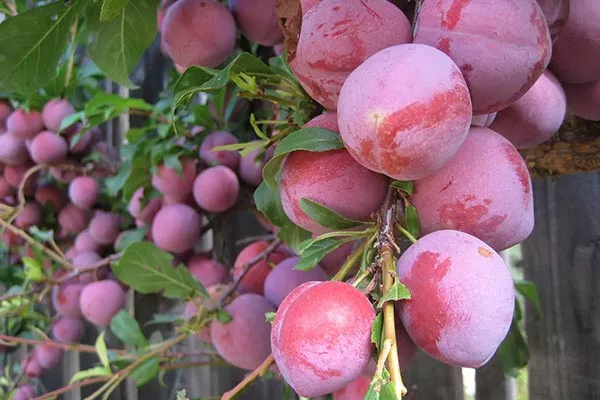
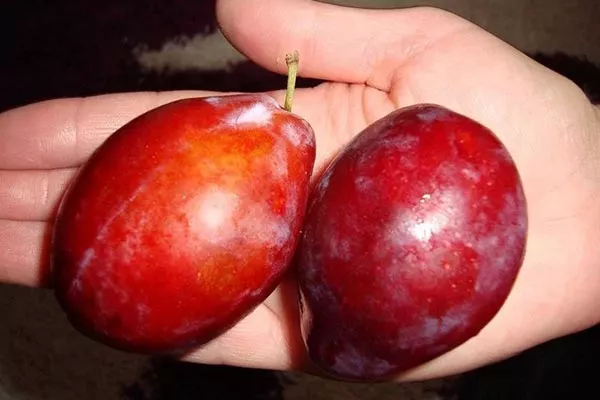
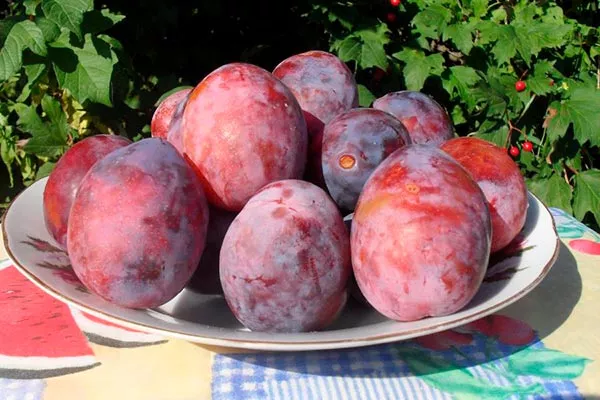
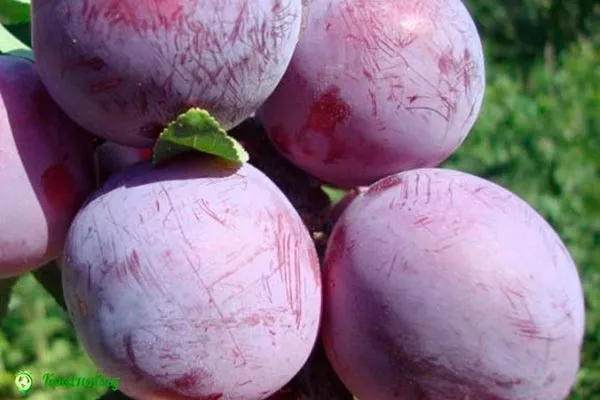
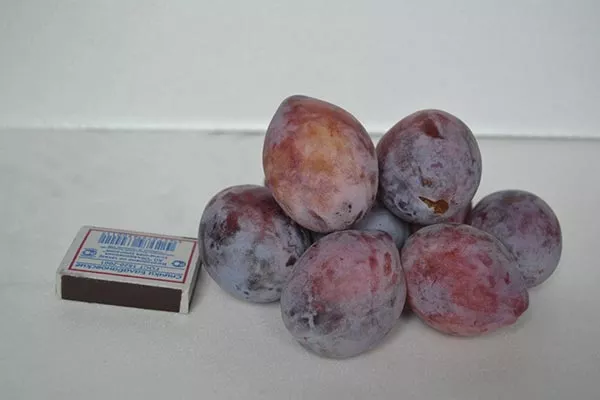
The fruits are large, round or obovate, bright red with a bluish tint and a dense waxy coating. The skin is thick and rough, the flesh is orange, juicy, and has a dense, fibrous consistency. Each fruit weighs 45-60 g.
Taste and purpose
The fruit has a very pleasant, sweet-sour, dessert-like flavor. They can be eaten fresh, but keep in mind that the thick skin greatly affects the taste perception. Giant plums can also be used to make compotes, jams, and other preserves.
Productivity and other characteristics
The Giant plum is a mid-season, self-sterile variety with moderate fruiting. Fruiting typically occurs three years after planting.
One tree yields approximately 40 kg of plums. This variety is characterized by high winter hardiness and moderate resistance to diseases and pests.
Pros and cons
The Giant plum has many advantages, which are worth learning about in advance. Before planting, it's also worth finding out if this old variety, time-tested and trusted by gardeners, has any drawbacks.
How to plant correctly?
For proper growth and development, as well as for abundant fruiting, the Giant Plum requires favorable conditions.
- ✓ Soil pH should be between 6.0-7.0 for optimal growth.
- ✓ The depth of the fertile layer is not less than 60 cm.
Landing features:
- The site should be well-lit, free from drafts and gusty winds. A good location would be near the wall of a building, house, solid fence, or garage.
- Low-lying areas where water stagnates during snowmelt are contraindicated for planting. The maximum groundwater level is 1.5 meters above the ground surface. There are no special soil requirements, but neutral pH is preferred.
- It's recommended to purchase seedlings from nurseries or specialty stores. They should have healthy roots, flexible trunks and branches, and be free of damage, rot, or signs of disease. Ideally, the seedling should be two years old and at least 1 meter tall.
- In the south, planting is usually done in mid-autumn; in regions with harsh winters, plums, like most fruit trees, are planted in the spring.
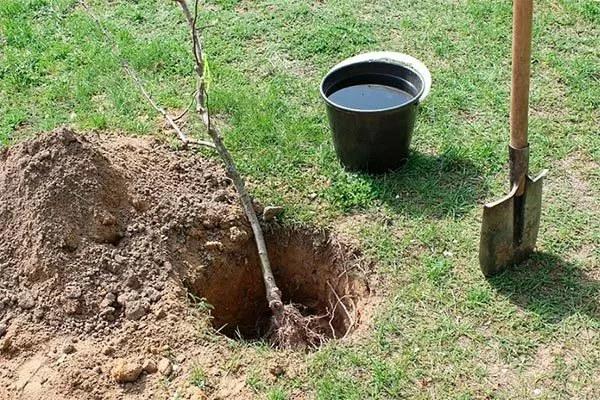
- The variety isn't picky about soil composition, but the looser and more nutritious the soil, the better and faster the seedling will take root. One to two weeks before planting, prepare a planting hole 70 x 80 cm deep and 100 cm wide. Fill the hole with a mixture of excavated soil (topsoil), humus, peat, and superphosphate.
- The roots of the seedlings are dipped into a clay slurry and then placed in the hole, with the mixture forming a mound. The roots are carefully spread over the earthen mound, covered with soil, and compacted. The root collar of the seedling is slightly buried in the soil when planting.
- The planted tree must be tied to the support with twine or string. After planting, the shoots are shortened by a third or a quarter, and then watered generously—30 liters per plant.
- Maintain intervals of 2-2.5 m between adjacent trees. It is recommended to mulch the tree trunks with mown grass or straw.
Care Features
The Giant plum requires certain care, which includes watering, fertilizing, pruning, and other standard agricultural practices.
Care features:
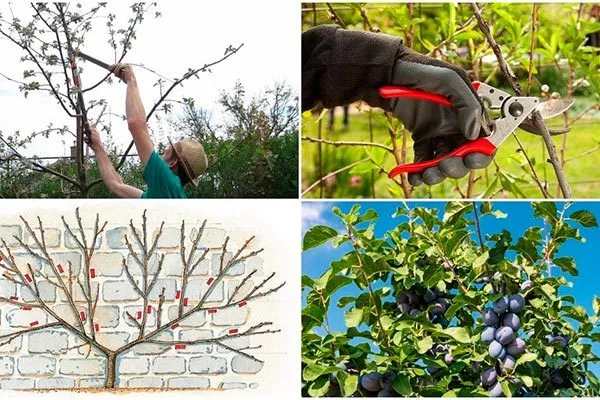
- The tree is pruned annually; without pruning, it will not produce the expected growth and abundant harvest. In the spring, the tree is pruned early, before the sap begins to flow. After winter, all frozen, dry, and broken branches are removed, and the crown is shaped.
Experienced gardeners recommend shortening shoots by a quarter each time you prune, and always sealing all cuts with garden pitch. Height growth can be limited by pruning at 2-3 meters—this approach increases yield. Thickening shoots growing deep into the crown are also removed. - In spring, nitrogen-based fertilization is recommended. Nitrogen-based fertilizers are especially important for young trees aged 3 to 5 years, as they improve establishment and promote growth.
Older trees require potassium sulfate and urea—their crowns are sprayed with these solutions in the spring, before the buds open. After harvest, plum trees are fed with superphosphate. - The variety is drought-resistant, but young seedlings require regular watering. Mature trees require watering during the fruiting period. If there is no rain, at least 20 liters of water should be poured under each tree.
Plum trees are watered in the morning or late evening. In autumn, when the heat subsides, watering becomes less frequent; once every 2-3 weeks is sufficient. In rainy weather, trees do not need watering. After watering, the area around the tree trunks is loosened, weeded, and, if desired, mulched. - In the south, plum trees don't require any covering. In northern latitudes, where temperatures reach -40°C (-40°F), the root zone is insulated with a layer of humus or straw, and the trunk is wrapped in burlap, covered with spruce branches, or more modern covering materials. It is recommended to cover young seedlings entirely for the winter.
Diseases and pests
The Giant Plum, despite its strong immunity, is still not immune to diseases and pests. Under unfavorable conditions, the tree can be affected by fungal diseases.
- ✓ The appearance of gray pads on the bark and fruits.
- ✓ Rapid wilting and drying of affected branches.
Most often, the Giant plum suffers from fungal infections:
- Moniliosis. It appears as rot affecting the branches and trunk. This problem is treated with a mustard solution or Fitolavin sprays.
- Clasterosporium. This fungal disease attacks ovaries and flowers. It is controlled with fungicides.
Harvesting and storage
The plums are harvested from early August to mid-September. Ripening times vary depending on climate conditions. It is recommended to harvest them at technical ripeness, when the plums have acquired the characteristic color of the variety.
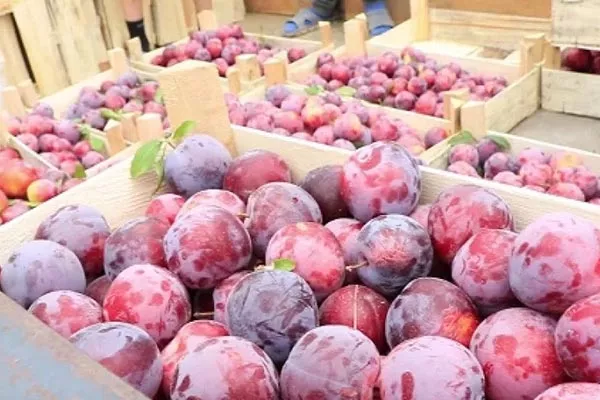
The plums are picked carefully, without squeezing them or rubbing off the waxy coating. The harvested plums are placed in wooden boxes or wicker baskets. Fresh plums will keep for about a month if stored in a cool, dry place. The optimal temperature range is 0°C to +5°C.
Reviews
The Giant plum is a noteworthy variety, despite its long history and vulnerability to moniliosis. With proper care and attention, this large-fruited tree can produce excellent yields of large, delicious plums.