
The plum variety known as Harmony is deservedly popular among gardeners in our country. It is successfully grown in both northern and southern regions of Russia due to its adaptability, ease of care, and consistent fruiting. Before planting Harmony, it is crucial to familiarize yourself with its characteristics.
Peculiarities of the origin of the variety
The Harmony variety is the result of breeding work carried out at a research institute named after the outstanding agricultural scientist Michurin.
Description of the standard
This variety is characterized by medium growth. A mature tree reaches a height of no more than 400 cm, but more commonly 300-350 cm. The tree's crown is shaped like outstretched arms, but not too wide.
The leaves are oval, slightly pointed at the tips, and light green. Young branches are tightly attached to the trunk, but as they mature, they spread outward.
Fruits and their taste properties
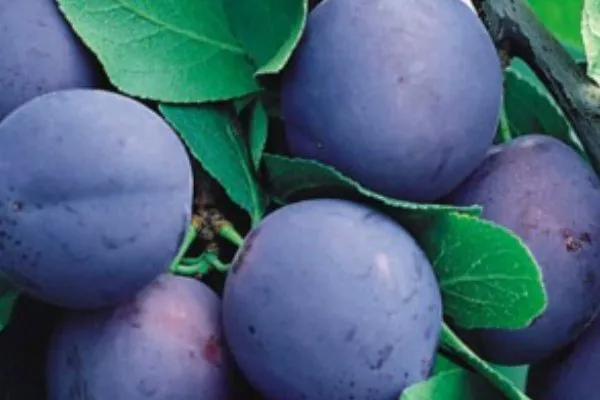
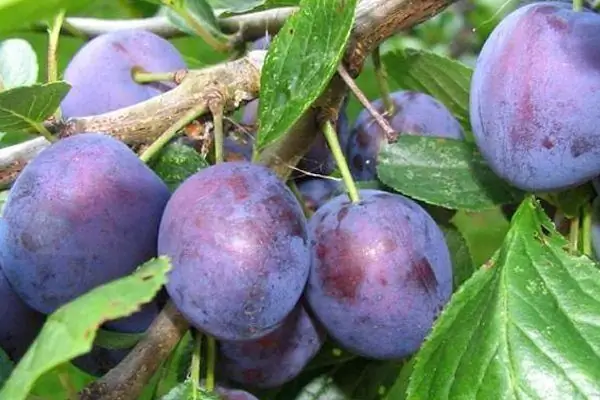
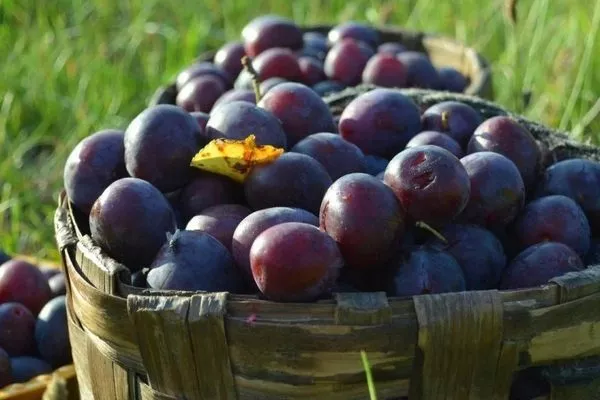
The Harmony plum fruits are moderately sized. They are round and colored in rich shades of blue-violet and lilac, adorned with a light waxy coating.
Other characteristic features:
- The minimum weight of each berry is 28-30 g, but with proper agricultural practices and favorable weather conditions, the weight of individual fruits can reach an impressive 70, and sometimes even 90 g.
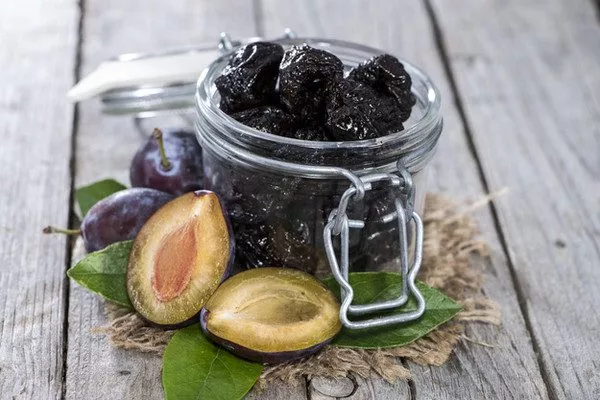
- The plum pulp is bright yellow, abundant in juice, and easily separates from the pits.
- The taste of these fruits is sweet with a slightly sour aftertaste.
- These plums are distinguished by their soft, delicate texture.
- They are especially valued for their delicate aroma, which creates a unique harmony of taste.
Characteristic
The harvested fruit does not survive transportation, making it unsuitable for commercial use. When fully ripe, the fruit retains its integrity.
Resistance to drought and frost
This plant is ideal for cultivation in both the south and north. It tolerates dry summer conditions well. Minor temperature fluctuations do not have a significant negative impact. Excessive moisture, particularly rain, can cause cracks in the fruit's skin.
There is no precise data on the temperature indicators of frost resistance anywhere, but the originators position the variety as highly frost-resistant.
Pollination of the variety
The Harmony variety is self-pollinating and does not require insects to set fruit. This can significantly increase productivity. In this case, it is recommended to place pollinators nearby.
The Hungarian plum is an ideal donor for Harmony. Harmony blooms early, and you can enjoy ripe fruits as early as July.
Productivity, fruiting and ripening time
Harmony is distinguished by its late maturity, beginning to bear fruit in its fourth or fifth year. Despite this, in some regions the first berries can be seen as early as the second half of July, while in others, only in September.
One of the key advantages of the Harmony variety is its high productivity. A healthy and properly pruned tree can yield up to 30-40 kg of fruit, and sometimes even more (if harvested in a timely manner).
Use of fruits
Harmony fruits are very juicy and sweet, making them an excellent ingredient for compotes, preserves, and jams. This variety is considered one of the best for summer desserts, and they are an excellent ingredient for baked goods.
Resistance to diseases and pests
The Harmony plum is renowned for its good resistance to various diseases and pests. However, to prevent potential insect problems, preventative measures are recommended.
Growing regions
This variety is recommended for gardening in the Krasnodar Krai, Astrakhan and Rostov Oblasts, and southern Ukraine. It can also be planted in more northern regions of the country, provided the tree is properly prepared for winter.
Landing features
Reproducing the Harmony variety is easy. The process doesn't require extensive experience or specialized knowledge—just follow the instructions.
The best time for landing
It prefers warm soil, so it should be planted in soil that has already been warmed by the sun. The best time to plant is in the spring, when the soil temperature reaches 8-10 degrees Celsius.
Autumn planting in northern latitudes can result in the death of young trees due to early frosts. In such cases, special attention is paid to protective measures. To maintain warmth, seedlings require mulching, covering material, and spruce branches to prevent freezing.
How to choose a site for planting?
The ideal location for planting a young Harmony tree is a sunny spot in the garden, protected from gusts of wind and cold air currents. This variety thrives in slightly elevated areas, and if these aren't available, they can be artificially created.
Lowlands where excess moisture accumulates and cold temperatures are localized are absolutely not suitable.
What is allowed and prohibited to plant nearby?
Avoid planting near pear, cherry, and sweet cherry trees, as this will negatively impact Harmony's growth. However, black elderberry and maple have a beneficial effect on the tree, promoting increased yield.
How to select and properly prepare planting material?
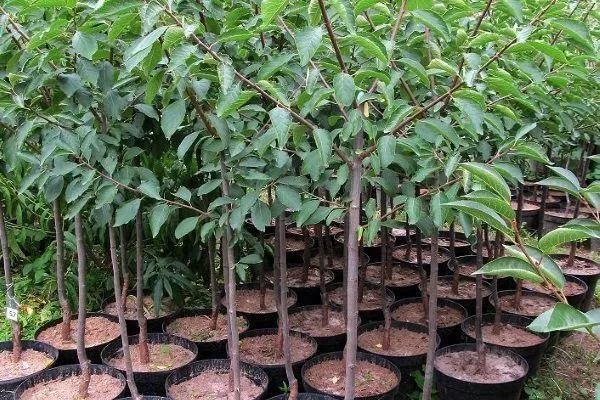
To successfully grow the Harmony plum, select one- or two-year-old seedlings with a well-developed, covered root system. It's best to purchase seedlings from a specialized nursery.
It's important that the roots are intact and healthy, free of damage and growths, and that the bark is healthy and smooth. The seedling should be at least 100 cm tall, and it's important to monitor for swollen buds, which is a sign of health and readiness for growth.
Planting sequence
A month before planting the seedlings, prepare their root system by ensuring it is healthy and removing any dried or yellowed branches and roots. Once the soil temperature reaches the optimal level, you can begin planting the cuttings one by one.
To do this, follow these steps:
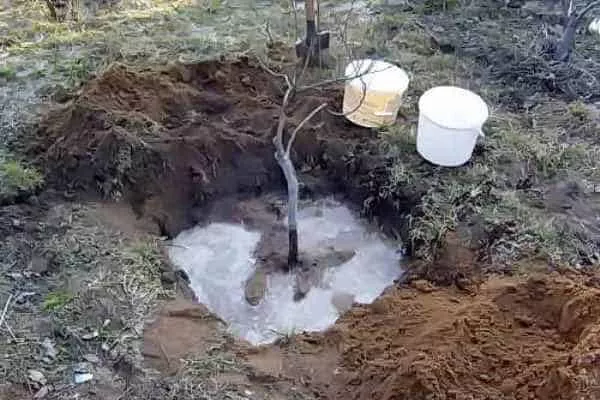
- Prepare planting holes in advance, the dimensions of which correspond to the plum tree's root system. The hole should be at least 50-55 cm deep and about 70-80 cm wide.
- Add compost and wood ash to the mixture containing the soil removed from the topsoil. The compost component should make up 1/4 of the total soil volume. 200-300 g of wood ash per hole is sufficient.
- Drive a wooden post into the center.
- Place the seedling in the hole, carefully spreading the roots so that they are 5 cm from the bottom.
- Fill with prepared soil mixture and compact thoroughly, removing all voids.
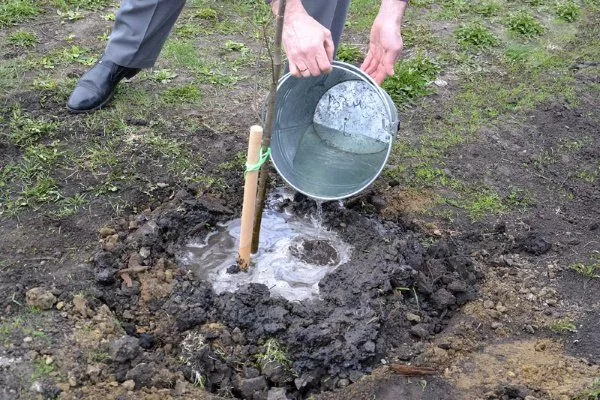
- Secure the plum tree stalk to the stake with soft rope. Afterward, water the seedlings, loosen the soil around the trees, and then apply mulch.
- ✓ The optimal planting depth for a seedling should be at least 50 cm to provide sufficient space for the root system to develop.
- ✓ The distance between trees should be at least 3 meters to ensure sufficient space for the growth and development of the crown.
The Harmony variety requires sufficient space to grow, so the distance between trees should be at least 300 cm.
How to care for the plum tree further?
This variety is easy to grow, which is an undeniable advantage. All the care methods typical for most plum varieties are also applicable here.
Cleaning the root system and removing unwanted shoots
Every spring, plum trees begin to grow root suckers, which draw nutrients from the base of the plant. Therefore, it's necessary to periodically remove them, including their root system, to prevent the trunk from becoming depleted.
During the growing season, plum trees require regular pruning in the spring. This can include both formative and sanitary pruning:
- In the first year of life, shorten the central trunk to 60-65 cm to stimulate subsequent growth of the main branches.
- In the second year of life, the central trunk is shortened by a third of its length, and the lateral shoots are trimmed to 20-22 cm.
- In subsequent years, all new shoots are shortened to 15-18 cm, and all damaged, frozen, or dried branches are removed. Regular pruning is necessary to prevent pest and disease infestations.
- In the eighth year of life, the tree needs to undergo a rejuvenation procedure, which includes cutting back all five-year-old shoots by half their length and shortening young growth by a third of its length.
Preparing for winter
Harmony has excellent frost resistance. However, during the cold season, young seedlings require special care. Using spruce leaves to insulate the trunk is an effective solution, and to protect the soil from freezing, it is covered with mulch, creating a layer of fallen leaves or sawdust.
Despite its resistance to low temperatures, this variety still requires additional frost protection during its initial growth period. This is also necessary in the northern parts of the country.
The following methods are used for this:
- a protective layer of rotted manure at least 15-20 cm thick is created around the roots;
- The lower part of the trunk and main branches are covered with spruce branches or tied with specialized material for plant protection, for example, lutrasil, agrofibre, mineral wool.

Top dressing
Every spring, plantings require nitrogen fertilizer. When plum trees begin to bloom and bear fruit, they are given phosphorus and potassium. Before the onset of cold weather, the soil around the trees is tilled, improving its structure with compost or rotted manure.
Such a varied diet promotes active growth of plums, increases their resistance to diseases and leads to abundant fruiting.
Watering
During the hot summer months, it's especially important to provide trees with stable moisture. In spring and early summer, plants need water for active growth and bud formation.
A lack of moisture can lead to excessive fruit drop. In drought conditions and inadequate watering, the fruits will be underdeveloped.
To fertilize trees, dig a trench around the trunk to prevent water from reaching the trunk itself. During the growing season, irrigation is recommended at the following times:
- beginning of spring;
- before budding;
- after flowering;
- during the fruit ripening period (double the volume of water);
- at the end of autumn to reserve moisture.
Control and prevention of diseases and parasites
Despite its disease resistance, this variety is susceptible to infection and pest damage. To prevent disease and insect infestations, the following methods are used:
- sanitary pruning is carried out annually;
- supplementary feeding is carried out to strengthen the immune system;
- soil cultivation is carried out regularly, including weeding, loosening, digging, removing weeds and fallen leaves;
- the tree trunk area is sprayed with Bordeaux mixture;
- Before the onset of cold weather, the trunk needs to be whitened.
Harvesting and storage rules
When harvesting plums, it's important to follow a few basic rules to ensure a full harvest: start at the top of the tree and work your way down to the base, working on a dry day. Plums that have fallen from the tree are not suitable for long-term storage and should be collected separately.
To preserve plums in the long term, it is critical to comply with the following conditions:
- You need to pick plums with your palm, carefully lifting and twisting them together with the stem;
- avoid squeezing, rubbing or scratching the fruit with your fingers;
- It is not recommended to pick off the stems;
- Do not remove the waxy coating that forms naturally on the surface of the plums;
- The harvest must be carefully placed in baskets or plastic containers, avoiding throwing to prevent damage.
Next, it is necessary to carefully separate the plum fruits by size and condition: separate the damaged, small, medium and large ones.
Ideal conditions for long-term plum storage include temperatures ranging from 0 to 1-2 degrees Celsius and humidity ranging from 90 to 95%. If these parameters are met, plums will retain their flavor for 12-25 days.
Methods of reproduction
This variety is versatile in propagation, so the following methods are suitable for it:
- From seeds. Reproducing a plum tree from a seed pit is possible for those with patience, but no special conditions are required. Simply clean the fruit of any remaining pulp, cover it with a damp cloth, and place it in a package or container.
Store in the refrigerator until the end of winter, carefully monitoring the humidity. In the spring, plant the seedlings in fertile soil in the garden and wait a couple of years for the seedlings to form and be ready for planting. - Using root shoots. This method is the least labor-intensive and most effective way to propagate this variety. Select a sturdy shoot from the donor tree, located at least 100 cm from the main trunk, and carefully rake the soil to reach the root.
Cut the root at a depth of 15 cm on all sides, immerse it in water for two days, then in a root formation stimulator and transplant into the garden. - By root cuttings. This propagation method is ideal for early spring and produces quick results. To obtain planting material, a portion of the root system is removed from the mother plant, almost at its base.
To form cuttings, select root cuttings containing shoot buds. The cuttings should be at least 10 mm thick. The cuttings are cut, treated with a rooting stimulant, and then planted in a pre-prepared bed. - Simple cuttings. Using a sharp tool, cut off shoots up to 35-40 cm long, removing the lower leaves. The cuttings are then placed in a root-promoting solution for several hours.
To root the cuttings, they are buried in the soil to the level of the first removed leaf, placing them at a 45-degree angle to the surface of the bed. You can also place the cuttings in water.
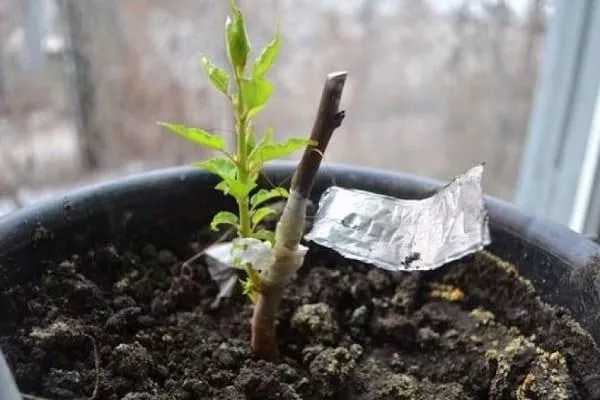
After a month, they begin to fertilize, and in the spring they are transplanted into the garden. - Graft. Rooted cuttings obtained from root shoots or a young tree grown from plum seeds can be used as a rootstock when grafting for further propagation.
Positive and negative qualities
- ✓ The variety has high frost resistance, but young seedlings require additional protection in the first years.
- ✓ The fruits have a unique aroma and taste that create an inimitable harmony, making the variety especially valuable for desserts.
The Harmony plum doesn't tolerate excessive soil moisture. This is its only drawback.
Reviews
The Harmony plum is a garden plant that is very popular among gardeners. It is an easy-to-grow tree that produces abundant harvests of sweet and juicy fruits. For healthy growth, flowering, and fruiting, simply find a sunny spot and ensure regular moisture. This variety is an excellent choice for beginning gardeners.