
Shaping the crown of a young plum tree is an important and crucial step that influences the tree's subsequent growth and fruiting. The choice of shape depends on the gardener's goals and growing conditions. With the right approach and timely pruning, both configurations produce a healthy, resilient, and highly productive tree.
Rules for establishing the crown of a young plum tree
To properly structure a seedling, it's important to consider the plant's biological characteristics. Due to its rapid growth, the tree requires regular and timely pruning to create a proper crown.
Follow these recommendations:
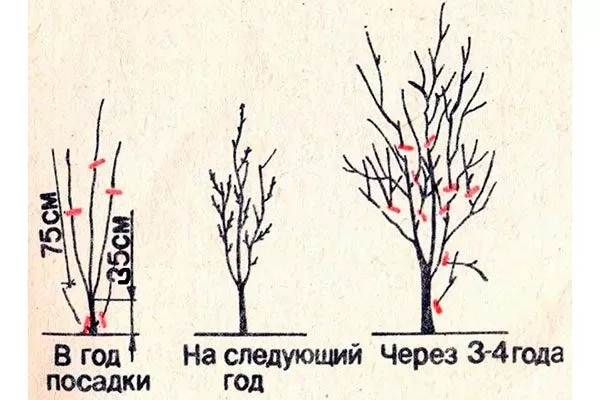
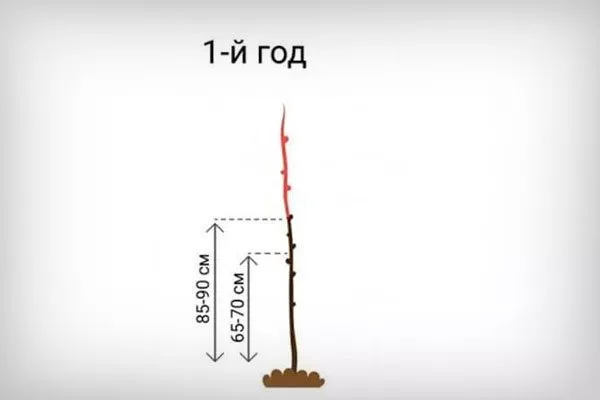
- Perform the first formative pruning immediately after planting. Shorten the central stem to a height of 50-70 cm from the ground.

- Choose the right time for the event – this is influenced by both the type of crop and the climatic conditions of the region.
- Determine in advance the optimal number of skeletal branches so that the tree develops evenly and maintains a strong structure.
The best time to structure the crown
This type of plum pruning is best done in early spring—before the sap begins to flow and the buds have yet to open. This allows the tree to recover more quickly and focus its energy on growing a properly shaped crown.
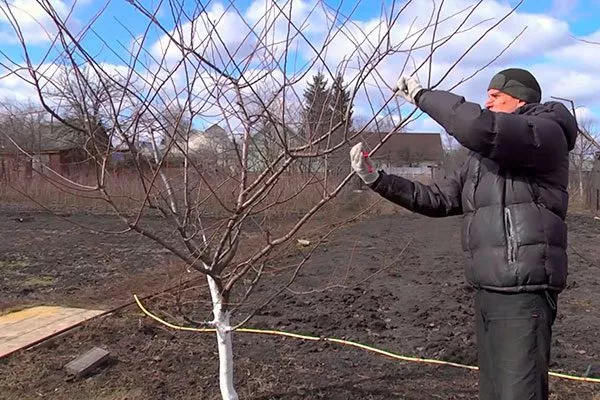
In southern regions, autumn pruning is also acceptable, but it should be carried out no later than mid-October, so that the tree has time to heal the cuts before the onset of persistent cold weather.
Result:
- main period – early spring (March-early April);
- acceptable in southern regions – early autumn (until mid-October).
Necessary tools, work stages and recommendations
Properly selected and sharpened tools are the key to accurate and safe pruning. Dull blades can cause serious damage to the tree, hindering wound healing. Ideally, all tools should be personal, used only on your property.
If tools are borrowed, for example, from neighbors, they must be thoroughly disinfected to avoid transferring pathogens or pests.
What you will need for work:
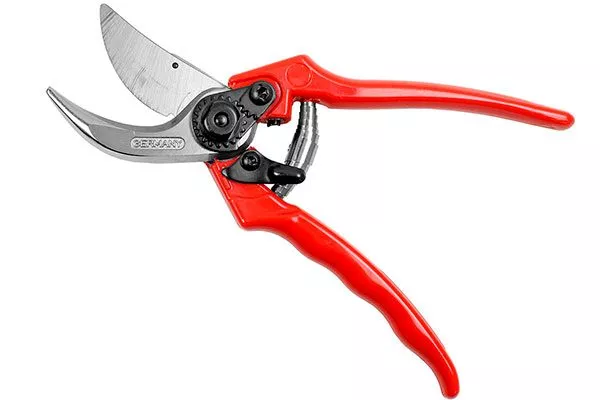
- Secateurs – used for cutting young shoots up to 0.4 cm thick.
For live branches, a bypass pruner is suitable, for dry ones - an anvil pruner. - Lopper - copes with thicker branches up to 0.5 cm in hard-to-reach places.
Thanks to the long handles, it easily penetrates into dense tree crowns. - Garden saw – will be needed to remove dead and dry branches over 5 cm thick.
It is advisable to have two saws – a small one and a large one. - Garden knife - used to align cuts, remove burrs and uneven areas.
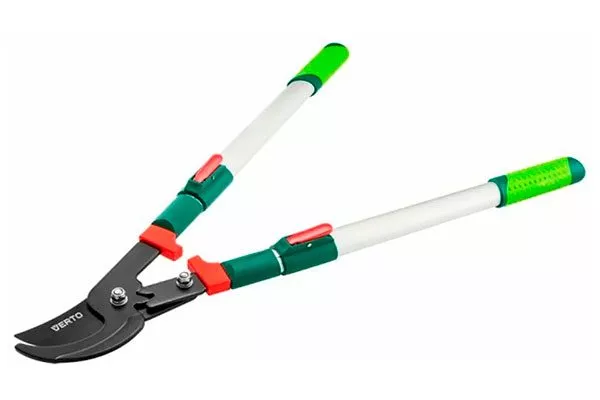
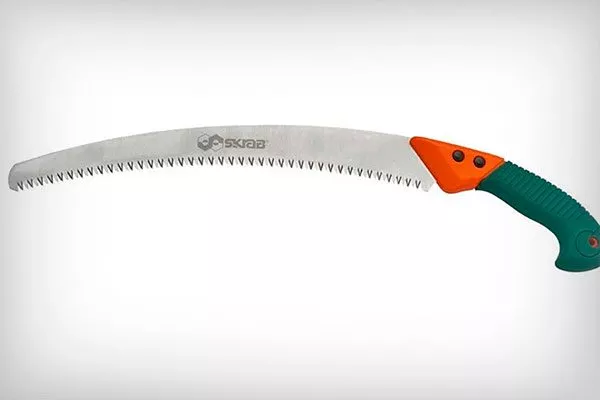
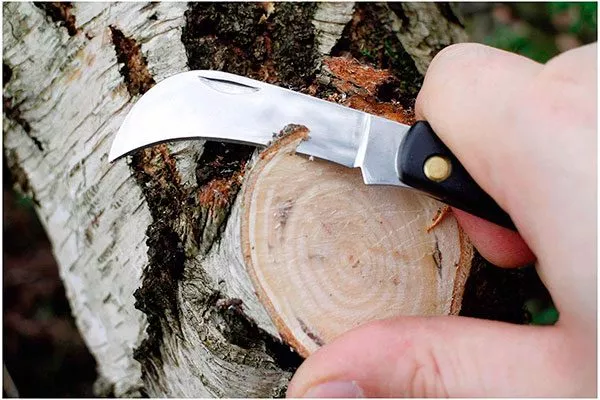
Additionally, prepare some garden varnish – it is necessary for covering fresh cuts to speed up their healing and protect them from infections.
Choosing a Crown Shape with Step-by-Step Instructions
A two-year-old tree already needs its crown structured. This procedure not only gives the plant a neat and well-groomed appearance, but also improves its overall condition: the crown becomes more ventilated, and sunlight freely penetrates all branches.
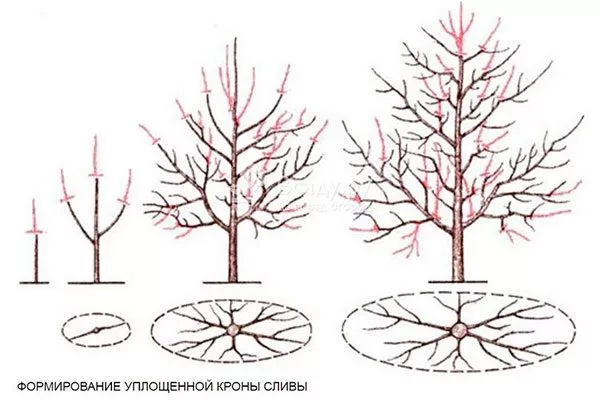
Sparse-tiered scheme
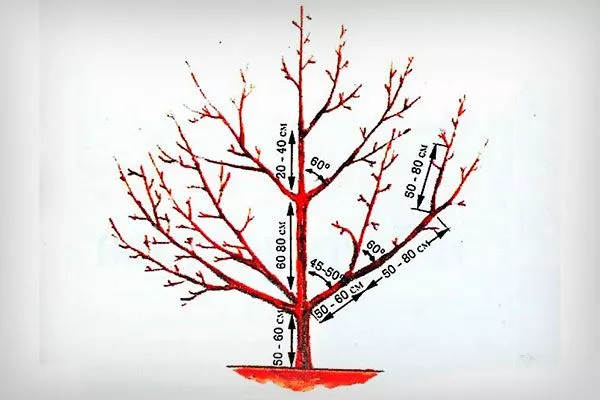
To achieve a proper and easy-to-maintain crown, it's necessary to leave 5-7 primary skeletal branches, evenly distributed between the two tiers. Sometimes three tiers are formed, but this is quite rare.
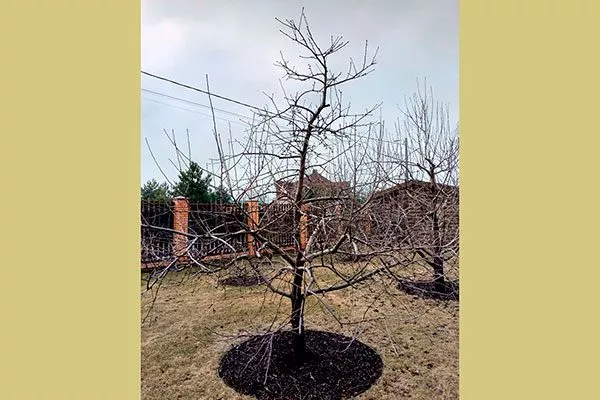
The first tier begins to be laid during planting, especially if the seedling has not only a central conductor, but also developed lateral shoots.
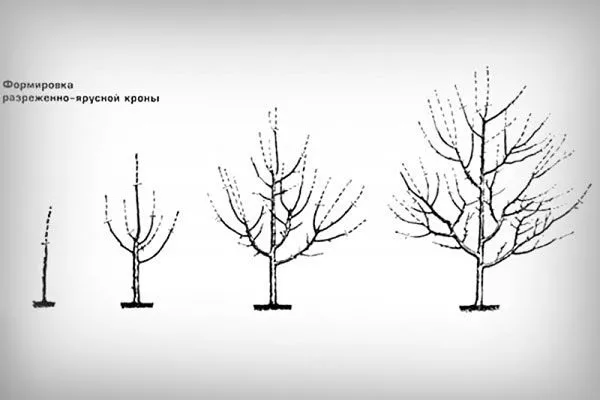
Structuring a two-year-old or three-year-old tree involves several stages:
- First of all, carry out sanitary pruning: remove damaged, diseased and thickening branches.
- Shorten last year’s growth by about half, leaving 40-60 cm – these shoots will become the basis for the second (and sometimes third or even fourth) tier.
- Do not remove perennial branches that are no longer than 60 cm – they will only require a summer growth correction.
- In the third year, in the spring, continue shaping using the sparse-tiered principle, laying the skeleton on a trunk 60-80 cm high.
Cup-shaped
To shape a plum tree into a bowl-shaped crown, begin the process when it's one year old: shorten the central stem to 50 cm or slightly higher. This stimulates the development of lateral shoots and lays the foundation for the future shape.
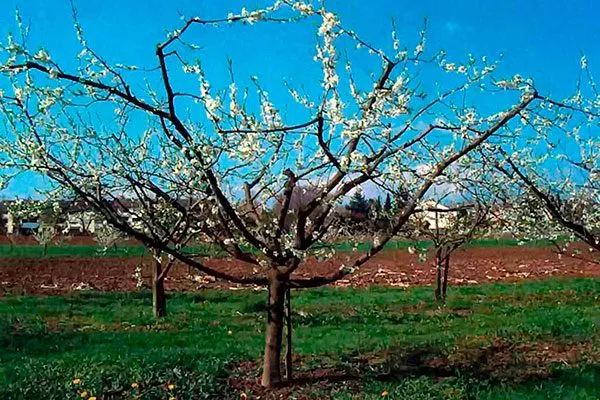
All skeletal branches should originate from a common point, with the distance between them no more than 5-7 cm. It's best to have the top shoot facing north – this will prevent the remaining branches from stretching toward the sun, and the crown will be symmetrical.
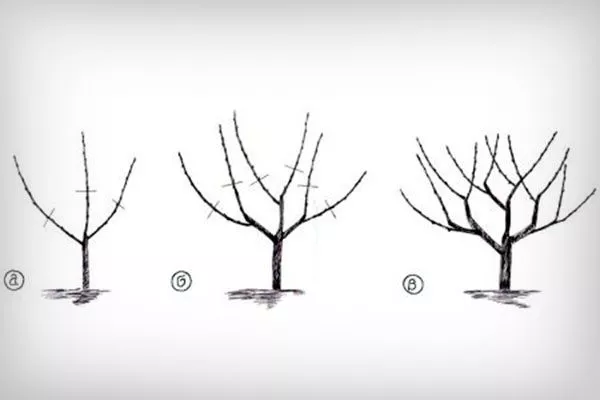
The formation diagram of the "tree-bowl":
- In the second year after planting, leave 3-4 evenly developed lateral shoots and allow them to grow freely.
- By the end of the season, each main branch should form 2-4 offshoots. In July, pinch out the young shoots.
- In the third year, shorten the skeletal branches to 50 cm, leaving about 10 buds. At the same time, water and trim the branches.
- Lateral branches grow from the tips of the main branches. Prune back one—the strongest and most conveniently located—by 10 buds. This is where the main crop for the current season will form.
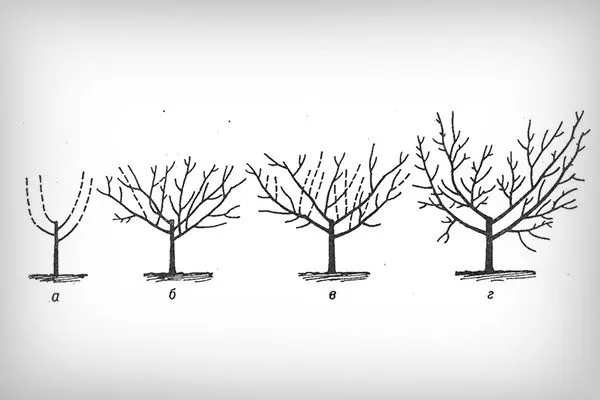
In subsequent years, all that remains is to control the growth of new shoots, regulating their development as needed.
Bush method
When planting, the plum tree should be pruned to the height of the trunk—about 40 cm, sometimes even slightly lower. Leave 2-4 lateral shoots below the cut, which will form the basis of the future crown.
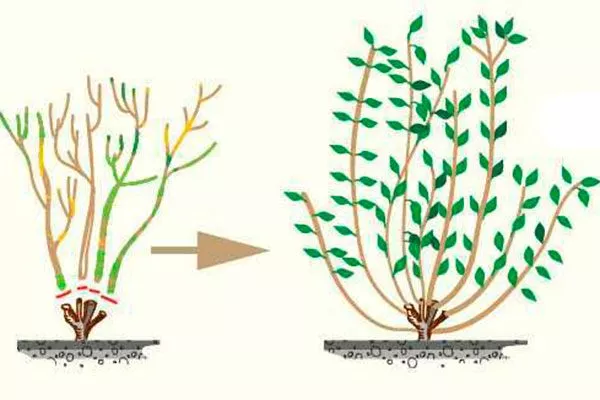
Please follow these guidelines:
- In the second year after planting, prune the skeletal branches, leaving a length of about 45 cm. Remove all shoots that appear below 30 cm from the soil line, cutting them back to the desired length. Also shorten the new growth from the second season to the desired length.
- In the third year, for bush-shaped plum trees, perform only sanitary and maintenance pruning. Shorten the previous year's shoots, leaving about 50 cm. At this stage, the crown is considered fully formed.
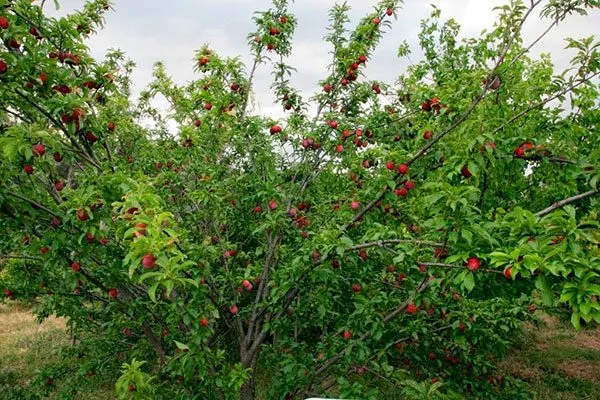
It is the bush form of plum that is considered the most frost-resistant, which makes it especially suitable for regions with cold winters.
According to Kurdyumov
Nikolai Kurdyumov is a renowned gardener and promoter of natural farming. In his recommendations, he recommends growing plum trees with a sparse, tiered crown. However, structuring the crown should not begin immediately, but only in the second year after planting.
During this period, shorten the water sprouts by 20 cm and perform sanitary pruning if necessary. After this, bend down 2-3 branches from last year, creating an angle of 50-80 degrees.
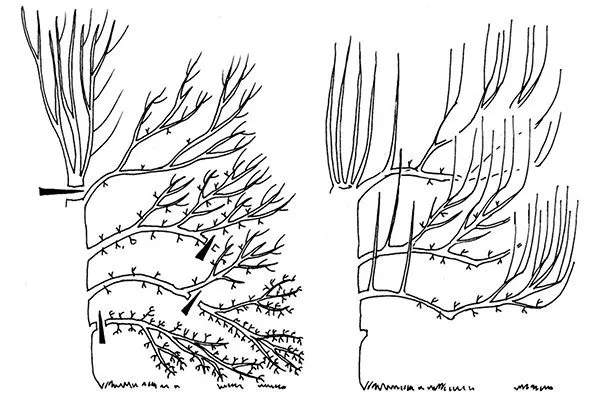
Additional tips from Kurdyumov:
- the lower tier should have no more than three branches;
- in the second - 2-3 branches;
- above - one branch for each subsequent tier;
- the distance between tiers is about 60 cm, and between branches in a tier – about 15 cm;
- Leave only those shoots that extend from the trunk at an angle of up to 40 degrees as the main skeletal shoots - this reduces the risk of breakage.
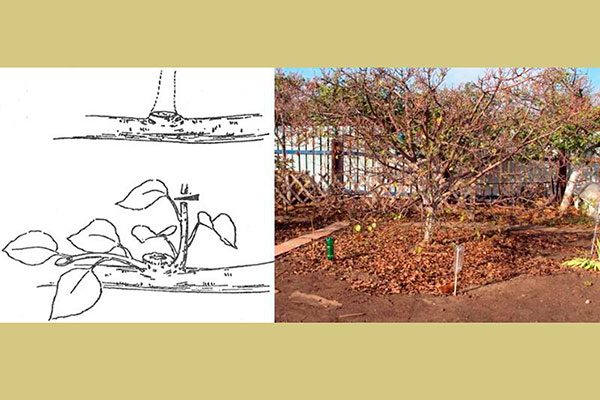
To avoid exposed branches, use a pruning system:
- when buds are fully awakened, shorten the shoots by 1/4;
- at average – by 1/3;
- if weak - by 1/2 the length.
According to Kurdyumov, bent branches mimic the natural shape of a tree laden with fruit and remain productive longer. A plum tree formed this way will be compact, easy to care for and harvest, and will still produce excellent yields.
Pyramid shape
Pruning a tree with a pyramidal crown is a step-by-step process and requires a systematic approach. Key recommendations:
- During the first three years, focus on shaping the tree: shorten the central conductor (leader) and skeletal branches to give the tree a vertical, conical silhouette.
- Starting from the fourth year, perform corrective pruning, the purpose of which is to maintain the desired pyramidal shape, remove thickening, inward-growing and vertical shoots, as well as sanitary cleaning.
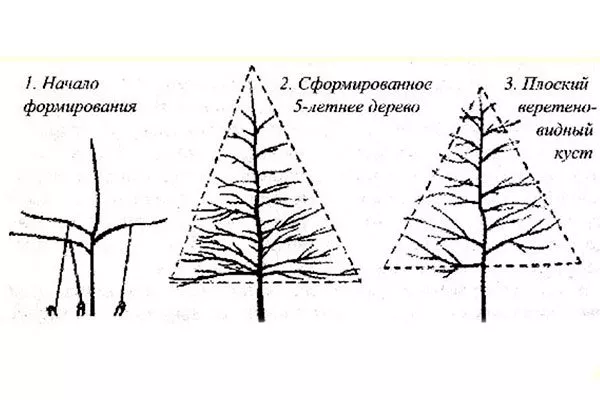
Plum trees with this type of crown are typically compact, allow good light penetration, and are easy to care for. Due to their neat shape and moderate growth, they are often used not only in orchards but also in ornamental plantings.
Formation of plum trees by age
Plum tree crown shaping begins in the first year after planting, and the process continues over several seasons. Final formation typically occurs in the tree's fourth year of growth.
Shaping plum seedlings when planting in spring
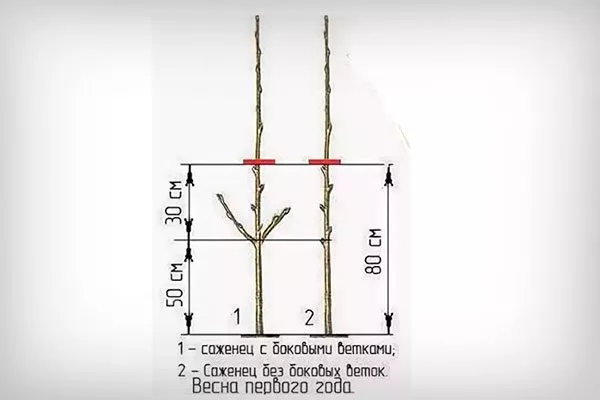
When creating a crown using the sparse-tiered method, shorten the seedling after planting to a height of 60-80 cm, leaving 3-4 buds below the cut. These buds will subsequently grow shoots that will form the skeletal branches of the lower tier.
How to shape a plum tree in the first year?
Do not prune during the first year after planting. Begin structuring the lower tiers and establishing the middle tiers only the following spring.
To do this, follow these steps:
- Select 3-4 strong shoots, evenly spaced around the trunk and at approximately the same level. Remove all remaining branches at the ring.
- Leave the small branches of the first tier that are less than 30 cm long, and cut the longer ones into a ring as well.
- Shorten the selected 3-4 shoots to the same level, approximately to half the length of the tallest of them.
- Trim the central conductor so that its top is 15-20 cm higher than the cut of the lateral shoots.
What to do with a 2-year-old plum tree?
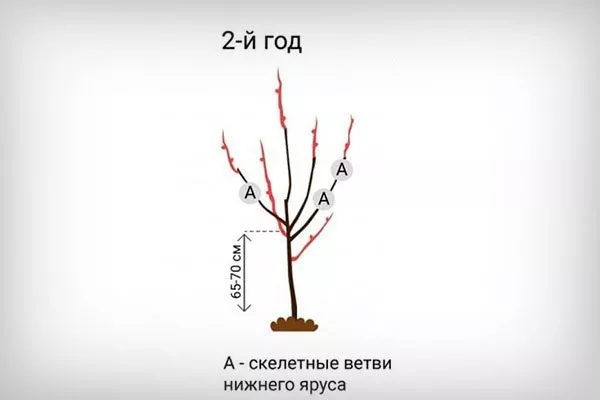
In the spring of the second year, continue pruning the plum: complete the formation of the second tier and begin laying the third, final one.
Follow these recommendations:
- At a height of approximately 50-60 cm above the lower tier, select 2-3 promising shoots extending in different directions from the trunk.
- Repeat all the actions performed last year: trim the shoots to the same level and remove branches growing inward from the crown, competing shoots and suckers.
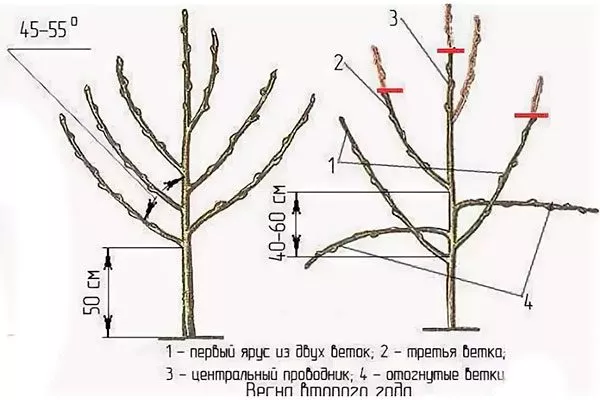
Structuring young plum
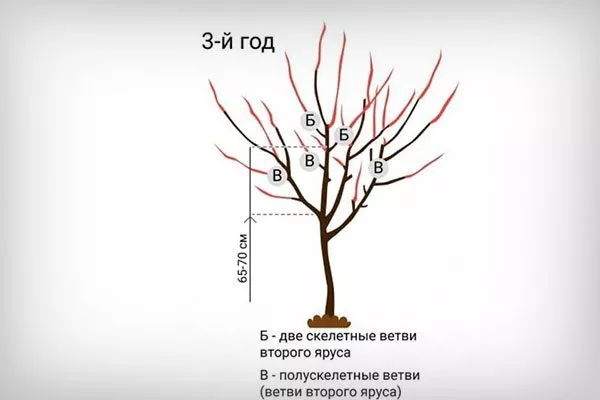
Crown formation is complete in the spring of next year. Follow these steps:
- At a distance of 40-50 cm from the second tier, leave the strongest shoot, and remove all the others, including the central conductor, “to the ring”.
- Trim the shoots of the lower and middle tiers to maintain shape.
- After this, prune the young plum tree only for sanitary and thinning purposes - remove thickening branches and control the tree's upward growth.
How to shape a mature plum tree?
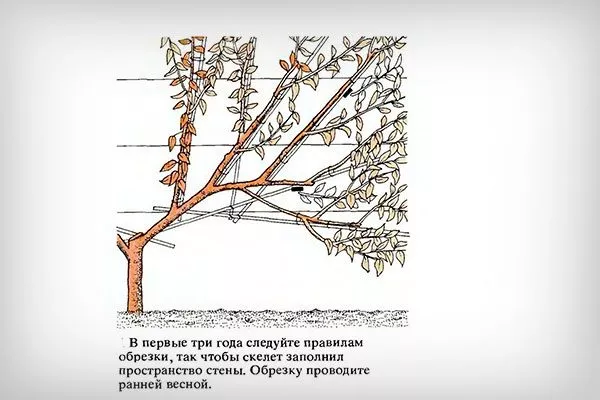
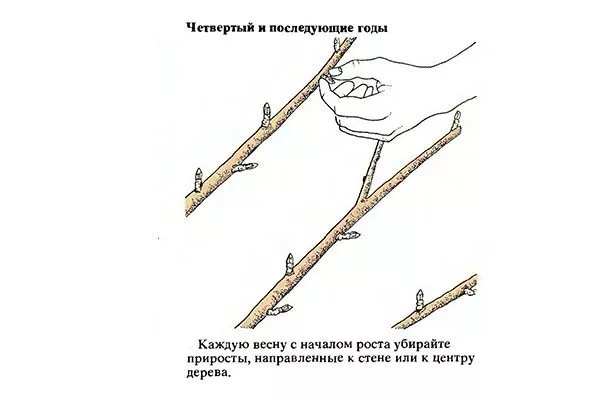
Prune mature, fruit-bearing plum trees several times during the season. In spring and fall, perform sanitary pruning: remove dry, damaged, and diseased branches. At the same time, replant upper branches onto lateral shoots to control the tree's height.
How to shape an old plum tree?
Signs of the need to rejuvenate an old plum tree include a decrease in yield, a reduction in shoot growth to 10-15 cm per year, and a shift in fruiting to the upper part of the crown.
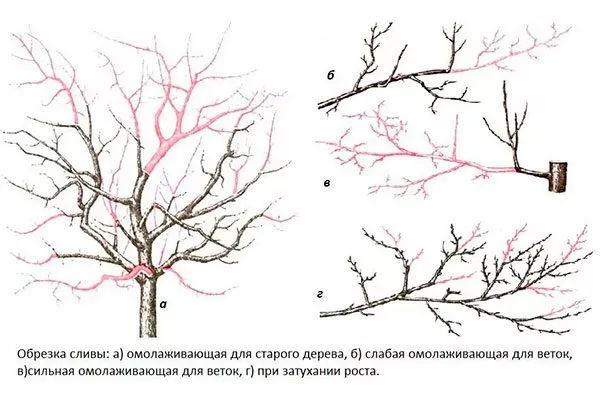
To rejuvenate the tree, gradually remove old wood by pruning out skeletal branches. Perform this procedure in stages over 3-4 seasons, allowing the tree time to fully renew itself and sprout new, fruit-bearing shoots.
Shaping a neglected plum
If a tree hasn't been pruned for a long time, don't try to restore its shape all at once. Follow these guidelines:
- First, carefully inspect the plant and remove all dry, broken and diseased branches.
- Next, move on to thinning pruning: cut out water sprouts growing inward into the crown, as well as branches that rub against each other.
- Shorten the current year's young growth by about a third.
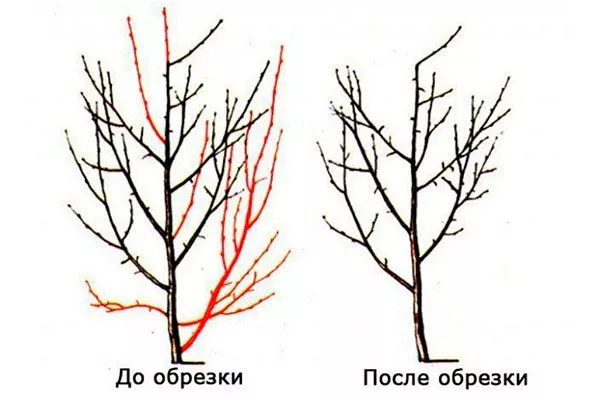
These steps will significantly lighten the crown and improve light access. After harvesting, assess the plant's condition for fruiting and plan rejuvenation measures for the following season.
Common mistakes and their consequences
Many gardeners make frequent mistakes when shaping plum tree seedlings. For example, excessive pruning can delay fruiting by 1-2 years, while improperly angled branches typically cause them to break under the weight of the fruit.
The most common problems include:
- leaving too many first-order branches;
- incorrect choice of growth direction of skeletal shoots;
- using a blunt instrument causing uneven cuts;
- lack of treatment of cuts with protective agents.
Proper crown formation for a young plum tree is the key to its health, good yield, and ease of care. This process is especially important in the first few years after planting, when the foundation of the future tree is being laid. Crown formation can be done in various ways, depending on personal preference. The most popular options and their key features are presented below.