
Eurasia 21 is an early-ripening hybrid from the European plum group. This variety is distinguished by its tree height, large fruits, and high yields. Let's learn what gardeners should consider to ensure they get half a hundred pounds of large, piquant fruits.
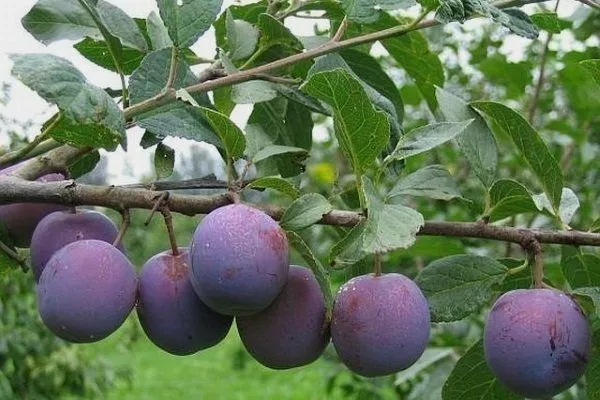
plum variety "Eurasia"
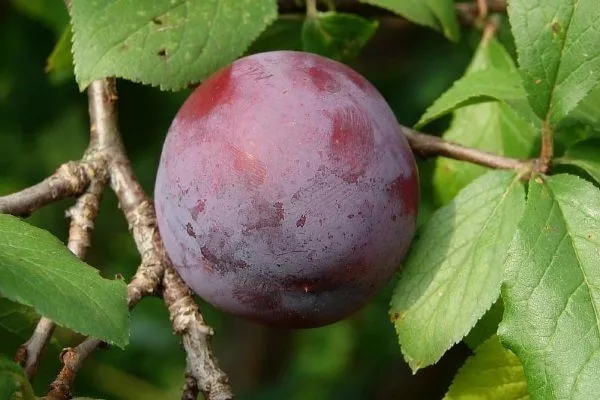
The Eurasia plum retains its quality during long-term storage
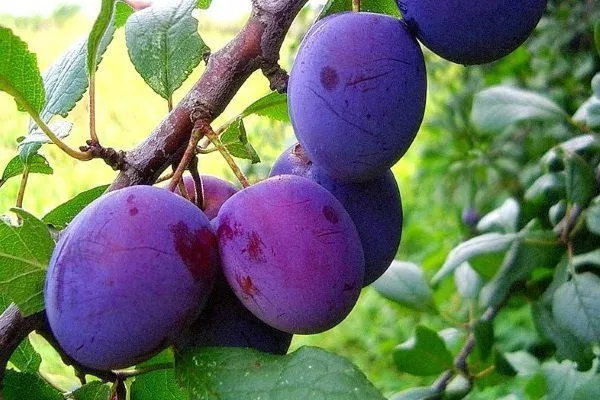
Frosty winters are not a problem for the Eurasia variety
History of the variety's appearance
"Eurasia" is a product of domestic breeding. This complex hybrid was created by crossing cherry plum and plum. The following varieties were used: Domashnyaya, Kitayskaya, Americanskaya Zlotaya, and East Asianskaya Sliva. The variety was developed by Voronezh breeders. "Eurasia" has been included in the State Register since 1986. It is recommended for cultivation in the central regions and the Leningrad Oblast.
You can get more information about other varieties of plums here.
Description of Eurasia
The first thing you notice when looking at the "Eurasia" variety is the tree's height and the size of its fruit. Description of the variety:
- Tree. Height: 5-6 m. It has a semi-spreading crown of moderate density. The bark on the trunk and branches is gray. Due to its tall stature, this variety is usually grafted onto dwarf rootstocks.
- FruitBeautiful, dark blue with a burgundy tint, and thin skin. Covered with a bluish waxy coating. Weight: 23-33 g. The flesh is very juicy, tender, and crumbly. The taste is sweet and sour, with a distinct plum aroma. The stones are small and difficult to separate from the flesh.
- ✓ The rootstock must be compatible with the Eurasia 21 variety, it is preferable to use dwarf rootstocks to control the height of the tree.
- ✓ Rootstock resistance to local soil conditions and climate.
Eurasian fruits contain 7% sugar and 2.7% acid. For comparison, Hungarian plums contain about 14% sugar and 0.7% acid.
Plum Eurasia is a table variety intended for fresh and processed consumption.
Characteristics of plum
Eurasia is distinguished by its successful combination of undemanding nature and high-quality fruit. Few stone fruits are as easy-to-grow and productive as the plum, and Eurasia is one of the best.
Main agrotechnical characteristics of the Eurasia 21 variety:
| Characteristics | Parameters/Description |
| Productivity | young tree – 20 kg adult – 40-50 kg record – 100 kg |
| Ripening time | early ripening |
| Precocity | harvest - in the 3rd-4th year |
| Pollination | self-infertility |
| Frost resistance | average, up to minus 20-25 °C |
| Resistance to diseases and pests | average, needs timely treatment |
| Drought resistance | low, without watering the leaves turn yellow and the fruits fall off |
Advantages and disadvantages
The Eurasia plum has its positive qualities:
- Productivity. A tree with proper care can produce up to 50 kg of large fruits.
- Frost resistance. The tree, its roots, and flower buds easily withstand frosts and freezes typical of the temperate climate.
- Immunity. The variety is resistant to many diseases and pests.
- Fruit characteristics: Excellent flavor, large size, and long-lasting marketability and flavor.
- Early fruiting. The tree produces its first harvest 3-4 years after planting the seedling in its permanent location.
Flaws:
- Tree height. It's more difficult for a gardener to maintain tall trees, spray them, harvest them, etc.
- Self-sterility. Pollinators must be planted in the area.
- Vulnerable to many diseases. The variety is susceptible to clasterosporium leaf spot, fruit rot, codling moth, and aphids.
- Not completely versatile. Due to the loose texture of the pulp, the fruits are not suitable for certain dishes.
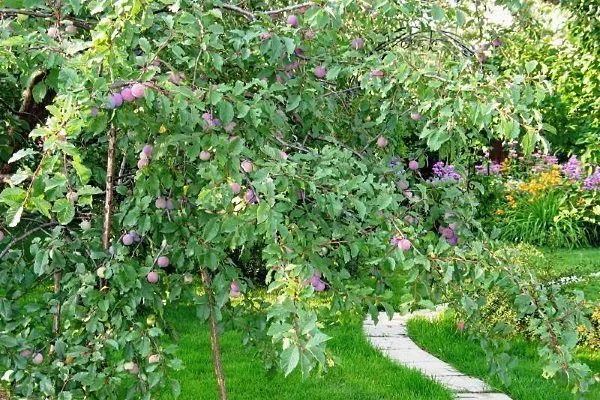
Pollination of plum
The Eurasia variety is self-sterile. This is a drawback, but it can be easily mitigated by planting one or more plums of a different variety nearby. Eurasia produces large yields near Volzhskaya Krasavitsa, Mayak, Rekord, and Renklod Urozhny. Gardeners sometimes use mixtures of different pollens instead of pollinators.
How to choose the right Eurasian seedling?
The best option for purchasing seedlings is to go to a nursery. Buying planting material at the market from unknown sellers not only risks purchasing a completely different variety than you expected, but also infecting your garden with a fungal or viral disease.
Rules for selecting seedlings:
- The root system should be well developed, with roots at least 10 cm long. There should be no damage, signs of fungus, or rot.
- The bark is intact, without damage. No dry branches.
- The grafting site should be clearly visible. The graft is located just above the root collar.
Optimal parameters for a seedling:
- age – 1-2 years;
- height – up to 150 cm;
- barrel thickness – 1.3 cm;
- number of branches – 3-4 pieces.
You shouldn’t even take 3-year-old seedlings – they take root worse than 1-2 year-old ones.
Landing requirements
The future fate of the seedling—its survival, immunity, vigor, and yield—largely depends on how correctly the planting is carried out. The process begins with selecting the seedling and the planting site.
Deadlines
The landing time for Eurasia is selected taking into account the region:
- Spring. In the central and mid-latitude regions, it's preferable to plant plums in the spring. Planting begins when the threat of frost has passed, usually in April. Over the summer, the seedling will establish itself without exposure to frost and enter the winter stronger.
- Autumn. This type of planting is more suitable for southern regions, where mild winters allow seedlings to overwinter safely. However, at least 1.5-2 months should pass between planting and the onset of stable frosts.
A dry, windless day is chosen for planting seedlings.
Choosing a location
Landing site requirements for Eurasia:
- Soil. The best option is medium loamy soil with a neutral pH. Acidic soils are undesirable, as plums produce extremely poor yields on them. Sandstone is a poor choice.
- Illumination. Choose a sunny site. A slightly elevated location is ideal. It's best to plant the plum tree in the southern or southeastern part of the garden.
- Wind protection. The tree is tall and fragile—branches can break when exposed to wind, so choose a location protected from the wind. It is best planted near walls, fences, and buildings.
- Neighbours. There should be at least 3 meters between the Eurasian plum and the nearest tree. It is not recommended to plant plum near walnut, birch, poplar, hazelnut, pear, or fir trees. An apple tree is a good choice.
Landing rules
The rules for planting the Eurasia plum are almost the same as for other varieties of this crop. Here's what to keep in mind:
- If the soil is acidic, it is deoxidized by adding lime - 0.5-1 kg is added to one hole.
- It is very important that the location is not exposed to winds, due to the increased fragility of long branches.
The remaining nuances are similar to the general rules for planting plum seedlings:
- The ideal time for planting is spring, but it is better to purchase seedlings in the fall, regardless of the time chosen for the event.
- The planting hole is prepared in advance – two weeks before planting the seedling. If planting in the spring, it is advisable to prepare the hole in the fall.
- The dimensions of the pit are 80 cm in diameter and 80 cm in depth.
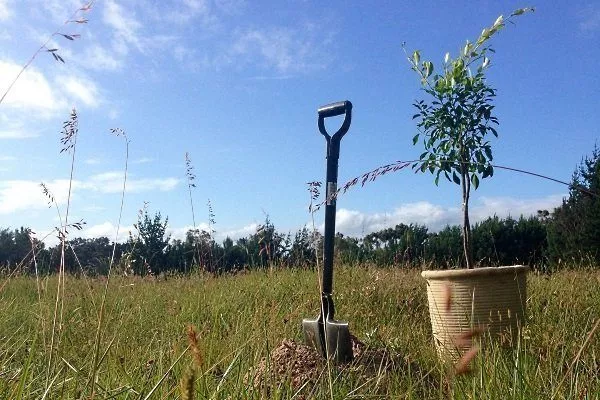
Preparing for landing
The soil for planting is prepared in advance. It is dug over, the rhizomes of perennial weeds are removed, and a complex mineral fertilizer (100-120 g per square meter) and bone meal (55-60 g per square meter) are added.
Planting holes—70-80 x 60-70 cm (width x depth)—are also prepared in advance. For spring planting, it's best to prepare the holes in the fall. If this isn't possible, dig the holes in the spring, a couple of weeks before planting. Fill the holes with a soil mixture prepared by mixing the topsoil with fertilizer.
- 2-3 weeks before planting, analyze the soil for acidity.
- Add deoxidizers (lime or dolomite flour) if necessary, according to the analysis results.
- Enrich the soil with organic and mineral fertilizers, as indicated in the article, but taking into account the specific conditions of the site.
Components for the soil mixture (for one planting hole):
- humus – 3 buckets;
- superphosphate - 250 g;
- dolomite flour/slaked lime – 200/300 g;
- potassium sulfate – 30-40 g.
When spring comes, a nutrient mixture prepared from:
- rotted compost – 20 kg;
- urea – 30 g;
- ash – 200 g.
The better the soil is enriched, the faster the seedling will take root and the better it will develop.
Until the seedling is planted, it is kept buried in the ground. The day before planting, place it in water, and immediately before placing it in the hole, soak the roots in a soil-clay mixture. Alternatively, dip the roots in a clay-mullein solution. Before dipping the roots in the mixture, trim them by 1-2 cm. Also trim off any broken or rotted roots.
The process of planting a plum sapling Eurasia
Once the hole and seedling are prepared, planting begins. Here's the procedure:
- The bottom of the pit is carefully loosened and a hill is formed.
- A support for the seedling – a wooden peg – is placed in the middle of the hill.
- The seedling is placed on the top of the hill, straightening out the roots.
- Sprinkle the roots with soil, tamping it down with your hand.
- The root collar should be at a distance of 3-5 cm from the ground surface.
- The seedling is tied to a peg.
- A 50 cm deep depression is made around the trunk to allow for watering. The recommended watering rate is 3 buckets of water.
- Sprinkle the tree trunk circle with mulch.
When planting several plum seedlings, leave 3 m between adjacent ones and 4.5 m between rows.
Growing and care
Gardeners expect large harvests from the Eurasia variety, but they won't achieve this without regular care. Standard farming practices include watering, fertilizing, pruning, and pest, disease, and weed control.
Top dressing
If all the necessary fertilizers were added to the planting hole, the tree will not require any additional feeding for the first two years. After that, the tree is fed according to a schedule of four applications per season.
Timing and rates of fertilizing plum Eurasia 21:
| Deadlines for contributions | Fertilizer | Norm for one tree |
| Spring. Before flowering. | ammonium nitrate (applied during digging) | 20 g |
| Spring. Blossoming. | potassium sulfate with urea (solution - 2 tablespoons of each per 10 liters) | 20-25 l |
| Spring-early summer. After flowering. | nitrophoska (solution - add 3 tablespoons per 10 liters) | 25-30 l |
| Autumn. End of September. | superphosphate (added during digging) | 100 g |
Every 3-4 years, the soil is limed, applying 300-400 grams of lime per tree. If necessary, the plum tree is also fed with chicken manure (infusion) in the summer after the tree has finished blooming. However, not earlier than 3 weeks after applying Nitrophoska.
When and how to prune?
A distinctive feature of the Eurasia 21 plum is its rapid branch growth. This growth doesn't keep pace with the trunk's thickening, making the tree unstable and prone to branch breakage during winds. Because of this, the plum requires double pruning—first in the fall and then in the spring. Furthermore, a third pruning—in summer—is recommended for the young tree during its early stages.
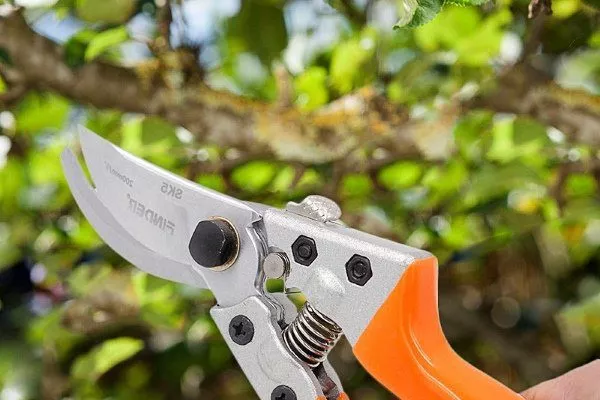
After pruning, it's important to treat all cuts with garden pitch to prevent infection. Forming the crown allows the tree to devote its internal resources to the ripening of large plums.
Crown pruning scheme:
- During the first year, buds develop on the seedling. The trunk is cleared of lateral branches to a height of 0.5 m above the ground. The remaining shoots are pruned by 50%.
- The main stem is pruned to a height of 1.5 m from the ground. Plum trees are typically shaped in a sparse, tiered pattern. During the first five years, 5-7 strong branches are left standing at a 45-50 degree angle from the trunk. The interval between adjacent shoots is 20 cm.
- Three skeletal branches are left on the bottom tier. Two are at the same level, and the third is higher. On the second tier, two branches should remain at different levels.
- During the first two years of life, pruning is carried out in June. Lateral branches are shortened by 20 cm, leaving the central conductor intact.
- In September, the main conductor is cut by a third, the remaining shoots by 2/3.
- Branches located at an acute angle, as well as those growing inward, are removed completely.
When pruning a mature tree, prevent overcrowding. Skeletal branches should be directed in different directions, spaced at least 25 cm apart. During sanitary pruning, dry, frozen, and damaged branches are removed. These are burned immediately after pruning to prevent the spread of infection and pests.
With proper pruning, a gardener can adjust the height of the Eurasia plum, as a 6 m tall tree is not very easy to maintain.
How to water a plum tree?
The Eurasia 21 plum is a moisture-loving variety. It requires regular watering, either by sprinkling or ditching. Watering schedule:
- The tree is watered for the first time in early spring – before the buds open.
- Until August, the tree is watered every 10-20 days, depending on the weather. This amounts to approximately five waterings per season. The recommended watering rate for a young tree is 40 liters, and for a mature tree, 60 liters.
- After the leaves fall, the tree is watered generously to saturate the soil with moisture before winter. The recommended watering rate is 80 liters.
For Eurasia, both over-watering and drought are equally harmful:
- Water shortages lead to fruit set loss, potentially costing a large portion of the harvest. Lack of irrigation often leads to fruit cracking.
- Excess moisture causes yellowing of leaves and death of branches.
Soil care
After watering, the soil around the tree trunk is loosened and mulched. Weeds and shoots are promptly removed. Loosening the soil is essential for aeration, allowing oxygen to reach the roots.
Prevention and protection from diseases and pests
Diseases that most often affect the Eurasia 21 variety:
- Clusterosporiasis. To treat the tree, treat it with copper oxychloride (dissolve 30 g in a bucket of water). Apply 2 liters of solution per tree. Spray after flowering. To prevent the disease, it's important to promptly remove and dispose of fallen leaves, prune the tree, and control weeds.
- Moniliosis. Spray with a lime solution (2 kg of lime per 10 liters of water). Spraying times are March and October. After the harvest, treat the tree with a copper sulfate solution (10 g of copper sulfate per 10 liters of water). Preventive measures include removing mummified fruit from the branches.
Disease and pest control:
- For prevention. Trees are treated with a solution of urea, Bordeaux mixture, and copper oxychloride.
- To combat pests and diseases. Trees are sprayed with a solution of urea, Karbofos, Fitosporin.
The most dangerous pests for Eurasia are the plum sawfly, codling moth and aphids.
What other common diseases exist in plums, will tell This article.
Plum pests and control measures:
| Pest | How to treat? | Prevention |
| Plum sawfly | Treatment with Karbofos before and after flowering | autumn digging of the soil |
| Aphid | during the period of bud formation – treatment with benzophosphate (60 g per 10 liters of water) | removal of fallen leaves |
| Codling moth | after flowering – treatment with Karbofos or Fufanon | harvesting fruits and loosening the soil |
When and how to harvest?
The first plum harvest from Eurasia occurs in the third year, and the older the tree, the greater the yield. The branches of a mature tree sag under the weight of the fruit. To prevent the branches from breaking, they are supported with supports.
The Eurasia 21 plum tree bears fruit early—the first plums can be picked as early as late July or early August. They ripen in waves, so harvesting is spread out over three to four stages.
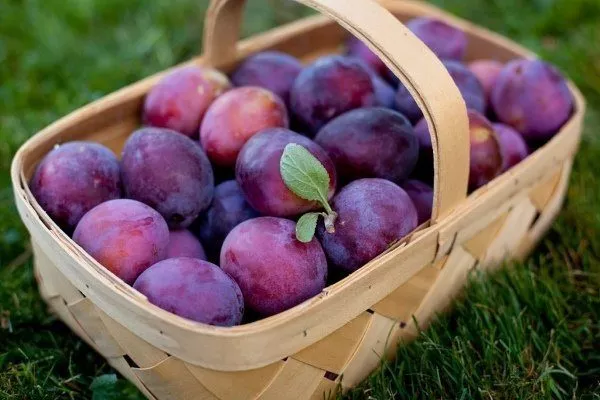
If you pick the fruit slightly unripe—7-10 days before it's ready—it won't lose any flavor. Not only will it ripen safely, but it will also keep better.
Winter protection of trees
Despite its good frost resistance, the Eurasia plum requires pre-winter cultivation. Thanks to these measures, the tree survives the winter without freezing or becoming prey to rodents.
The procedure for preparing a plum tree for winter:
- Removing leaves from the tree trunk circle.
- Moisture-recharging irrigation – 80 l.
- Loosen the soil and apply mulch – wood shavings, rotted sawdust, or peat are all suitable. The mulch layer should be 10-12 cm thick.
- Removing dead bark and overgrown moss.
- A similar procedure is used for skeletal branches.
- Whitewashing peeling areas. Prepare a solution of 10 liters of water, 0.5 kg of copper sulfate, 2.5 kg of chalk or lime, and 200 g of wood glue.
- The cleaned and whitewashed tree is wrapped in burlap, agrofibre, or paper. To protect against rodents, the tree trunk is wrapped in fine wire mesh.
Application of berries
Eurasia is an early table variety, ideal for fresh eating. Its plums, with their juicy, tender flesh, make an excellent summer dessert. This variety is also excellent for preserves—the large, soft fruits make excellent jams, preserves, juices with pulp, and sauces.
Although Eurasia plums aren't Hungarian, they can be used to make prunes, though they tend to be a bit sour. They're also not suitable for freezing—frozen plums lose their flavor and become watery. Compotes are also not made from Eurasia plums—their flesh is too soft, and the compote can turn out cloudy.
Storage and transportability of plums
Due to their soft flesh, Eurasian cherries are susceptible to damage during transportation. Therefore, it is recommended to either process them immediately or pick them unripe. Refrigerated at below-zero temperatures, they retain their marketable quality for three weeks.
If you're not a fan of tall trees, the Eurasia 21 isn't for you. All of this variety's other shortcomings aren't significant enough to negate this exceptionally productive plum. With proper care, the tree will produce around 50 kg of large plums each summer.