
The Etude plum is an excellent choice for gardeners seeking variety and quality. Its good productivity, cold tolerance, and excellent flavor make it one of the best on the market. By following simple cultivation techniques, you can reap generous harvests and high-quality fruit every year.
History of selection
Developed by Russian scientist G. A. Kursakov at the I. V. Michurin All-Russian Research Institute of Genetics and Breeding of Fruit Plants.
This variety was created by crossing the Eurasia 21 and Volzhskaya Krasavitsa varieties. It was officially recognized in 1985.
The concept of a plum
The crop has unique genetics: it is virtually immune to disease and pest attacks, and tolerates both heat and cold. Etude has many attractive characteristics.
The appearance of the tree
This neat, medium-sized plant with a rounded crown reaches a height of 2-2.5 m. Its actively growing root system ensures moisture extraction even in extreme heat.
Distinguishing features:
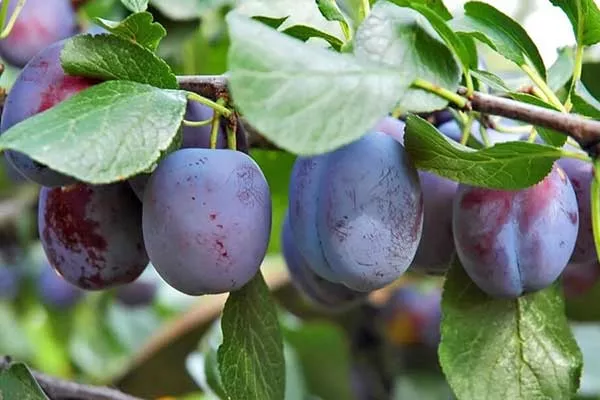
- Branches – dark brown, with a grayish coating.
- Escapes – straight, thickened, covered with numerous lenticels.
- Leaves - large, ovoid, dark green in colour and slightly wrinkled.
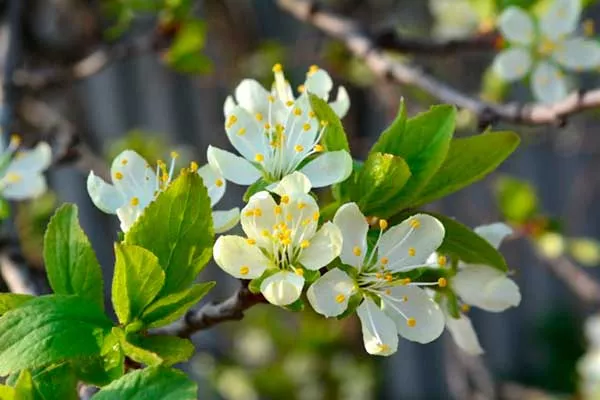
The tree's flowering is accompanied by the appearance of large buds, which gather into delicate inflorescences.
Fruits and their taste characteristics
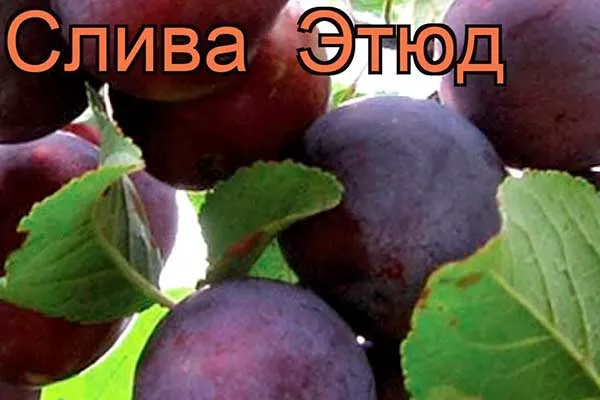
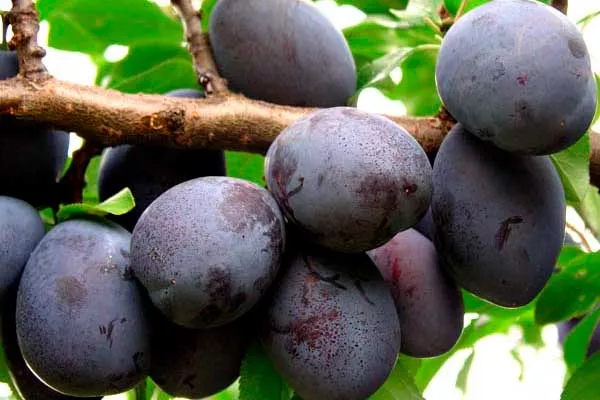
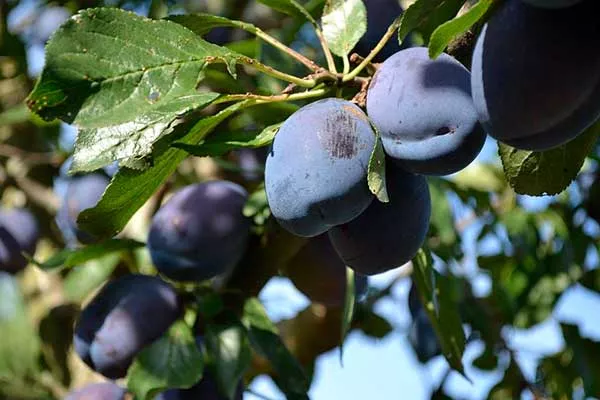
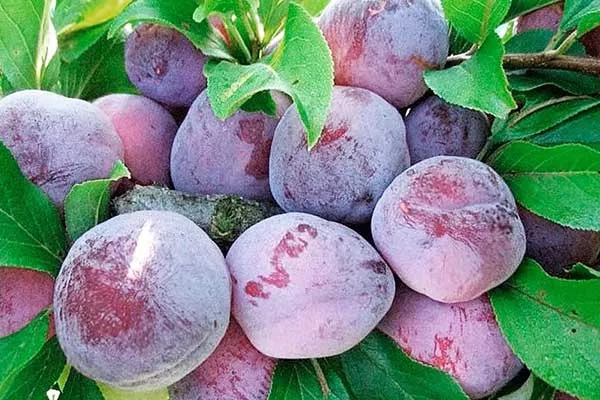
The fruits are large, weighing between 28 and 30 grams. They are dark purple with a reddish tint. Grayish subcutaneous spots are clearly visible on the surface. The tough skin is protected by a thick waxy coating, and beneath it lies moderately firm, yellowish-green flesh.
Drought resistance, frost resistance
At temperatures of +35°C, the plant can hold its fruit for a long time without dropping it. Its strong crowns support the entire harvest. In winter, at temperatures of -30°C, the tree remains frost-free and is not susceptible to pests or rodents.
This unique variety of domestic plum can grow in virtually any soil and at various latitudes across the country. Humidity levels are not a concern.
Growing regions
In recent years, the geographic range of Etude has expanded significantly. This tree is widely cultivated in the Moscow, Voronezh, Yaroslavl, and Leningrad regions.
In addition, plums are planted in Ukraine, Moldova, Belarus, Estonia and Kazakhstan.
Self-fertility and the need for pollinators
This variety is partially self-fertile, so cross-pollination is necessary to increase yield. Planting suitable neighbors in the same plot will increase productivity.
Plant Zarechnaya Rannaya, Volzhskaya Krasavitsa, and Renklod Tambovsky next to Etude. All three varieties, grown side by side, are considered the best choice.
Yield and ripening time
The crop is characterized by excellent productivity, allowing a single tree to yield up to 20 kg of fruit per season. The plums ripen quickly and uniformly, resulting in a short fruiting period. The main wave of ripening occurs in the last week of August.
Scope of use
The fruits are easy to transport. They can be stored in containers and industrial refrigeration units, maintaining their appearance and flavor for 2-2.5 months.
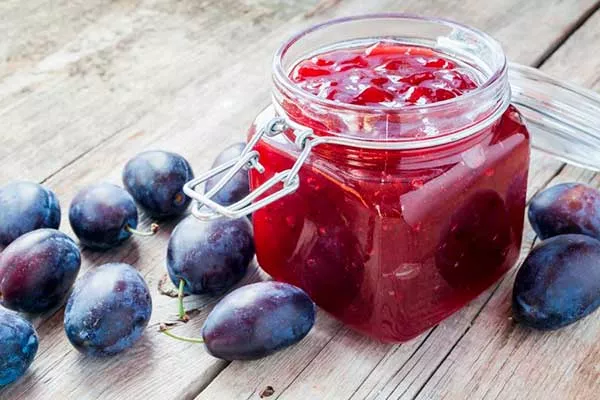
The variety is suitable both for winter preparations and for fresh consumption.
Flowering, fruiting
Regular fruiting begins in the fourth year after transplanting to a permanent location. The tree blooms in the last week of May, and fruiting, corresponding to the mid-early ripening period, begins in the second half of August.
Landing features
This crop requires careful planting. Further growth, development, and yield depend on proper planting procedures.
Recommended timeframes
The Etude plum variety can be planted in the spring, but experienced gardeners recommend planting it in the fall.
How to choose a site for planting?
The soil should be permeable. Moisture-rich loams are ideal. It's important that the soil isn't acidic—a neutral pH is a good indication for planting. Finding a level, south-facing spot in the garden is fairly easy, but it doesn't require any landscaping, as the variety doesn't require it.
What crops can and cannot be planted next to each other?
Avoid planting hybrids near this variety, as they may negatively impact productivity. Avoid mixing fruit trees with other crops; it's best to separate fruit trees from vegetable crops.
Although planting other varieties of domestic plums is not prohibited, allow two or three pollinators for each plant. To create a spacious garden, dedicate more than half the space specifically to this purpose.
Selection and preparation of planting material
First, dig a hole measuring 70 x 50 x 60 cm and add composted manure with nitrophoska to the bottom. The mixture should form a small mound and make up two-thirds of the hole's total volume. It's best if the soil is slightly dry, otherwise the plant may have difficulty maintaining its balance.
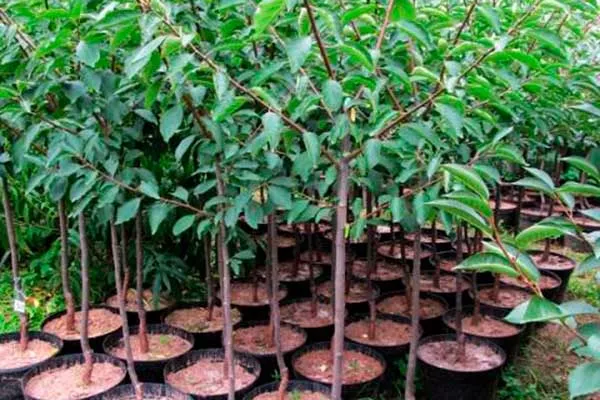
To prepare a seedling, follow these steps:
- Carefully inspect the root system. Remove any dry or damaged roots. If they are too dry, soak the seedling in water for 3-4 hours.
- If the roots are too long, trim them to a length of 20-25 cm so that they fit freely in the planting hole and do not bend.
- For better rooting, treat with a growth stimulator or a solution rich in microelements (for example, Kornevin).
- Before planting, dip the roots in a mixture of clay and water to speed up the seedling's adaptation to the soil.
- ✓ The seedling planting depth should be such that the root collar is 3-5 cm above the soil level.
- ✓ The distance between seedlings should be at least 3 meters to ensure sufficient space for the root system to grow.
Planting sequence
Proper planting ensures good seedling survival. Step-by-step instructions:
- Install the support.
- Place the seedling in the center of the hole and spread out the roots.
- Pour out 5 liters of water.
- Fill 1/3 of the hole with soil and press down with your hands to completely cover the gaps between the roots.
- Fill in the remaining soil and compact well.
- Water generously with warm water (5 l).
- Mulch the tree trunk area. The minimum mulch layer should be 20 cm.
To avoid over-watering of the root system from nearby groundwater, make an artificial mound up to 50 cm high.
Aftercare
When growing a crop, it's important to ensure proper care, which should be carried out in accordance with all recommendations. Follow standard agricultural practices.
Watering
Water the seedling regularly – twice a week is sufficient. In hot weather, increase the frequency of watering to three times. The recommended rate for each plant is 10 liters. During the rainy season, avoid overwatering the soil.
Top dressing
To ensure a healthy appearance and strong immunity for your plum tree, provide it with all the necessary nutrients by adding a fertilizer complex.
The plant doesn't need any additional fertilizer during the first year, but in the second season, apply nitrogen-containing fertilizers. Plan this for early and late June.
Starting from the third year, fertilize the tree at the end of April with nitrogen substances, in June with nitrophoska, and in August, after harvesting the fruits, use phosphorus-potassium mixtures.
Plum pruning patterns
Perform standard pruning in spring and fall. Crown shaping is done simultaneously with pruning, making the process more convenient and less labor-intensive.
Caring for the tree trunk circle
Begin work in early spring. Follow these recommendations:
- Clear snow from the root zone to help the soil warm up and dry faster.
- Do not try to delay vegetation, as this does not affect the rate of flowering, but may negatively affect the physiological functions of the tree.
- Positive temperatures and sunlight promote the awakening of juices.
- Loosen the soil only after it dries. This will help preserve nutrients and retain moisture. Dig in young roots, not thick ones, as they provide the plant with nourishment. The frequency of loosening depends on the condition of the soil and its compaction.
At the same time, clear the area of weeds, repeating this procedure several times during the summer. - Remove shoots around the plant by digging and cutting them below ground level.
Wintering
The Etude variety is highly resistant to subzero temperatures and is not affected by spring frosts, preventing flower drop. The tree requires no additional insulation, and the fruit's shelf life is not affected by frost.
Diseases and pests, methods of control and prevention
The crop has a strong immune system, so preventative spraying is not required. There is no need for chemical soil treatment.
However, remove rotting leaves even if there are no signs of disease. Remove any unwanted grasses and plants that shouldn't be growing nearby.
Tips and recommendations for growing
Gardeners recommend planting plums in the fall, 1-2 months before frost. Follow these guidelines:
- Fruit trees don't tolerate drafts, so choose a location sheltered from cold winds. Plums grow well in light, neutral soil. If your area has clay soil, add sand and peat to soften it.
- Prepare the planting hole in advance, approximately two to three weeks before planting. Place a layer of a soil mixture of commercially available fertile soil and humus at the bottom. Mix the excavated soil with equal parts peat and sand, add 5 kg of wood ash, and fill the hole, watering it first.
- To reduce soil acidity, add 200 g of quicklime per 1 sq. m.
For easy watering, create a 1-1.5 m diameter circle around the trunk. Dig the soil regularly to ensure adequate oxygen supply to the roots.
Harvesting and storage
Although the Etude plum blossoms in May, harvesting can begin as early as mid-August. Pick the fruit in dry weather, preferably early morning or evening.
Set damaged fruits aside immediately. If the fruit is wet, dry it before storing. Arrange ripe fruit in layers, using paper as a spacer for the second layer.
Positive and negative qualities
Before planting a plum tree, carefully study its advantages and disadvantages to avoid potential difficulties in the future. Etude has many advantages:
This variety also has a drawback: it requires nearby pollinator trees. Without them, it will be difficult to achieve a good harvest.
Reviews
The Etude plum is characterized by its resistance to adverse climatic conditions and excellent fruit flavor. This variety has become popular among lovers of fresh fruit and winter preserves. It's important to understand the characteristics of this cultivar, planting guidelines, and its positive and negative qualities. With proper care, bountiful harvests are guaranteed.