
The Delicate plum is one of the most sought-after varieties among gardening enthusiasts, thanks to its popularity and numerous positive reviews. To ensure the tree quickly takes root in your garden and becomes a source of abundant harvest, it's important to follow a number of growing and care guidelines.
Variety selection
The Delicate plum belongs to a domestic variety, and its creation is attributed to experienced breeders Z. A. Kozlovskaya and V. A. Matveyev. This variety was obtained by crossing two varieties: Ajanskaya Vengerka and Eurasia 21.
The appearance of the tree
This plum variety is adapted to the weather conditions of central Russia. The tree is characterized by the following varietal characteristics:
- Height - can reach 300-400 cm, and the average annual stem growth is 35-40 cm. By the age of three, the seedling reaches a height of 180-200 cm.
- Bark young branches are smooth and light brown.
- Crown The tree opens wide and round, resembling a spreading dome.
- Foliage The Delicate leaf is medium-sized, oval-oblong, with slight wrinkles and fine teeth along the edges, ending in a pointed tip. The upper side of the leaf is shiny and dark green, while the underside has a matte tone.
- Flowers The plums are small in size, have a pure white color and are located on short branches in a bouquet-type arrangement.
Fruits and their taste characteristics
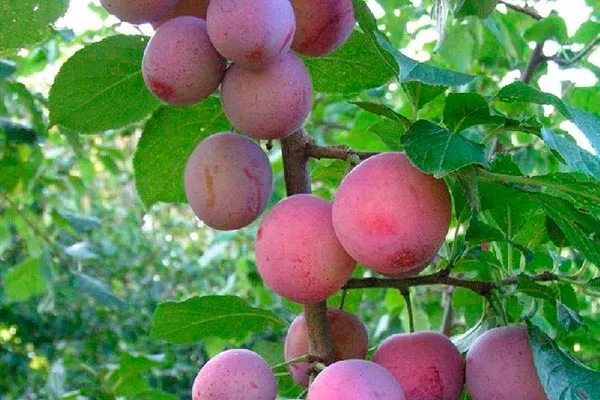
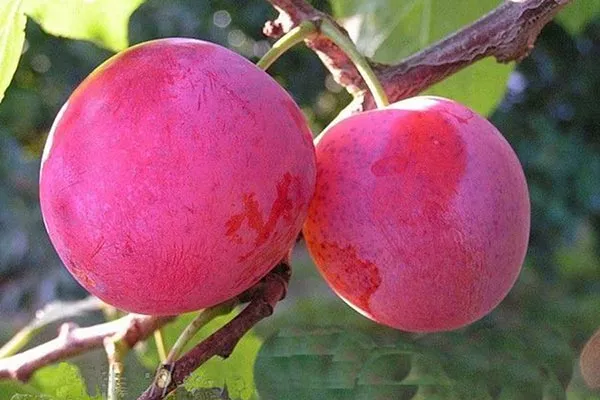
Large, uniformly formed plums of the Delikatnaya variety have a round shape and a barely noticeable seam, reaching a minimum weight of 40 grams. Under the most favorable growing conditions, the fruits can be even larger. Other important characteristics for gardeners:
- The skin is very thin and delicate, and is not felt while eating, which makes them especially pleasant to consume.
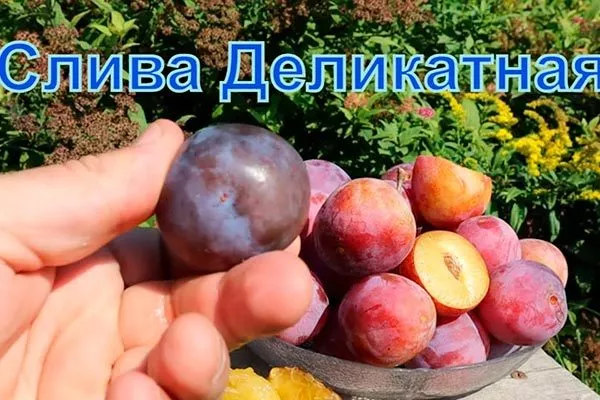
- The peel colour is pinkish-purple with a light waxy and bright coating.
- The pulp is juicy, medium-dense and has a yellowish color.
- The stone of this variety is oval and small, easily separated from the soft part, which makes the plums even more convenient for eating and processing.
- The fruit's flavor is appealing with its sweetness and slight sourness, which led to the variety being rated 4.3 points by tasters.
The composition includes the following components:
- 8-8.5% sugars;
- 14% dry matter;
- 0.6% pectin;
- 12.6 mg of ascorbic acid.
Characteristic features of the variety
The Delikatnaya variety is a valuable source for breeding, just like its predecessor, Eurasia 21. The timing of the first flowering can vary depending on the rootstock used and the level of care. This plum is characterized by its mid-early maturity, good yield, and undemanding growing conditions.
Cold and drought resistance
The Delicate plum is cold-hardy, but it is demanding regarding root system growth conditions. In early spring, gardeners should carefully monitor the melting snow near the tree's trunk and, at the right moment, break up the ice crust that has formed, creating a natural drainage channel to prevent water from accumulating around it.
This variety can tolerate short periods of heat without harm. However, if there's been no precipitation for a month, watering is essential, especially during the period of bud and fruit formation. Furthermore, to prepare the plum for winter frosts, intensive watering is recommended in mid-autumn.
Plum pollinators
Delicate plum is partially self-pollinating. To achieve the desired harvest, it's necessary to create conditions for successful pollination by planting a couple more plum trees in the garden that will bloom around the same time as Delicate plum.
Classic European plums, Edinburgh and Victoria, are ideal pollinators. The Delicate plum blooms in May.
- ✓ Tendency to form bouquet branches, which increases yield.
- ✓ High resistance to the fungus Clasterosporium, which reduces the need for chemical treatments.
Productivity and fruiting
A ten-year-old tree yields 35-45 kg. In commercial gardening, yields reach 20-25 tons per hectare. The Delikatnaya variety is characterized by continuous fruiting, beginning in the third or fourth year after planting. This variety's shoots often produce bouquet-like branches.
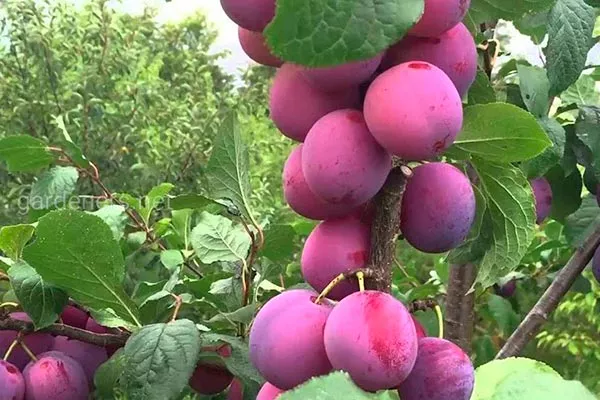
Delikatnaya is a plum variety with a moderate ripening period. The first plums can be picked in July, and the last in August, allowing for earlier harvests than most other varieties.
Application of berries
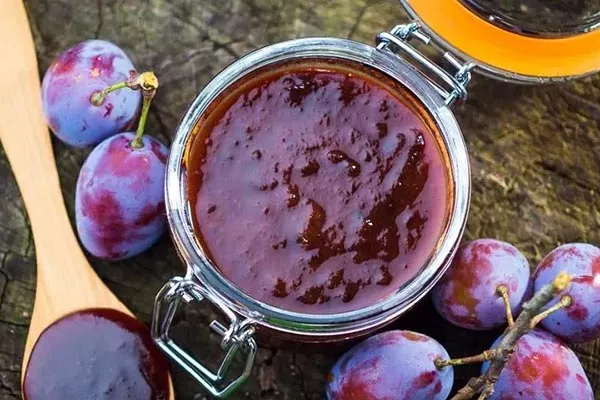
Fresh, appetizing fruits with a dessert-like aroma are best eaten freshly picked. Any leftovers can be used for homemade preserves, such as compotes, jams, and other desserts, given that the easily separated pits make the fruits easy to process.
Disease/pest resistance
The variety is resistant to fungal diseases. In particular, Delikatnaya has increased resistance to the fungus Clasterosporium. If you follow proper agricultural practices, including regular watering, fertilization, removal of dead leaves, and sanitary pruning, insect pests will not cause a problem.
Landing features
The variety will bear fruit abundantly if it is grown in suitable conditions and agricultural standards are observed.
Recommended timeframes
In temperate climates, it's best to plant plums in the spring to allow the young tree to adapt more quickly. In southern regions, it's preferable to plant in the fall, between October 13th and 17th. For container plantings, you don't need to consider external weather conditions.
Choosing a suitable location
When choosing a location for planting the Delicate plum, several key aspects should be taken into account:
- Illumination. It loves sunny spots, so choose a place where it will receive enough light.
- Drainage. It does not tolerate waterlogged areas, so make sure the chosen area drains quickly after rain.
- Acidity of the soil. Prefers soil with a neutral or slightly acidic reaction, so conduct an analysis and improve the properties if necessary.
- Wind protection. It is quite tall and can be damaged by strong winds. Consider installing protective structures to prevent damage to the tree.
- ✓ The soil pH level should be within 6.0-7.0 for optimal growth of the Delicate plum.
- ✓ The depth of groundwater should not exceed 1.5 meters to avoid rotting of the root system.
Neighborhood Features
To create a harmonious combination, plant other plum varieties at least 300 cm away from the Delicate plum. It's also a good idea to grow berry bushes nearby.
An excellent option is to choose apple trees as neighbors. However, be sure the apple variety isn't too tall, so as not to shade the plum trees. Similarly, it's important to keep this in mind when choosing pear varieties.
How to select and prepare planting material?
For planting, buy young trees, aged one to two years, with good appearance:
- Their bark is whole, without cracks, the branches are elastic, with swollen buds, and if they are in containers, with green leaves.
- The root system is moist, viable, and collected into a dense lump.
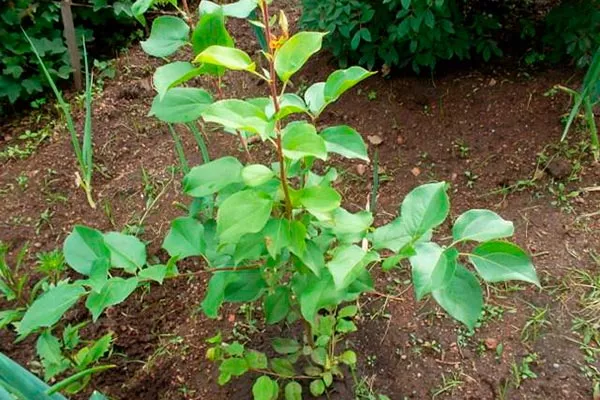
Before planting, the roots are treated with a clay solution for better moisture and protection. The containers are placed in larger containers to soak the substrate, making it easier to remove the seedlings.
Landing algorithm
In order to successfully plant a plum tree, it is necessary to carry out a number of preparatory procedures:
- Clear the selected area of unwanted plants and debris. This will create favorable conditions for the young tree to grow undisturbed.
- Next, carry out surface tillage and loosen the soil to a depth of approximately 30-35 cm. This action improves soil aeration and facilitates the rooting of the plum.
- Prepare the planting holes a couple of weeks before the main work. The optimal size for this variety is 60 x 80 x 80 cm. Add a thick layer of sand and pebbles (gravelly, expanded clay, etc.) to the hole to provide drainage.
Place a soil substrate on top made from excavated soil and organic matter mixed in equal proportions.
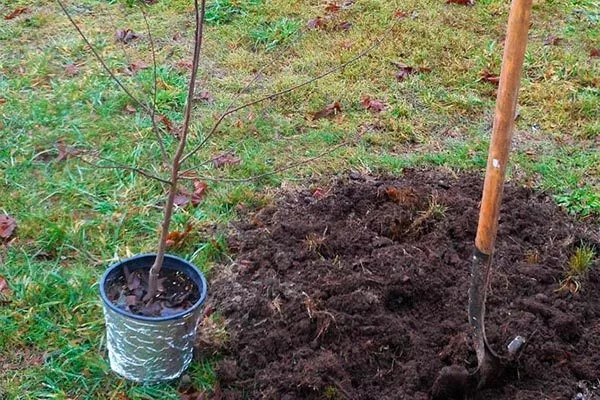
Landing is carried out as follows:
- Remove half of the soil mixture from the hole.
- Form a mound from the remainder inside.
- Install a strong stake to ensure stability for the young tree.
- Plant the seedling carefully, spreading out the roots, while the root collar of the plum should be at a depth of 5-7 cm from the surface of the ground.
- Then carefully fill the hole with soil, compact it and form the sides to create a circular irrigation system.
After moistening, it is necessary to mulch the circle around the tree.
Aftercare of plum
Caring for the Delikatnaya variety doesn't require much effort: fertilize the soil regularly and, after watering, ensure moisture is maintained around the tree's trunk. It's important that moisture penetrates to a depth of 40 cm, where the plum's main roots are located, every month.
What and how to do it correctly:
- Watering is carried out at intervals of 10-15 days, with each plant requiring 15-18 liters of water at room temperature.
- To feed plums, use complex fertilizers, which are applied in accordance with the tree's growth stages:
- At the beginning of flowering, it is advisable to add potassium nitrate (25-30 g per 10 liters of water).
- To improve fruiting, it is recommended to add a solution of Superphosphate (40-50 g per 5 l of water) several weeks before fruiting.
- In autumn, humus is used instead of mulch, in a layer of up to 10 cm.
- Pruning is carried out in accordance with the basic requirements:
- When forming a pyramidal crown, branches growing at an angle of less than 45 degrees to the conductor are removed.
- Every year the plum tree is cleared of young shoots, damaged and dry branches, as well as crossing ones.
- Plum pruning is carried out before the sap begins to flow.
Methods of combating diseases and pests
The most common diseases of the species under study include fruit rot, olive spot, and a disease characterized by the appearance of holey spots:
- To prevent the development of fruit rot, it is recommended to use a manganese solution prepared from 30-40 g per 10 liters of water.
- To combat olive spot, a solution of Bordeaux mixture, made from 50 g per the same amount of water, is more effective.
- In case of damage by holey spot, it is advisable to use a solution of copper sulfate, prepared from 220-250 g per 10 liters of water.
Among insects, special attention should be paid to aphids and codling moths. Oxychom, a copper-containing product, is effective against the former. To combat codling moths, use an infusion of tomato tops soaked in water for 24 hours. The plant should be treated every two weeks.
Positive and negative qualities
Delicate has many advantages and some disadvantages, which it's advisable to know about in advance. Its advantages include:
There are also some disadvantages associated with its characteristics:
Reviews
The Delicate plum is an easy-to-grow variety with fruits that are perfect for winter preservation and fresh eating. It stands out for its resistance to moderate frosts and low susceptibility to fungal diseases, making it an attractive choice for gardeners.