
The Bluefree plum is a hybrid variety that has gained popularity for its exquisite sweet aroma. This variety is easy to grow. Bluefree trees, also known as Blue Free and Bluefre, are available in stores.
The origin of the plum
Blue Free was created in America in the last century, when experts mixed the American Stanley variety with the classic English President variety, which was already known in the nineteenth century.
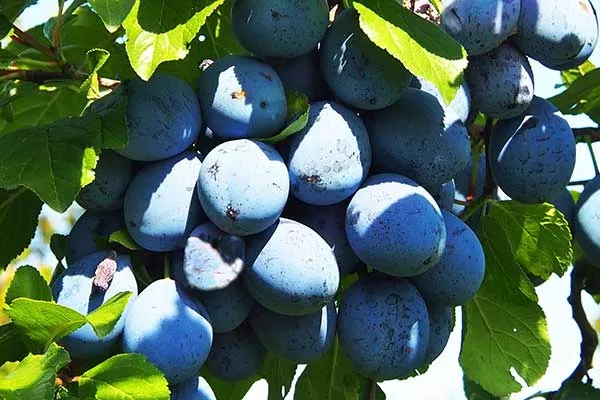
By the end of the twentieth century, this variety began to conquer markets in the former Soviet Union, and in 1994, it was registered in the Ukrainian Registry of Varieties. In Russia, Blue Free is still not included in the State Registry, but existing data indicate that the North Caucasus Federal District, including the Krasnodar Krai, has the ideal climate for its cultivation.
Features of wood
The Bluefree plum has vigorous growth. According to various sources, this variety can reach a height of 200 to 700 cm, but actual growth depends on planting conditions. Early in its development, the plum exhibits the fastest growth rate, which gradually decreases as fruiting begins.
Key features of the variety include:
- dense, wide-spreading crown, approaching oval shape;
- significant angle of deviation of branches from the trunk, which ensures their stability;
- leaf blades about 3 cm long;
- flowers are also about 3 cm in size, but in diameter;
- moderate foliage.
Varietal characteristics of fruits
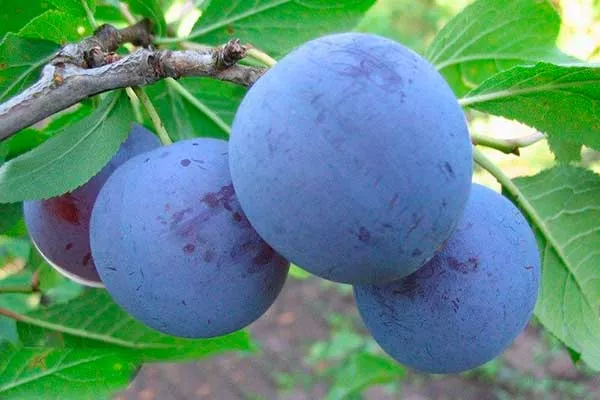
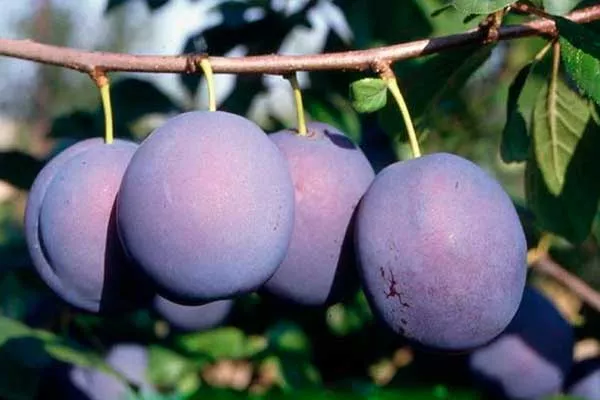
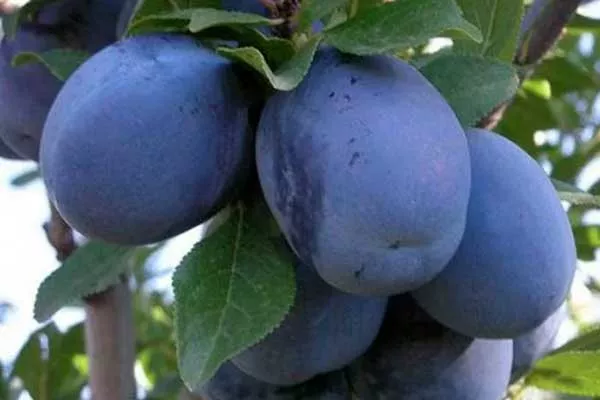
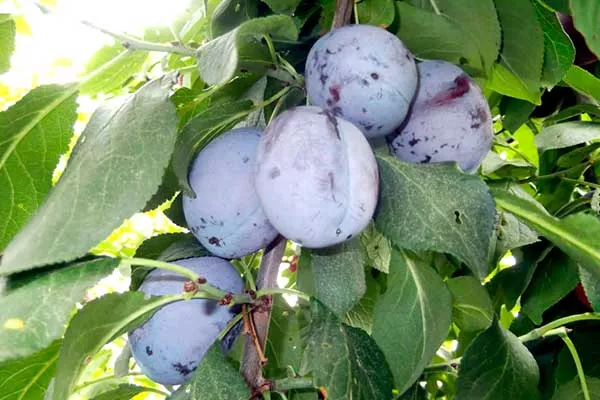
Bluefree is distinguished by its large fruit size, weighing up to 100 g. They have the following characteristics:
- shape – round-oval with a slight deviation from symmetry;
- the skin has a deep blue hue, which acquires a bluish sheen due to the wax coating;
- the waxy coating adheres tightly to the skin and is difficult to remove;
- subcutaneous points are located unevenly;
- the pulp of the fruit is juicy and soft, yellow-green in color, which turns into bright yellow when ripe;
- the taste is distinguished by sweetness with a slight sourness and hints of honey, rated at 4.6 points on the tasting scale;
- the stone separates from the pulp with some difficulty;
- Bluefree fruits change color quickly, but this is not a sign of their ripeness - to determine readiness for consumption, you should focus on traditional ripening times and taste.
Characteristics of the variety
BlueFries have competitive consumer qualities. For transportation, simply maintain the appropriate temperature. Refrigerated, these fruits will retain their flavor and quality for several months.
Resistance to cold and drought
This variety exhibits high winter hardiness. It is reported to be able to withstand temperatures as low as -32-34°C. If damaged, the plant is capable of quickly recovering, but the risk of frost damage falls not on the tree itself, but on the flower buds.
The hybrid has poor drought tolerance. In southern climates where regular rainfall is absent, trees may experience moisture stress.
Pollination
The Bluefree plum is considered self-pollinating, but to achieve maximum yield, it is advisable to grow it near donor trees. These include the following varieties:
- President;
- Stanley;
- Empress;
- Opal;
- Vision;
- Anna Shpet;
- Amers.
Productivity, ripening time and fruiting
Blue Free is distinguished by its early fruiting: already in the third or fourth year after planting, it produces its first fruits, reaching peak fruiting by the age of ten.
This plum variety boasts impressive yields, which increase each year. A 9-15-year-old tree can yield up to 95-100 kg of berries.
The ripening period occurs in the second half of September, but this can vary depending on the specific region. For example, in Kuban, harvesting begins in early autumn, and in cooler conditions, in late September or early October.
Scope of application of berries
Bluefries are versatile. Eating them naturally is one of their primary uses, but they're also perfect for making preserves, jams, and compotes. Plums are excellent for drying, making them perfect for making prunes, or for freezing.
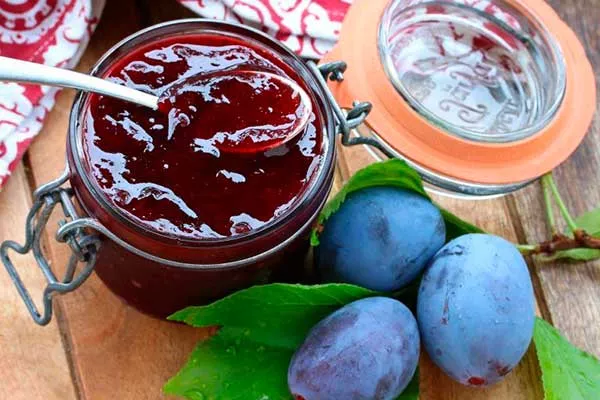
The Bluefree variety is particularly popular in supermarkets due to its substantial size and attractive appearance, which wins favor with shoppers. Furthermore, the late ripening of these plums makes them an indispensable source of vitamins at times of year when other seasonal fruits have already disappeared.
Where to grow?
This variety is intended for the south, but cultivation in central Russia is also possible, albeit requiring additional care. In cooler climates, the risk of crop loss increases due to the early onset of winter frosts.
In hot summer conditions and low rainfall, plums reach maturity in a matter of days, but care must be taken to prevent the fruits from splitting on the branches. In the Moscow region, the BlueFree plum will also thrive, especially if planted on a south-facing plot.
Landing features
Blue Free plum requires careful care before and after planting. To ensure successful planting, follow the established recommendations. This way, you can expect optimal results within three years.
Optimal timing
The best time to plant Blue Free plums is in the fall, especially October, when there's no risk of frost. If temperatures drop, planting can be postponed until spring, after the thaw has passed.
- ✓ The seedling planting depth should be such that the root collar is 4-5 cm above the soil level.
- ✓ The distance between trees should be at least 4-6 meters to ensure sufficient space for growth.
Selecting a suitable site
For Blue Free to thrive and bear fruit, it requires fertile soil with access to groundwater. This is typical for this plum variety. The tree also requires fertilizing to withstand both hot weather and cold periods.
When choosing a landing site, it is important to consider a number of criteria:
- the area must provide sufficient daylight;
- the soil must be fertile;
- pH should be neutral;
- The area must be protected from strong winds and gusty air currents.
Desirable and undesirable neighborhoods
It is recommended not to use plum varieties other than pollinators for the Blue Free plant. The choice may be limited to just two plum varieties.
Working with planting material
To successfully grow plum trees, select seedlings between one and two years old. The ideal height is considered to be 130-140 cm. When choosing a seedling, pay attention to several key aspects:
- root system health;
- presence of 3-4 lateral branches;
- at least 3-5 root shoots 25 to 30 cm long;
- no visible damage, signs of decay or disease.
It is best to purchase seedlings with an open root system, as they are more developed and adapt better to new conditions.
It's best to buy plum tree seedlings in the fall, even if you plan to garden in the spring. Before planting, the tree should be buried in a trench 50-60 cm deep in a sheltered, elevated location. The seedlings should be laid horizontally with their tops facing south.
The landing process
To plant a tree, it's important to properly prepare the site for its future growth. It's recommended to begin preparations well in advance, no later than one to two months before the scheduled planting date.
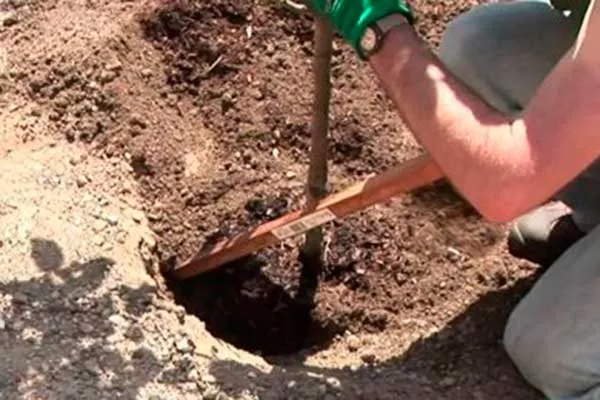
The preparation process includes the following steps:
- Plow the selected area.
- Clear the area of all weeds and debris.
- Dig a hole 50-65 cm deep and wide.
- Fertilize the soil: mix 12-14 kg of compost (rotted manure), 120 g of superphosphate (in the form of granules), 50 g of potassium sulfate (or potassium salt) with the excavated soil and add a little wood ash.
If planting occurs in the spring, then warm soil should be placed at the bottom of the hole to speed up warming.
The planting process itself includes the following actions:
- Carefully pour a mound of fertilized soil into the prepared hole, filling it to about 2/3 of its depth.
- Install a support.
- Place the seedling in the center of the hill, carefully spreading out the roots.
- Fill the hole with the remaining soil mixture, leaving the root collar at a level of 4-5 cm above the surface.
- Tie the seedling to the support.
- Create a circular furrow around the tree.
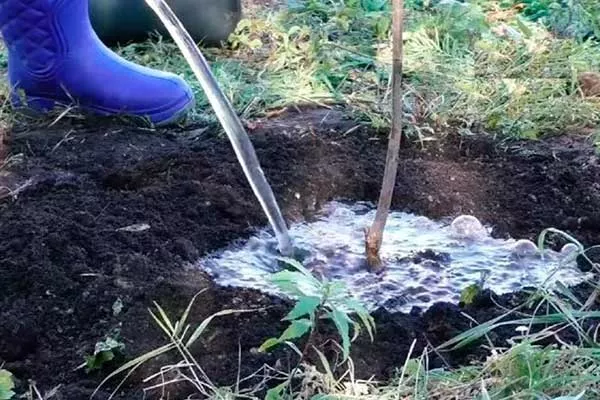
- Water the plantings.
- Complete the process by mulching using peat or humus in a layer of 10-15 cm.
When planting a tree, shake it lightly so that the soil tightly fills all the voids.
Aftercare of plum
Growing Bluefree does not require any special skills and differs from cultivating other species only in a few details.
Moisturizing
During periods of drought and hot summers, special attention must be paid to watering. Water is critical during budding, as well as immediately before and after budding, when the fruit reaches maturity. 40 to 50 liters of water should be used per tree.
- In spring, apply urea at a rate of 15-20 g per 1 sq. m.
- In summer and autumn, use complex fertilizers with phosphorus and potassium.
- Increase the amount of fertilizer as fruiting begins.
Features of feeding
Starting in the third year after planting, caring for Bluefree plums includes regular fertilizing, provided the soil was properly prepared at planting. In spring, urea is preferred (15-20 g per square meter), and in midsummer and fall, a combination of phosphorus and potassium fertilizers is used.
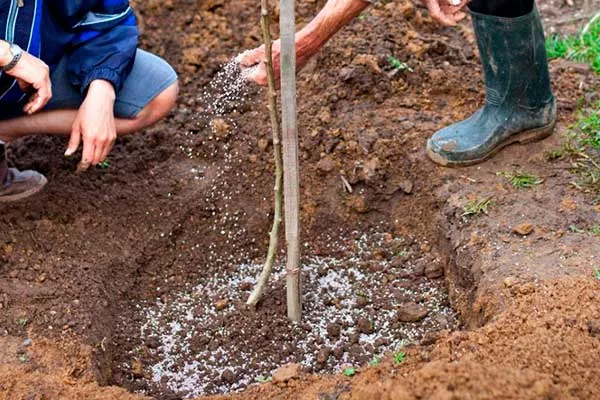
As the fruiting period begins, the volume of fertilizers increases to the following values:
- 25-30 g urea;
- 60-70 g Superphosphate;
- 20-30 g of potassium chloride;
- 10-13 kg of compost.
Trimming
The initial stage of pruning aimed at renewing the plant begins when the tree is four years old and continues at the same interval thereafter.
BlueFree plums are large and highly productive, which can cause branches to break under their weight. Therefore, it's important to remember to provide adequate support for the branches.
Plum pruning isn't just tree maintenance; it's a comprehensive procedure that helps maintain the tree's health and ensure a high-quality harvest. Here's what to consider:
- remove all diseased and damaged branches that may become a source of disease;
- Do not leave old shoots that no longer bear fruit; by removing them, you will give new, younger stems the opportunity to develop.
Don't forget about proper pruning techniques: cuts should be disinfected and sealed with garden pitch to allow the tree to heal faster.
Forming the crown of the Blue Free plum
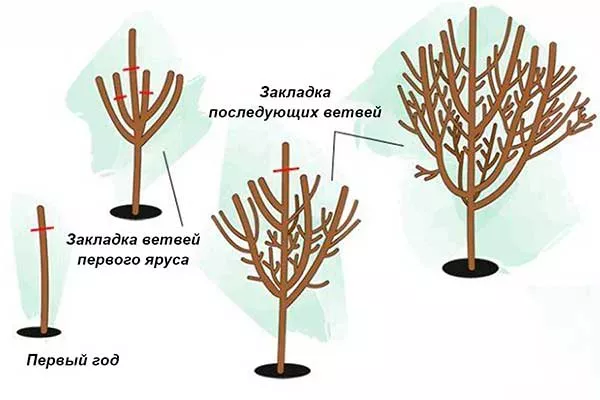
Crown formation begins in the second or third year and is complete when it attains a perfectly round shape. Here's how to do it right:
- Pruning is carried out annually in the spring. This step is extremely important and should be performed immediately after planting, when the tree is cut back by two-thirds.
- The following year, when the snow melts and the air temperature reaches +8°C, the tree is shortened to 65-75 cm.
- In the third year, the upper part is shortened by 40-45 cm, the lateral branches by a third, and the lower ones by 5-6 cm.
- In the fourth year, all lower branches are removed, leaving 6-8 of the most developed to form the base of the crown. The remaining shoots are pruned so that each retains up to four buds.
Wintering
In warm climates, there's no need to protect the trunk from cold. However, in colder areas, it's recommended to protect young plants from sudden temperature changes using standard methods.
Methods of control and prevention of diseases and parasites
Bluefree plum has good disease resistance, but in adverse weather conditions it is susceptible to moniliosis. This disease damages the above-ground parts of the tree. In such circumstances, it is necessary to carefully remove all damaged areas of the plum and treat them with the fungicide Abiga-Peak.
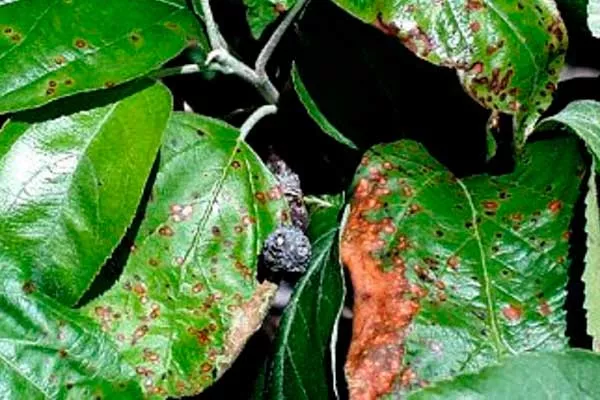
Aphids are a serious enemy for this variety, significantly affecting leaves and young shoots. To combat this pest, it is recommended to use a solution containing Inta-Vir. As a precaution, it is advisable to plant marigolds near the plum tree, as their aroma repels pests.
Storage of fruits
The Bluefree plum's skin acquires a deep shade even before it reaches full ripeness. This allows the fruit to be harvested at technical maturity, ensuring its durability during transportation and long shelf life, a feature highly valued by retailers.
Although plums continue to ripen after being picked from the tree, their flavor is still distinct from plums ripened on the vine. Leaving them until the last moment allows them to develop a sweeter flavor. The flesh will soften somewhat, but the fruit will still survive transportation without significant damage.
Preservation features:
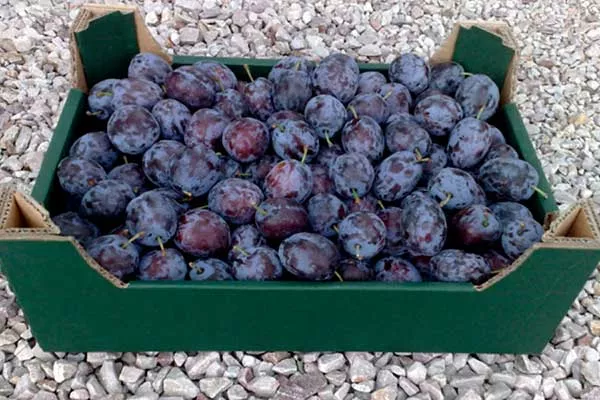
- These fruits can be stored for one to three months. At home, they can be placed in the refrigerator's crisper drawer, or for larger quantities, in wooden boxes with paper dividers, arranged in 2-4 layers.
- Storage requires a temperature of 3 to 5 degrees and humidity of about 85%.
- Freezing doubles or even triples the shelf life. However, despite the dense flesh, refreezing will reduce the fruit's quality.
Similar types of fruit
| Name | Disease resistance | Flowering period | Soil requirements |
|---|---|---|---|
| Stanley | High | April-May | Average |
| President | Average | May | High |
| Blue Bird | High | April-May | Low |
The Bluefree plum, with its large fruits, stands out among other varieties of this crop. It is most similar to the following cultivars:
- Stanley - This medium-sized variety produces fruits weighing approximately 50-60 g, is characterized by a dark purple color and a dense waxy coating, and is known for its generous yield and good winter hardiness. It is a direct descendant of Blue Free.
- President - Medium-sized trees, producing fruits weighing up to 60-80 g, are green with a burgundy-black-blue coating. They are also distinguished by increased productivity and frost tolerance. They are also a "parent."
- Blue Bird - This variety has tall trees that produce large fruits (up to 80-90 g) of purple color with a thick waxy coating, has good winter hardiness and excellent immunity.
Positive and negative qualities
Reviews
Ignat Kotelnikov, 58 years old, Kaluga. I've long dreamed of planting a Bluefree plum. It's tasty, large, and versatile, but it's very difficult to prune and shape.
Anna Kasterova, 49 years old, Moscow region. I'm particularly drawn to the Blue Free plum variety. It's a true giant among trees, with enormous, juicy fruits. Watering it requires a lot of effort, as the tree's large size requires a lot of water. But sometimes, you can devote a few days to tending to the garden and then enjoy a bountiful harvest.
Evgeniya Antonenko, 62 years old, Perm. Initially, I was worried the plum tree wouldn't survive the winter in my garden. But it survived the winter easily and didn't even get sick. It produces large plums every year. They're good for canning and drying.
The Blue Free plum variety is easy to care for and produces high-quality fruit, which grow larger each year. With proper care, you won't have to worry about diseases or pests. Before purchasing a seedling, carefully consider all the pros and cons to know what to expect from the tree in the future.