
Aprium is a hybrid created by crossing an apricot and a plum. This variety inherits the best properties of its parent varieties, making it popular among gardeners and summer residents. Let's learn about all the characteristics of aprium, including the intricacies of planting, growing, and propagating it.
History of selection
For a long time, breeders struggled to cross two popular garden crops—plum and apricot. Floyd Zeiger (University of California, USA) was the first to succeed in this task in 1989. The hybrid borrowed the flavor of the apricot and the hardiness of the plum.
Types and popular varieties
| Name | Ripening period | Fruit color | The taste of the fruit |
|---|---|---|---|
| Triumph | Late-ripening | Golden with purple dots | Sweet |
| Crown | Mid-season | Yellowish | Sweet |
| Hummingbird | Mid-season | Large sweet and sour | Sweet and sour |
| Valentin | High-yielding | Orange or yellow | Sweet |
| Alex | Early maturing | Pinkish-raspberry | Dense and yellow |
In addition to aprium, there are several other hybrids obtained by crossing plum and apricot.
Other hybrid forms:
- Plumcot. The aprium has 75% apricot and 25% plum characteristics. The plumcot is the opposite: 75% plum and 25% apricot.

- Sharafuga. This hybrid was obtained by crossing apricot, plum and peach.
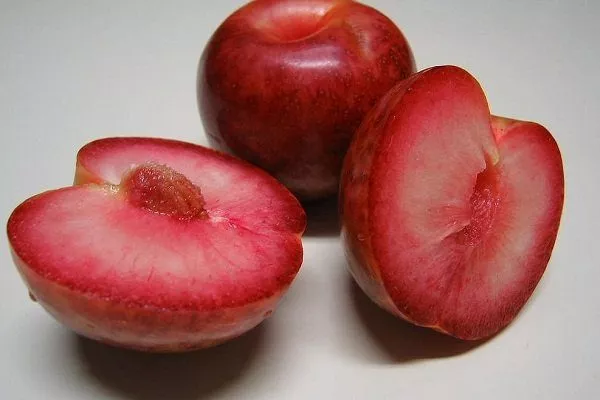
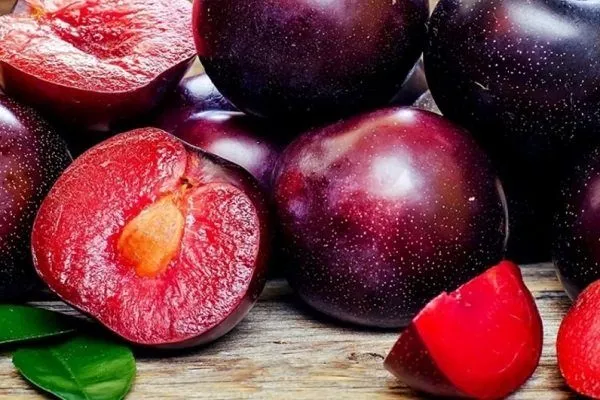
Breeders have developed many interesting varieties of aprium, differing in ripening time, taste, color, and size of the fruit.
The most famous varieties:
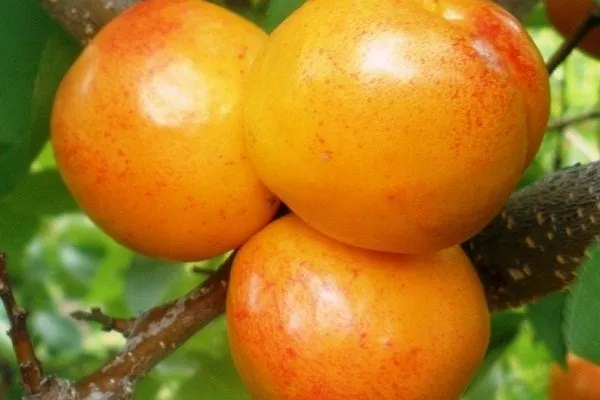
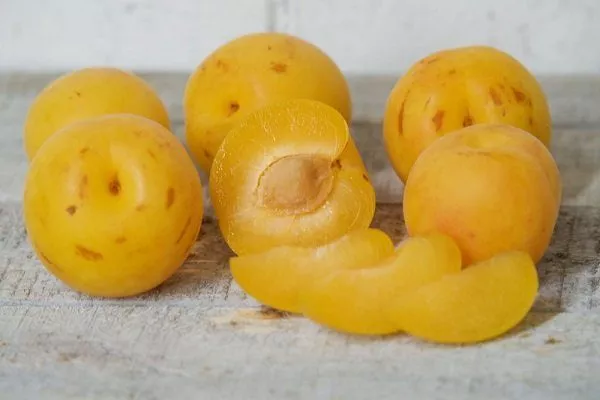
- Triumph. A late-ripening variety. Its golden, slightly velvety skin is dotted with numerous purple spots.
- Crown. A mid-season variety with yellowish fruits.
- Hummingbird. A mid-season hybrid with large, sweet and sour fruits.
- Valentin. A high-yielding hybrid with sweet, orange or yellow fruits.
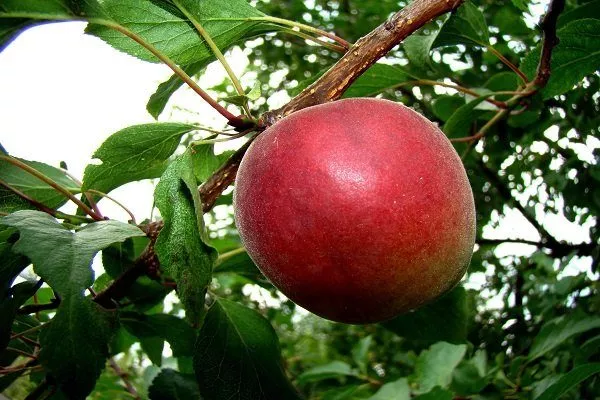
- Alex. An early-ripening variety with smooth, pinkish-raspberry-colored fruits. The flesh is firm and yellow.
Main characteristics
Taking the best features of two fruit forms, aprium acquired excellent agronomic and taste characteristics.
Tree
Aprium is a fast-growing plant. Its appearance varies depending on the variety.
Brief description:
- the tree is not tall – about 2-2.5 m;
- crown – dense, rounded;
- leaves - small, green, oblong;
- flowers are white, with five petals.
Fruits and yield
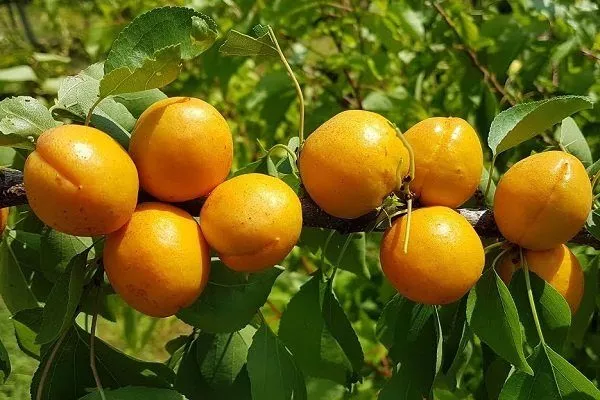
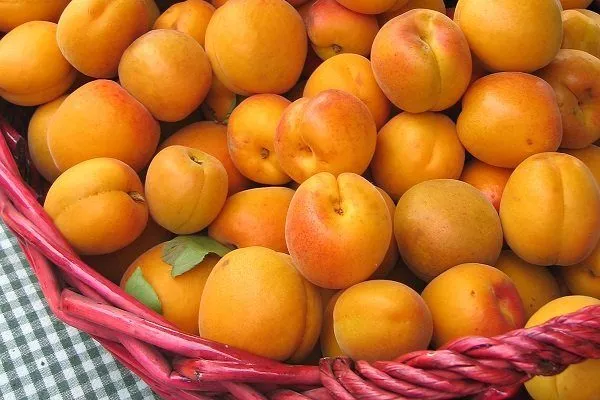
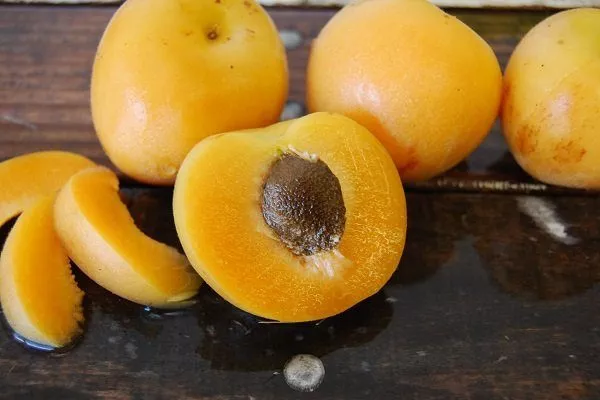
Apriums are often called "bald apricots" or "apricot nectarines." They look just like apricots, but without the characteristic rough skin. Apriums have a smooth, plum-like skin.
Aprium fruits are large and spherical. Their characteristics depend on the variety. They can vary in color, flavor, weight, and other properties.
Fruit characteristics:
- maximum weight – 70 g;
- average weight – 40 g;
- the skin is smooth, thin, with a light waxy coating, sometimes with a little pubescence;
- color – purple, pink, yellow, orange, dark purple, burgundy, greenish.
The flavor can be dominated by either apricot or plum notes. The former resemble plums in appearance, while the latter resemble apricots. The flesh of the aprium is dense and less juicy than that of apricots. The fruit often has an orange aftertaste.
The first fruits appear on the tree no earlier than the third year. As the tree grows, the yield increases. A single mature tree yields 30-40 kg of ripe fruit.
Frost and disease resistance
Aprium stands out among heat-loving apricots due to its high winter hardiness. This hybrid easily withstands temperatures down to –35°C. Damage to the tree can occur during winter thaws.
This plant, like any hybrid, has excellent characteristics, including disease resistance. Aprium has excellent immunity, successfully resisting both various infections and insect pests.
Advantages and disadvantages
Like any hybrid plant, aprium was created to produce a tree that would surpass its parents in every respect. This is why aprium's advantages far outweigh its disadvantages.
Landing features
Aprium prefers sunny sites protected from strong winds. Soils should be well-drained and pH neutral.
In highly acidic soils, quicklime (or "fluff lime") is added at a rate of 400 g per square meter.
It is recommended to purchase seedlings only from specialized nurseries, otherwise the chances of obtaining a varietal hybrid are very slim.
- ✓ The presence of live buds on the branches, which indicates the viability of the seedling.
- ✓ The root system must be well developed, without signs of rot or damage.
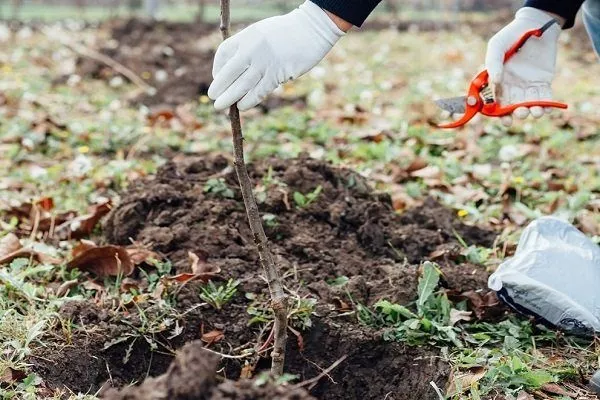
When choosing a seedling, pay attention to the condition of its bark and roots; they should be healthy, not dried out, and without damage.
The process of planting aprium:
- Prepare the planting hole 2-3 weeks before planting. If you prefer to plant in the spring, prepare the holes in the fall to allow the nutrients to better penetrate the soil.
The depth of the pit is 80 cm. The width is 80-90 cm. - Place a layer of broken bricks or small stones on the bottom of the hole.
- Place a nutrient-rich soil mixture on top of the drainage layer. Prepare it by mixing two buckets of organic fertilizer (humus or compost) with 100 g of mineral fertilizer consisting of 65% phosphorus and 35% potassium.
- Place the seedling in the hole on a mound of earth. Carefully spread the roots and cover them with the remaining soil mixture. Fill the hole to the very top.
- Water the seedling and tie it to the support with soft twine.
Growing and care
Although aprium is unpretentious, a good harvest is unlikely without proper care. For the tree to live up to gardeners' expectations, it requires specific growing conditions.
Care features:
- Watering. The main problem for this hybrid is drought. It is very sensitive to lack of water. To form large, juicy fruits, the aprium requires regular watering. Watering should be done once a week, with 10 liters of water per tree.
If the site lacks artificial irrigation and the region experiences frequent droughts, the hybrid will not produce good yields. The tree requires moderate moisture—stagnant water, as well as a lack of it, are equally harmful to the tree. - Loosening. After each watering, it is recommended to loosen the soil around the tree trunks as soon as it dries out a little.
- Mulching. To reduce the need for watering and tilling, and to slow weed growth, mulch the soil around the tree trunks. As the mulch decomposes, it also replenishes the tree's nutritional reserves.
- Top dressing. In the spring, immediately after the snow melts, apply 30 grams of saltpeter per square meter. The tree is fed a second time in September: 20 liters of humus are added under each tree.
- Trimming. In March, sanitary pruning is performed. Dead, damaged, and frost-damaged branches are removed, and a rounded crown is formed.
In Russia, aprium fruits ripen in early August; they are eaten fresh and widely used in cooking, making preserves, jellies, and compotes.
Methods of reproduction
Aprium is a hybrid, so gardeners don't propagate it by seed, as the resulting planting material doesn't retain the varietal characteristics. This hybrid plant is propagated only vegetatively, using green or woody cuttings.
- ✓ The air temperature should be no lower than 20°C for green cuttings and no lower than 15°C for woody ones.
- ✓ Air humidity should be maintained at 70-80% to prevent the cuttings from drying out.
Features of propagation of aprium by cuttings:
- Green. This method is used in summer. A section of the branch with leaves is separated from the middle of the shoot. The cutting should have three leaves. The cutting is done in the morning to ensure the branches are saturated with moisture.
The shoots are dipped in a growth stimulator and planted in a nutrient medium. Once the cuttings have rooted, they are transplanted to their permanent location. - Woody. Planting material is harvested during the dormant period. Cuttings are 30 cm long. Cuttings taken in the fall are stored in the cellar until spring. In the spring, they are planted in boxes filled with peat or in open ground.
- Air layering. In summer, select a branch with annual growth. Make two circular cuts on it. The bark is removed from the area between the cuts. The damaged area is treated with a stimulating solution and wrapped in a plastic bag, leaving room for soil.
This method is used to grow an air layer, which is cut from a branch and transplanted into nutritious soil.
A video review of the Aprium hybrid can be seen here:
If your apricots are freezing due to low temperatures, plant a cold-hardy variety, or even better, an aprium. It's significantly more frost-resistant than apricots, guaranteeing a consistent harvest.