
The Angelina plum (Angelino) is a popular variety, sought after by many gardeners and homesteaders who enjoy growing fruit trees. This article discusses the general characteristics of the plant and its fruit, offering step-by-step recommendations for planting and caring for the seedling. Helpful tips for pest and disease control are also provided.
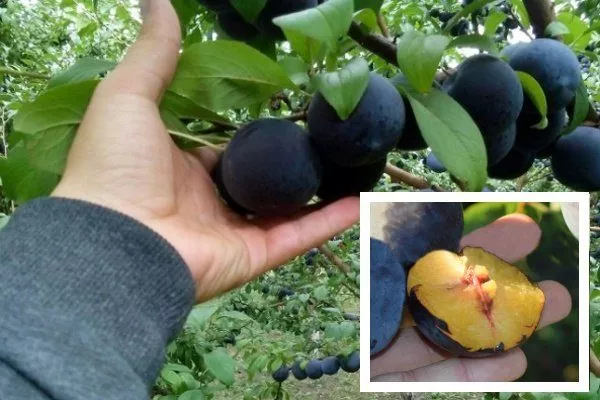
Plum Angelina (Angelino)
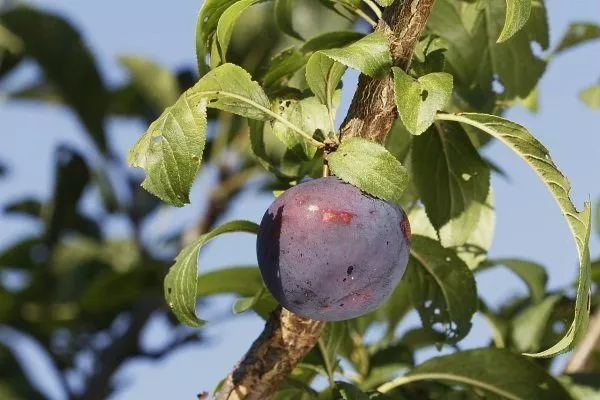
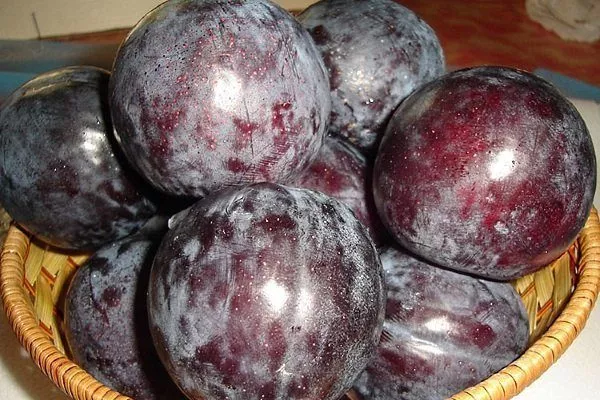
The fruits of the Angelina plum have a blue coating
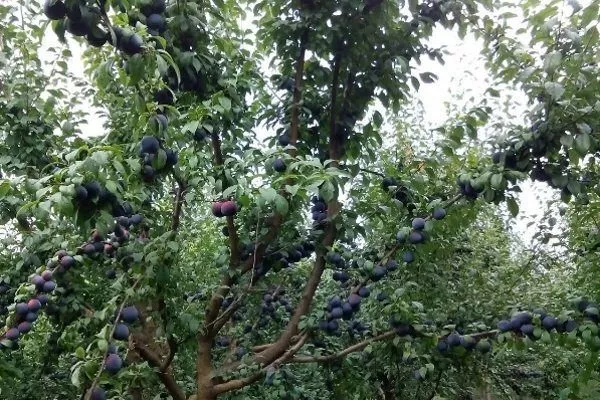
The yield indicators of the Angelina variety are consistently high
How did the variety selection process take place?
Californian breeders have managed to develop a late variety, Angelina, obtained by crossing two types of plums – wild and Chinese plumThe plant resembles a cherry plum in appearance, but its fruit reveals it to be a plum. The advantages of this variety include its versatility and ability to be transported over long distances.
Description and characteristics of Angelina
The tree can reach a height of three meters. Its crown is pyramidal, with a wide base. It is formed from strong, slightly spreading branches. The tree is characterized by medium foliage density. The leaves are elliptical, slightly tapering at the tip. The flowers are white, gathered in simple umbels. Flowering occurs in early May, beginning one year after planting.
The fruits are barrel-shaped or rounded and large. Some can weigh around 120 g. The average fruit weight is 60-90 g. The flesh is juicy, sweet and sour, and amber-colored. The skin is dark purple, with a blue bloom with a slight silvery tint. The pit is small and easily separated.
Plum Angelina is a variety characterized by increased resistance to most fungal diseases and pests, and also adapts well to unfavorable environmental conditions.
Productivity and year-round fruiting
This variety attracts gardeners with its high yield and regular fruiting, making Angelina a promising cultivar. It is widely used in various industries. A single tree can yield approximately 50-80 kg of fruit.
Fruiting begins annually at the end of September. After planting, the harvest begins to form as early as the fourth year.
Frost and drought resistance
Compared to other plum varieties, Angelina has good frost and drought resistance. However, to ensure high-quality fruiting the following year, gardeners need to prepare the tree for winter and choose the right planting site.
Does the variety need pollinators?
The Angelina plum variety produces only female flowers, so for fruit to form on the tree, nearby plants with male or bisexual flowers must be present. Furthermore, their flowering period must coincide with that of this variety.
| Pollinator | Flowering period | Distance to Angelina |
|---|---|---|
| Columnar cherry plum | Beginning of May | 3-5 m |
| Black Plum | Beginning of May | 5-7 m |
| Plum Amber | Mid-May | 5-7 m |
Columnar cherry plum, Black, Amber, and Friar plum varieties are suitable as pollinators for Angelina.
Advantages and disadvantages
This variety has its advantages and disadvantages, but the positives outweigh the negatives. Gardeners note the following advantages:
- use of fruits for various purposes;
- good taste and appearance;
- good yield rate;
- long shelf life;
- resistance to high and low temperatures.
The gardener reviewed the plum variety "Angelina" in the video below:
Features of planting a seedling
Planting is an important process for every fruit tree, one that will ultimately impact its growth and development. To obtain the maximum yield with good taste and appearance, gardeners must follow certain planting recommendations for this plum variety.
- ✓ Soil pH should be between 6.0-6.5 for optimal growth.
- ✓ The depth of groundwater is at least 1.5 m from the surface.
Landing requirements
The plant can be planted in both spring and fall. Be sure to choose a sunny location protected from winds. When planting, consider the crown's thickness. Loose, fertile soil is preferable.
What crops are best to plant with?
Any tall trees will negatively impact the active growth of the Angelina plum, blocking the plant from sunlight. This can slow down the plant's development and negatively impact the yield. Planting apple trees, pear trees, raspberry bushes, and blackcurrant bushes near the plum will also negatively impact the crop. Maple trees are the best neighbors for the Angelina variety.
Preparing soil and planting material
When purchasing a seedling, be sure to pay attention to the root system: it should be carefully packaged in film and fertilized with peat, which provides reliable protection against mechanical damage and moisture loss.
A few weeks before planting, prepare a hole 60 cm deep and 70 cm wide. Enrich the planting mixture by adding several buckets of organic matter (humus or compost). For mineral fertilizer, add about 400 g of superphosphate. To ensure the seedling's stability, tie it to a stake driven into the center of the hole. Water the seedling with four buckets of water.
Step-by-step planting instructions
Planting a seedling shouldn't be difficult, but following these guidelines will ensure better growth. Follow this plan:
- Dig a hole and inspect it to ensure that the dimensions correspond to the root system of the plant; it should fit freely into the hole.
- Mix fertile soil with organic matter and mineral elements and place the mixture at the bottom of the hole.
- In the center of the hole, form a mound and install a stake in it to support the plant and protect it from gusts of wind.
- Firm the soil and water thoroughly.
- After the moisture has been absorbed, mulch the seedling with wood chips. More information on proper soil mulching can be found here.Here.
- The final stage is to firmly tie the seedling to the support.
We also recommend reading a detailed article about How to plant and grow a plum tree.
Caring for the variety
Caring for the Angelina plum doesn't require much time or effort. Watering, fertilizing, pruning, and preparing for winter are essential for good growth and development.
Watering
The tree requires consistent watering. The soil should be moistened to a depth of 35-40 cm. In early summer, more consistent watering is required—approximately 5-6 buckets of water per plant. However, overwatering the tree is avoided, as excess moisture can lead to the development of fungal diseases.
Fertilizer
Until the plant is 5 years old, feed it according to the following scheme:
- In the spring. Add 40 g of ammonium nitrate per 1 sq. m.
- In autumn. Fertilize the plant with 40 g of potassium salt and 80 g of superphosphate per 1 sq. m.
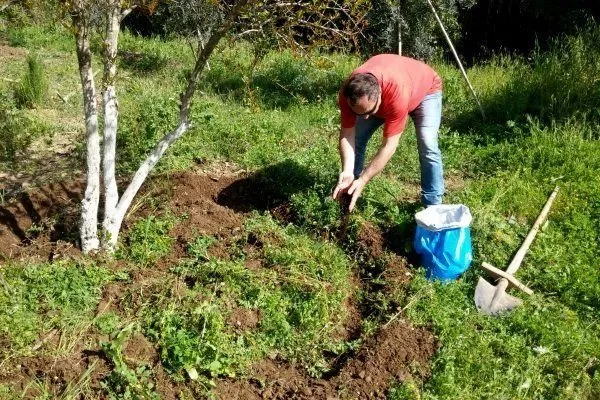
Apply fertilizer every other year. For mature plants, follow the same schedule, but double the amount of fertilizer. Apply organic fertilizer every three years: one bucket of compost.
Tree pruning
Young trees require regular pruning in the summer to promote fruiting. Mature plants will require formative pruning, which is considered a lighter form of pruning.
Pruning allows the gardener to thin the crown to prevent overgrowth and prune main branches to stimulate new growth. During the fruiting season, be sure to remove diseased, deformed, and broken branches. Perform sanitary pruning every fall.
Rejuvenation pruning is performed only when growth has slowed and the plant is producing only a small amount of fruit. During this process, remove branches that have grown over the past 3-4 years. Further pruning is performed every 4-5 years.
Preparing for winter
Preparing for winter begins with firmly compacting the soil around the tree. Water and fertilize the plant if needed. Also, paint the tree trunk with lime to prevent damage from severe frosts, spring freezes, and extreme temperature fluctuations. Mulch the plant with compost. After the snow falls, form a snowdrift around the tree.
Wrap young plants in burlap or agrofibre – this will provide reliable protection not only from frost, but also from rodents.
Diseases, pests, treatment and prevention
The Angelina plum variety is characterized by high resistance to weather changes and low maintenance requirements, but has average resistance to various diseases and pests that can negatively affect yields.
To avoid this, read about prevention and treatment:
| Disease/Pest | Symptoms | Treatment/Prevention |
| Fruit rot | Dark spots appear on the fruits, gradually spreading to all the fruits. | To prevent damage to the fruit, spray it with an iodine solution every three days.
To combat the disease, collect all affected fruits and burn them. |
| Rust | Brown spots with a rusty tint form between the leaf veins. By autumn, the spots become darker. | Fungicides applied to problem areas will help combat the disease.
To prevent this, treat seeds with fungicides before planting or only take cuttings from healthy plants. Feed the trees with micronutrients. |
| Chlorotic ringspot | Yellow rings and stripes appear on the leaves, and the fruits become covered with dark spots. | As a preventative measure, remove weeds and use healthy planting materials.
To combat the disease, disinfection must be carried out only in special laboratory conditions. |
| Plum sawfly | In early summer, the upper side of the leaves becomes covered with small brown spots, and a powdery pink coating appears on the underside. | Burning the damaged parts of the plant will help eliminate the pest.
To prevent this, regularly loosen the soil and water the tree generously during the flowering period. |
| Plum codling moth | The caterpillars feed on the fruit pulp, destroying and contaminating it with their excrement. This leads to premature ripening and fruit drop. | Prevention consists of timely clearing the area of fallen plums and loosening the soil.
Control measures include: clear the tree of dead bark and remove any affected fruit. Use a chemical sprayer. |
| Cane aphid | When aphids settle in dense colonies on the underside of leaves, the pest causes significant damage to the plant. Leaf edges curl downward and become discolored along the veins. Young fruits infested with aphids become deformed and do not ripen fully. | To get rid of the pest, spray the crown with pyrethroids, insecticides containing nicotine, or mineral oils. |
You can see a full overview of plum diseases and learn about methods of treating them from our other article, which is located hereTimely resolution of the problem will have a positive impact on the quality and quantity of the harvest.
Collection and storage
The harvest is at the end of September. This variety is characterized by excellent shelf life. Plums can be stored for about three weeks at room temperature. When stored in the refrigerator, the shelf life increases to four months. The taste and appearance of the fruit remain unchanged.
It's acceptable to harvest unripe fruit. This way, they'll ripen in the refrigerator, and their flavor will be better.
Application of Angelina
The fruits are widely used due to their flavor and unique long-term shelf life. They are eaten fresh or frozen to enjoy their flavor during the winter, preserving their nutritional properties. They are also used for winter preserves, such as jam, compotes, and jellies. Plums are also used for dried fruit.
Gardeners' reviews
Most gardeners speak positively about the Angelina plum variety, citing its unpretentiousness and undemanding care.
The Angelina plum is a favorite among many gardeners, who appreciate its low maintenance requirements. Following planting recommendations will ensure good growth and development, as well as increased yields.