
Plum and cherry plum are close relatives, popular among Russian gardeners. Both fruit crops are widespread in central Russia and are fairly easy to distinguish from each other. This article will explain the differences between these plants and what they have in common. We'll also tell you whether the trees will coexist if planted next to each other in the same plot.
The origin of plums and cherry plums
Both fruit trees belong to the same family, known as Rosaceae (which also includes many other inhabitants of domestic gardens: cherries, peaches, apricots, etc.). Both trees belong to the genus Plum, which includes over 200 species. They are the closest "relatives" in the plant world.
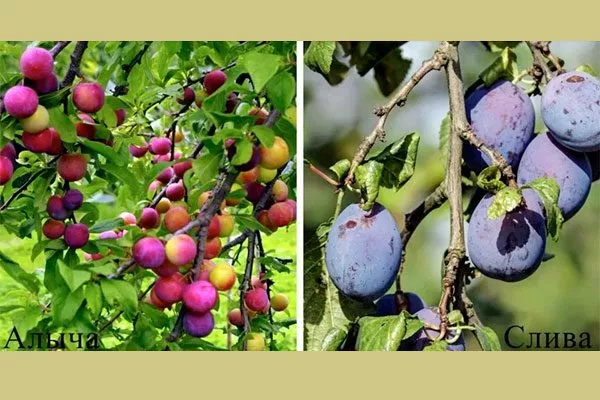
The cherry plum is essentially the ancestor of the common plum. Its other name is the cherry plum. This tree is found in the wild. It is hardy and very fruitful. Its distribution is quite extensive, including:
- Asia Minor and Central Asia;
- Balkans;
- Transcaucasia and North Caucasus;
- Iran;
- Moldova;
- regions of the Russian Federation, mainly southern ones.
By crossing the cherry plum with the blackthorn, it gave birth to the domestic plum. Its "daughter" has no wild forms and is not found in nature. It is more popular with gardeners and much more familiar to them than its ancestor. The cultivated variety first appeared in Persia. In the 17th century, it was brought from Europe to Russia.
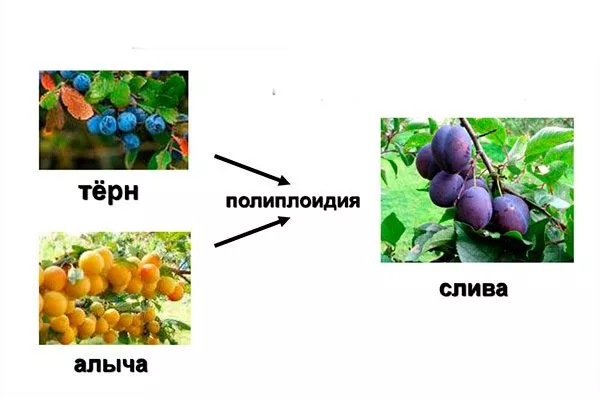
Plums were originally not known for their winter hardiness. Over time, thanks to the efforts of breeders, many varieties well adapted to harsh winters were developed. Today, this fruit is successfully grown not only in the central part of the country but also in the north. Its range is wider than that of the cherry plum.
External differences
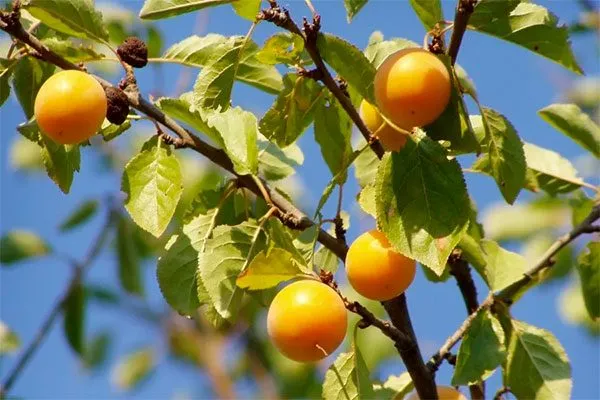
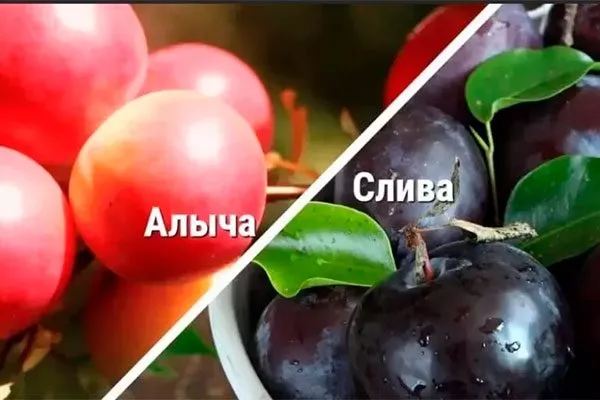
Despite their close relationship, these two fruit crops are impossible to confuse. Even an inexperienced gardener can easily tell whether they're plums or cherry plums by the appearance of the tree and fruit:
| External indicators | Domestic plum | Cherry plum |
| What does a tree look like? | ||
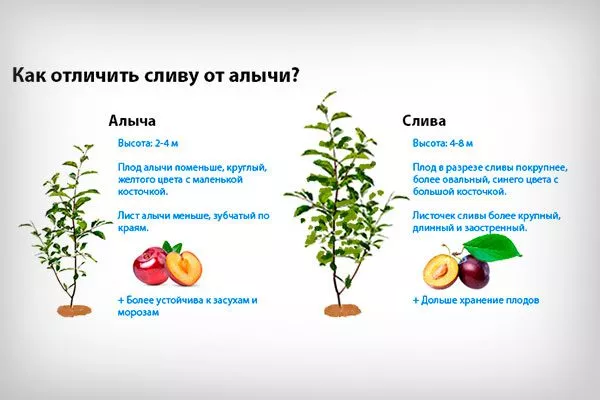
| Height | 5-12 m (maximum 15 m) | 3-10 m |
| Crown | Spreading, ovoid, wide or columnar.
| Spreading, rounded (the plant has the appearance of a multi-stemmed tree or lush shrub).
|
| Escapes | Medium thickness (thinner than apple or pear), greenish-brown or gray-brown (may have a reddish tint), young ones are thin and flexible, actively growing, old ones are covered with thick bark with cracks. 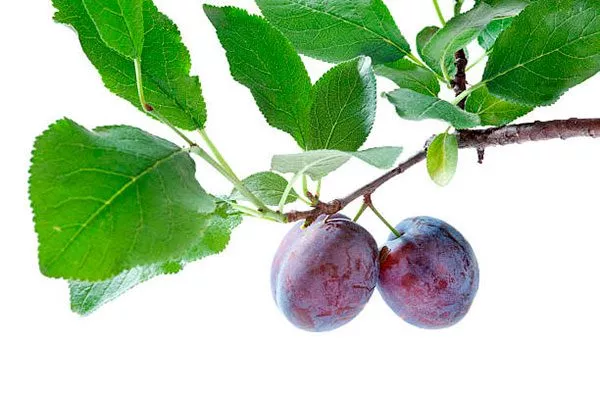 | Thin, branched, brown-green in color, can be prickly, young ones are smooth, green with small hairs, old ones are thicker, covered with dark rough bark, peeling and cracking.
|
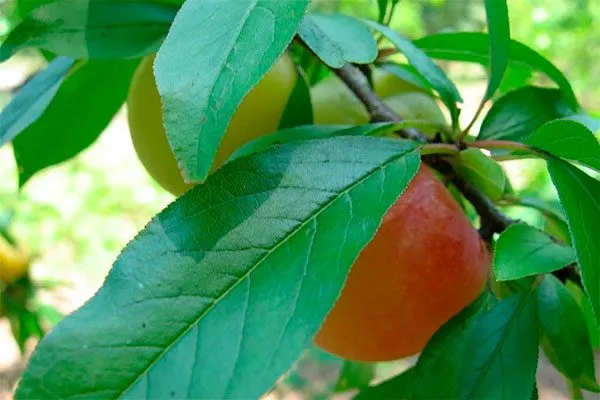
| Foliage | Large, simple, narrow, lanceolate, with a smooth or serrated edge, usually green (may be a different color in some varieties, for example, purple).
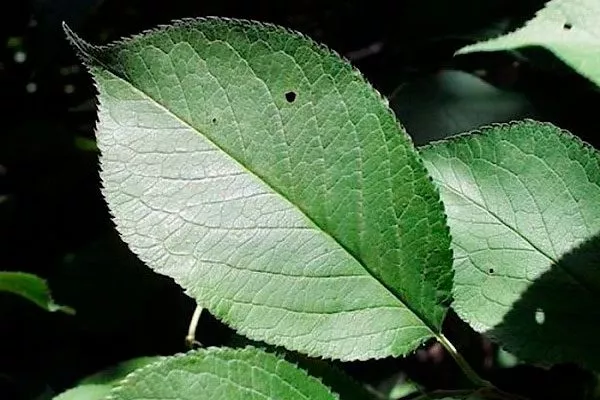
| Small, oval with a pointed tip, with serrated edges, dark green (some varieties have decorative foliage, red or purple in color), lighter on the back side.
|
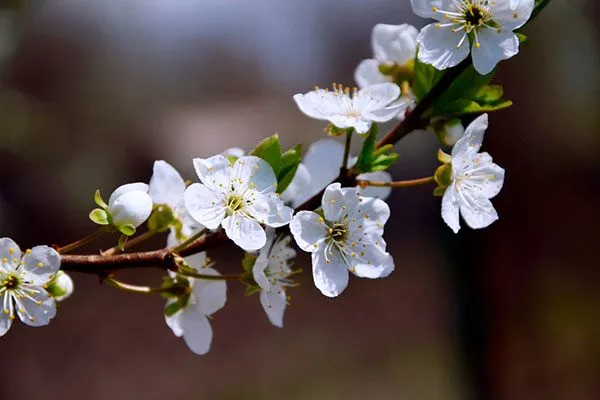
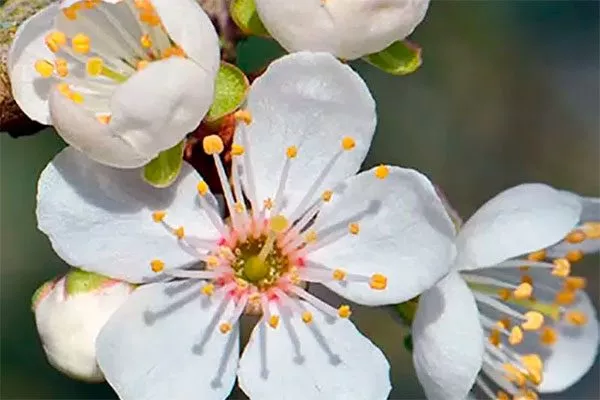
| Flowers | Cup-shaped, five-petaled, white or pink (in decorative varieties they can be burgundy or purple), solitary or collected in inflorescences of 5-6 pieces, diameter - 2 cm.
| White or pink, with 5 petals, collected in small brushes or single, diameter - 2.5 cm, very fragrant.
|
| What does the fetus look like? | ||
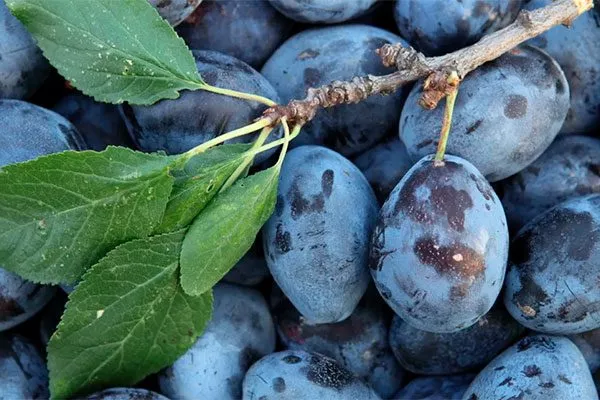
| Form | Oblong, round-oval or spherical, with a well-defined longitudinal groove.
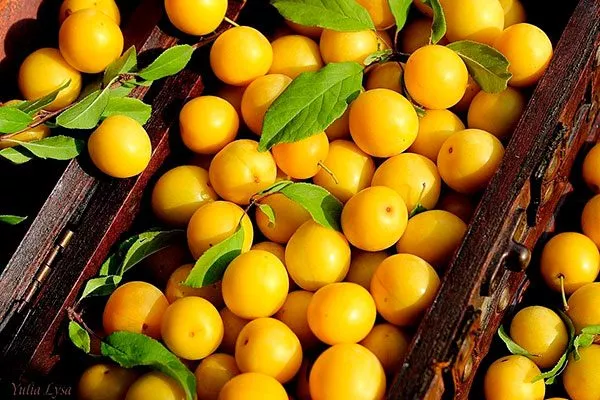
| Round, slightly flattened, with little or no ventral suture.
|
| Size | Large or medium. | Small. |
| Weight | 20-70 g. | 10-35 g. |
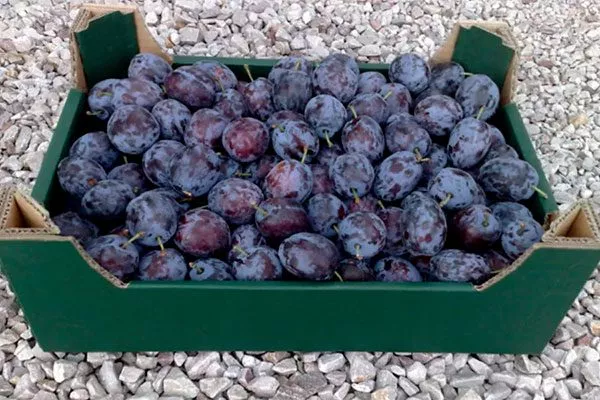
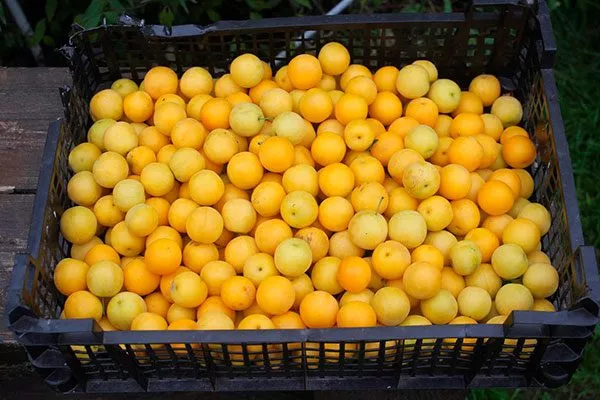
| Coloring | Mostly blue or purple, can be yellow, green, red-pink, blue-black. | Yellow, orange, sometimes with a reddish tint (some varieties can be pink or purple). |
| Skin | Smooth, with a characteristic bluish tint, matte or shiny, dense, can be of varying thickness and strength. | Thin, dense, strong, glossy, with little or no waxy coating. |
| Pulp | Firm, often fleshy, juiciness and density depend on the variety. | Watery, often liquid, juicy, aromatic. |
| Bone | Large, usually separates well from the pulp.
| Small, difficult to separate from the pulp.
|
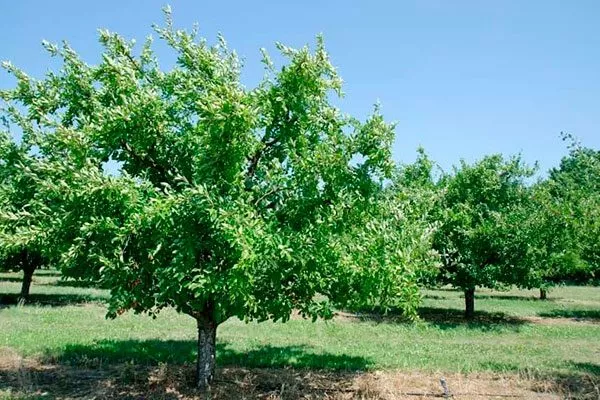
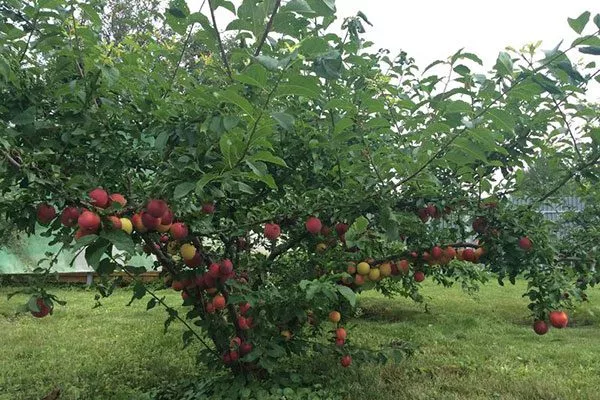
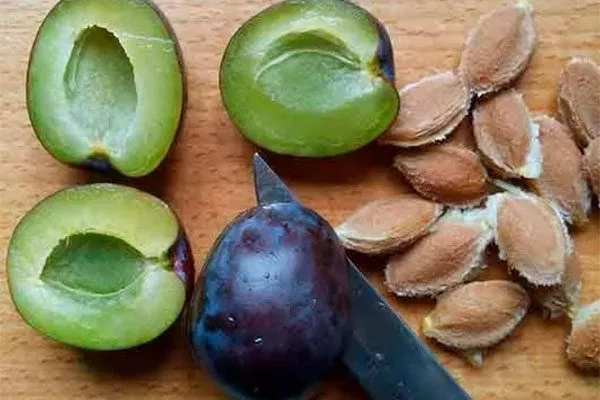
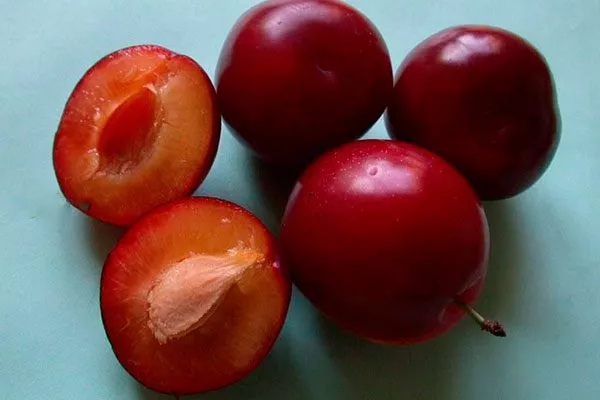
The cherry plum tree reaches productive maturity two years earlier than the plum tree. Its lifespan is twice that of its cultivated relative. It can grow in the same place for up to 50 years.
Taste and smell
The tasting qualities of these two gifts of the garden are also not identical. Their ratings, as given by professionals, are as follows:
- 4.5-5 - plumThe flesh is sweet with moderate to slight tartness. Some varieties have a tart note. Sugar content is up to 19%, acidity is less than 1.32%. The aroma is delicate, not very pronounced.
- 4-4.8 - cherry plumThe fruit is sweet and sour, refreshing, very juicy, and aromatic. The aroma is fruity and nectar-like, perceptible from afar. Sugar content is up to 7.6%, and acidity is up to 3%.
Plums are considered more delicious due to their high sugar content. Cherry plums (also known as tkemali) are less sweet. They contain more acid (ascorbic, citric, and malic) than their fleshy purple counterparts.
Chemical composition
The nutritional value of the fruits of these two garden crops also varies. There are significant differences in the pulp components. Data for comparative analysis is provided in the table:
| Chemical composition and nutritional value | Plum | Cherry plum |
| Caloric content, kcal/100 g | 34 | 49 |
| Proteins, g per 100 g of pulp | 0.2 | 0.8 |
| Fats, g per 100 g | 0.1 | 0.3 |
| Carbohydrates, g per 100 g | 7.9 | 9.6 |
| Natural sugars, % | 6.5-19 | 4-7.6 |
| Acids, % | 0.6-1.32 | 1.4-3 |
| Vitamins | A, C, B1, B2, P | A, C, B1, PP, E. |
| Minerals | potassium, calcium, phosphorus, magnesium, iron, zinc, copper, manganese, iodine, nickel | potassium, calcium, phosphorus, magnesium, sodium, iron, etc. |
| Pectin, % | 0.2-1.5 | 0.5-5 |
Cherry plums are not only more caloric but also superior to plums in terms of nutritional content. Due to their sour taste, they are rarely eaten fresh, and cooking loses the lion's share of their vitamins and minerals. They contain more tocopherol (vitamin E), but are inferior to purple fleshy fruits in terms of retinol (vitamin A).
Applications of plums and cherry plums
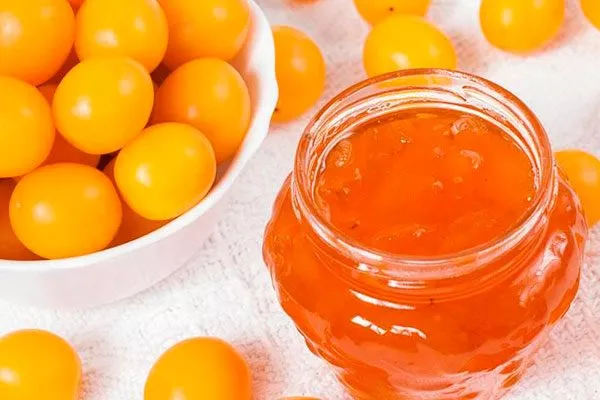
Tkemali plums are generally less sweet and flavorful than plums. They are rarely eaten fresh, with the exception of varieties with high tasting scores. Cherry plums are widely used in home cooking:
- Housewives make jam, compote, and various delicacies from it - pastille, marmalade, or jelly (due to the high content of pectin in the pulp and skin, they do not require the use of gelling additives);
- used as a filling for pies;
- make drinks (lemonade, juice, fruit drink);
- canned for the winter;
- added to vegetable dishes, combined with tomatoes, eggplants, zucchini;
- prepare sauces for meat dishes.
Plums are most often eaten fresh or added to desserts like fruit salads. The fleshy, thick-skinned fruits make excellent thick jams and preserves. They are also suitable for canning and adding to baked goods as a filling. They are also used to make baby food and juices.
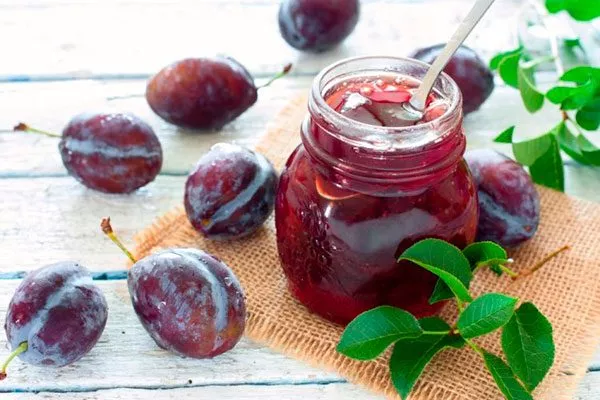
Plum fruits are often dried and cured. The resulting prunes are considered a highly beneficial delicacy. They are also used to make a sweet paste with nuts, honey, and raisins. They are also combined with chocolate to create homemade candies.
Ripening time
Cherry plum thrives in warmth, but is hardy and undemanding in terms of watering and soil. It grows and bears fruit best in the south of the country. In warm climates, the tree is less susceptible to disease and more easily resists insect attacks. It begins producing fruit in its second or third year. The fruits ripen at the following times:
- end of summer;
- early autumn (some varieties).
Unlike its ancestor, plum is less susceptible to cold. Many of its varieties are successfully grown by gardeners even in northern regions. While it is quite frost-resistant, it cannot boast the same immunity as tkemali.
Plum trees reach productive maturity in the fifth year after planting. With proper care, the fruit ripens as early as July. In cooler climates, harvesting occurs later.
Productivity and transportability
Plantings of these two fruit trees yield different amounts of fruit. Average yields per trunk (in favorable years and with proper agricultural practices) are as follows:
- cherry plums - 30-45 kg;
- plums - 20 kg (there are exceptions - some varieties, for example, President or Green Renclode, yield 40 kg).
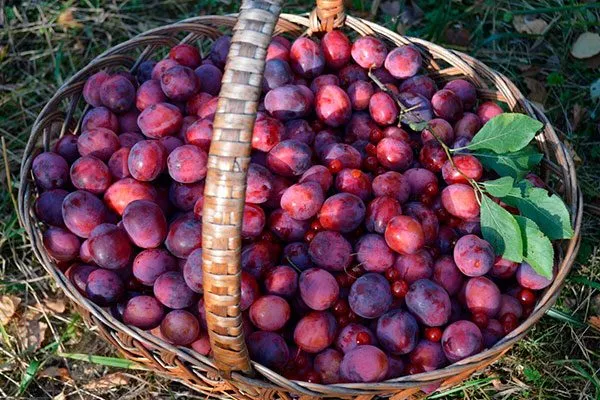
The transportability of the harvest depends on the variety and stage of ripeness. Plum varieties with firm flesh and tough skin are resistant to mechanical damage (for example, Hungarian plums). They withstand long-distance transport well. The same applies to cherry plums, especially those picked slightly underripe.
Storage
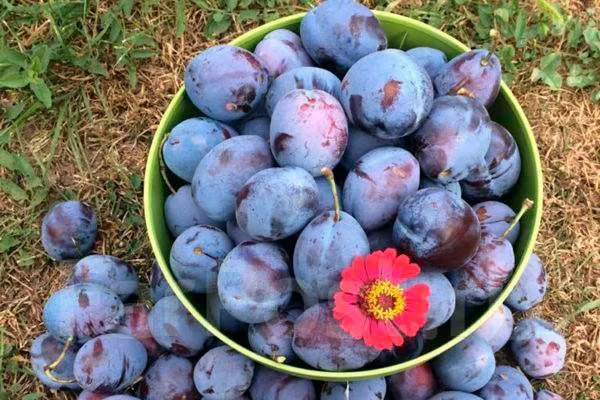
The shelf life of the harvested fruit depends on many factors: variety, ripeness, care with which the fruit was picked, and storage conditions. Fruits picked slightly unripe from the branches retain their freshness best. Storage periods are as follows:
- Plums - from a few days to several monthsRipe fruit will keep in the refrigerator for no more than 5 days, while unripe fruit will stay fresh for up to 2 months at temperatures between 0°C and 2°C (80% humidity). Frozen fruit will keep for at least six months.

- Cherry plum - from several days to 3 weeksIt quickly loses its firmness and flavor at room temperature. If unripe, it can retain its juiciness and freshness for 14-20 days if stored in the refrigerator's vegetable compartment (temperature range: 0°C to +4°C). For long-term storage, tkemali can be frozen or dried.
Differences in care
Both fruit crops prefer sunny locations where they receive plenty of warmth and light. They grow well in fertile, loose, permeable soils that are not prone to groundwater flooding, loamy, and neutral or slightly alkaline. However, there are some differences in cultivation techniques:
| Care activities | For plum | For cherry plum |
| Watering
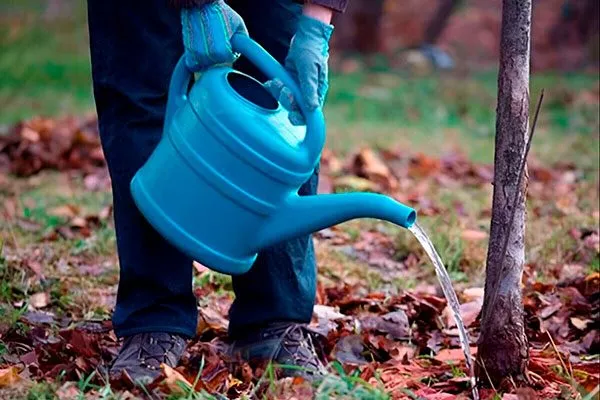
| Water your trees regularly, once a week (2-3 times a week for seedlings). The soil around the tree trunk should be moist to a depth of 40 cm.
The first watering should be done a few weeks before flowering and 14-20 days after. Be sure to water the plant during the fruiting period. For young trees, use 40-60 liters of water per trunk; for mature (fruit-bearing) trees, use up to 100 liters per trunk. | The plant is more drought-resistant and requires moderate watering. Moisten the soil to a depth of 30-40 cm.
For an adult tree, carry out 3-4 treatments per season, using 40-50 liters of water per trunk. Water the cherry plum before flowering, during the formation of ovaries, 3 weeks after the second watering and during the ripening phase of the fruits.
|
| Top dressing
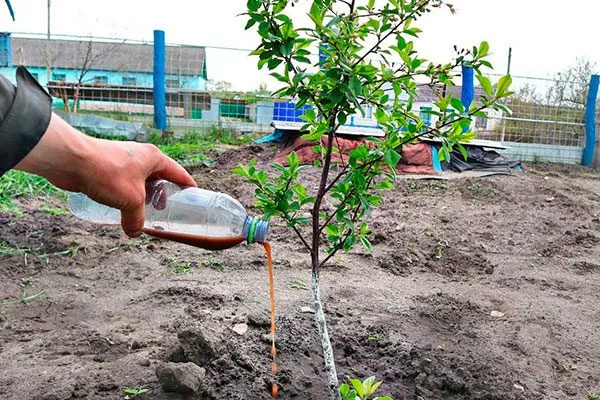
| In spring, plum trees need nitrogen, and in summer, potassium and phosphorus. Apply fertilizer 3-5 times per season.
Use organic matter (humus, compost, ash) and mineral compounds (superphosphate, potassium sulfate, urea). The older the tree, the more nutrients it needs. | Fertilize tkemali plants in the same manner. Feeding less frequently (several times per season) is acceptable. This fruit crop requires less additional nutrients. |
| Trimming
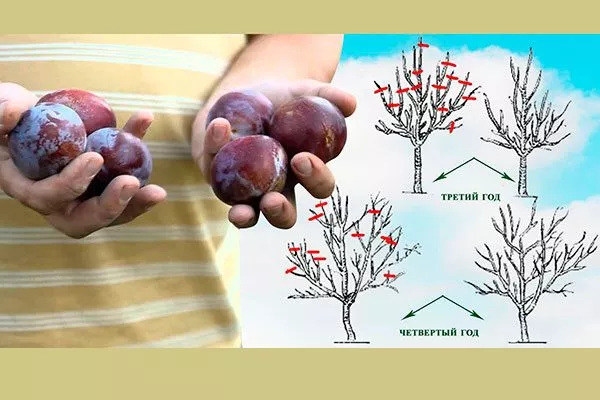
| The plum tree requires annual formative and sanitary procedures.
The first involves shortening the central conductor and forming 5-7 skeletal branches. This gives the plant a neat and well-groomed appearance and increases its productivity. The second involves removing frozen and broken shoots, as well as thick shoots affected by diseases and pests. | Once planted, cherry plums begin to grow rapidly. Their crowns tend to become dense.
It requires mandatory pruning. Weak and irregularly growing branches should be removed. Rejuvenate the tree annually by pruning old shoots. The culture is less demanding in terms of crown formation, but requires frequent thinning.
|
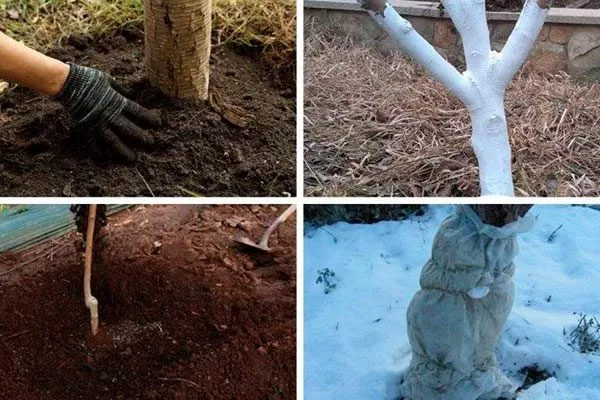
| Preparing for winter
| Plum varieties characterized by good frost resistance do not require winter insulation when grown in temperate climates. Young trees are an exception.
Trees grown in northern regions and cold-sensitive species require preparation for the cold season. After harvesting, take the following steps:
| The plant's frost resistance leaves much to be desired. In the south, trees can overwinter without insulation. In the central zone, they require good preparation for the cold season, especially young plants.
In late autumn, carry out the following activities for cherry plum:
|
| Pest and disease control
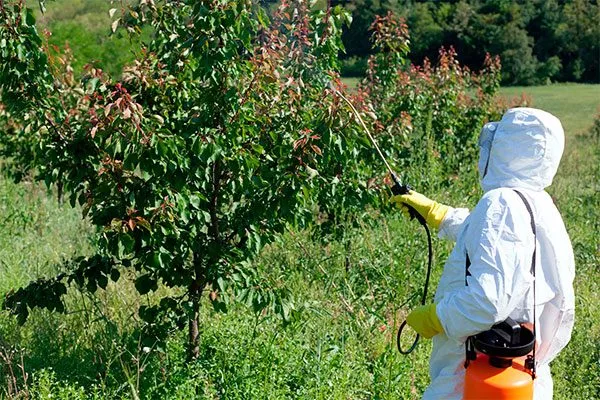
| The crop is moderately resistant to infections and pest attacks. Without proper care and preventative treatments, it is susceptible to moniliosis, holey spot, rust, fruit rot, aphids, codling moths, and other pests.
To prevent the problem, spray the crown at the following times:
To reduce the risk of plum tree diseases, do not neglect pruning, remove root suckers, dig up the soil, and remove fallen leaves and plant debris from the garden. | Cherry plums have a strong immune system. In warm climates, they rarely get sick or suffer from pest infestations. Unlike plums, they are hardy and undemanding.
Under favorable conditions and with good care, the crop can be grown without the use of fungicides/insecticides. When grown in unfavorable conditions, the tree may be susceptible to moniliosis, powdery mildew, clasterosporium, coccomycosis, and pests (aphids, codling moths, sawflies, and mites). In these cases, preventative treatments are necessary, using the same protocol and products as for plums.
|
Plums are more demanding in terms of care than cherry plums. They require extra attention from the gardener.
Which is better to choose?
When deciding which fruit tree to plant in your garden, consider not only your own preferences, but also the local climate:
- For the southern regions Cherry plum is more suitable. It performs best when grown in warm climates. For cultivation in the central regions of the country, choose varieties that can withstand temperatures of -20°C or below, and be sure to insulate them for the winter.
- For regions belonging to the Central Belt of the Russian FederationPlums are preferable. The increased cold resistance of some varieties makes them suitable for cultivation even in the north of the country. They also thrive in the southern regions, provided they receive adequate watering.
Choose zoned varieties to ensure a rich harvest.
If you want your plot planted with tall trees, choose plum, or bush plum, tkemali. The latter takes up twice as much garden space as its purple counterpart.
Those who love sweet fruits and thick jam should take a closer look at plums, and those who love sour fruits rich in vitamins should consider cherry plums.
Compatibility of cherry plum and plum in the same garden
Both fruit crops thrive in the same garden. They require similar growing conditions (full sun, protection from wind and drafts, and soil type). Their care is very similar. Simply select varieties that are compatible with each other in terms of pollination:
- hybrid cherry plum and plum;
- cherry plum and Chinese plum.
When planting both fruit crops in one garden plot, follow several important rules:
- distance between plants: 3–5 m;
- The crowns should not shade each other, and the roots should not compete for nutrients and moisture.
Hardy tkemali is an excellent plum rootstock, compatible with any plum variety. You can also graft a cherry plum cutting onto a plum tree to save space and produce different fruits from a single trunk. This technique allows you to grow a heat-loving plant in a cold climate.
Plum and cherry plum are popular fruit trees with many similar characteristics. However, there are also significant differences. When choosing one of these two garden plants, consider its winter hardiness and susceptibility to disease and insects. Consider not only your own taste but also the conditions in which you will be growing the tree.