
When planning to plant fruit tree seedlings in the spring, it's best to purchase planting material in the fall. A wide selection of high-quality, healthy seedlings is available during this period. To preserve the plants until spring and protect them from frost, they should be dug in.
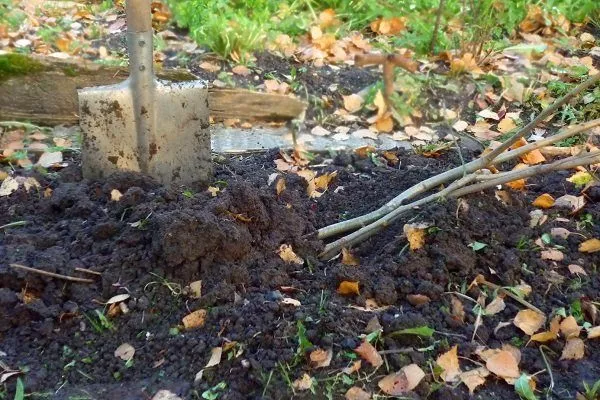
Digging in seedlings: what is it?
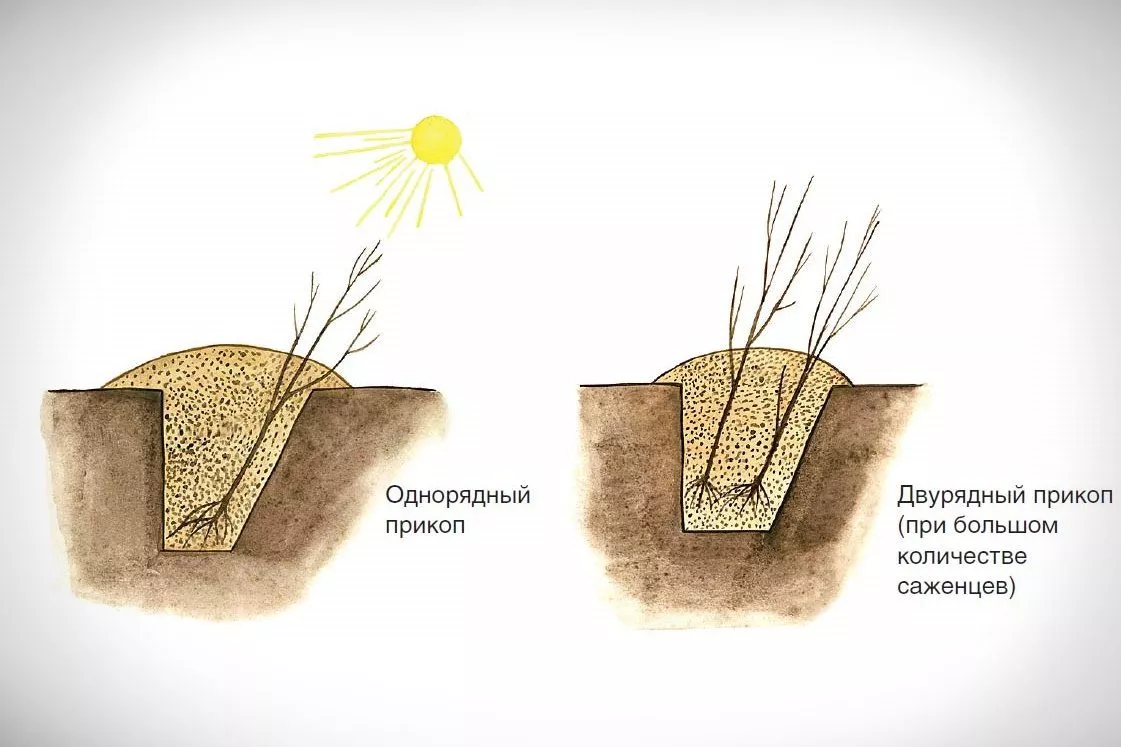
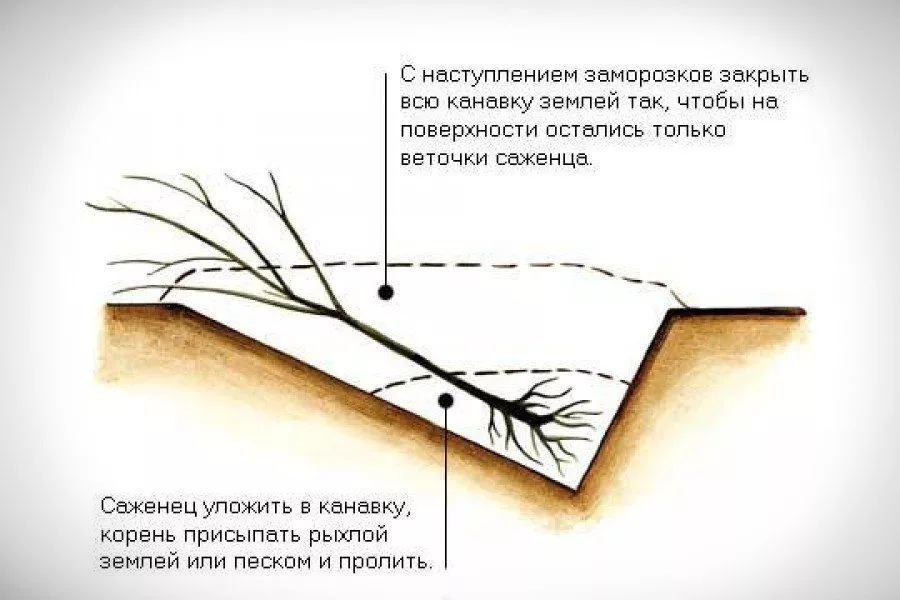
Digging in is a procedure for making planting easier. The seedling is buried at an angle of approximately 45 degrees, so that the root collar is covered with soil and only the branches remain above the surface.
No fertilizer is added to the hole while digging, but additional protection from frost and rodents is required. In the spring, the plants are removed from the ground and planted in their permanent location, taking all necessary precautions into account.
The seedling should not take root in a new place during digging, so this process is carried out as close to winter as possible.
Saplings are dug in for the winter in several cases:
- The seedlings were purchased in late autumn, when the planting deadlines had been missed.
- It is planned to plant seedlings of crops with low frost resistance.
- Seedlings of crops that are recommended to be planted only in spring (for example, plums, apples, pears, cherries) were purchased.
Rules for successful seedling burying
To ensure that buried seedlings survive until spring, you must follow these rules:
- selection of a suitable place for future digging;
- a properly formed ditch or pit;
- seedlings are located strictly in the direction from north to south;
- the optimal distance between seedlings is maintained (about 30 cm);
- plants are covered with soil to a depth of at least half the height of their trunks;
- the soil is compacted, but not too much;
- seedlings are additionally protected from frost and rodent attacks;
- With the onset of the first frosts, the plants are completely covered with soil, forming a small mound.
Digging in seedlings
The procedure is carried out before severe frost sets in. Trees should not be buried in early or mid-autumn, as there is a risk that they will begin to root in the new location.
Selecting a location for the pit and preparing it
It's best to choose a site on a raised platform. The area should be reasonably dry and well protected from cold winds. Avoid choosing a location where water stagnates in the spring.
There should be no weeds, straw, old compost heaps, or other organic material nearby. These are ideal conditions for rodents to overwinter, and young fruit trees can become food for them.
An excellent choice would be a site located next to a southern wall, fence or any outbuilding.
It is important to properly prepare the hole for the upcoming digging:
- make a hole at least 40-50 cm deep and about 30-40 cm wide;
- for a grafted seedling, make a hole 50 cm deep;
- make the northern wall vertical, the southern one - sloping (angle about 45 degrees);
- Do not apply fertilizer or water.
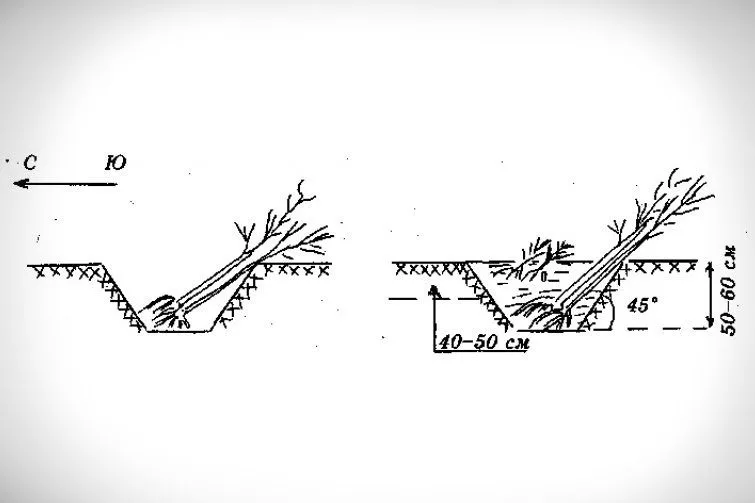
If several seedlings are being stored for the winter, a trench is dug instead of a hole. Plants are spaced approximately 30 cm apart.
Preparing seedlings
The seedling is prepared as follows:
- carefully tear off all the leaves, but try not to damage the bark;
- Place the roots in clean water and leave for several hours;
- If there is damage or signs of rot on the roots, cut them back to the beginning of healthy tissue;
- If the tree has many side branches, tie them with rope or soft twine, but not too tightly so as not to damage the thin bark.
Laying seedlings in a digging hole
Once all preparatory steps are complete, the seedling can be placed in the ground for storage. When placing it in the pit, it's important to follow these steps:
- place the tree in the hole so that the roots are facing north and the crown is facing south;
- carefully straighten the roots, trying not to damage them;
- To avoid mixing up varieties, attach a tag with the name to each tree.
Covering trees with soil
At the next stage, the seedling is covered with soil:
- Add soil (sand can be substituted) to the hole gradually, in small portions, to avoid the formation of air pockets, otherwise the roots will be damaged by frost;
- First of all, cover the roots with soil and water them;
- sprinkle the trunk and lower branches with soil to a height of about 15 cm from the level of the root collar and water again;
- If the weather is rainy and the soil is wet, do not water the seedling while digging it in;
- Lightly compact the soil with a shovel so that the soil fits tightly around the roots;
- When burying a grafted seedling, make sure that the graft is completely covered with soil.

When planting a large number of seedlings in trenches, a new row can only be started after the previous one is completely covered with soil.
Covering buried seedlings
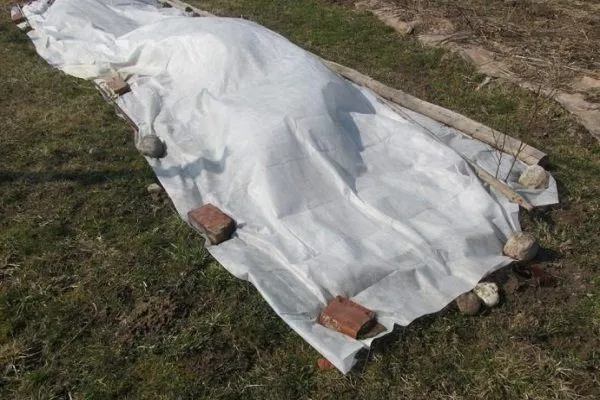
The seedling should be dug in no later than the end of October. In early November, the trees are additionally covered with a special non-woven material or pine branches for additional insulation.
When the first snow falls, create a small snowdrift at the site where the trees will be dug, completely covering them. In the spring, when the snow melts, the covering must be removed without waiting for warmer weather.
Protection from mice
Mice can be unexpected guests on a property. If mice get under cover, they can destroy a young tree. To protect the plants, place rodent poison under the cover.
- ✓ Use fine-mesh wire mesh around seedlings for physical protection from rodents.
- ✓ Use ultrasonic rodent repellents near the digging site.
Burying seedlings for the winter is a simple but important step that allows you to preserve the planting material until spring. By following these simple guidelines, you can preserve young plants without planting them directly in their permanent location.