
In spring, it's necessary to fertilize various crops, including fruit trees and shrubs. Each month requires specific procedures. It's important to select the right fertilizer for each crop, apply it in the right way, and at the right dosage.
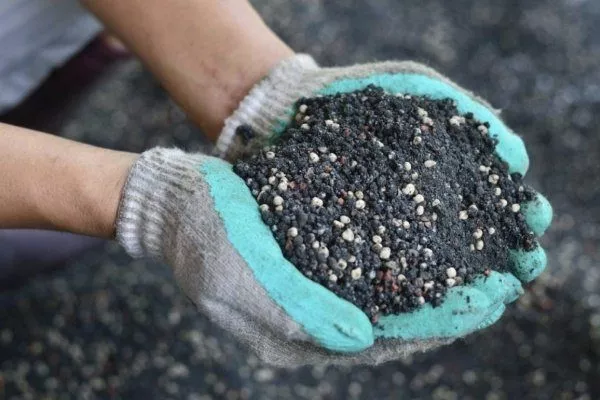
Why is spring fertilization of fruit crops necessary?
When growing various crops, gardeners resort to a variety of agricultural techniques. One of the most effective methods is plant nutrition. This ensures decorative plantings and a good harvest.
Timely application of fertilizers and the correct selection of formulations promote crop growth, ensure good flowering, and protection from diseases and pests. All of this is essential for a high-quality and abundant harvest.
Fruit trees and shrubs are perennial crops. Throughout their lifespan, they require various micro- and macronutrients, just like the human body. People obtain these nutrients from food, while plants obtain them from the soil. Over time, the soil becomes depleted, making fertilizer essential.
Feeding stages by month
Each variety of fruit tree and shrub requires an individual approach. This applies not only to the composition of the fertilizers used but also to the stages of their application. There are some general considerations that apply to each spring month.
March
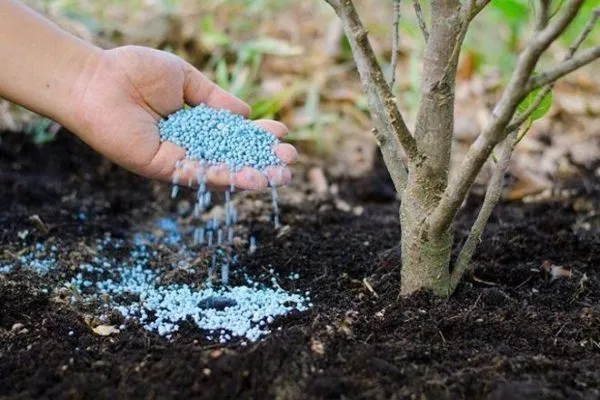
This month marks the first fertilization of the year. Fertilizers are applied at the beginning of the snowmelt season.
During this period, nitrogen-containing fertilizers are essential. They stimulate vegetation. Soluble mineral fertilizers are best. They are sprinkled directly on top of the snow, which, when melted, will dissolve the fertilizer and draw it into the soil. Prepare for this type of fertilization in the fall by thoroughly loosening the soil around the tree trunks.
The amount of nitrogen fertilizer required depends on the plant's age. For shrubs and young trees, 40 g of fertilizer is sufficient, while a mature tree requires approximately 100-120 g.
It is important to adhere to the recommended dosages, as excess nitrogen can lead to fungal diseases and weaken the crop's immunity.
If the plantings are on a slope, it's best to delay fertilizing, as the fertilizer may be displaced by melting snow. It's also worth delaying the application if there's a lot of snow. The fertilizer will remain on the surface for a long time, and some of it may evaporate.
April
This month, foliage begins to form and flowering begins. At this stage, plants require potassium and phosphorus. These elements strengthen the plants and ensure normal growth.
Phosphorus is essential for root strengthening, root growth, and anchoring in the soil. Potassium stimulates the growth of lateral shoots.
Phosphorus can be used in its pure form, but potassium is preferable as part of combined mixtures.
If flowering ends in April, the plants should be fertilized with organic matter. This is especially important for apple and pear trees.
May
When the plant is actively flowering, you can use both organic and mineral fertilizers. Minerals can be applied foliarly.
This month is characterized by the formation of ovaries and the beginning of fruit growth. At this stage, fruit trees and shrubs need organic matter. Compost, rotted manure, and vermicompost are best for fertilizer.
In May, fertilizers can be applied in various ways:
- digging with soil;
- mixing with loosened soil in the tree trunk area;
- mixing with mulch (rotted leaves and straw are also used for this purpose);
- sealing into depressions in the ground;
- foliar method.
Errors
- Adding fresh manure without composting (causes root burns)
- Using potassium chloride for young seedlings (inhibits growth)
- Excessive use of nitrogen fertilizers (leads to fattening at the expense of fruiting)
Nitrogen fertilizer application rates in March
- Young trees (1-3 years): 40-50 g/plant
- Mature trees (4-10 years): 80-100 g/plant
- Old trees (10+ years): 120-150 g/plant
- Bushes: 30-40 g/bush
This feeding schedule is general. It can be adjusted depending on your region and the weather conditions in a given year.
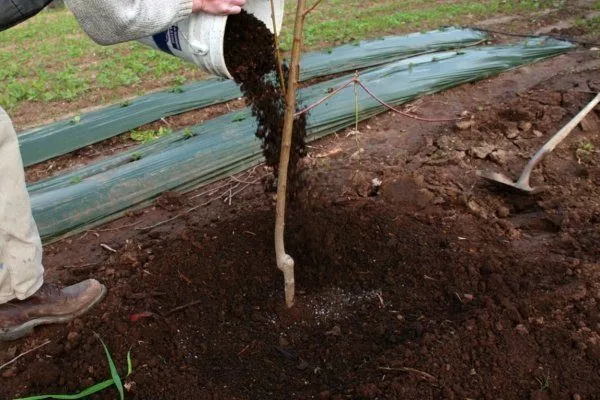
Options for fertilizing fruit trees and shrubs in spring
When choosing fertilizers, consider the crop type, season, and soil characteristics. Plants can be fertilized in a variety of ways, but it's important to calculate the correct amount of fertilizer used.
Chicken manure
This fertilizer is considered a nitrogen fertilizer. It is recommended for use during the growing season. This type of fertilizer is best suited for the following crops:
- apple;
- pear;
- plum;
- cherries;
- cherry;
- quince;
- persimmon;
- peach;
- apricot.
How to prepare a solution from chicken manure
- ✓ Use only rotted manure (aged for 6-12 months)
- ✓ Maintain a ratio of 1:15 (1 kg of droppings per 15 liters of water)
- ✓ Let the solution steep for 3-5 days before use.
- ✓ Apply only to moist soil (after rain or watering)
- ✓ Consumption rate: 5-8 l/m² of tree trunk circle
Fertilizer should be applied in the spring to the tree trunks. Use dry fertilizer, as improper storage can cause ammonia formation.
Fresh, concentrated manure has a negative impact on the health of fruit crop roots. Fertilizers must be diluted.
To prepare the correct feeding solution, dissolve 1.5 kg of bird droppings in a 10-liter bucket of water. First, add a third of the liquid to the dry material and let it sit for a couple of days. Then, add water to the fermented mixture to reach the required volume.
Manure
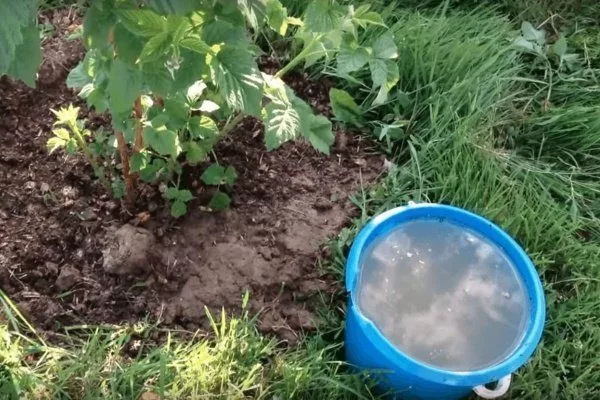
This fertilizer is the second most popular for fruit crops. It is especially popular with apple, pear, cherry, plum, apricot, and other stone fruit trees.
Fresh manure is not used. Regardless of the dilution ratio, it is converted into ammonia.
To feed fruit crops, manure must be left to stand for at least 2 years.
Humus
This organic fertilizer can be considered a basic product. It can be used for a variety of fruit crops.
Apple trees require up to 30 kg of compost. If the plant is over 9 years old, this amount should be increased by at least 1.5 times.
To fertilize pear trees in the spring, compost is mixed with soil. On average, one tree requires 20 kg of this fertilizer.
Cherry or sweet cherry trees require humus for the first 4-5 years. The fertilizer should be spread approximately half a meter around the trunks.
Green tea
This fertilizer is homemade and organic. It can be used for any fruit crop.
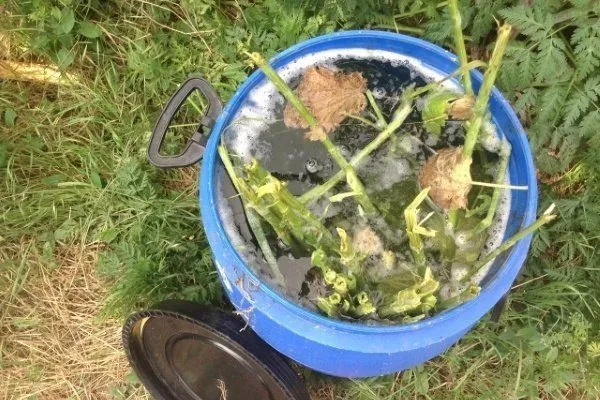
To prepare the mixture, place the green part of the grass in a suitable container and fill it with water. Cover the container with plastic wrap, making several holes in it. The fertilizer will be ready in three weeks. This fertilizer is best applied after flowering, diluting the resulting solution with 10 parts water.
Ash
This fertilizer is attractive because of its natural origin. It combines phosphorus and potassium, which are especially needed by fruit crops in the spring.
Ash can be used for various fruit trees. Cherries and plums are especially fond of it.
Fertilizer should be applied to the tree trunks. To do this, dig a 10-15 cm deep trench and fill it with ash, immediately covering it with soil. The fertilizer can also be applied in liquid form. To prepare it, add a half-liter jar of ash to a bucket of water.
Ash can be mixed with urea. For a 10-liter bucket of water, you need 3 tablespoons of urea and half a cup of ash. This mixture is effective for shrubs such as raspberries, blackberries, rowanberries, gooseberries, and currants.
Superphosphate
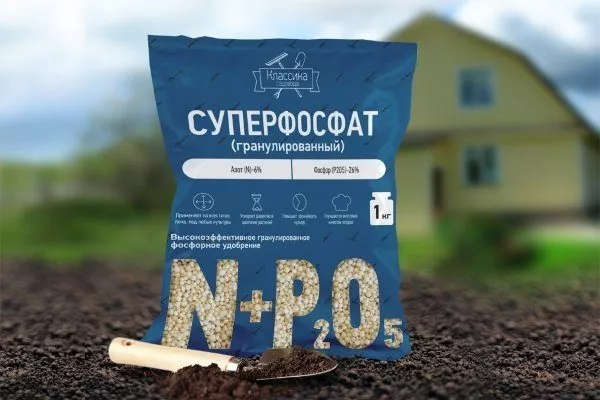
This fertilizer belongs to the mineral group and is based primarily on phosphorus. It can be used for any fruit trees and shrubs.
When planting crops, add 0.4 kg of fertilizer to each hole. For top dressing, apply 40-70 grams, injecting the mixture into the tree trunk circle. Fertilizing fruit crops this way should be done after flowering.
Superphosphate can be combined with potassium and some nitrogen fertilizers. However, it should not be combined with urea, ammonium nitrate, or chalk. Allow at least a week between applications of these fertilizers.
Potassium chloride
This fertilizer is high in potassium. It perfectly compensates for nutrient deficiencies and normalizes crop development. This fertilizer can be used for a variety of fruit trees, but is especially effective for apple trees.
One fruit tree requires approximately 0.15 kg of potassium chloride. The optimal amount of fertilizer should be based on the soil characteristics. If the soil is rich in black soil, the concentration should be reduced, while for light soil, it should be increased.
Potassium chloride combines well with nitrogen and phosphorus fertilizers, but it is also successfully used on its own.
Fertilizers must be applied correctly. Liquid fertilizers should be applied only after watering the soil. Foliar feeding should be done on cloudy days or in the evening. Watering is necessary after applying dry fertilizer.
Urea
This nitrogen-based fertilizer belongs to the amide group. It can be used for a variety of fruit crops.
Urea works well as a spray in combination with copper sulfate. For 10 liters of water, use 0.7 kg of urea and 50 g of copper sulfate. This treatment can be repeated during flowering and then when fruit set.
Fruit trees are also fed during fruiting. In this case, root feeding is used. For apple trees, dissolve 0.25 kg of urea in 10 liters of water; for cherry and plum trees, reduce the amount to 0.15 kg. If organic fertilizer was previously applied, reduce the concentration by half.
Scheme of urea treatment according to development phases
- Before bud break: 500 g/10 l of water (eradication spray)
- In the “green cone” phase: 300 g/10 l (by buds)
- After flowering: 200 g/10 l (root feeding)
- During the fruit growth period: 150 g/10 l (foliar feeding)
Nitroammophoska
This fertilizer is best used when the soil is perfectly fertile. It is a complex product consisting of nitrogen, potassium, sulfur, and phosphorus.
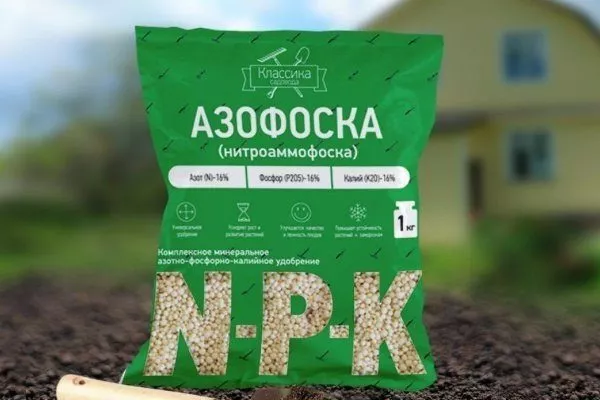
Nitroammophoska can be used for any fruit trees, but only as a supplemental fertilizer. For apple trees, it's best to apply it after flowering, using 30-40 liters of solution per tree. To prepare it, you need 50 g of the solution per bucket (10 liters).
Nitroammophoska is also used for foliar feeding to enhance crop growth. In this case, the prepared solution is sprayed with a spray bottle.
Ammonium nitrate
This product is well suited for early feeding of fruit crops. It can also be used in the summer approximately twice a month.
Ammonium nitrate is best used as a solution. To do this, dissolve 30 grams of nitrate in a bucket of water. During fruiting, it is recommended to increase this amount by 1.5 times. This type of fertilizer has a positive effect on the yield of plants and the taste of the fruit.
Do not use this product in combination with peat, sawdust, or straw. This combination is dangerous and can cause a fire.
This video explains when and how to properly fertilize fruit trees and shrubs in the garden:
Fertilizing fruit crops is an important agricultural practice. Fertilizing should begin in the spring. It's important to consider the compatibility of fertilizers with each other, as well as with different crop types. When purchasing ready-made fertilizers, carefully read the instructions.