
Golden Jubilee is a popular mid-season peach variety, well-known not only among Russian gardeners but also European and American ones. It has been in cultivation for 100 years. It is loved for its consistently high yield, beautiful fruit appearance and excellent flavor, strong immunity, and hardiness.
Peculiarities of origin
The variety was developed in the United States in 1921. American breeders crossed the Greensboro peach with the Elbert peach. It was added to the national state register in 1947.
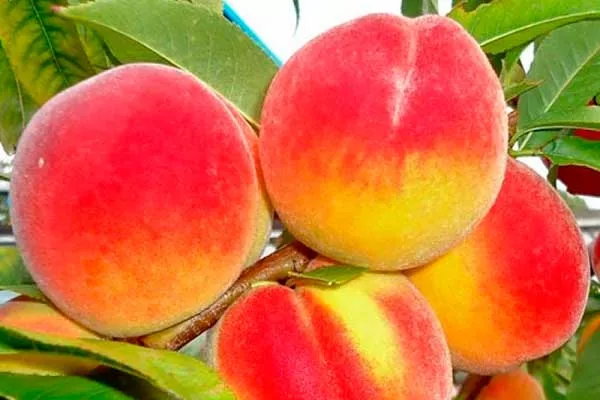
Description of the fruits and tree Golden Jubilee
Trees of this cultivar are medium-sized. Trunk heights range from 2.5 to 4 meters. They are characterized by a robust root system and good growth rates. Other distinguishing features include:
- wide-spreading and rounded crown;
- its weak foliage;
- deep green color of leaves;
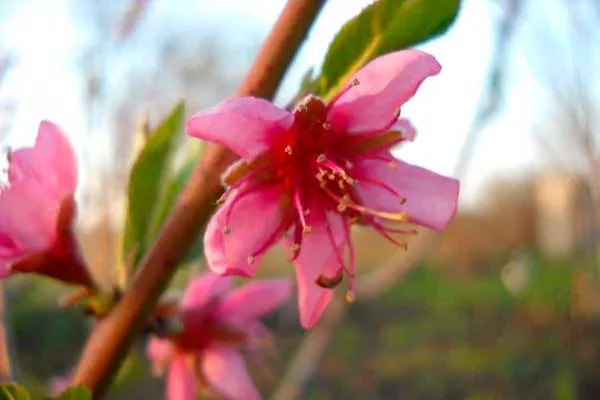
- bell-shaped flowers with pink petals.
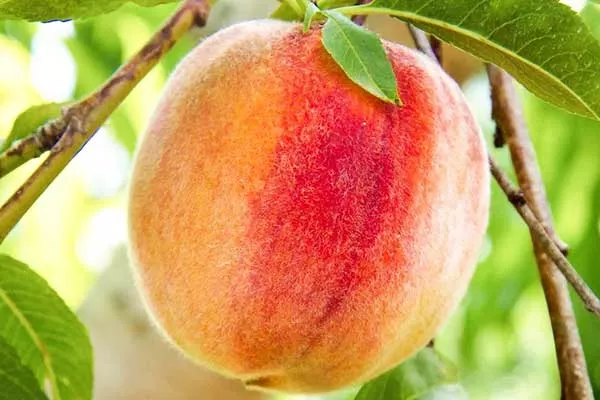
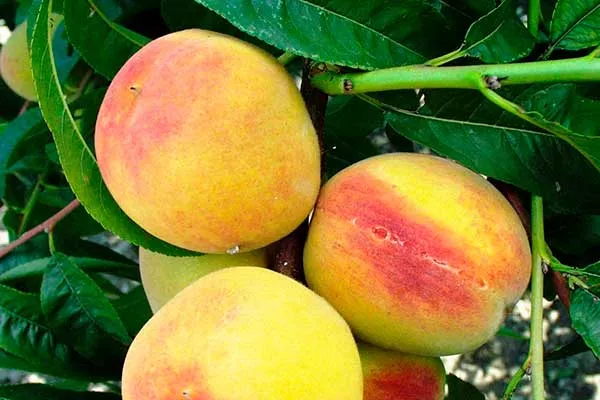
The Golden Jubilee harvest is large-fruited, attractive, and highly nutritious. The fruit description includes the following characteristics:
- weight - 100-150 g (average weight - 140 g);
- round, broadly oval shape, slightly compressed at the sides;
- the presence of a medium-sized abdominal suture, deepening towards the top of the fetus;
- yellow-orange skin color with an extensive dark red blush;
- the presence of fluff on the surface of the skin, medium-thick, but not hard;
- orange-yellow flesh with a pink tint near the stone, consisting of many soft fibers, juicy and aromatic;
- a medium-sized stone that can be easily separated from the pulp.
Taste qualities
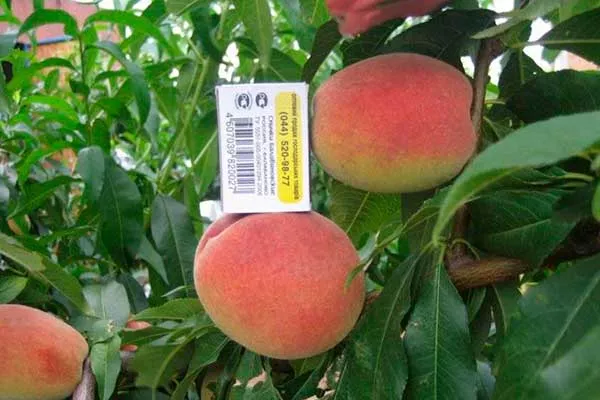
The fruits of this variety are delicious, juicy, and aromatic. Their flesh is pleasantly sweet with a slight tartness. Its remarkable flavor is due to its balanced composition, which includes the following components:
- dry matter - 9.50%;
- sugars - 7.5%;
- acids - 0.87% (including ascorbic acid - 9.24 mg/100g).
Key Features
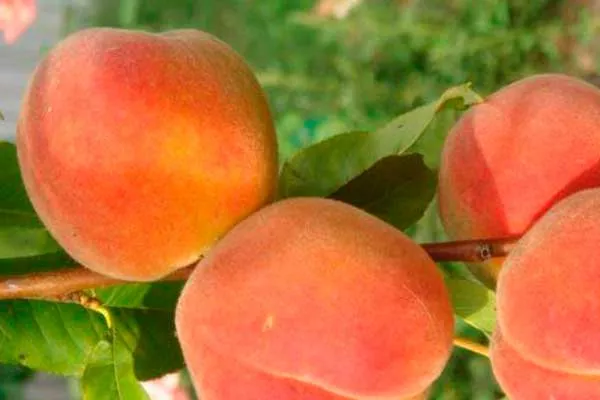
This peach variety has many excellent characteristics that make it popular among domestic gardeners.
Drought and frost resistance
Golden Jubilee is considered a winter-hardy fruit variety. Its trees can withstand temperatures down to -25°C. Frost resistance is found in the flower buds and shoots, which are not prone to freezing. The variety also exhibits high drought tolerance.
Does the variety need pollinators?
| Name | Ripening period | Disease resistance | Fruit size |
|---|---|---|---|
| Golden Jubilee | Mid-season | High | Large |
| Stavropol pink | Early | Average | Average |
| Inca | Late | High | Large |
| Harnas | Mid-season | High | Large |
| Volcano | Early | Average | Average |
This peach variety is self-fertile. Growing trees of other varieties with the same flowering period nearby can increase yields by 30-40%. For cross-pollination, gardeners use the following varieties:
- Stavropol pink;
- Inku;
- Harnas;
- Volcano.
Productivity and fruiting
Peach trees begin bearing fruit in their third year of life. They continue to produce for 12-15 years. The tree reaches its peak productivity at ten years of age.
The yield figures for the Golden Jubilee are as follows:
- 50-65 kg of peaches are produced by one plant that is 10 years old;
- Farmers growing the variety on an industrial scale obtain 20,000 kg per 1 hectare of fruit planting.
The fruit ripens uniformly, lasting 20-30 days. The first peaches can be enjoyed as early as July. Peak fruiting occurs in August (the first ten days). The harvest is quite shelf-stable (retains its marketable appearance for 8 days) and transportable.
Application of fruits
The Golden Jubilee harvest is intended for table use. Housewives use its fruits in the following ways:
- Peaches are eaten fresh;
- added to desserts, fruit salads;
- used for processing into juice, puree (baby food);
- they make jam, preserves, and compote from them;
- canned;
- freeze.
Resistance to diseases and pests
This American variety is renowned for its robust immunity. Its trees rarely suffer from diseases or insect attacks. They are especially resistant to fungal infections.
Requirements for soil and climatic conditions
The Golden Jubilee peach is best suited for cultivation in mild, temperate, and southern climates. It can also grow in hotter regions of the country. It produces the best results in the climates of the North Caucasus region and Crimea.
The variety isn't particularly demanding when it comes to soil. To maintain the tree's health and ensure maximum productivity, grow it in soil that meets the following requirements:
- loamy, sandy loam or chernozem;
- fertile;
- loose;
- moisture- and air-permeable;
- neutral in acidity or slightly alkaline;
- without groundwater occurring close to its surface.
- ✓ The soil pH level should be strictly within 6.5-7.5 for optimal nutrient absorption.
- ✓ The depth of groundwater is at least 1.5 m to prevent rotting of the root system.
Planting the Golden Jubilee peach tree
Before purchasing a Golden Jubilee seedling, learn the intricacies of planting it. If you do everything correctly, the tree will quickly and easily establish itself in its new location and grow and thrive.
Recommended timeframes
Plant a peach tree in your garden according to the timeframe recommended by experienced gardeners:
- in autumn (late September, October) 1.5 months before the onset of sub-zero temperatures - for the southern regions of the country;
- in the spring (April), before bud break - for the Middle Belt.
Carry out planting after making sure that the plant is in a state of complete dormancy.
Choosing a suitable location
Select a plot of land in your garden for growing the Golden Jubilee peach that meets the following requirements:
- sunny (peach loves the sun very much, it grows poorly in the shade, does not like partial shade);
- protected from drafts;
- windless;
- smooth;
- located in the southern or southwestern part of the garden.
Prepare your Golden Jubilee planting in advance. Dig planting holes in the fall, spacing them 300-400 cm apart. The hole dimensions are 60 x 60 cm.
Fill the planting holes 2/3 full with a loose, nutritious soil mixture consisting of garden soil and wood ash. Form a mound from the soil mixture. You can add a little rotted manure, compost, chicken manure, or mineral fertilizer.
Selection and preparation of planting material
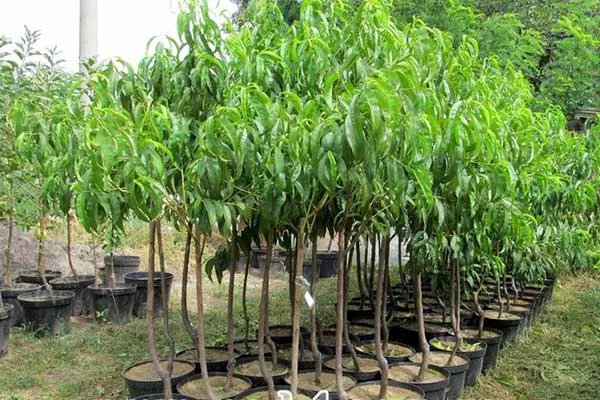
For planting, select a one-year-old seedling with a well-developed root system, healthy and strong, and undamaged. Soak it for 24 hours in a bucket of water with a rooting stimulant added.
Landing algorithm
Plant a peach tree in your garden by following these step-by-step instructions:
- Water the planting hole and place a wooden stake in the moist soil to serve as a support for the seedling.
- Place the peach tree in the center of the hole on a mound of nutrient substrate.
- Spread out its roots, being careful not to damage them.
- Cover them with soil, making sure the root collar is no more than 4 cm deep.
- Compact the soil around the trunk.
- Water the seedling. Use 20 liters of water per plant.
- Mulch the tree trunk area.
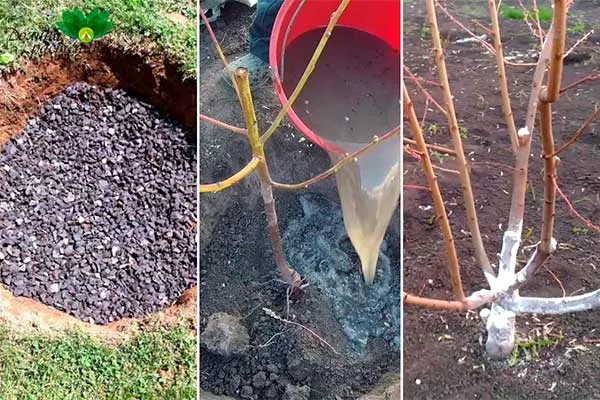
If you planted the Golden Jubilee in the fall, be sure to prune the sapling's side branches at the end, leaving the three strongest. Sprinkle the cuts with powdered wood ash. Remove all leaves. Cover the trunk with lime.
Plant care
The Golden Jubilee peach requires standard care, taking into account some of its varietal characteristics. This includes the following procedures:
- watering;
- loosening the soil around the tree trunk;
- top dressing;
- pruning;
- preparing for winter.
Watering and loosening the soil
This fruit tree thrives on moisture. Water it at least 3-4 times per season. Ideally, water it once every two weeks. Water 30 liters per mature tree. Moisten the soil to a depth of 0.5 m. Water early in the morning or in the evening after the heat subsides.
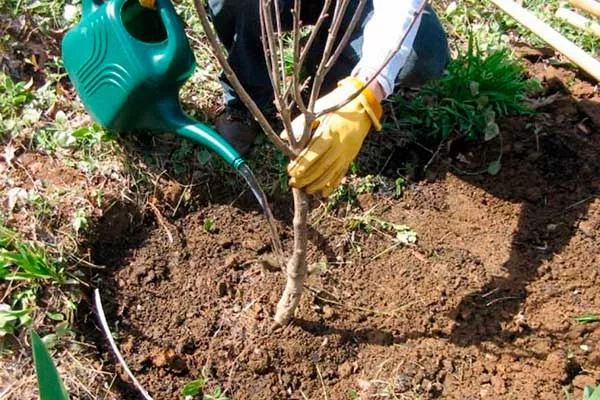
The Golden Jubilee peach tree's moisture requirements increase 21-30 days before harvest. Regular and abundant watering during this period ensures good harvest quality:
- large fruit size;
- their juiciness and sweet taste.
After each watering, loosen the soil beneath the tree to ensure better oxygen supply to its roots. Avoid the formation of a dense, air-impermeable soil crust. Mulch the moistened and loosened soil with compost or garden peat.
In cold climates, be sure to water the trees before winter at a higher rate. Apply up to 50 liters per tree. Perform this procedure in early November during good weather (air temperature - 10°C).
Tree fertilizing
Fertilize the Golden Jubilee peach tree annually using the following compositions:
- mineral - if you grow crops on black soil;
- mineral and organic matter - on poor soil.
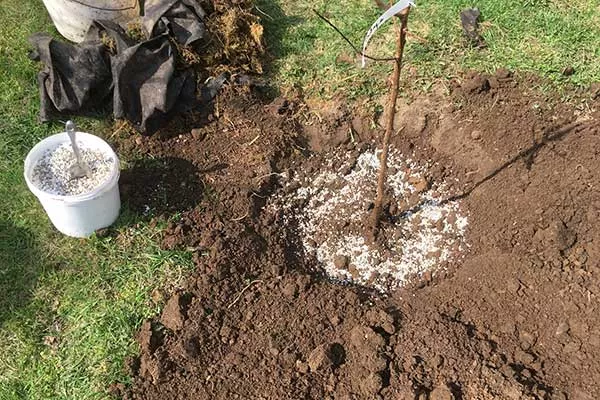
Follow the fertilizing schedule:
- At the beginning of spring Use urea. Consumption: 50–70 g per tree.
- In summer Feed the fruit crop with a complex mineral fertilizer, following the instructions. When the fruit ripens, spray the foliage with potassium sulfate dissolved in water (30 g per 10 l).
- In the autumn period Add potassium sulfate or superphosphate. Use 40 g of the substance per 1 square meter of the tree trunk circle.
After harvesting the fruit, experienced gardeners sow green manure crops under the peach tree. Green manure also provides nutrients to the fruit tree.
Trimming technology
Shape the crown of the Golden Jubilee peach tree for the first 3-4 years after planting. After that, only perform sanitary pruning, removing unproductive branches.
- showing signs of disease;
- broken;
- dry;
- interfering with each other.
Perform this procedure between bud break and flower bud opening. Treat all cuts with garden pitch or powdered wood ash.
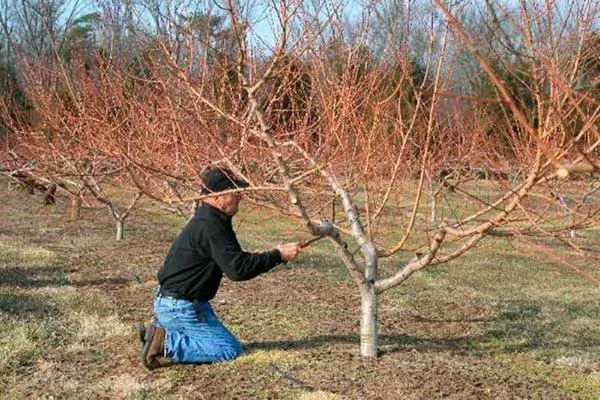
Try to give the Golden Jubilee peach tree a cup-shaped crown. Prune it to shape it according to these guidelines:
- In the first year after planting Prune the conductor on the seedling at a height of 60-70 cm. The highest branch of the tree should have a wide angle. Select the second growth just below at a similar angle and prune all three branches to 10 cm to the outer buds.
Cut off the remaining branches on the trunk and conductor immediately after the bud opens. - In the second year after planting Maintain an optimal slope on the peach tree's skeletal shoots. Shorten the extension shoots to 60-70 cm. Remove strong upper and lower growth and thin out the side shoots. Shorten the remaining shoots by two buds.
- In the third year On the tree's upper scaffold branch, select two strong second-order branches. Prune them to 60 cm from the main shoot fork. Trim off the portion of the conductor above the upper branch. Clear the top and bottom of the scaffold branches of any strong growth.
Prune back one-year-old growth that has reached 80 cm in length to two buds. Shorten the lower shoot to 50 cm. On shoots that were shortened by two buds last year, prune back the upward growth. Prune the lower branches to two buds.
Carry out formative pruning in the spring, and sanitary pruning as needed, in the summer (after harvesting the fruit) or in the fall when preparing the tree for winter.
Preparing for winter
This variety is frost-resistant, withstanding temperatures down to -20-25°C. Its trees require winter protection if grown in the central and northern climates of Russia. In the south, there is no need to cover the peach tree before winter.
Prepare your fruit crop for the cold season if harsh winters are common in your area by following these steps:
- having carried out moisture-charging irrigation in November;
- hilling the tree trunk to a height of 50 cm;
- insulate the peach tree using a box made of pegs, roofing felt, burlap, modern non-woven materials or cardboard (wrap seedlings completely, and adult trees - up to the skeletal branches);
- covering the area around the tree trunk with a layer of peat or humus (at least 15 cm thick) and coniferous branches.
Possible diseases and pests
This variety is resistant to most dangerous peach diseases, particularly clasterosporium and powdery mildew. The only problem it suffers from is leaf curl.
- ✓ The appearance of red swellings on the leaves in early spring.
- ✓ Formation of a waxy coating on the affected areas.
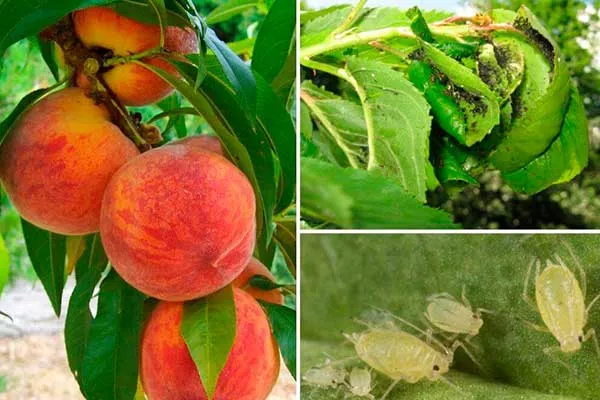
This fungal disease manifests itself in the spring with the following symptoms:
- the appearance of swellings on the tree leaves, which turn red over time;
- the presence of a waxy coating on the swellings;
- the formation of wounds on the shoots from which gum oozes;
- drying up and falling of leaves;
- death of buds;
- yellowing, curvature and drying of branches.
At the first sign of peach leaf curl infestation, take action:
- cut off and burn all branches affected by fungus;
- Treat the peach tree with Bordeaux mixture (concentration - 1%) or use copper oxychloride in the form of an aqueous solution (2%), carry out at least 4 treatments with a frequency of 2 times a month.
To prevent peach leaf curl, spray the trees with Bordeaux mixture in early spring. Copper sulfate can also be used.
With proper care, the Zolotoy Yubiley peach tree is pest-free. Otherwise, aphids, weevils, fruit moths, and oriental codling moths may appear.
If there are a lot of insects and the tree has suffered severe damage, start treating it:
- cut off branches affected by pests;
- destroy them away from the garden plot;
- Use universal insecticides (Fitoverm, Fufanon, Iskra) to treat the peach tree.
Harvesting and storage
Pick Golden Jubilee fruits from the branches as soon as they ripen. Otherwise, they will begin to fall to the ground within 2-3 days. Ripe fruits can last up to 8 days.
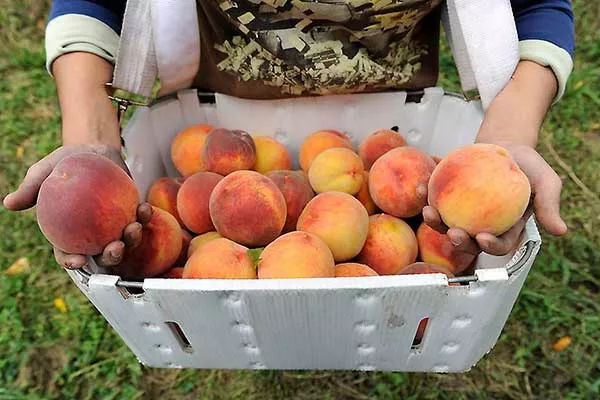
If you want your harvest to last for 3 weeks, pick your peaches from the vine 7 days before they ripen.
Positive and negative qualities
The Golden Jubilee is renowned for its many virtues, making this American peach variety popular among domestic gardeners:
Among the few disadvantages of the variety, gardeners highlight:
Reviews
The Golden Jubilee peach is worthy of attention from Russian gardeners due to its high yield, low maintenance, drought and cold resistance, beautiful fruit, and excellent flavor. Simply following standard cultivation practices will ensure a bountiful harvest.