
Peach Golden Triumph is a representative columnar species This fruit has a number of advantages. This variety is so easy to grow that even a novice gardener can successfully grow it. The main thing is to know a few varietal requirements and tricks.
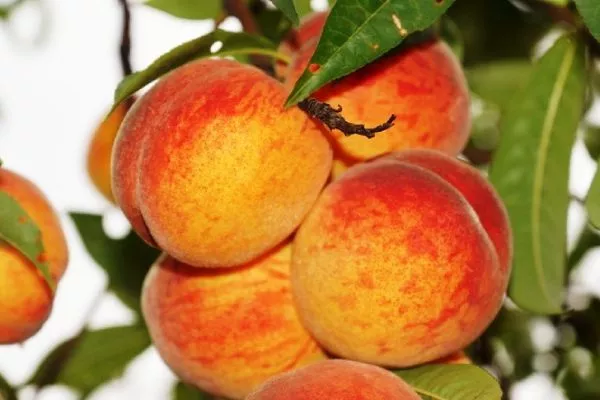
The appearance of the tree
Russian agronomists developed this variety in the last decades of the last century. The most common name for this variety in Russian is Zolotoy Triumf (Golden Triumph). Some publications also feature its English equivalent, Zolotoj Triumf (Light Triumph). Both names are used interchangeably and are not considered incorrect.
The plant can be identified by the following varietal characteristics:
- The tree is not tall, usually reaching no more than 150 cm in height, although there are specimens up to 200 cm long.
- The branches form a cylindrical and rather compact crown.
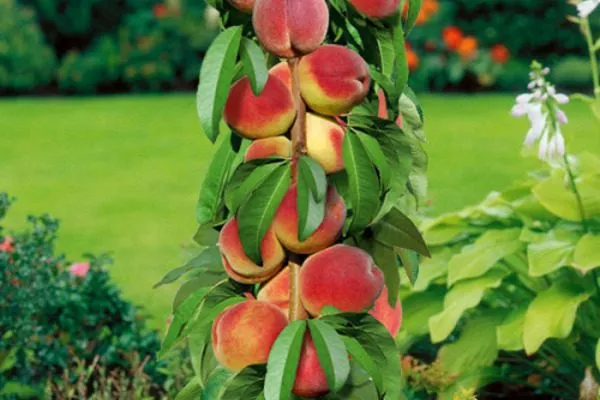
- The fruits on the tree are arranged in such a way that they appear to be growing from the trunk, thanks to the shortened shoots that are a characteristic feature of this variety.
- The leaves are lanceolate in shape with pointed ends and are a rich dark green colour.
- During the flowering period, the trees look especially attractive: they bloom with numerous large flowers with petals of a delicate pink hue, which gives them a special decorative effect.
Fruits, their taste and uses
The fruits are impressive in size, weighing between 250 and 280 grams, sometimes slightly more. They are round and colored warm shades of orange-yellow, adorned with reddish spots that cover almost their entire surface. The skin is firm and slightly fuzzy.
The nutritional profile of these peaches is also of particular interest. They contain valuable components such as:
- pectins;
- beta-carotene;
- essential oils;
- organic acids;
- a variety of macro- and microelements;
- vitamins A, E, K, C, B1, B2, B3 (PP), B4, B5, B6 and B9.
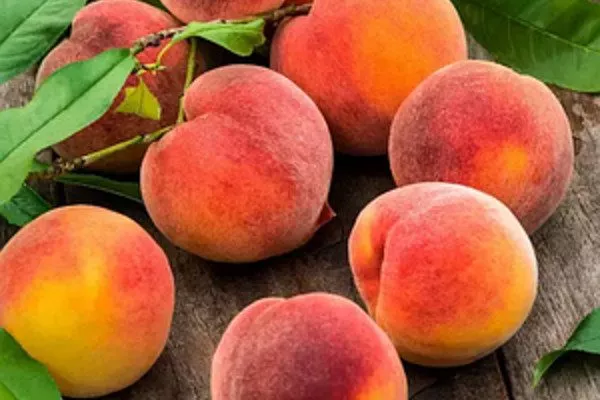
Peach flesh is a rich orange color, moderately firm, and juicy. The flavor is sweet, and the aroma is slightly rich. Each peach contains a pit.
Pollination ability
This variety is self-fertile – it produces fruit beautifully without the need for other donor varieties, although cross-pollination always helps improve both the quantity and quality of the harvested crop.
Ripening period and yield volume
This variety is considered early-ripening, as the fruits are ready for harvesting as early as the first days of August. However, much of this process depends on agronomic practices and specific climatic conditions. With proper care, a single tree can yield up to 10-12 kg of peaches annually.
Winter hardiness and regionality
This variety is frost-hardy and can withstand extreme winter temperatures reaching -30 to -38ºC. Although the peach's native land is characterized by warm and long summers, it can be successfully cultivated in central Russia, the Central Belt, the Urals, Altai, and other regions.
Key requirements
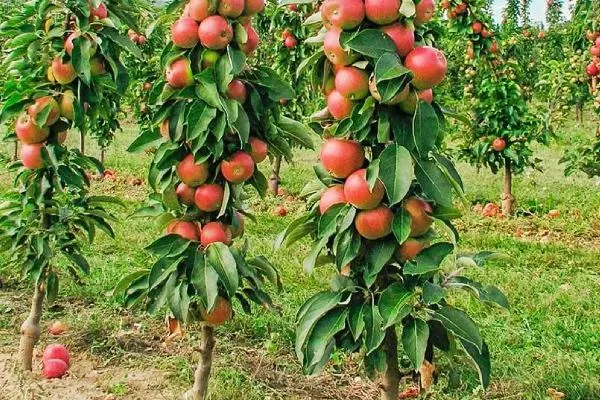
This columnar variety does not tolerate excessive soil moisture and prefers sunny locations for growth and fruiting, making it unsuitable for areas with frequent rainfall, poor soils, and high groundwater levels.
- ✓ Soil pH should be between 6.0-7.0 for optimal nutrient absorption.
- ✓ The distance between seedlings when planting should be at least 1.5 m to ensure sufficient space for the root system to grow.
At the same time, its drought resistance contributes to successful development in hot summer conditions, and its early ripening allows for harvesting fruits even with a limited summer season.
Care and cultivation
When choosing a planting site, choose areas with sufficient light and shelter from cold, gusty winds. It's important that the groundwater level does not exceed 150 cm from the soil surface. Waterlogged areas and constant moisture create ideal conditions for the development of rot and fungal spores, which even the strongest plants cannot withstand.
| Irrigation method | Frequency | Volume of water |
|---|---|---|
| Drip | 2 times a week | 10-15 liters per tree |
| Surface | Once a week | 20-25 liters per tree |
When choosing seedlings for planting, it's important to consider the specific characteristics of columnar varieties—they root most quickly when planted at one year of age, as more mature plants do not transplant well. Otherwise, the rules remain the same: plants with closed root systems are preferable to those with open roots.
If the choice is made in favor of an open root system, it is important to carefully check the shoot and roots for the following characteristics:
- no dried root shoots;
- the minimum length of the roots should be 15-18 cm, and optimally 20-25 cm;
- the presence of "live" buds and a healthy, strong trunk.
Traditional times for planting trees and shrubs are spring and fall. The timing depends on the climate of the region where the peach tree will grow and bear fruit:
- In southern regions, autumn is often preferred, as winters arrive later there and the air temperature does not drop much, which gives the plant the opportunity to take root well and prepare for winter.
- In parts of the country with risky farming, spring planting is more common.
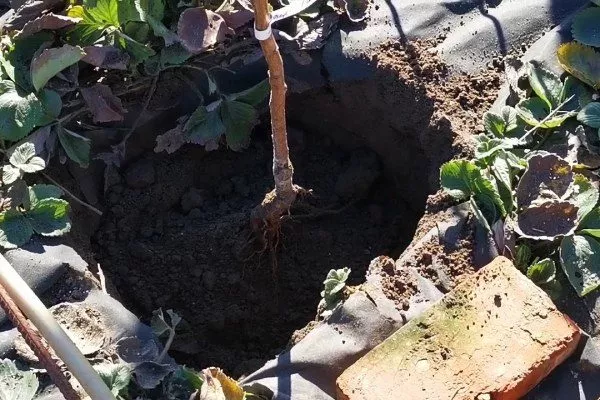
Cultivation features:
- The planting hole is prepared in advance: for spring plants, the hole is dug in the fall, and for pre-winter plants, in the spring. If preparation is being done immediately before planting, it should be done two weeks before the expected date.
- The ideal hole size is 50 x 50 x 60 cm, with a 10-12 cm thick drainage layer of pebbles, crushed stone, or broken brick at the bottom. Along with the drainage layer, a support for the still-weak trunk is installed.
- Enrich the soil removed from the hole with organic matter (humus, compost, bird droppings), superphosphate and complex mineral preparations, as well as wood ash.
- In case of heavy clay soils, it is recommended to add a lot of river sand.
- After planting, which is carried out in the standard way, compact the soil around the plant and water it generously with settled water.
- In the morning, loosen the soil or cover it with a layer of mulch made from peat, straw or mown grass.
Diseases and pests - resistance
Golden Triumph is resistant to diseases and pests, making the use of preventative measures with insecticides and fungicides a matter of personal preference and the specifics of the region where it is grown.
Positive and negative qualities
This variety is famous for its many advantages:
As for disadvantages, there are virtually none. The variety is sensitive to poor agricultural practices. Before purchasing seedlings, it's important to carefully weigh the pros and cons. Strict adherence to established agronomic guidelines is essential during cultivation.
Reviews
The Golden Triumph peach is versatile – it can be planted in all climate zones across the country. Its juicy fruits are ideal for eating directly, as well as for making delicious and flavorful homemade preserves, such as jams, preserves, marmalades, and compotes.