
Golden Triumph is an early-ripening peach variety distinguished by its large fruits, hardiness, and strong immunity. It is grown not only in home gardens across the country but also on commercial farms. Due to its ornamental qualities, it is also popular with landscape designers, who use it as a focal point in their gardens.
Who developed the variety and when?
Golden Triumph is an American peach cultivar, developed in 1986. It was created by John Rivers, who crossed the Golden Glo with the Columnar peach. After being demonstrated at a show in Atlanta, Georgia, the variety gained popularity among gardeners.
The appearance of the tree
The calling card of the Golden Triumph is the interesting appearance of its trees. They are medium-sized, compact, and lack large side shoots. This peach variety has a columnar appearance, densely covered with foliage and fruit.
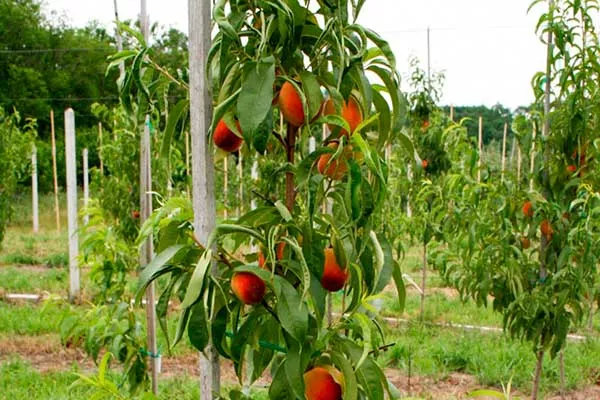
It has the following distinctive features:
- “height” – 1.6-2 m (the plant reaches its maximum height by the fourth year of life);
- elongated cylindrical crown;
- small lateral shoots with short internodes;
- foliage: large in size, dark green, lanceolate with a pointed tip and a serrated edge, smooth;
- flowers: large, consisting of upward-curved petals of pink color, fragrant.
- ✓ The tree height does not exceed 2 m, which makes it easier to care for and harvest.
- ✓ The crown has an elongated cylindrical shape, which makes the variety ideal for dense planting.
Fruits and their taste characteristics
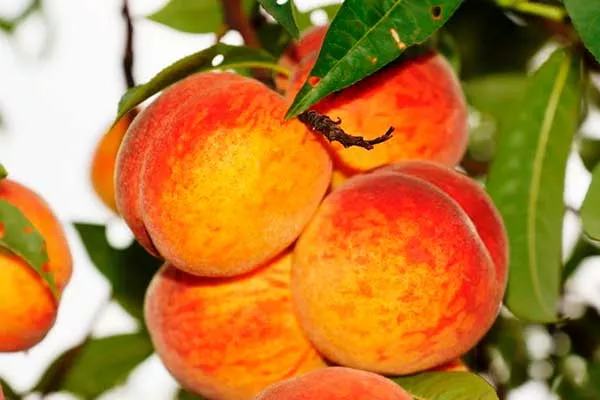
Golden Triumph is a large-fruited peach variety. It is renowned for its attractive fruit. Its characteristics include:
- correct round shape;
- weight - 250 g;
- orange covering color with an extensive burgundy blush, almost completely occupying the surface of the fruit;
- skin of medium pubescence and density;
- pulp: bright yellow, dense, fibrous, oily, aromatic;
- a small stone that easily separates from the pulp.
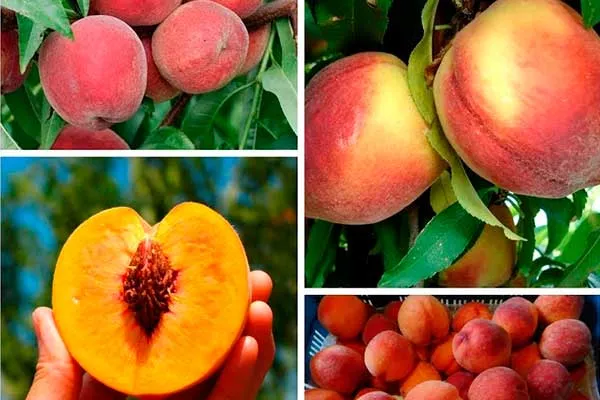
The pulp of the Golden Triumph fruit is not only delicious but also nutritious. It contains many valuable substances:
- pectins;
- essential oils;
- organic acids;
- macro- and microelements;
- vitamins (A, E, K, C, group B).
You'll get the most benefit from the fruit by eating it unprocessed. Add it fresh to desserts. Peaches are also great for making treats:
- jam;
- jam;
- jelly;
- marmalade.
Ripening and fruiting
Peach trees begin bearing fruit in their third year. They bloom in June. The first fruits ripen around mid-July. They can be harvested en masse at the end of the month.
Productivity
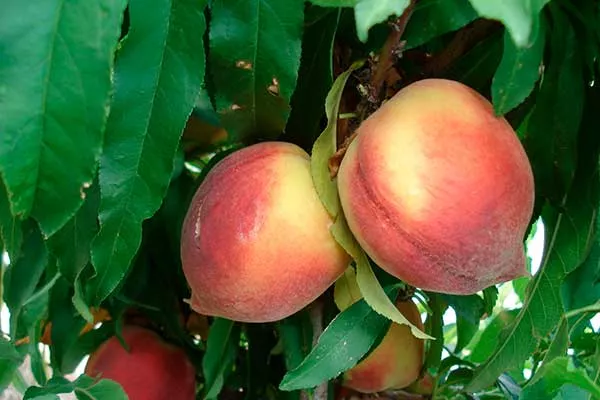
Golden Triumph is considered a high-yielding variety of fruit crop. One mature tree produces 10-12 kg of peaches. They are distinguished by their good shelf life and transportability.
Growing regions
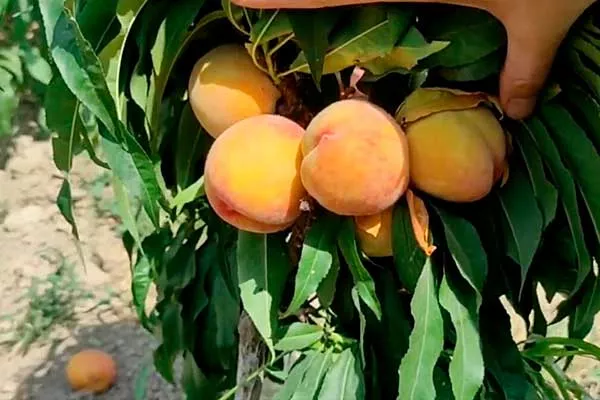
Peach grows and produces best in warm climates with long summers. However, thanks to its good drought and frost resistance, the Golden Triumph is suitable for cultivation in climates less favorable for garden crops:
- in the central part;
- in the middle zone;
- in the south;
- in the Urals;
- in the Far East.
Self-fertility and the need for pollinators
This peach variety is considered self-fertile. It doesn't require other pollinators in the same garden. However, cross-pollination improves the quality of its fruit and increases its yield. Plant other varieties nearby for best results.
Growing and care
For planting a peach tree, select a plot with the following characteristics:
- well lit;
- protected from the wind;
- with deep groundwater (1.5-2 m and more).
- ✓ The depth of groundwater should be at least 1.5-2 m to prevent root rot.
- ✓ The soil should be pre-enriched with organic and mineral fertilizers 2 weeks before planting.
When purchasing seedlings from a nursery, remember that annual plants thrive best. Choose a tree that meets the following criteria:
- with healthy and strong roots (their length is 15-20 cm);
- with shoot buds;
- with good trunk development.
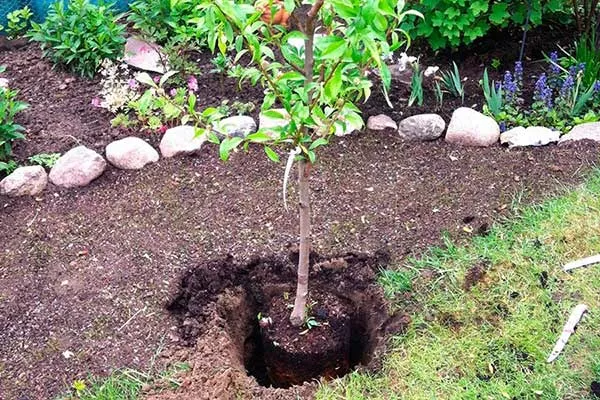
Dig a hole 14 days before planting the peach tree. Ideal dimensions are 50x50x60 cm. Prepare it as follows:
- Place a 10 cm thick drainage layer of pebbles or gravel on the bottom.
- Add humus, compost, superphosphate, and wood ash. Mix the fertilizer with the soil taken from the hole.
- If the soil is heavy, mix it with sand.
Plant a peach tree seedling step by step:
- Place the tree in the central part of the hole.
- Cover the roots with soil. Make sure the root collar remains open, a few centimeters above the soil surface.
- Compact the soil.
- Water the tree.
- Install the support.
- Tie the peach tree trunk to it.
Further care for the fruit crop consists of the following activities:
- WateringPeach trees thrive on moisture. Water Golden Triumph seedlings once a week. The recommended rate is 40-50 liters per plant. A mature tree requires less frequent watering—once every two weeks.
- Top dressingIn the spring, fertilize fruit crops with nitrogen. In the fall, apply potassium and phosphorus fertilizers.
- Loosening the soilPerform this procedure after watering the planting. This will help prevent a crust from forming on the soil, which prevents air from reaching the tree's roots.
- MulchingSprinkle the area around the tree trunk with peat, sawdust, and straw to retain moisture in the soil.
- Sanitary pruningCarry out this procedure regularly, removing any diseased, dry, or insect-infested shoots.
Frost resistance and the need for shelter
This variety is characterized by moderate frost resistance. Its trees can withstand temperatures down to -28°C. Winter hardiness zones are 3-4. Peaches grown in the south require no shelter. If you are growing this variety in a cold-winter area, mulch the area around the trunk with sawdust and wrap the trunk with agrofibre.
Resistance to diseases and pests
Golden Triumph is renowned for its robust immunity. It exhibits resistance to the main peach diseases:
- holey spot;
- powdery mildew;
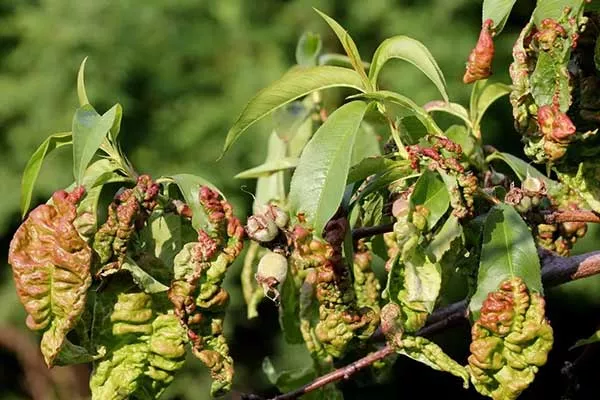
- leaf curl (the variety is moderately resistant, requires treatment);
- moniliosis;
- scab.
Carry out disease and pest prevention by following the plan:
- In mid-April, treat your peach tree for codling moth and other pests for the first time. Make sure to complete the treatment before the buds open.
- Treat the plantings against fungus before flowering with Bordeaux mixture (concentration - 3%), and the rosebuds with the same product (concentration - 1%).
- After the tree has finished flowering, apply a combination of pest and disease control treatments. Suitable products include Garth, Zakvayt Oil, and Strazh.
- In October, when the leaves begin to change color, treat the peach with Bordeaux mixture (3%), and after the leaves fall, with copper sulfate (1%).
Requirements for soil and climatic conditions
Golden Triumph will not produce a rich harvest if grown in waterlogged soil. Avoid growing peaches in such areas:
- with high humidity and frequent rains;
- poor soil.
To ensure that your garden crop will reward you with a bountiful harvest, select a sunny area in your garden with soil that meets the following requirements:
- light;
- fertile;
- loose, permeable to moisture and oxygen;
- medium loamy;
- having neutral acidity.
The variety is successfully cultivated in different climates:
- its drought resistance ensures good development of the peach tree in regions with hot and long summers;
- Early ripening of fruits makes it possible to obtain a harvest even during a short summer period;
- Frost resistance makes it possible to cultivate this peach variety not only in the Moscow region, but also in the northern regions of the country.
Advantages and disadvantages
Reviews
Golden Triumph is a striking example of a peach variety with a columnar crown. It has long been appreciated by both private and commercial gardeners for its productivity, hardiness, and excellent harvest quality.