
The Golden Moscow peach is a hybrid created by selectively crossing two varieties. This fruit belongs to the dicotyledonous family, distinguished by its multicolored appearance. The tree delights the eye with its magnificent blooms, decorating the spring garden.
When was the variety developed?
This variety was developed at the Nikitsky Botanical Garden, where breeders I. N. Ryabov and A. N. Ryabova selected the Elberta and Salvey peaches for cultivation. The crop is intended for fresh consumption. The variety was officially released for commercial use in 2014.
To develop a new hybrid, scientists from the Nikitsky Botanical Garden organized an expedition to regions of Central Asia and Transcaucasia, where they exchanged seeds and collected over a thousand specimens.
In the course of further research, they conducted agrobiological studies, analyzed the genetic structure, and developed methods of clonal selection.
The appearance of the tree
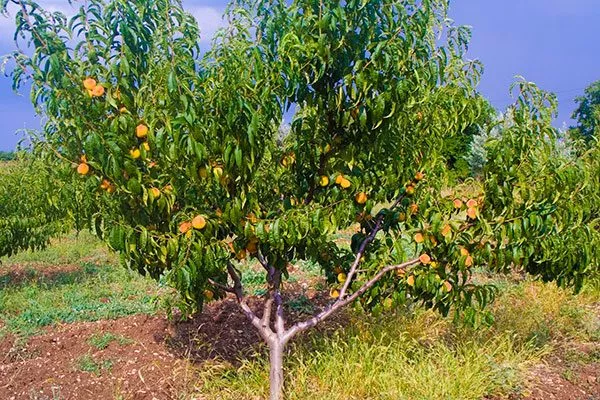
This tree is characterized by medium height, but is also noted for its rapid growth. By three years, it can reach 140-150 cm in height, and a mature plant grows to 320-350 cm.
Other varietal characteristics:
- The tree's crown is dense and rounded. Gardeners disagree on how to shape it: some insist on pruning branches, especially in the early years, and then removing only dead ones, while others prefer to leave things alone and allow the crown to develop naturally.
- The branches extend from the trunk in an orderly manner, creating the appearance of a ball from afar.
- The leaves are medium-sized, with an elongated and pointed configuration, called lanceolate. They are green in color and have a matte surface. The leaf blades are very smooth, and their outline is visible only on the underside.
- Peach blossoms grow singly and resemble roses in shape, but with a slightly oval outline. The buds are a delicate pink.

Fruits and their taste characteristics
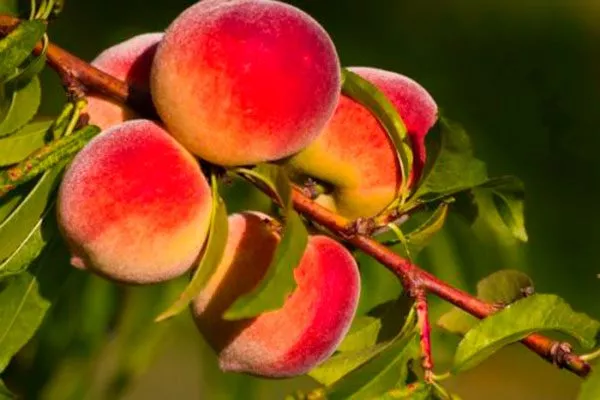
The fruits of the Golden Moscow variety are distinguished by their impressive weight, averaging between 130 and 180 g. However, under optimal care conditions and favorable weather, their weight can reach 200-250 g.
Key features:
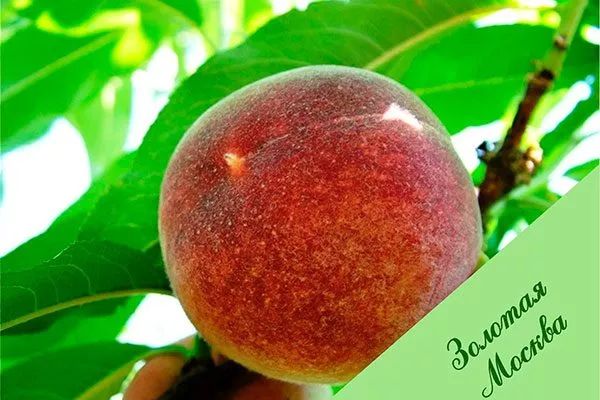
- The peaches are round in shape and bright yellow in color with a slight red blush.
- The skin is of medium thickness and slightly denser than that of other varieties, easily separated from the pulp and covered with soft velvety pubescence.
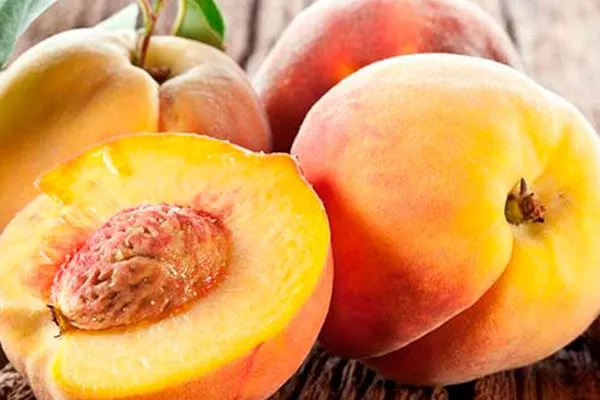
- Inside, the fruits have juicy, fibrous and compacted pulp of a golden-yellow color, with raspberry inclusions around the seed.
- The stone is large and easily separates from the pulp (without much effort).
- Golden Moscow fruits are versatile in their uses: they are used to make jams, juices, purees, and are also eaten fresh.
- Flavor is highly valued, receiving 4.5 points out of a possible 5. Sugar content is 11.8%, and acidity is 0.5%. The flavor of these fruits is predominantly sweet, sometimes with a slight sourness, which may indicate insufficient ripeness.
Ripening period and yield
The tree will begin bearing fruit four years after planting. The crop has a medium ripening period. In southern latitudes, budding begins in April and continues until late spring, while in colder regions, this process is delayed by two to three weeks. The peak harvest period begins on August 15th.
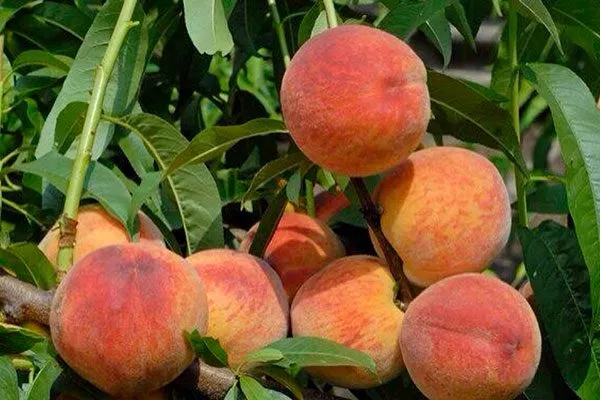
The crop's yield is impressive, but maximum results are achieved only in mature trees:
- In the first year, only 5-7 kg of fruit can be harvested from one tree.
- The following year, this figure doubles, reaching 10-14 kg.
- A fully grown tree can produce 40-50 kg of peaches per season, and under industrial cultivation conditions, the yield can reach 140-215 centners per hectare.
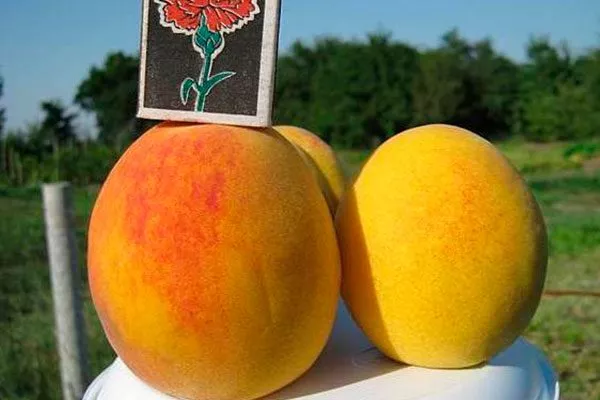
Experienced gardeners recommend regulating the number of fruits per branch to encourage larger fruit growth. Without such regulation, there will be more fruits, but they will be smaller and will only decrease in size with each passing year.
Self-fertility and the need for pollinators
The Golden Moscow peach doesn't require external pollinators, as it is self-fertile. Its flowers have pistils and stamens located close together and reach maturity simultaneously. Self-pollination occurs when pollen from the stamens settles on the pistil.
This variety makes life easier for gardeners and summer residents by eliminating the need to plant other peach trees for cross-pollination, which is often inconvenient in limited garden plots.
- ✓ Resistance to powdery mildew, which reduces the need for chemical treatments.
- ✓ Self-pollinating ability, making it easy to grow in confined spaces.
In the event of a prolonged spring, when insects are slow to return to active life, the self-pollinating peach Zolotaya Moskva ensures reliable fruiting.
Planting a seedling
Planting young plants is a key moment that determines their future growth and development.
Deadlines
The right time for planting depends on climate conditions and geographic location. In warm southern regions, autumn is preferable, while spring is more appropriate for northern areas.
Location
Ideal growing conditions include sunny, dry areas that are additionally protected from strong winds and drafts. A south-facing garden is the best choice.
Preparation and planting
When choosing a location for planting a tree, it is important to ensure water drainage from the roots to avoid damage in winter or spring due to freezing and spring overwatering, which can lead to rot and bark diseases.
- ✓ The seedling planting depth should be at least 60 cm to ensure stability and proper development of the root system.
- ✓ The distance between trees should be at least 3 meters to ensure sufficient space for the growth and development of the crown.
Key points:
- When planning to plant several trees in one place, you should maintain a distance of 300 cm between them so that each tree has access to light, air and nutrients in the future.
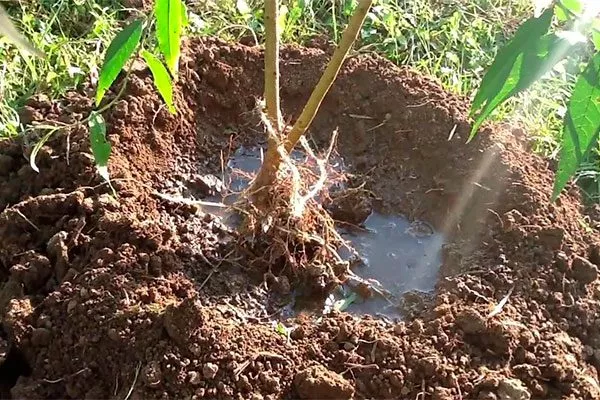
- Before planting, thoroughly prepare the soil. A few weeks in advance, dig a hole 60-65 x 70-75 cm and fill it with 20 liters of warm, preferably settled, water.
- To improve drainage, add a layer of red brick chips to the bottom of the hole.
- On the day of planting, add 10-12 kg of a mixture of humus and soil to the hole.
- To secure the seedling, immediately place a wooden support in the hole and then attach the tree trunk to it using twine.
- Carefully place the plant into the hole, spreading out the roots, and cover with soil.
- After planting, tie up the tree, water the soil around it with warm water and cover with a layer of straw or bark.
Peach tree care
Golden Moscow is easy to care for and doesn't require significant financial investment. However, with proper attention, you can achieve impressive results: a lush tree and a bountiful harvest of fruit.
Watering
This variety does not require frequent irrigation. Watering should begin with the arrival of spring and the activation of sap flow, and cease after the harvest in September. No irrigation is required during the fall and winter.
Rules:
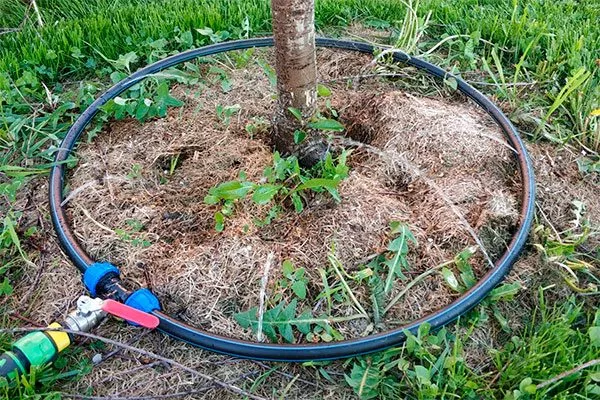
- During the summer months, peach trees require watering every two weeks, but the frequency may vary depending on soil conditions and weather. Watering is necessary if the topsoil deeper than 10-12 cm remains dry.
- Drip irrigation is ideal for peach trees. If this isn't possible, mulch the area around the tree trunk to retain moisture and reduce evaporation.
Top dressing
If your tree's branches grow 20-35 cm each year, the plant doesn't need additional feeding. This growth rate indicates the peach tree is receiving all the nutrients it needs.
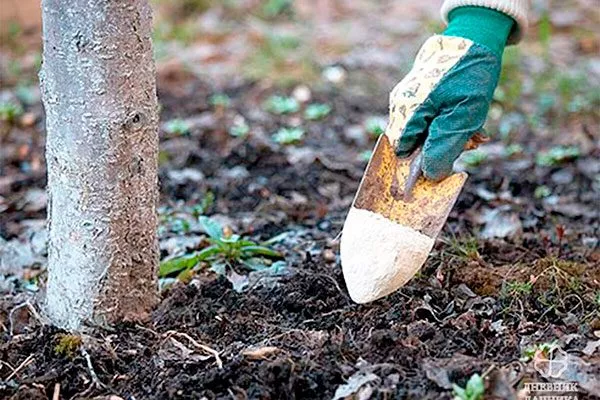
But if the growth is less than indicated, it is worth considering regular fertilizing throughout the year, approximately 2-3 times:
- In the spring, nitrogen-rich mineral fertilizers are added to the soil to promote the formation of new fruit buds, increase the volume of green foliage, and stimulate tree growth. These include ammonium nitrate, urea, and nitroammophoska.
For those who prefer organic farming methods, chicken manure or cow dung are recommended in the spring. Watering the tree with a wood ash solution is also beneficial. - Summer is the time to apply mineral fertilizers containing phosphorus and potassium, which promote full ripening of fruits and increase their sweetness. Organic liquid fertilizers can be applied every two weeks, stopping approximately 20 days before harvest.
- In September, it's recommended to apply a final fertilizer, using potassium mixtures or a special autumn fertilizer. When digging the soil, add compost and superphosphate.
Throughout the growing season, peach trees can be treated with Fitosporin, a safe foliar treatment. Spraying with this biofungicide can be done every three weeks to protect the tree from fungal infections.
Processing
Golden Moscow has good resistance to powdery mildew, but don't forget about regular protection against insects and diseases. To prevent other diseases, treat the plant with a 3% Bordeaux mixture or 0.5% copper sulfate at least three times a year:
- before the buds begin to open;
- after flowering is complete;
- after the fruit has been harvested.
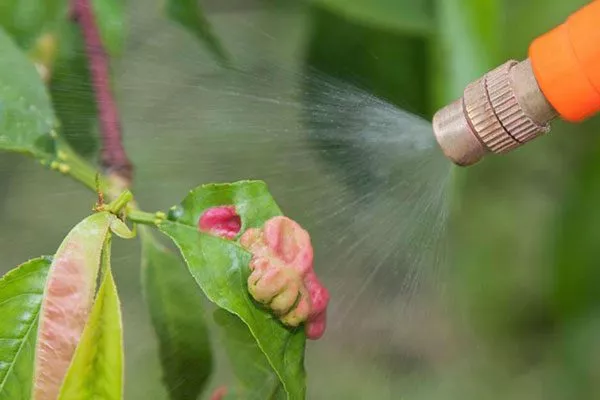
Peach trees can suffer from diseases such as leaf curl, moniliosis, and clasterosporium. To protect Golden Moscow from pests, insecticides should be used as a preventative measure.
Trimming
Careful pruning promotes optimal absorption of sunlight and heat, which in turn strengthens the plant's immunity to disease and accelerates its growth.
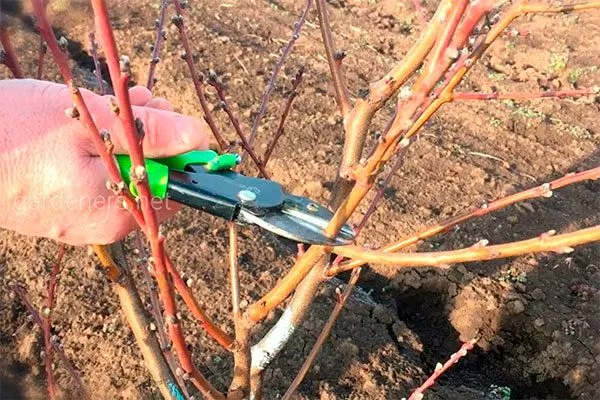
Trimming diagram:
- A year after planting, cut back the central trunk by a third to encourage the growth of lateral branches.
- Remove fast-growing branches from a three-year-old tree, leaving only those that are expected to bear fruit.
- In the fourth year, prune only parts of dead, broken, angled or crossing branches.
- For a mature tree, perform annual rejuvenation pruning, removing branches that grow at an angle greater than 45° to the trunk to prevent them from breaking during fruiting.
Preparing for winter
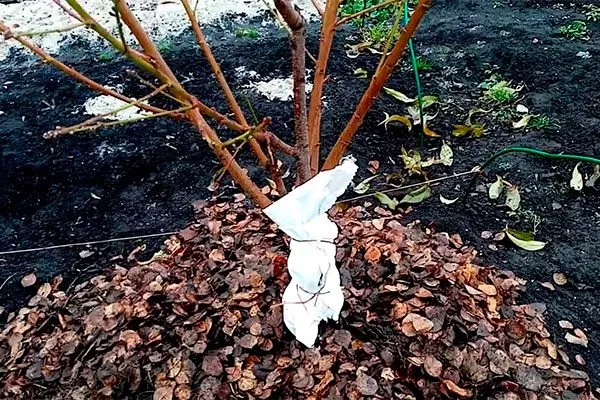
Peach trees are sensitive to low temperatures, and can lose their buds at temperatures as low as -30°C. In regions with cold winters, it's important to provide protection for these plants:
- In September or early October, the trunk of the Golden Moscow tree should be treated with a special paint or lime, which will help protect the bark from frost.
- In October, the root zone should be mulched using pine needles, bark, vegetable scraps, dry leaves and small branches.
- Using straw for mulch is not recommended, as it can attract small rodents. The mulch around the trunk should be at least 10-12 cm thick, with 20-25 cm being ideal. Remove the mulch in the spring, around April.
- In areas with frequent snowfall, you can further protect the ground around the tree by covering it with burlap. After the snow falls, you can pile it on top, creating an additional insulating layer.
- In regions where winters are particularly harsh, a protective canopy made of slats can be built over the tree, covered with burlap, film, or thin plywood.
Collection and processing of fruits
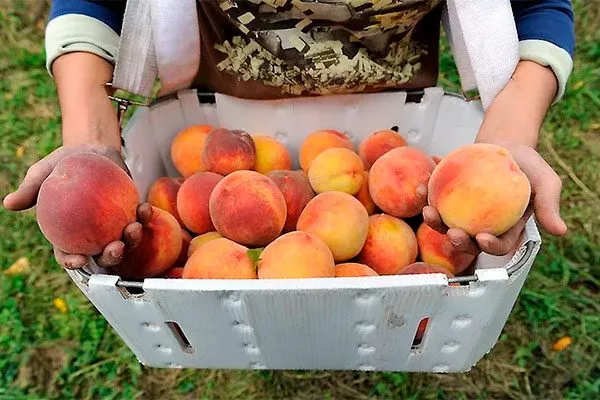
The harvest begins when the fruit reaches the desired condition. It's important to pick the fruit carefully to avoid damaging the tree branches. Peaches are ready to harvest when they have a rich yellow color with a characteristic blush and feel soft to the touch.
Features of cleaning and further actions:
- The fruits should be picked together with the stalks, avoiding tearing off the branches.
- Peaches are placed in boxes or baskets to prevent them from getting damaged.
- For transportation or storage, fruits that are not yet fully ripe are selected.
- For long-term storage, peaches are canned or dried.
Positive and negative qualities
Gardeners note the peach trees' excellent yields and consistent fruiting each year. But the variety also has other advantages:
Reviews of the Golden Moscow peach
The Zolotaya Moskva variety demonstrates the ability to bear fruit regularly even in the harsh climate of central Russia, while maintaining high fruit quality and flavor. Gardeners particularly note its resistance to diseases and pests, frost hardiness, and increased productivity.