
The Yubiley Stolitsy peach attracts gardeners with its good productivity, excellent flavor, and resistance to adverse conditions. Known for its early maturity and self-fertility, this variety has become a popular choice in various regions. It's important to carefully study its characteristics and follow simple care recommendations to ensure bountiful harvests.
Information about origin
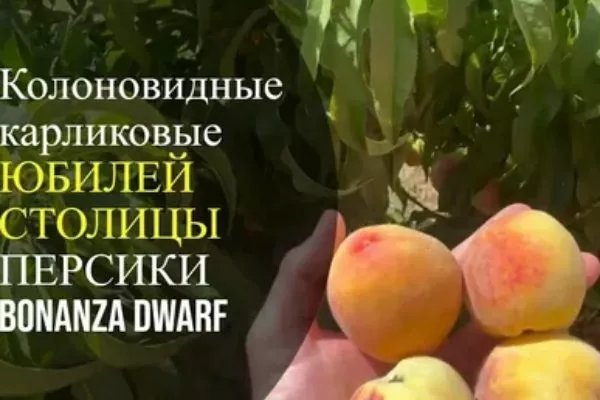
Determining the exact date and conditions of its emergence is difficult, as columnar varieties are not listed in the State Register. It was likely developed through amateur selection and therefore has not undergone official testing.
The appearance of the tree
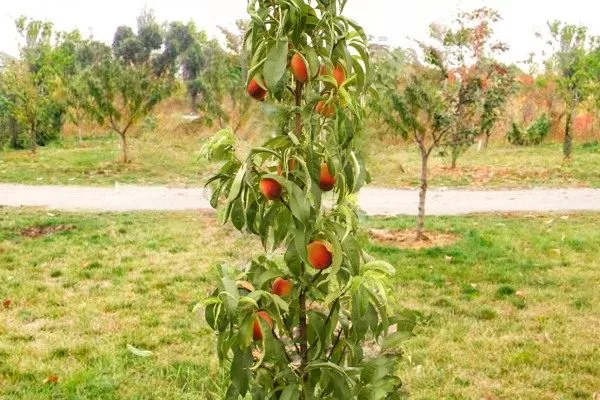
This semi-dwarf plant reaches 1.8-2 m in height. It has a narrow crown, densely covered with dark green leaves. During flowering, large buds appear.
Fruits and their taste characteristics
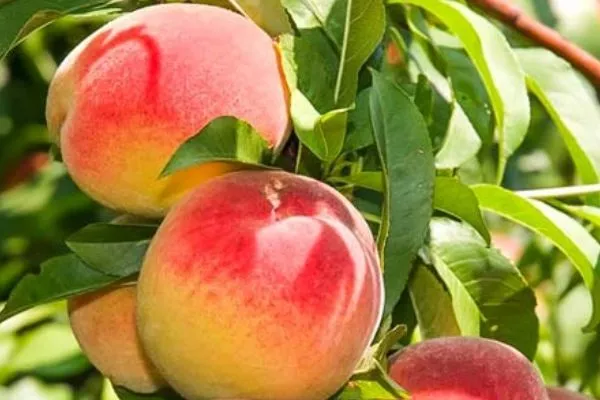
Characterized by large, round, carmine-colored fruits, the peach weighs between 150 and 200 grams. Beneath the thin, smooth skin lies moderately firm flesh.
Ripening and fruiting
Flowering occurs in May. Yubiley Stolitsy is an early-ripening variety: fruit ripening and harvesting begins as early as July. Fruit buds form on the current year's shoots.
Productivity
This is a high-yielding variety. Gardeners harvest approximately 10-12 kg of high-quality fruit from a single plant.
Growing regions
The peach is a heat-loving plant that adapts best to southern Russia and Crimea. It is successfully grown in the Black Earth Region and in regions with mild, snowy winters.
Self-fertility and the need for pollinators
The Yubiley Stolitsy variety is self-fertile. It produces fruit even without pollinators in the garden.
Care and cultivation
Planting and caring for this crop require special attention to ensure vigorous growth and a bountiful harvest. Follow these recommendations:
- Choose a sunny location protected from winds. South- or southwest-facing slopes with well-drained soil are ideal. Peach prefers light, loamy or sandy loam soils with a neutral pH.
- Prepare the site thoroughly. A few months before planting (preferably in the fall), dig it over, add organic fertilizer (humus or compost) and mineral supplements (superphosphate, potassium salts). If the soil is acidic, add lime.
- Choose healthy seedlings with a well-developed root system and a strong trunk. Two-year-old seedlings are best.
- Prepare the planting hole in advance; it should be approximately 50-60 cm deep and 60-70 cm in diameter. Place a drainage layer (gravel or crushed stone) at the bottom of the hole and add a small amount of fertile soil mixed with organic fertilizer.
Place the seedling in the hole, carefully spread the roots, and fill them with soil, compacting each layer to eliminate any air pockets. Leave the root collar at ground level or slightly above (1-2 cm). Water the tree thoroughly to ensure the soil settles and adheres tightly to the roots.
- ✓ The optimal planting depth of a seedling should be at least 50 cm to ensure stability and proper development of the root system.
- ✓ The distance between trees should be at least 3 meters to ensure sufficient space for the growth and development of the crown.
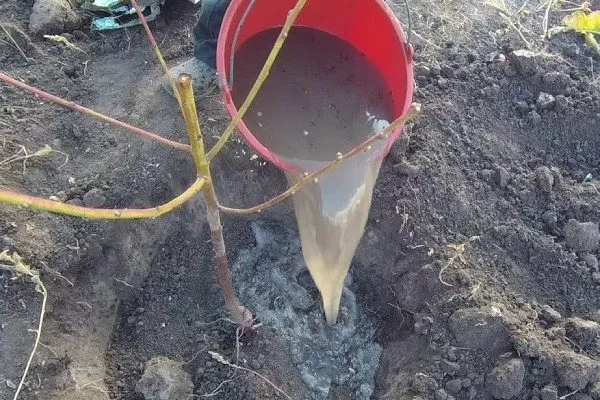
Caring for your plant will help you achieve bountiful harvests. Follow standard agricultural practices:
- Watering. Water the plant regularly, especially during periods of active growth and fruiting. The soil should be kept moderately moist at all times. Water the tree at the base, avoiding contact with the leaves and trunk.
- Top dressing. During the first year after planting, apply nitrogen fertilizer in the spring to promote foliage growth. During flowering and fruiting, use phosphorus-potassium fertilizers to improve fruit formation and flavor.
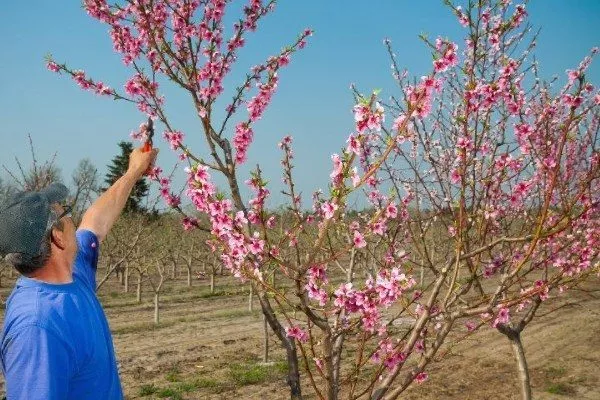
Apply organic fertilizers (humus, compost) in the fall to improve the soil structure and increase its fertility. - Trimming. Perform formative pruning in the spring to create a strong crown and remove weak or damaged shoots. Remove all branches growing inward to ensure good ventilation and light. Tame fruiting shoots to encourage new fruit production.
By following these recommendations, you will provide your peach with comfortable growing conditions and receive a bountiful harvest of fragrant and juicy fruits.
Frost resistance and the need for shelter
This variety is highly winter-hardy and frost-resistant, including late frosts. In regions with cold winters, provide reliable shelter.
Resistance to diseases and pests
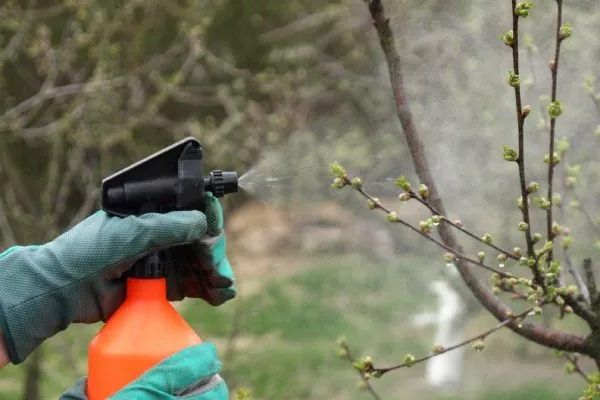
The variety is resistant to a range of diseases. However, preventative treatments are important. If improperly cared for, the tree can be susceptible to the following diseases and pests:
- Leaf curl. Symptoms include swelling and reddening of the foliage, which then falls off. Treat plants with fungicides (such as Bordeaux mixture) in early spring before bud break.
- Moniliosis (fruit rot). The fruits are turning brown and rotting. During flowering and fruit setting, treat with Horus or Skor fungicides.
- Powdery mildew. White coating on leaves and shoots. Treat with sulfur-based products or fungicides such as Topaz or Thiovit Jet.
- Aphid. These are small insects that suck the sap from leaves and shoots, causing them to deform. Treat with insecticides such as Aktara or Inta-Vir.
- Codling moth. Caterpillars damage fruit, causing it to rot. Control involves collecting and destroying damaged fruit and treating with insecticides (Calypso, Confidor) during the egg-laying period.
| Disease/Pest | Period of activity | Control measures |
|---|---|---|
| Leaf curl | Early spring | Treatment with Bordeaux mixture before bud break |
| Moniliosis | Flowering and ovary | Processing Chorus or Speed |
| Powdery mildew | Summer | Topaz or Thiovit Jet treatment |
Positive and negative qualities
Before planting a crop in your garden, be sure to carefully consider not only the advantages but also the disadvantages. The Yubiley Stolichny plant has many advantages:
Among the disadvantages, gardeners note:
Reviews
The Yubiley Stolitsy peach is a reliable choice for those seeking a resilient, high-yielding variety with excellent flavor. Self-fertility and high winter hardiness make it suitable for a variety of climates, although it requires careful monitoring and pest control. With proper care, you'll reap a bountiful and delicious harvest.