
The Vine Gold peach (Tardive T-3) is gaining popularity among gardeners thanks to its numerous advantages, making it a desirable choice for cultivation in warm climates. This tree requires little care, but to achieve higher yields, it's important to consider certain agronomic aspects of its cultivation.
Subtleties of selection
Canadian breeders worked hard to create this variety, and in 1994 they introduced the world to a tree that would become a leading peach cultivar. The breeder, George Line, used the New Jersey Cling 95 peach and the Veecling cultivar.
Wine Gold is in demand worldwide, including in Russia, where it has gained popularity among gardeners relatively recently. This variety is popular due to its ability to withstand cold and disease.
The idea of a peach
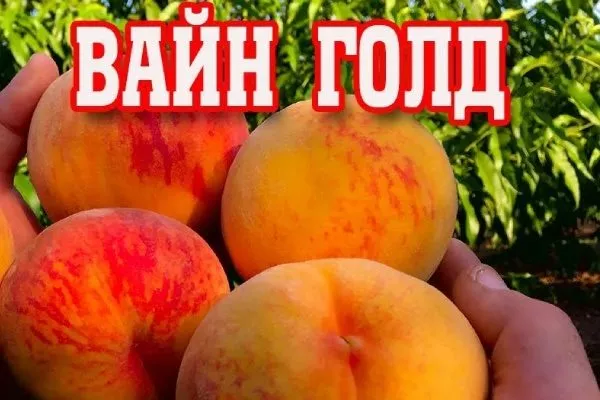
The Wine Gold peach boasts a unique flavor and texture, making it an excellent choice for gourmets. The variety's name derives from its bright golden hue, which is due to the high carotenoid content of the pulp.
The appearance of the tree
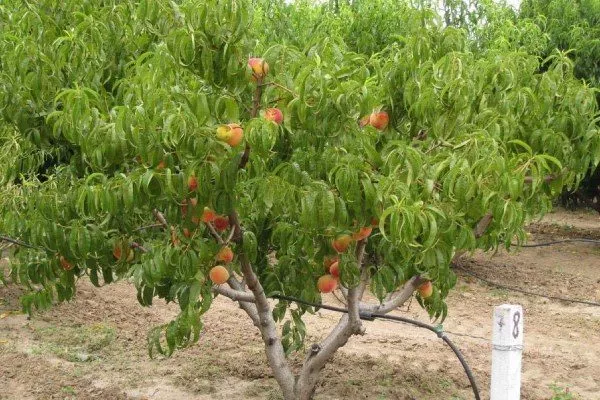
This vigorous tree can reach 400-450 cm, forming a broad, rounded crown. The trunk is covered in brown bark, while young branches are green.
The leaves are lanceolate and also green. Budding occurs with the formation of pink flowers, gathered in lush inflorescences.
Fruits and their taste characteristics
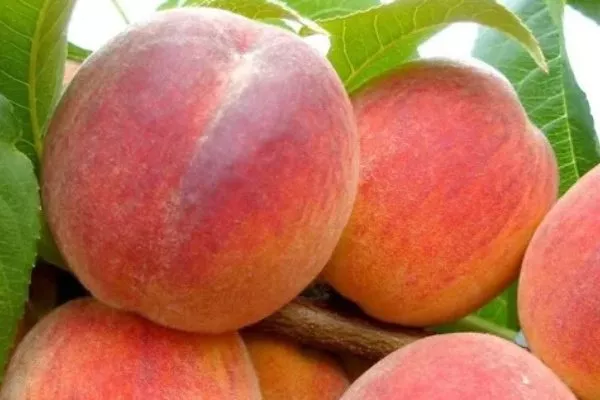
The peach is renowned for its large fruits, which have a standard round and oval shape, making it highly prized by gardeners. Key varietal characteristics:
- weight reaches 300-400 g;
- the peel is yellow, with a bright blush that appears under the sun's rays;
- medium-firm flesh;
- The color of the pulp is orange-yellow.
Wine Gold peaches are easy to transport and can retain their appearance for up to four days after picking. They can be eaten fresh or used in various preserves, including jams and compotes.
Fruiting, ripening period
By the end of June, you can already see fruit on the peach tree branches. In midsummer, they begin to acquire their characteristic color, and by the end of July, the peaches reach full ripeness.
These trees begin bearing fruit the following season after planting, provided they are provided with optimal conditions. The typical yield of this variety reaches 50 kg per tree.
Location and soil requirements
To successfully grow peaches, it's important to select a well-lit site. South-facing hillsides or hilltops are considered ideal.
The site should be open but protected from strong winds and sudden gusts of air. Peach trees prefer light loam or sandy loam soils.
Winter hardiness
This variety is distinguished by its increased winter hardiness, but in some regions, seedlings may suffer from frost damage during particularly cold winters. Whitewashing is used to protect the trees from low temperatures.
Landing
These fruits prefer to grow in gardens that provide optimal air and soil moisture levels. Seedlings are planted in the spring, between March 20 and April 15, in pre-dug holes that are wider than the plant's roots.
Which area is suitable?
The Wine Gold variety requires specific growing conditions, so when choosing a location for its cultivation, experienced agronomists recommend a site that is well-lit, elevated, and protected from gusty and strong winds.
- ✓ Check the soil pH, the optimal range for peaches is 6.0-7.0.
- ✓ Ensure there is no standing water and ensure good drainage.
If the soil is too heavy or clayey, the plant's roots may fail to take root and die. Soil preparation for planting should begin early, in the fall:
- dig up the area;
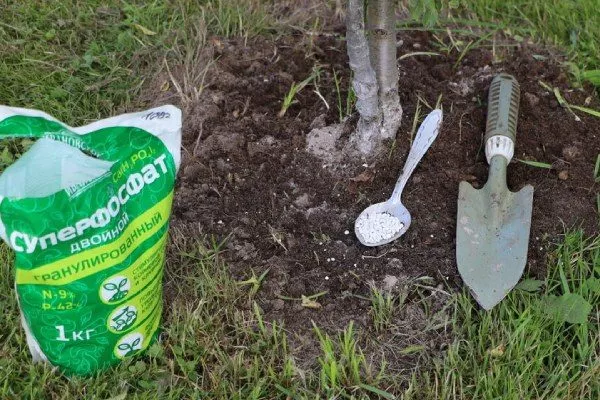
- add organic matter to the soil – manure, wood ash, as well as mineralized preparations such as superphosphate and potassium chloride;
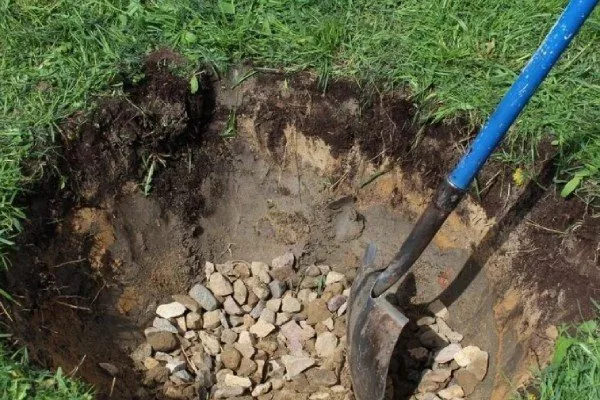
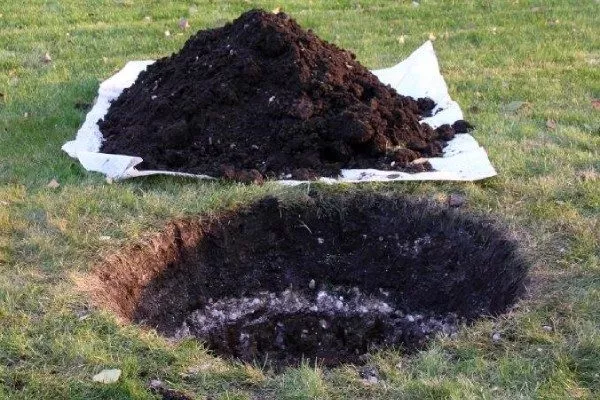
- form holes - the dimensions of the hole should be 40-50 cm in diameter and 50-70 cm in depth, with an interval of 5-8 m between plants;
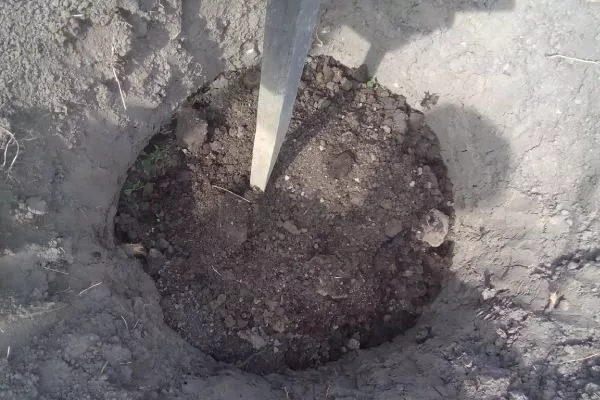
- Place a drainage layer of crushed red brick, small pebbles and river sand at the bottom of the prepared hole, and fill the top 1/3 with a mixture of organic matter and garden soil.
Where to buy and how to prepare planting material?
It is recommended to use peach tree seedlings from specialized nurseries or greenhouses, giving preference to specimens aged 1 to 2 years and 120 to 210 cm tall. It is important to carefully inspect the root system of the seedling, which should be brown in color and contain clods of soil.
Gardening professionals recommend cutting a small section of the seedling's roots with pruning shears to check for a whitish tint, which is a sign of a healthy plant.
Before the seedling is planted in the ground, it should be prepared as follows:
- Soak in a bucket of water with a rooting agent added to it (for example, Kornerost or Zircon) for 24 hours.
- Remove all dry and damaged areas of the roots.
Planting operations
When planting a plant, you should adhere to the following work plan:
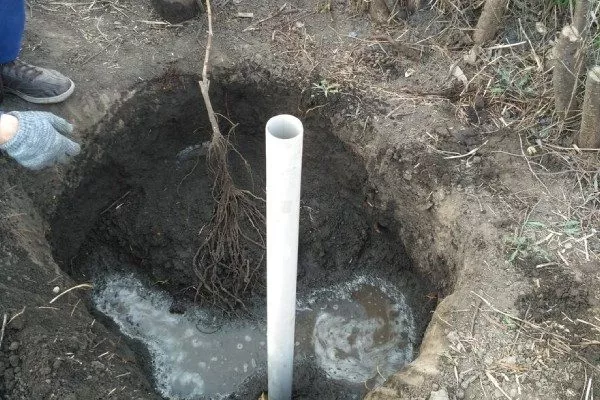
- Thoroughly moisten the backfill soil mixture. It should consist of turf and organic matter.

- Place a wooden stake for support 10 cm away from the center.
- Carefully insert the seedling into the hole, straighten the roots and, holding it by the main stem, attach it to the stake.
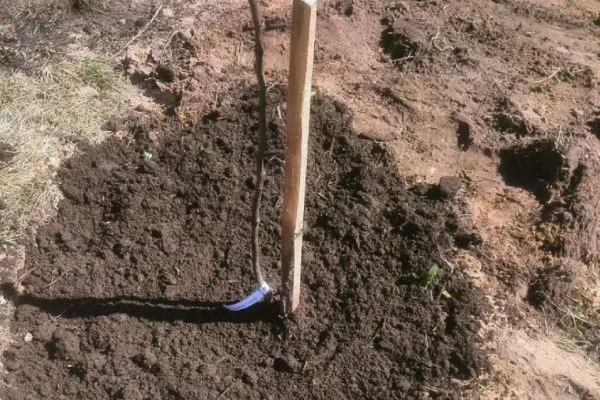
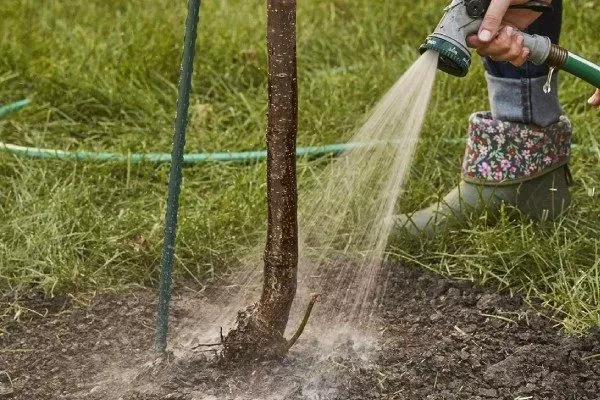
- Fill the roots with fertile soil, compacting it evenly and shaking the plant gently to avoid creating air pockets, then fill the remaining space in the hole, compacting the soil and watering the area around the roots generously.
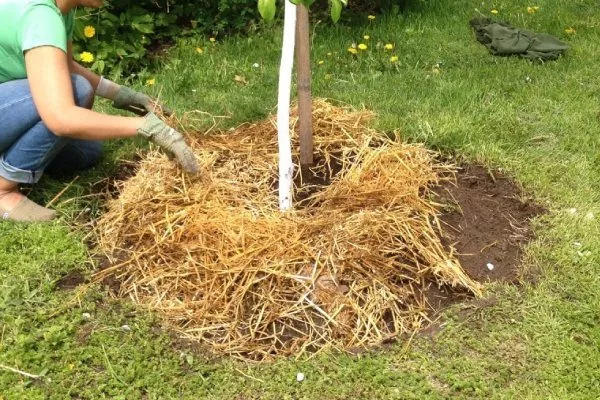
- After watering, cover the tree trunk circle with a layer of mulch made from rotted grass, compost and wood chips, up to 5-6 cm thick.
How to care further?
Wine Gold peaches require special attention in agricultural technology, including regular irrigation, fertilization and mandatory formative pruning, which contributes to a rich harvest.
Watering
Watering peaches should begin 10 days before flower buds appear. After that, water every 7-12 days, depending on the soil conditions, using 2-2.5 liters of water per plant.
The peach tree can withstand short-term droughts, but requires maximum irrigation:
- early spring;
- during budding and fruit formation.
Standards depend on the age of the tree:
- up to 2 years – 14-16 liters of water per 1 sq. m of tree trunk circle;
- older than 2-3 years – 18-22 liters of water for the same space.
The final irrigation is done a couple of weeks before harvesting. No irrigation is required during rainy periods.
Soil loosening
Professional gardeners advise regularly loosening the soil around plants after each watering to prevent it from drying out.
This is especially important to do in the spring, as it helps reduce the likelihood of fungal diseases and provides the plant roots with the necessary amount of air.
Fertilizer
Experienced gardeners advise creating a small circle around the tree, which will help retain moisture in the soil and prevent it from drying out.
To prevent the formation of a hard crust on the soil surface, experts recommend covering the root zone with a layer of mulch consisting of compost, sawdust, and slurry.
In the second year of a peach tree's life, gardeners recommend three stages of fertilizing, using:
- The first, which is carried out from March 1 to 15, requires nitrogen mixtures such as urea or carbamide.
- At the beginning of June, it is recommended to use ammonium or potassium nitrate.
- September and October are the time to add organic matter – manure or compost, as well as mineral phosphates.
- Apply nitrogen fertilizer in spring to stimulate growth.
- In summer, use potassium fertilizers to maintain fruiting.
- In the fall, add phosphorus fertilizers to strengthen the root system.
When fertilizing plants, it is important to:
- loosen the soil, which promotes faster absorption of fertilizers by plants;
- generously moisten the soil around the peach tree, ensuring moisture penetrates to a depth of 30-35 cm;
- It is not recommended to feed in rainy weather;
- from the fifth year, it is recommended to increase the amount of fertilizers by a third;
- distribute the mixture into special holes 25 cm deep, which should be dug in a circle at a distance of 80-100 cm from the tree trunk.
If nutrient deficiencies or signs of plant exhaustion are observed, apply foliar treatment using a water solution.
As auxiliary means use:
- potassium permanganate solution, which promotes the development of fibrous root system;
- An infusion of yeast and sugar that activates the growth of soil microorganisms and increases the effectiveness of fertilizers.
Trimming
In spring, peach trees are pruned, which includes removing damaged and wilted leaves, helping to form a bowl-shaped crown, and providing good lighting.
The formation process begins in March, when the temperature reaches +5-8 degrees, and includes:
- In the first year:
- selection of 2-3 main branches coming from the base of the tree;
- shortening the seedling to 75-80 cm, leaving 20-25 cm for the main branches and 60-65 cm for the trunk;
- pruning side branches to 12-15 cm.
- In the following year:
- the main branches are shortened to one level, and two buds with young shoots are formed from the new ones;
- Summer shoots forming on the crown must be cut off.
- In the third year:
- strong shoots located at a distance of 50-55 cm from the main branches are selected;
- are cut to 40-55 cm (second order branches).
- In the fourth year: a new level of branches (third order) is established.
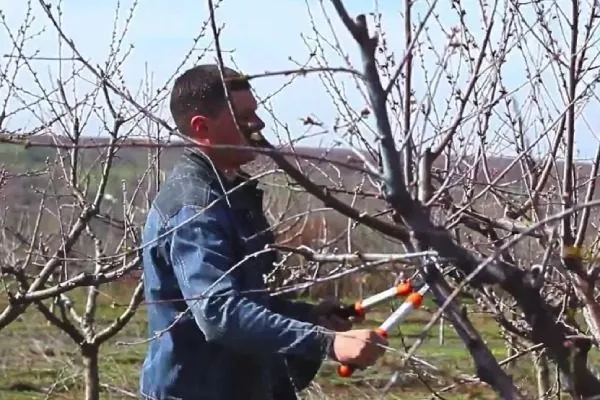
The sanitary procedure, carried out in early spring, includes the removal of wilted and diseased branches, which helps to increase the duration of the tree's fruiting.
Graft
The optimal time for grafting Vine Gold peaches is early spring, approximately from March 10-15 to early April. Plum, apricot, peach, or cherry plum trees are suitable rootstocks.
Crown grafting
Crown grafting is considered simple and effective. It requires careful preparation: the rootstock must be carefully trimmed.
Before grafting, you should carefully check the cutting for damage and place it in water the day before the procedure.
To successfully complete the vaccination you will need:
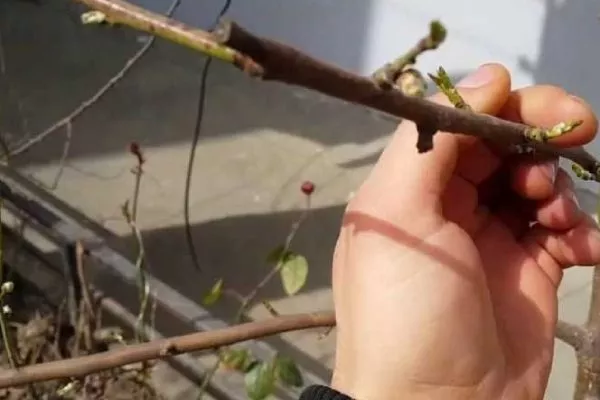
- Select a strong branch on the rootstock with a diameter of approximately 1.5-1.7 cm.
- Using a special tool, make a vertical cut in the shape of a semicircle or the letter T, about 3.5-4 cm deep.
- Quickly and carefully insert the scion into the prepared cut, treat it with garden pitch and wrap it with electrical tape.
It is important to act quickly to avoid the cut drying out, which can negatively affect the result of the graft.
The second method
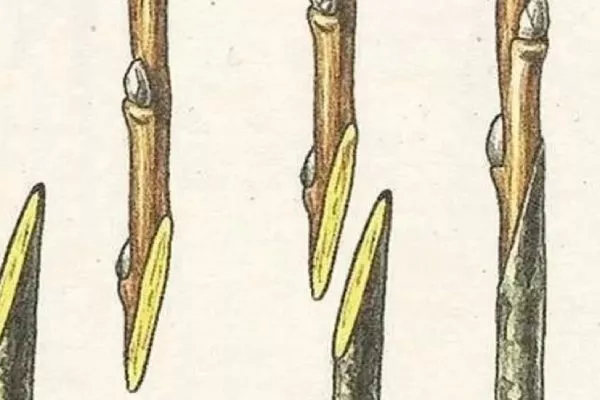
For successful grafting, it is necessary to select a scion and rootstock of the same thickness, as well as:
- make cuts on both parts with the same cutting angle;
- immediately connect them and secure them with garden wax and electrical tape.
The grafting is considered successful if after some time leaves appear on the grafted cutting and on the tree, which is a sign of their fusion.
Once the cutting has taken root, it needs additional support. The grafting site, secured with tape, can be removed when the cutting reaches a height of 20-25 cm.
Transfer
The Wine Gold peach prefers sunny locations and does not tolerate even light shade. Gardening experts consider replanting this variety a less desirable, but sometimes unavoidable, measure that should be carried out before the plant begins active growth, that is, in early March. This timing is necessary to allow the tree to quickly adapt to the new conditions.
Transplantation is permissible for trees less than three years old, and for its successful implementation it is necessary:
- find an area with good lighting and protection from the wind;
- prepare the soil by adding a mixture of garden soil and fertilizers, and moisten it thoroughly;
- dig a hole twice the volume of the tree roots, 50-80 cm deep;
- install a support in the hole (stronger than when planting a seedling) and carefully place the tree, straightening the roots and covering them with soil;
- compact the soil and water the plant with a solution of Kornevin;
- shorten the side branches of the tree by 1/3 of their length.
Preparing for winter
Peach trees are renowned for their ability to withstand low temperatures, allowing them to easily survive short-term frosts ranging from -23 to -35 degrees Celsius.
To protect these trees from winter cold, experienced agronomists recommend the following measures:
- whitewash the tree trunk in advance;
- wrap it in burlap and mulch the root zone with spruce branches;
- cover the top of the young tree with a special covering material - lukrasil.
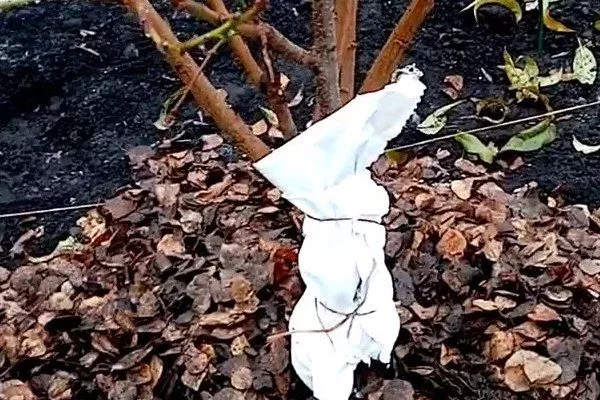
After winter, to protect plants from spring frosts, which are common in central Russia, it is necessary to cover the crown with non-woven material during flowering, while not forgetting to leave openings for pollinators.
Pest control
Wine Gold stands out for its resistance to diseases, eliminating the need for preventative measures. However, some pests can be a real headache for gardeners, including:
- fruit moth;
- aphid;
- spider mite;
- flower weevil.
To protect plants from these threats, it is recommended:
- whitewash the tree trunks at the end of winter and beginning of spring;
- carry out three treatments of the crown with insecticides: before bud break, at the budding stage and after flowering;
Harvesting and storage
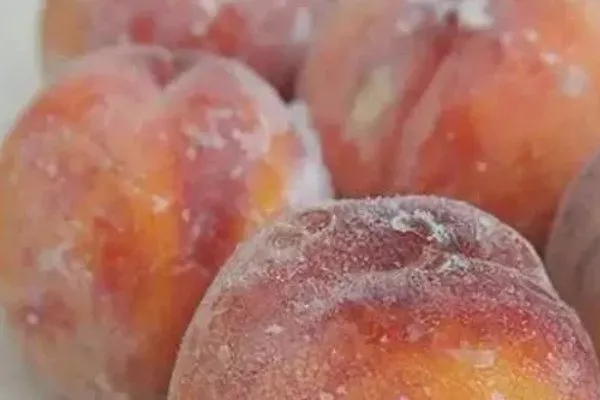
The intense fruiting period lasts about four weeks, and the fruits, once picked, remain fresh for up to seven days. When picking, be sure to leave the stems on the peaches, immediately placing them in one or two layers in the container in which they will be transported and stored.
For peaches, it is preferable to choose a cool place, and for transportation, it is better to use fruits that are not yet fully ripe.
These fruits can be stored not only fresh. They are suitable for:
- preparation of preserves;
- drying;
- frosts;
- juice squeezing.
Mistakes in care
Lack of experience can lead to various problems:
- Neglecting pruning can lead to overcrowding of the crown, which will negatively impact the amount of harvested crop.
- It is important to apply nitrogen fertilizers before temperatures begin to drop, otherwise young shoots may not have time to prepare for the cold and will die.
- Lack of moisture and irregular watering can cause flowers and ovaries to fall, which will affect the yield.
- Excessive use of potassium-phosphorus fertilizers can lead to an increase in the concentration of salts in the soil and weakening of the roots.
Positive and negative qualities
The Wine Gold variety has a number of advantages that distinguish it from others:
Reviews
The Wine Gold peach is deservedly considered a promising variety and one of the best crops for growing in a garden. Its popularity among gardeners is due to its ability to withstand low temperatures and diseases common to stone fruit crops.