
Vardeni is a popular early peach variety. It has become a favorite among Russian gardeners, as well as European, Canadian, and American ones. It is prized for its large fruits, strong immunity, hardiness, abundant yields, beautiful appearance, and excellent flavor. It is widely used in commercial fruit cultivation in many countries.
History of variety selection
Vardeni is an achievement of Canadian (or American) breeding in 1985. Scientists succeeded in developing an early-ripening, high-yielding variety characterized by resistance to pests and diseases, particularly fungal infections, excellent frost resistance, and adaptability to a variety of growing conditions.
Description of the tree and fruits
This peach variety begins bearing fruit in its third year. It is distinguished by a well-developed root system and a strong, upright trunk covered in light-brown bark.
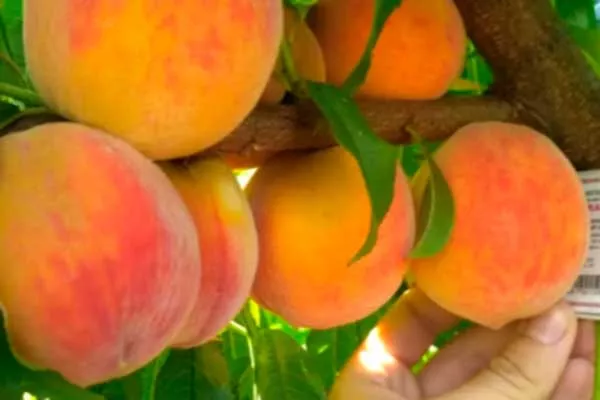
He also has other external characteristics:
- medium height (the tree reaches a height of 1.5-2.5 m);
- spreading crown, neat, rounded in shape;
- green shoots, characterized by flexibility and dense foliage;
- leaves: large, elongated with a pointed tip and serrated edge, bright emerald color, shiny;
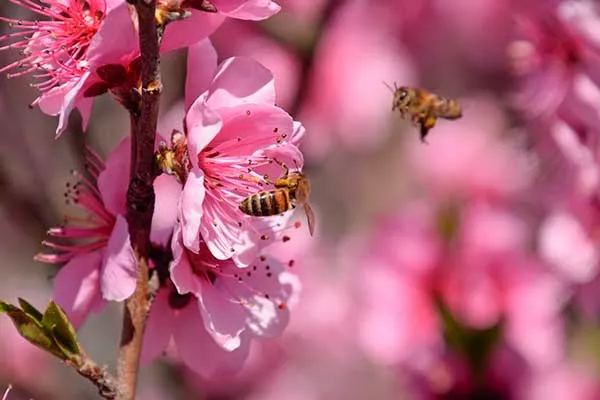
- Flowers: numerous, medium-sized, pink, bell-shaped, emitting a delicate aroma, appearing in April-early May.
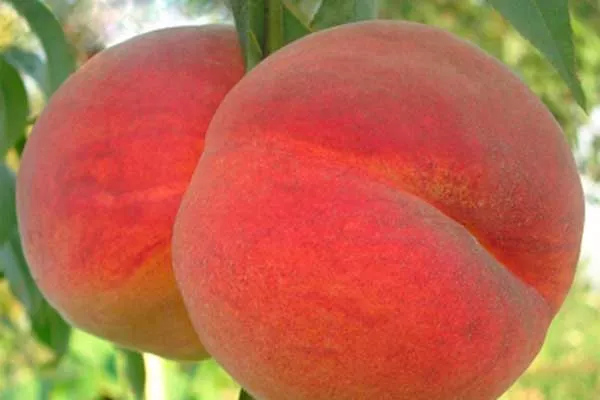
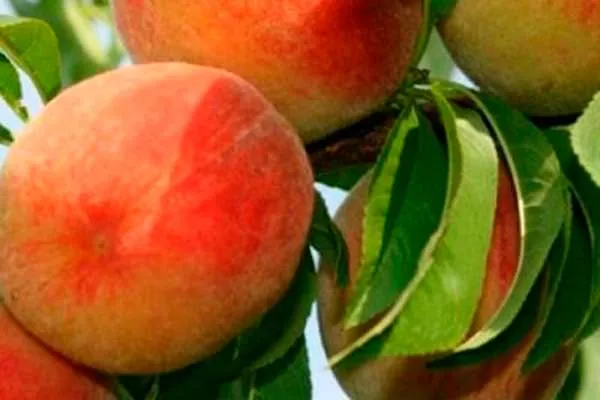
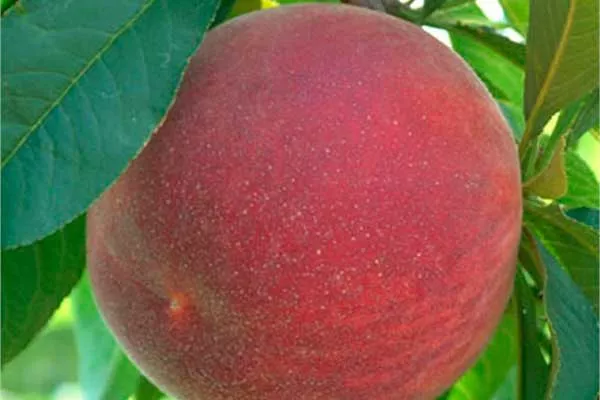
The Vardeni variety produces large-fruited and beautiful grapes, renowned worldwide for their high commercial qualities.
Fruits have the following characteristics:
- impressive dimensions;
- weight - from 200 g to 250 g;
- regular round shape;
- the presence of a clearly defined abdominal suture on the surface of the fetus;
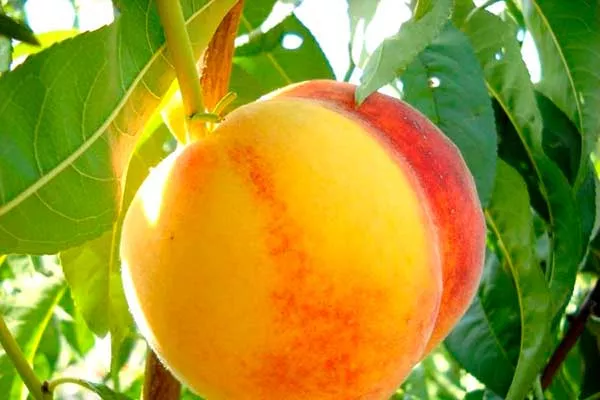
- bright yellow cover color, hidden by 60-80% under a washed-out red blush;
- smooth and dense, but not tough skin, on the surface of which there is light fluff;
- the pulp is yellow, dense, fleshy, not at all fibrous, very juicy and aromatic;
- a small stone that separates easily from the pulp.
Taste and uses
Peaches of this variety are distinguished by a harmonious, sweet flavor, which gourmets consider a dessert. It features sweet pineapple-honey notes, accented by a rich, fruity aroma. The Vardeni harvest received a tasting score of 4.8-4.9 out of 5.
Eat these fruits fresh or use them in home cooking:
- for cooking jam, marmalade, preserves, compote;
- to obtain juice, puree;
- for canning, including whole fruits;
- for preparing filling for pie, cake, pastries;
- for adding to desserts, such as ice cream or summer berry and fruit salads;
- for freezing.
Productivity
This peach cultivar is considered high-yielding. Due to the lack of information about it in the Russian state register, there is no official record of how many kilograms of fruit a mature tree produces per year. According to gardeners, this figure ranges from 40 kg to 70 kg.
It has been established that the productivity of the Vardeni peach increases each year. It yields its maximum when grown in areas with a mild, warm climate:
- in the south of the country;
- in Crimea.
Ripening and fruiting
This fruit variety is considered early-ripening. The first peaches can be enjoyed in mid-July. Fruiting on Vardeni trees is uniform, abundant, and prolonged, lasting for 3-4 weeks. In regions with cooler climates, fruiting occurs later.
Pollination
The peach is self-fertile. It produces abundant harvests without the need for nearby donor trees. To increase its productivity by 30%, gardeners cross-pollinate with other varieties that bloom at the same time:
- July;
- Early Kyiv;
- Collins.
- ✓ Self-pollinating ability, which is rare among peaches.
- ✓ Temperature resistance down to -34°C, making it suitable for growing in northern regions.
Frost resistance
Vardeni is a winter-hardy Canadian variety. Its trees can withstand temperatures as low as -34°C during the cold season. Due to its frost resistance, it has become widespread in the central and northern regions of the country.
Climate and soil requirements
This fruit crop grows and produces best in regions with a mild, warm climate. It is also suitable for cultivation in areas of the country with cold winters. However, the harvest ripens later there, and tree productivity is 20-30% lower.
- ✓ The soil pH level should be strictly within 6.0-6.5 for optimal nutrient absorption.
- ✓ The depth of groundwater is at least 1.5 m to prevent rotting of the root system.
Vardeni is undemanding regarding soil. It thrives in normal soil of normal quality (loam, sandy loam, black soil). It produces its maximum yield in soils with the following characteristics:
- loose;
- fertile;
- well drained;
- with a pH value ranging from 6 to 6.5.
Growing Vardeni Peach
Plant a peach tree in your garden within the following timeframes:
- in the spring (in March, April, early May) when the soil warms up to +10-12°C - in regions with a moderate climate and cold winters, to prevent the seedling from freezing;
- in autumn (September, October) until sub-zero temperatures set in - in the south of the country and in Crimea.
For planting, select healthy, strong seedlings from a nursery with a developed root system, straight trunk, branches, and buds. The optimal age for planting is 1-2 years.
Preparing the soil and choosing a planting site
Select a plot in your garden for growing fruit crops that meets the following requirements:
- solar;
- located in the southern sector of the garden, to protect the tree from freezing of roots and buds in winter;
- reliably protected from wind and drafts;
- dry, with deep groundwater;
- located away from buildings that create dense shadows;
- without other fruit trees and bushes within a radius of 3-4 m.
Prepare the selected site for planting the Vardeni peach. Clear it of debris, weeds, and plant debris. Then dig to a depth of 30-40 cm. While digging, add organic matter to improve soil fertility. If the soil is heavy clay, improve its structure by adding compost.
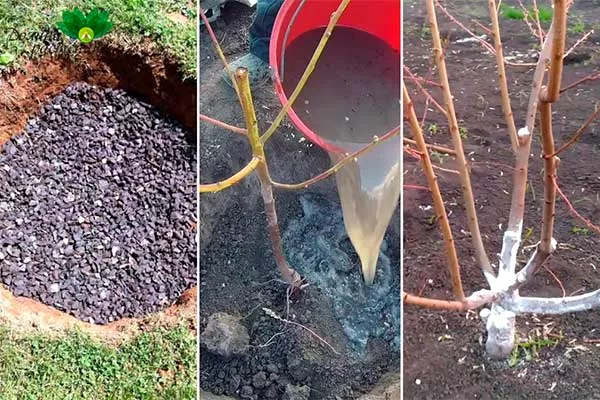
A few months before planting the peach tree, prepare a hole. Measure it 50 cm in diameter and 40 cm deep. Partially fill it with garden soil enriched with potassium fertilizer and ash. Mound the soil mixture into a mound. If you plan to plant several seedlings, space them 3-4 m apart.
Landing
Plant a Vardeni peach tree by following these step-by-step instructions:
- Water the planting hole generously.
- Once the soil has completely absorbed the moisture, place the seedling in the center of the hole directly on the mound. Spread out its roots.
- Cover them with soil, trying to leave the root collar of the peach open for a few centimeters.
- Compact the soil under the tree.
- Place a stake next to the seedling and tie it to it.
- Water the peach generously.
- Mulch the area around the tree trunk with non-acidic peat to retain moisture in the soil.
Fertilizing and watering
This fruit tree is moisture-loving. Although Vardeni trees tolerate drought well, their development is stunted by water shortages, and fruit set is low. During such periods, water the peach tree with at least 20 liters of warm water every 10-14 days.
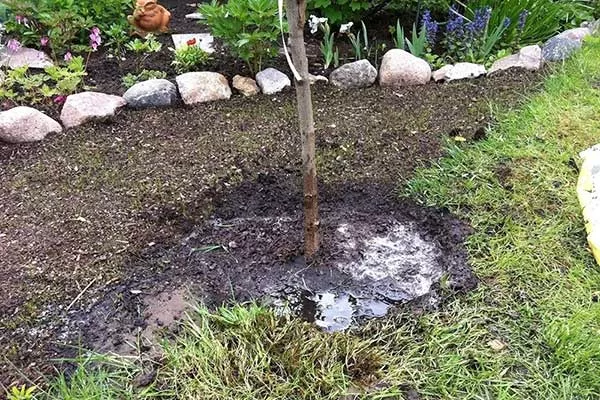
After moistening the soil under the fruit tree, carry out the following procedures:
- WeedingRemove weeds growing around the tree trunks. They harbor microorganisms and pests harmful to crops.
- Loosening. Loosen the soil under the tree every time after watering to improve its structure and make it more moisture- and air-permeable.
- MulchingCover the soil around the tree trunk with a layer of organic matter (7-10 cm thick) to better retain moisture and suppress weed growth.
Fertilize the Vardeni peach tree 2-3 times during the season:
- Before floweringApply 30-40 g of urea or nitrophoska. Combine fertilizing with watering.
- In the summerFertilize the crop with superphosphate (50 g) and potassium sulfate (25 g). Apply the same fertilizer again when the peach tree begins to bear fruit. Increase the application rate to 150 g.
Features of pruning
In early spring or fall, perform sanitary pruning of the peach tree. Remove old, broken, dry, frost-damaged, diseased, or parasitized shoots.
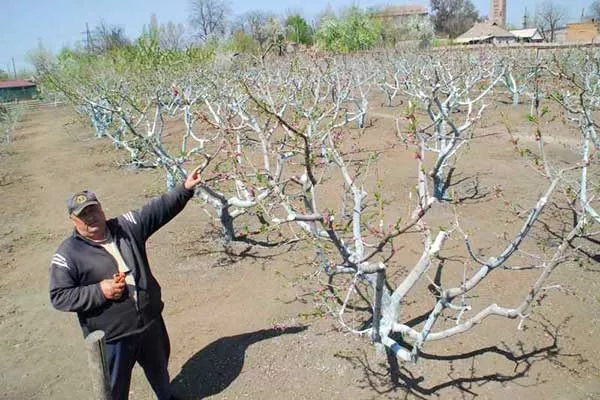
Perform formative pruning to shape the crown. Begin immediately after planting the seedling, shortening its shoots to 40-45 cm, leaving the strongest ones. Then follow the following pattern:
- create a base of 4 frame shoots Combine fertilizing with watering - first tier;
- form the second tier from 5 branches;
- trim the shoots of the first and second tiers by 1/3 of their length.
As the tree grows, continue to shape its crown. By the age of five, the trunk should not exceed 2.5-3 m.
Resistance to diseases and pests
The Vardeni peach is characterized by a fairly strong immunity. Its trees are rarely affected by major peach diseases such as powdery mildew and cladosporiosis. They are moderately susceptible to coccomycosis and scab.
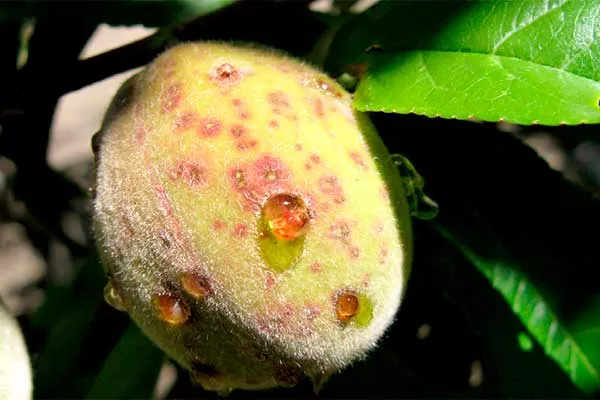
To prevent peach tree diseases, don't neglect preventative measures. They are especially necessary during rainy summers or if you have diseased plants in your garden.
The peach tree may be attacked by harmful insects:
- plate bug;
- pine silkworm;
- codling moth.
Monitor the condition of your fruit crop and take timely measures to treat it if you detect signs of insect damage.
To avoid diseases and pest attacks, spray the peach planting several times during the season:
- in the spring treat trees against fungal infections and parasites with a solution of copper sulfate;
- in summer use insecticides and fungicides (be sure to complete the treatment at least 3 weeks before the crop ripens);
- in autumn Repeat the application of fungicides and insecticides.
Preparing for winter
This Canadian variety is renowned for its winter hardiness. In areas with warm or moderately cold winters, the Vardeni tree does not require insulation. Mulching the root zone with fallen leaves or sawdust (10-15 cm thick) is sufficient.
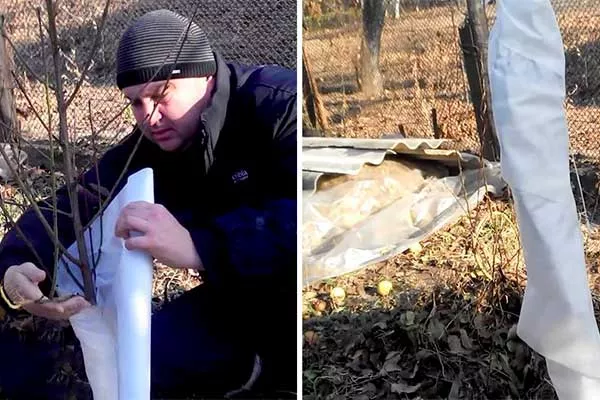
During harsh winters, provide your fruit tree with more reliable shelter. Hill up the tree, generously mulch the root zone with organic matter, and wrap the trunk with burlap or agrofibre.
Positive and negative qualities
The peach variety boasts many undeniable advantages that are inherent to it:
Among the variety's shortcomings, gardeners point out its average resistance to coccomycosis and scab, as well as the insufficiently soft flesh of the fruit.
Reviews
The Vardeni peach is an early Canadian variety that delights domestic gardeners and farmers with its early maturity, high yield, and excellent winter hardiness. The firm flesh of the fruit makes the harvest very shelf-stable and transportable. This variety is successfully cultivated commercially by gardeners worldwide.