
Peach trees, like many fruit trees, thrive on warmth and therefore require winter protection. To ensure the tree survives the winter safely, gardeners should consider the growing region, the tree's age, and other factors when choosing a winter protection method.
Why insulate peaches for the winter?
When peaches were grown only in the south, in Crimea or the Caucasus, there were no particular questions about keeping them warm. Nowadays, there are varieties for colder regions. They can bear fruit in conditions unsuitable for peaches, but they require winter protection.
Peaches grown in the southern regions of Russia, where winters are mild and warm, don't require special shelter. Hilling is sufficient to ensure that trees survive the winter safely. Regions with a temperate climate, such as Siberia and the Urals, are a different matter; without substantial insulation, trees have no chance of surviving the winter.
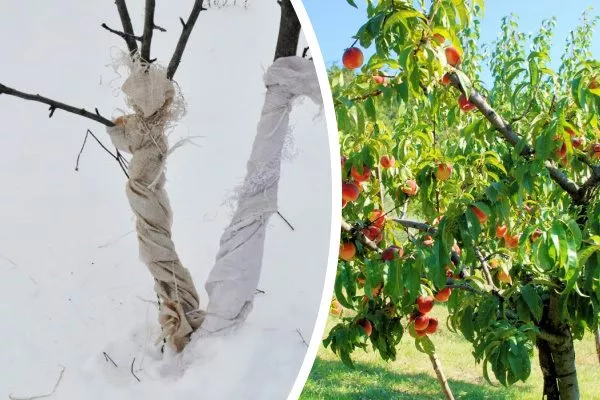
By insulating a peach tree, a gardener solves several problems at once:
- protects the tree from sudden temperature drops and hurricanes;
- ensures the quality of the future harvest - frozen trees produce small fruits;
- protects wood from sunburn caused by the negative effects of UV rays;
- saves the tree from rodents and death.
Insulation allows peaches to survive frosts that reach -40°C or even lower in Russia. Covering materials also protect fruit trees from sudden temperature fluctuations, cold winter winds, and heavy precipitation.
When to cover peach trees before winter by region?
To prevent damage to the tree, it's important to install the cover promptly. Both haste and delay can result in damage and even death of the peach tree. This is why insulation measures are carried out at different times in different regions, depending on climate and weather conditions.
Table. Timing for organizing winter shelter for peaches:
| Region | Deadlines | Winter average daily temperature, °C | Weather conditions |
| Moscow region | from the end of September to the beginning of October (after the leaves have fallen and the harvest has been collected) | 6-17 | consistently dry until the first frost |
| Middle zone | from the end of September to the beginning of October (after the leaves have fallen and the harvest has been collected) | 6-18 | stable, dry |
| Ural | from the end of September to the beginning of October (after the leaves have fallen and the harvest has been collected) | 9-14 | consistently dry until the first frost |
| Siberia | from mid to late September | 7-12 | consistently dry until the first frost |
| Leningrad Oblast | from mid to late September | 7-17 | stable, dry |
| Transbaikalia | from mid to late September | 7-18 | consistently dry until the first frost |
| Far East | from mid to late September | 9-18 | consistently dry until the first frost |
| Khabarovsk | from mid to late September | 7-20 | consistently dry until the first frost |
| Volga region | from mid to late September | 10-19 | consistently dry until the first frost |
Shelter-in-place regulations in different regions
The rules for winter shelter for peaches depend on climate conditions. The colder and longer the winters, the more serious the winter preparations. Peaches in Siberian and Ural orchards require the most intensive winter protection, especially young and immature trees.
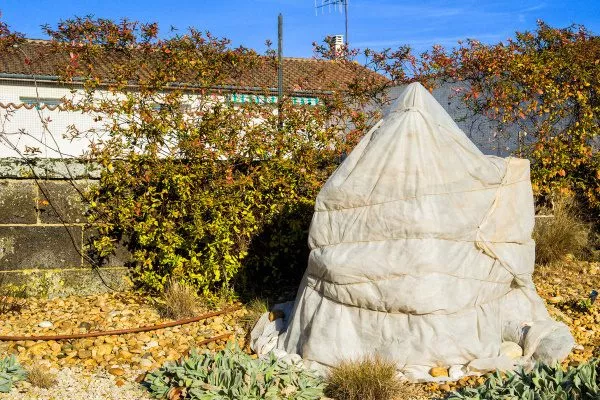
Winter shelter for peaches by region:
- South. Here, gardeners limit themselves to hilling; they can also cover the area around the tree trunk with plastic film. If snow falls, they also rake it up to the trunk. If there's a risk of severe freezing, they use a more effective insulating material, such as peat or humus, instead of soil.
- Middle zone. Frosts here range from moderate to severe. Winters with little snow are especially dangerous. Peach trees need proper insulation—both the roots and the trunk. However, the tree's variety and age must be taken into account. Frost-hardy varieties and mature peaches only require mulching with sawdust (15 cm thick), while other trees require wrapping.
- Siberia and the Urals. Here, the most radical frost protection methods are required, as winters in these regions are very harsh, with severe frosts and cold winds. Trees are covered entirely, either by wrapping them or by constructing a frame. Another method is to bend the peach tree to the ground, secure it, and then cover it with straw, which is then piled with snow in the winter.
The roots of seedlings should be in frozen ground before being insulated. If, for example, the thermometer reads below -10°C and a lot of snow has fallen, it should be shoveled away to allow the frost to set the soil. This prevents early bud break in the spring.
In the central part of the country, the greatest danger to peaches isn't frost, but early leafing. Above ground, the tree awakens faster than below. The dormant root system doesn't provide the tree with sufficient nutrition once it begins to grow. Eventually, it dies.
Preparing for winter insulation
Before insulating the tree, it's necessary to prepare it for winter. At this stage, the gardener has a lot to do: pruning, fertilizing, and spraying the peach tree, and turning over the soil around the trunk.
Autumn feeding
Peaches are fertilized twice in the fall. First, fertilizer is applied after harvesting, then immediately before covering.
Tips for autumn fertilizing:
- It is recommended to add mineral complexes containing phosphorus and potassium, humus and wood ash;
- nitrogen fertilizers are contraindicated;
- It is recommended to add a little slaked lime to acidified soils - 200 ml per 1 sq. m;
- The older the tree, the more fertilizer it requires.
During the autumn fertilizing phase, it is recommended to whitewash the trunks of peach trees. Whitewash not only the trunk but also the skeletal branches to protect them from sunburn. Copper sulfate and red clay are added to the lime—200 g and 500 g, respectively, per 1 kg of slaked lime.
Sanitary cleaning and pruning
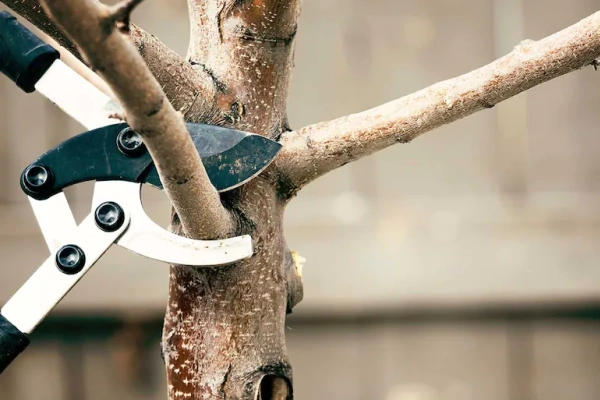
Before installing the shelter, the peach tree is pruned. Damaged, broken, and diseased branches are removed. Then, fallen leaves are raked out from around the tree trunk, and weeds and other plant debris are removed. All cut branches are burned to kill microorganisms, larvae, and insects that overwinter under the bark.
Along with sanitary pruning, crown shaping is performed. Shoots that interfere with dense growth are removed. If the tree is too dense, fruit bud formation will be hindered.
Digging and preventive spraying
Peaches don't thrive in dense soil, so the area around the tree trunks must be carefully dug over. The tree and the dug-up soil are sprayed with pesticides (insecticides) and disease control agents (fungicides).
Gardeners recommend spraying peaches with Fitosporin, a biofungicide containing humic acids. It simultaneously protects the plant and nourishes the roots. After the leaves fall, it's recommended to spray the tree with a Bordeaux mixture solution to prevent pests and fungal diseases.
Watering
If the fall is dry, water the peach tree with a moisture-replenishing irrigation. The recommended rate is 50 liters per square meter. This amount of water will ensure the roots adhere firmly to the soil and eliminate any air pockets. If the groundwater level is too high, skip this preparation step. To prevent water from leaking out of the tree's trunk, apply water gradually, in 2-3 stages.
Insulation procedure
Insulating a peach tree is done in stages. First, the roots are covered, then the above-ground portion—if the region's climate requires it. The key is to complete all covering procedures before the first serious frosts.
- Check the soil acidity level and deacidify it if necessary.
- Make sure the soil around the tree is free of weeds and debris that may attract pests.
Roots
The first stage involves preparing the root zone for winter. For this purpose, various loose organic matter is used: sawdust, humus and peat, soil or a mixture of soil and sand, fallen leaves, pine needles or spruce branches, hay, and straw. The recommended layer height is 15-20 cm.
Tree trunks are insulated in clear, dry weather with temperatures above zero. Only high-quality materials that are free of pests, fungal spores, and infections are used for insulation.
Barrel protection
Once the roots have been insulated, move on to the trunk. To protect it from frost, frost cracks, sunburn, and rodents, use specialized and readily available materials. In addition to agrofibre and spunbond, newspapers, cardboard, burlap, and roofing felt are also used for insulation. It is not recommended to use cling film or construction film, as they can create a greenhouse effect.
All covering materials are wrapped around the tree in strips. This allows for gaps in the covering to ensure proper air circulation.
Crown cover
The easiest way to cover the entire tree is to simply cover it, especially if it's small. When creating shelters, be sure to provide an oxygen cushion. Frames and shelters that enclose the tree and its crown reliably protect it from frost, disease, and rodents. A favorable microclimate is created inside the shelter, preventing damping off and mold.
Selection of material
Various materials are used to insulate fruit trees, so gardeners must choose the appropriate one themselves. When choosing winter shelters, consider which parts of the tree need to be insulated.
- ✓ Consider the material's ability to allow air to pass through to avoid wood rot.
- ✓ Pay attention to the material’s resistance to moisture, especially in regions with frequent thaws.
The following materials are used to construct winter shelters:
- For the ground part. Burlap, agrofibre, and polyethylene film are commonly used to cover the upper part of the tree. However, the best option is spunbond. It's more expensive than other materials, but it creates a favorable microclimate under the cover and can be reused multiple times.
- For the underground part. Loose materials such as peat, sawdust, or a mixture of manure and sawdust help protect the soil and roots from freezing. Ordinary soil can also be used. These materials are simple, readily available, and inexpensive.
Methods for covering peaches for the winter
Gardeners choose a covering method based on climate conditions, availability of materials, and the age of the tree. Below are the most popular options for insulating peach trees, most popular in regions with moderate and severe winters.
Agrofibre
This method allows you to warm the soil in the tree trunk circle using organic matter and breathable agrofibre, and protect the tree roots from freezing.
Work order:
- Mulch the tree trunk area with peat or well-rotted compost. The minimum layer thickness is 5 cm. Perform this work in dry weather to prevent mold from forming in the mulch layer.
- Using twine, tie the crown, slightly tightening the branches.
- Cover the tree trunk area with agrofibre. Be sure to leave gaps to allow air to pass through.
- When snow falls, cover the tree with it to protect the branches from icing.
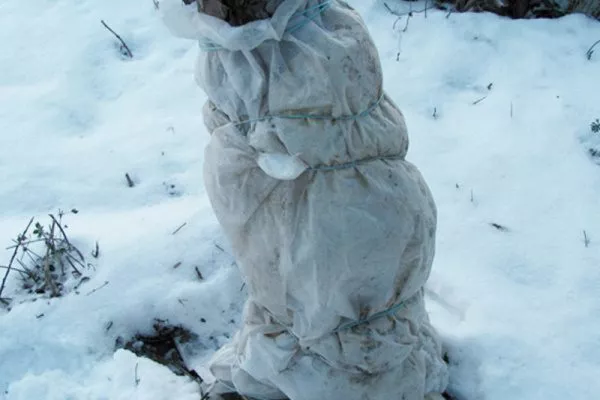
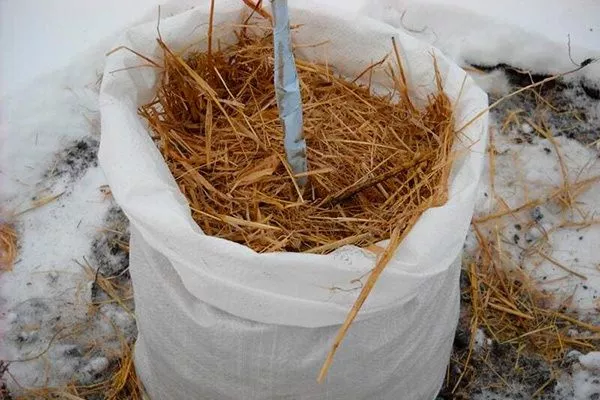
With straw
This insulation method traps heat in the root zone, while the straw or hay used for covering provides oxygen to the roots.
Work order:
- Mulch the dug-up tree trunk circle with loose organic matter - peat or humus.
- Place a layer of straw or hay around the trunk and wrap it with burlap and ropes to prevent it from blowing up.
- When snow falls, cover the tree with it. If the tree is high enough, cover it with snow to prevent the branches from becoming icy or frozen.
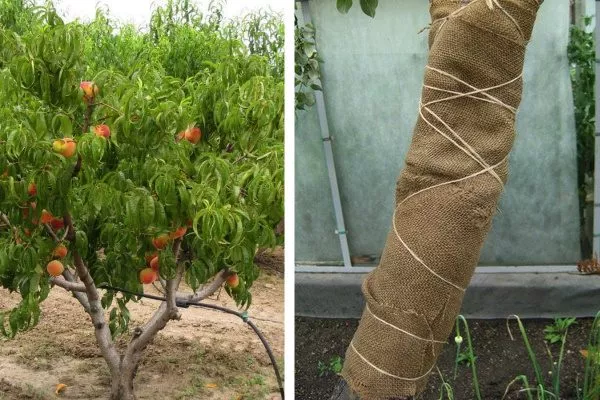
burlap
This is one of the most proven and simple methods for covering fruit trees. You might not have spunbond on hand, but burlap—like potato sacks—is always available. This natural material retains air while allowing air to pass through.
Work order:
- Remove debris from the tree's trunk area, dig it over, and then mulch with fallen dry leaves. Humus and wood shavings are also suitable as mulch.
- Wrap the trunk with 3-4 layers of burlap. When wrapping the tree, leave small gaps to allow air circulation.
- Tie the burlap with twine or ropes.
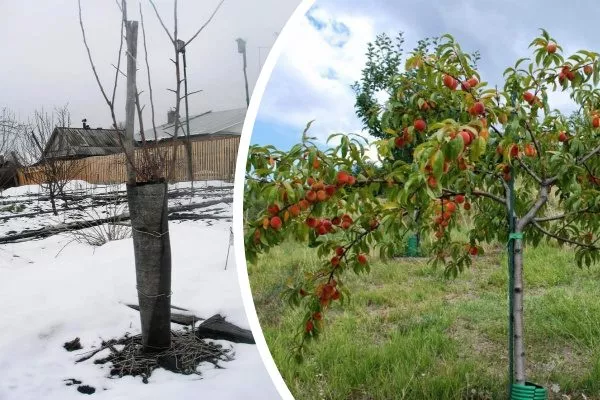
roofing felt
Roofing felt is an inexpensive, versatile material used in a wide variety of construction and utility projects. It's also useful in the garden; this dense and durable material can protect trees not only from frost but also from rodents.
Work order:
- Cover the tree trunk circle with any mulch.
- Place supports around the tree.
- Carefully pull the branches together and tie them with twine.
- Wrap roofing felt around the supports and tie it with ropes.
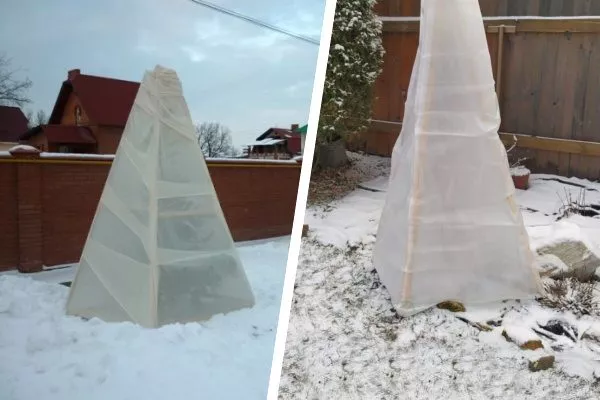
hut
The shelter, which completely conceals the tree, allows air to circulate. If done correctly, the peach tree will not only survive the frost, but also won't rot.
Work order:
- Carefully tie the tree branches together and tie them with twine to make the crown more compact.
- Build a frame over the tree's crown using boards, timber, plastic pipes, or other suitable material. Once constructed, the shelters can be reused multiple times.
- Fill the hut with mineral wool - it comes in sheets, so you can easily handle the job.
- Stretch some more plastic sheeting over the shelter—it will protect the structure from rain. Just be careful not to wrap it too tightly, otherwise the wood will suffocate and rot.
Thermos
For this method, roofing felt or any other covering material is used, which can be wrapped around the trunk, leaving a gap.
Work order:
- Cover the tree trunk circle with mulch.
- Place covering material around the trunk so that there is free space between it and the trunk.
- Fill the remaining gap with sawdust.
- Cover the structure with plastic wrap.
Additionally, watch a video on how to cover a peach tree for the winter:
How to cover seedlings?
Young seedlings are most vulnerable during the winter. Therefore, in regions with harsh winters, it is not recommended to plant them before winter. First-year trees require especially careful insulation. Unlike mature trees, they require mandatory insulation of the trunk and crown. It is recommended to completely wrap the seedling, first covering the area around the trunk with mulch.
Recommended covering materials:
- agrofibre;
- lutrasil;
- foamed polyethylene.
There shouldn't be a gap between the mulch and the insulating material—not only will cold air penetrate, but rodents will also. If mice gnaw at the trunk of a young sapling, it will die.
The peach tree's entire life, health, and yield depend on its first winter. Frosts become less severe only in the fourth to sixth year of its life, but this only applies to frost-hardy varieties. All other varieties are recommended to be carefully covered from then on.
Frequently asked questions about winter protection for peaches
Beginning gardeners often have questions about creating shelters for fruit trees. Any mistakes made when insulating a peach tree can lead to irreparable consequences. Tips from experienced gardeners can help prevent these mistakes. Below are some frequently asked questions about insulating peach trees and their answers.
Questions and Answers:
- How do you know if the deadline for covering a peach tree has been missed? If the first frosts have already passed, it means you are late in organizing insulation.
- Should I water the tree before covering it? Yes, it is necessary. The soil is first loosened and dug over, and then watered. Moistened roots are less likely to freeze.
- Why is it dangerous to cover a peach tree prematurely? Because there's a risk that the tree will rot and die, gardeners should be especially careful when using plastic film—it's important to leave a gap between it and the covering material.
- How does insulation affect crop yield? The quality of the shelter directly affects the yield and size of the fruit. Poor wintering can lead to freezing of branches and roots, over-rotting, and other problems, which will impact yield to varying degrees.
- Is it necessary to take into account varietal characteristics when organizing winter shelter? Peaches come in early, mid-season, and late varieties. The latter are the most frost-hardy, with increased tolerance to low temperatures.
If properly insulated, peach trees can demonstrate high productivity not only in southern Russia but also in regions with harsh winters. The key to winter sheltering is following proper agricultural practices, using high-quality materials, and implementing winter sheltering procedures in a timely manner.
I didn't know that peaches need to be sprayed before winter as a preventative measure. I usually only do this in the spring. But I liked the roofing felt method you described. I'd never heard of it, but it seems quick and inexpensive to do. Thanks for the advice!