
Sochki is a domestic early-ripening peach variety popular with gardeners. It is prized for its low maintenance, hardiness, and high yield. Although it is of little interest to farmers growing fruit for commercial use due to its very delicate fruit, which is difficult to transport, it is highly prized by gourmets.
Who developed the variety and when?
This peach cultivar was developed in 1932 by I. N. Ryabov, a breeder at the Nikitsky Botanical Garden. It was obtained by crossing the winter-hardy Greensboro with the hardy and productive Rochester.
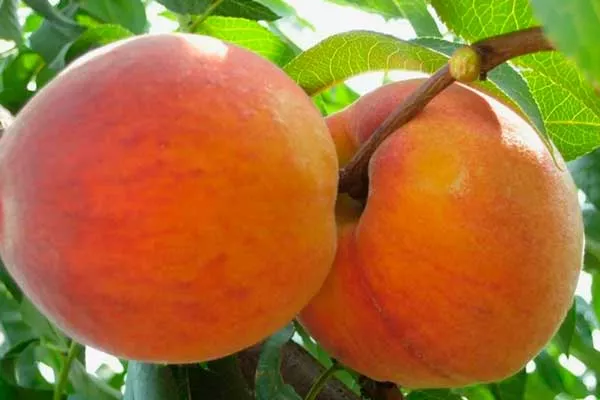
After extensive variety testing, Sochny was added to the Russian Federation State Register (1965). It is recommended for cultivation in the North Caucasus region. It is characterized by increased frost and drought resistance, and immunity to pests and diseases, with the exception of clasterosporium.
The appearance of the tree
Plants of this variety are characterized by distinctive features:
- vigorous growth (their height is 3-3.5 m);
- spreading crown, having a rounded shape and prone to thickening;
- foliage: large, green, lanceolate with a serrated edge;
- rose-shaped flowers that bloom on the tree in the second ten days of April.
Fruits and their taste characteristics
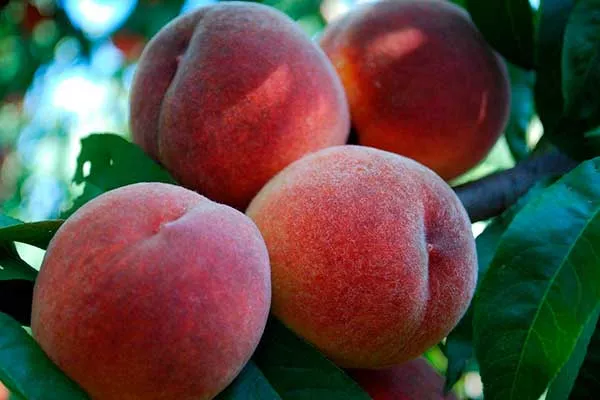
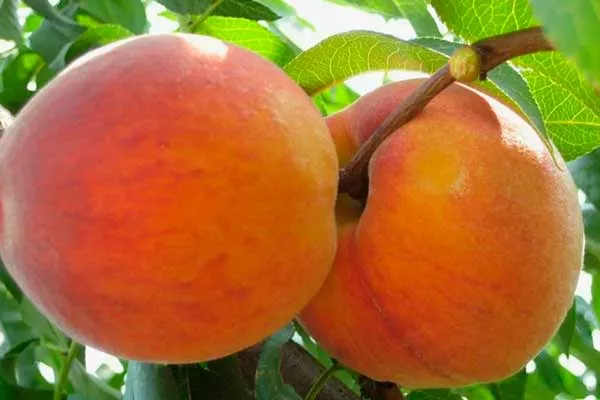
The appearance of the Sochny variety of peaches is appealing to gourmets. The fruits are distinguished by their unusual creamy-greenish skin with a marbled blush of burgundy hue. They possess the following characteristics:
- medium sizes;
- weight - from 120 g to 160 g;
- short stalk;
- rounded shape, slightly flattened on the sides;
- the presence of a clearly visible abdominal suture on the surface;
- thick skin with dense fluff;
- greenish-white flesh with red veins, slightly fibrous, very creamy consistency, juicy and fragrant;
- a medium-sized stone that is difficult to separate from the pulp.
- ✓ The fruits have a creamy-greenish skin color with a marbled blush, which is a unique characteristic of the variety.
- ✓ The pulp of the fruit contains red veins, which is rare in other varieties of peaches.
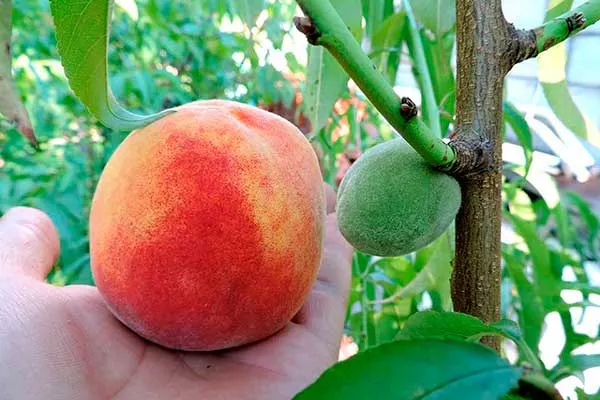
The fruits of this variety are not only visually beautiful but also delight the eater with their balanced flavor. Their flesh is sweet with a pleasant tartness, extremely tender, and melts in the mouth. It contains a lot of juice. The rich peach aroma makes it even more appetizing. Tasting score: 4.5.
The remarkable taste of the Juicy peach is due to its balanced chemical composition, the percentage content of substances in which is as follows:
- sugars - 8.5-12.4%;
- acids - 0.5-0.6%.
Scope of use
The purpose of this fruit variety is table:
- Peaches are eaten fresh;
- added to desserts, particularly ice cream and fruit salads;
- used for processing into juice and puree;
- They are used to make jam, preserves, compote, jelly, and marmalade.
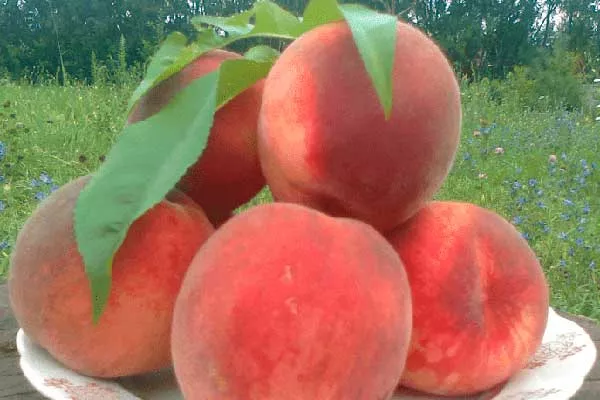
The main purpose of these peaches is fresh consumption. It provides a culinary pleasure and health benefits. The pulp is rich in vitamins (C, E, A), fruit acids, and minerals. This delicacy helps improve skin condition, strengthen the immune system, and elevate mood.
Ripening period and yield
Sochnoye trees begin to bear fruit in their second or third year. Its ripening period is considered early. The fruits ripen in the second half of July or the first week of August. Gardeners can obtain 60-70 kg of fruit from one peach tree. This variety is considered high-yielding.
Pollinators of the variety
| Name | Ripening period | Disease resistance | Fruit size |
|---|---|---|---|
| July | Early | High | Average |
| Redhaven | Average | Average | Large |
| Early Kyiv | Early | High | Average |
| Collins | Early | High | Large |
This fruit variety is self-fertile. It produces a good harvest when planted alone, without the need for other pollinating trees. However, the presence of pollinating trees in the garden has a beneficial effect on its productivity. Gardeners consider the following varieties with similar flowering periods to be the best companions for Sochnoye:
- July;
- Redhaven;
- Kyiv early;
- Collins.
Peculiarities of planting peaches
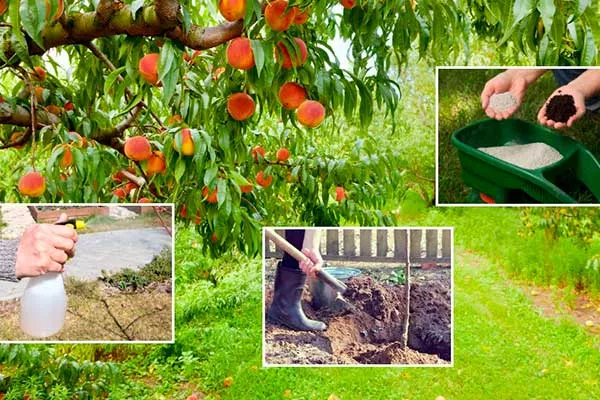
Carry out planting correctly. This will determine the survival rate of the Sochny peach tree in its new location, its health, and its continued development.
- ✓ The optimal planting depth for a seedling should be such that the root collar is 3-4 cm above ground level.
- ✓ The distance between trees should be at least 3 meters to ensure sufficient space for the growth of the root system and crown.
Landing dates and location
Plant fruit crops in your garden according to the following deadlines:
- in autumn (late September or early October) - in the southern regions and in Crimea;
- in spring (last week of March, beginning of April), before the buds open - in regions with cold winters, to prevent the seedling from freezing.
To grow a peach tree, select a plot of land in your garden that has the following characteristics:
- well-lit by the sun to ensure normal development of the crop and achieve uniform ripening of the harvest;
- located in the southern part of the garden, where the soil is well warmed by the sun during the day;
- windless (under the influence of drafts and strong winds, the peach tree gets sick in the summer and freezes in the winter);
- without the presence of trees and bushes within a radius of 3 m (other crops will take away water, nutrition, and light from the peach);
- with groundwater levels greater than 2.2 m deep, to prevent tree roots from rotting due to increased soil moisture;
- with fertile and loose soil (sandy loam, loamy soil, chernozem), characterized by neutral or low acidity.
Selection of seedlings
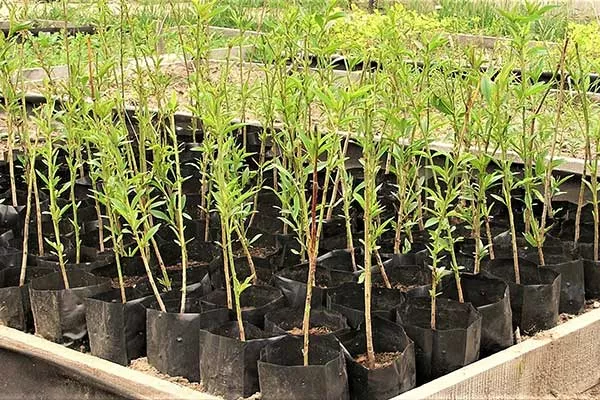
When purchasing Sochny (Juice) planting material from a nursery, try to choose the strongest and healthiest seedling. The following external characteristics will help you identify it:
- smoothness of the plant trunk and even grafting site;
- flexibility of the seedling (it should not break when bent);
- the presence of 3-4 lateral branches without foliage, which takes moisture away from the trunk;
- a well-developed root system (the roots should not have any dry or rotten areas, and they should be white and juicy when cut);
- "height" - up to 1.5 m;
- age - 1-2 years.
Site preparation
Prepare the chosen garden location for growing the Juicy peach tree in advance. Follow these steps:
- clear the area of debris;
- remove weeds, remove plant debris from the garden;
- dig up the soil (cultivation depth – 30–40 cm);
- For spring planting, dig the hole in the fall to allow the soil to settle;
- If you plan to plant a peach in the fall, prepare the hole 2 months beforehand;
- make the planting hole larger than the volume of the seedling’s root mass (diameter and depth indicators - more than 50 cm);
- If you plan to plant several Juicy peach trees in your garden, dig holes 3 m apart.
Step by step process
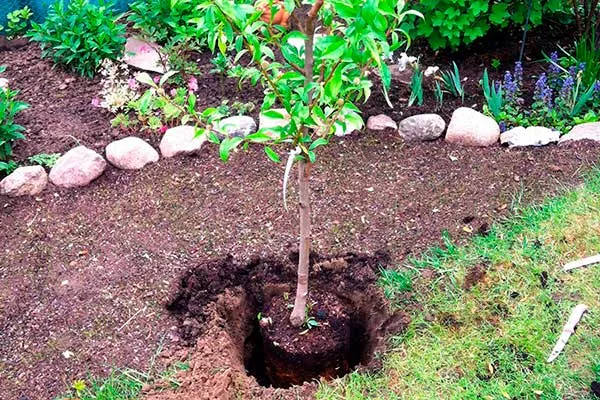
One day before planting, soak the roots of a peach tree purchased from a nursery in water with a rooting stimulant. Follow these steps to plant the tree:
- Drive a wooden support 1.5 m high next to the hill.
- Water the hole. Use 5–7 liters of water. Wait until the moisture is completely absorbed into the soil.
- Place the seedling in the hole, placing it on a mound of nutritious soil mixture. Spread out the roots.
- Fill the hole with soil, ensuring that the root collar of the peach tree is 3-4 cm above ground level.
- Tie the tree to the support.
- Tamp the soil under the seedling. Water it with 10 liters of water.
- Surround the tree with an earthen rampart (15 cm high) at a distance of 40–50 cm from the trunk.
- Mulch the soil under the peach tree with a thick layer of sawdust, non-acidic peat or dry pine needles (layer thickness - 7 cm).
Plant care
The plant will quickly establish itself in its new location, thrive, and produce abundant fruit with proper care. Without proper agricultural practices, it's impossible to ensure the health of a fruit crop and achieve a bountiful harvest.
Watering
Water young trees regularly, at least 1-2 times a week. Use 10 liters of water per plant. To ensure successful rooting, moisten the soil not just superficially, but right down to the root tips (to a depth of 35-45 cm). During drought, increase watering by 1.5-2 times. Water every other day.
Loosening the soil around the tree trunk after watering will improve its moisture and air permeability. Removing weeds will prevent fruit trees from becoming infected with diseases and pests. To retain moisture, apply a 7-10 cm thick organic mulch layer under the peach tree.
Pruning and shaping the crown of a young and mature peach tree
For the Juicy peach tree, be sure to prune:
- Post-landingPrune the peach tree planted in the garden, shortening its branches to 40-45 cm.
- SanitaryEvery year in spring or autumn, remove unproductive shoots: dry, broken, deformed, fat, frozen, diseased.
- FormativePrune the peach tree's crown according to the following pattern: leave four scaffold shoots as the base of the first tier, and form the next tier from five branches. Shorten the branches of the first two tiers by about a third annually. Shape the crown as the tree grows. By the fifth year, its trunk should be no more than 3 m tall.
Top dressing
Before harvesting the fruit, apply 2-3 additional fertilizers to the Juicy peach:
- before flowering, fertilize the crop with nitrophoska, urea, Kemira (consumption rate - 30-40 g per 1 tree);
- in summer add superphosphate (50 g) and potassium sulfate (25 g);
- Feed the fruiting plant with mineral compounds, increasing the application rate to 150-200 g per 1 trunk.
Preparing a tree for winter
This varietal variety of garden fruit is characterized by excellent frost resistance. Its trees easily tolerate temperatures down to -25°C.
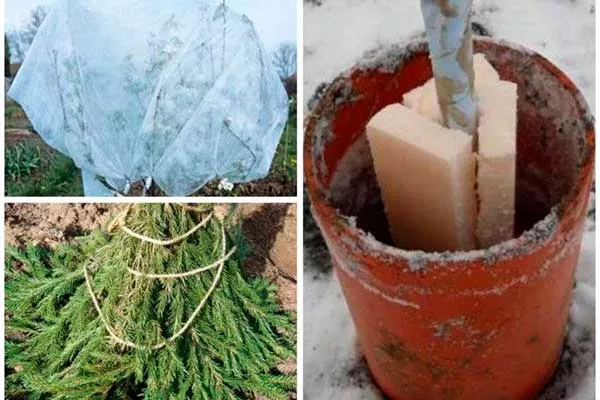
When growing the Sochny peach in the southern regions of Russia or Crimea, do not cover the trees for the winter. Plants grown in the central and northern regions require mandatory winterization. Young seedlings especially need insulation.
Prepare your plant for the cold season step by step:
- Perform a moisture-recharging irrigation in the fall. Use 50 liters of water per tree. Complete the procedure before the onset of cold weather.
- Hill up the trunk to a height of 0.5 m.
- Mulch the soil around the tree trunk with a thick layer of organic matter.
- Wrap the trunk with burlap.
- As soon as it snows, cover the peach tree generously with it.
Diseases and pests
This variety is considered resistant to many peach diseases. It is moderately susceptible to clasterosporium and powdery mildew. If poor care is provided or unfavorable weather conditions occur, the peach becomes more susceptible to diseases and pests.
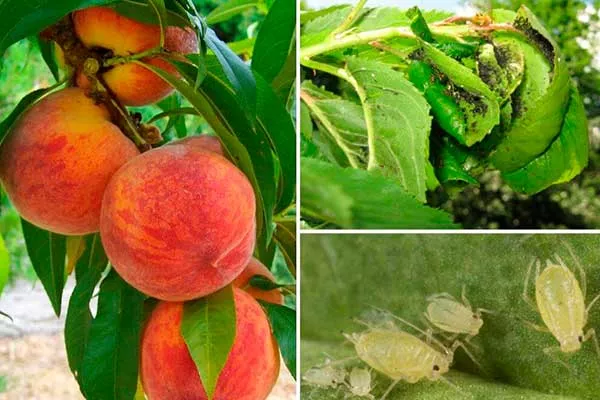
Preventative treatments to kill fungal spores and pests can help prevent fruit crop diseases. Perform these treatments at least five times during the season. Follow the instructions below:
- in the spring, as soon as the buds open on the tree, spray it with a solution of copper sulfate;
- treat the pink bud crop with complex preparations to destroy fungi and insects;
- after flowering, repeat the treatment to consolidate the previously achieved result;
- In the summer, spray the trees twice with insecticides and fungicides, using different types of preparations and maintaining a 3-4 day pause between their applications (carry out the last chemical treatment of the peach no later than 21 days before the fruit ripens);
- In the fall, spray the plants in 2 stages, applying a fungicide and an insecticide in turn.
To prevent peach diseases, use the following preparations:
- Fast;
- Planriz;
- Trichodermin;
- urea;
- copper sulfate.
To control pests, use insecticides such as Enzhio, Actellic, and Aktara. Folk remedies such as tobacco leaf infusion and garlic decoction are also effective.
Harvesting and storage
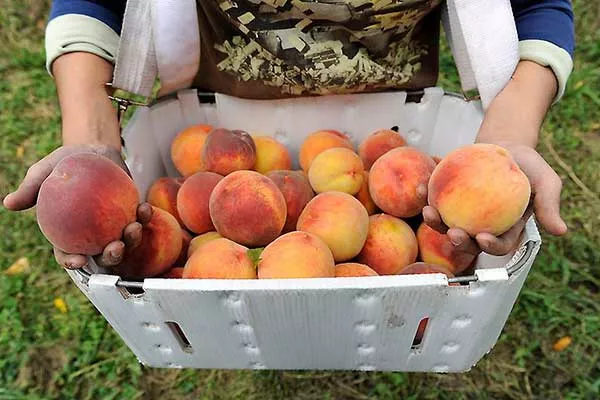
Pick ripe fruits from the tree immediately, without leaving them too long. They tend to fall off after they're fully ripe. It's best to harvest the Sochic peach a couple of days before it ripens. Do this in the morning, before the heat sets in. When picking the fruits from the branches, be careful not to damage the skin.
What are the advantages and disadvantages of the variety?
This peach variety has become a favorite among domestic gardeners for its numerous advantages:
The Juicy variety also has several significant disadvantages:
Gardeners' reviews of the Juicy variety
The Sochny peach is an early variety bred in Crimea that delights gardeners with its early maturity, consistently high yields, and winter hardiness. Its main advantage, however, is the incredibly tender and juicy flesh of the fruit and its remarkable flavor. This variety is successfully cultivated not only in the south of the country but also in regions with colder climates.