
The Shalakh apricot variety is unique—it has a pineapple flavor. It was from the Shalakh variety that domestic breeders developed the Ananasny apricot. The Shalakh is characterized by medium growth, resistance to heat and prolonged drought, and very high yields.
Breeding history and ripening time
The Shalah apricot variety originates in Armenia and was developed hundreds of years ago, so the exact year of its selection remains unknown. Originally grown only in Armenia, it eventually migrated to all countries of the former Soviet Union. These apricots are particularly beloved by consumers for their unique sweet-tart flavor with hints of pineapple.
The fruits ripen around July 20th, but ripening is not uniform, so harvesting takes 15-20 days.
- ✓ The optimal depth of groundwater should be at least 2.5 m to prevent rotting of the root system.
- ✓ To increase yield, artificial pollination must be carried out at least 3 times during the flowering season.
Features of the variety
The Shalakh apricot variety is both medium-sized and tall, as these characteristics are directly dependent on climate conditions—the warmer the weather, the faster the shoots grow. This early hybrid produces fruit in the first month of summer.
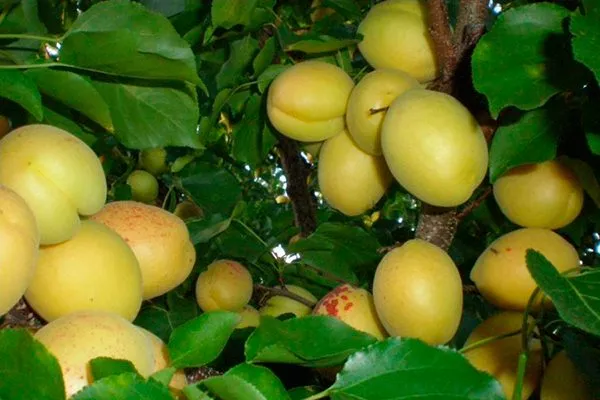
Characteristics of the tree
The average height of trees of this variety varies from 3 to 5 m. Other characteristics of the tree:
- the crown is quite spreading and dense, looks round;
- shoots – thickened and slightly curved, with smooth bark;
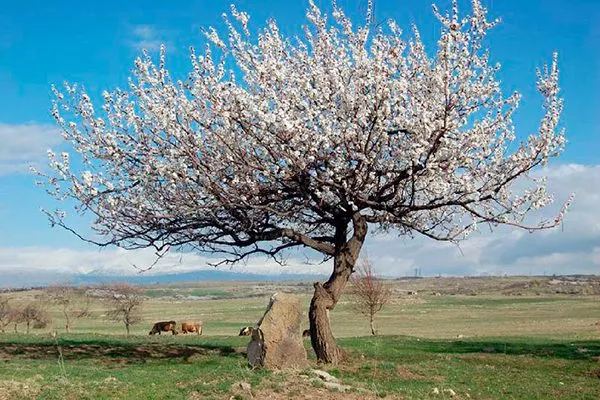
- flowers - the main tone is cream, but there is a light yellow tint;
- bark - with a grayish tint;
- Leaves are emerald green, brightly coloured, have a matte surface and are heart-shaped.
The crown tends to become dense, so pruning is essential.
Description of fruits
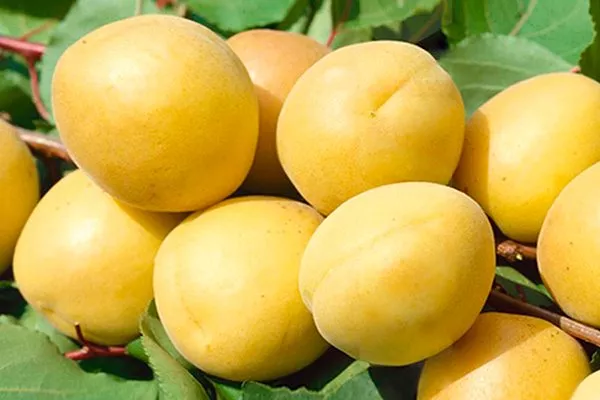
The Shalah apricot has a tasting score of 5 out of 5, considered the highest possible. But the fruit also has other distinctive characteristics:
- sizes – large, reaching a weight of 50 to 100 g;
- shape – oval or elliptical;
- abdominal suture - narrow;
- surface with bumps, pubescent;
- peel color - yellow-orange with a blush on the side;
- skin type – dense;
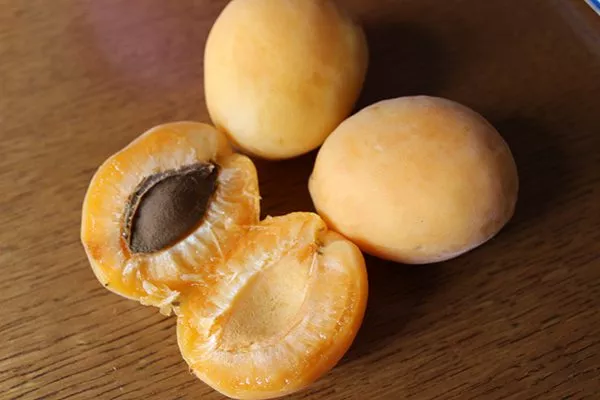
- pulp color – yellow or orange;
- structure – dense and fleshy;
- the stone is small in size and easily separates from the juicy pulp;
- the taste of the pulp is more sweet, but there is a slight sourness and notes of pineapple;
- The kernel is sweet and therefore used as food.
Resistance to drought and frost
The Shalah hybrid is characterized by high drought resistance, but on the other hand, without constant watering it is impossible to achieve a normal harvest.
The tree easily overwinters without cover at temperatures of -20-25 degrees Celsius, making it suitable for planting in central Russia. In other regions, trunk wrapping is required.
How does it pollinate and bloom, when to harvest?
Shalakh flowers are bisexual, but despite this, the plant is considered self-sterile, so the presence of pollinating trees and insects is essential. However, even this is not enough to achieve very high yields, so artificial pollination is recommended.
For pollination, you'll need a soft brush (a toothbrush can be substituted). Use it to collect pollen from the male flower and transfer it to the female flower. Experienced gardeners recommend repeating the process 2-3 times—during budding, during active flowering, and after flowering.
The first flowers appear at the very beginning of summer, and in hotter regions, as late as late May. However, if weather conditions are unfavorable, budding can occur as late as early July.
The fruits ripen quickly—in just three weeks—so harvesting begins in late June. However, in the south and in Armenia, it's already around the 10th of June.
Features of fruiting, harvesting and yield
The minimum yield from one tree is 100 kg, but with artificial pollination and suitable weather conditions, a higher level of 130-200 kg can be achieved.
To ensure maximum fruit production, fertilizing, timely watering, and pruning are essential. The tree's age is also important—the older it is, the more fruit it produces.
Fruiting begins 4-5 years after planting, but fruit can appear much earlier. Despite this, experts recommend shaking off or plucking flowers during the first three years to prevent fruiting. This practice will allow for high yields in the 4-5th year, as the tree will have matured sufficiently over the years.
The fruits fall to the ground quite easily, so shaking the branches is used when harvesting. To prevent the fruits from cracking or bruising when falling, gardeners stretch a large blanket under the tree.
Harvesting nuances:
- If the fruits are needed for fresh consumption within a week, the fruits can be harvested when they are technically ripe;
- If transport or storage for 2-4 weeks is required, harvest the crop one week before full ripeness.
Ripening isn't uniform, as the fruits on the lower tier of the tree ripen last. This is due to the lesser sun exposure on these branches.
Application of fruits
The Shalakh Pineapple apricot has a high sweetness and a very slight tartness, making it ideal for making preserves, jams, compotes, and juices, as well as pie fillings, salads, sauces, and dried fruit. This variety is rich in micronutrients and vitamins, making it recommended for those with cardiovascular issues.
The fruits have a positive effect on skin health, immunity, and more, but diabetics should avoid overconsumption. To meet the daily requirement of vitamins C, B, and A, as well as iron, iodine, potassium, phosphorus, calcium, and magnesium, it is sufficient to eat 250-300 grams of fresh or dried fruit per day.
Pros and cons of the variety
The Shalah hybrid has enjoyed great popularity among gardeners and consumers for several centuries.
How to plant an apricot?
The Shalah apricot can be planted in two ways: from a seedling or from a stone. Each method has its own unique characteristics. If grown from seed, a seedling will only appear after a couple of years, and the characteristics of the mother tree are unlikely to be preserved. Seedlings quickly take root and begin bearing fruit actively after four years.
Planting conditions and terms
Shalakh trees are planted in the spring, when temperatures stabilize at 12-15 degrees Celsius. This can also be done in the fall, but be sure to plant them 1.5 months before the expected frost, to allow the seedling time to establish itself in its new location.
Choosing a planting site
The optimal site for high yields is sunny, as sunlight enhances the sweetness and unique flavor of the fruit. This also allows them to ripen faster. However, there are other factors to consider:
- the groundwater level from the surface of the beds should be at least 2 m, otherwise the root system will be subject to rotting;
- the type of terrain is elevated and windless, so trees can be placed even near buildings and fences;
- acidity – from 7.0 to 7.5 pH;
- The soil should be loamy or sandy, black soil, so that oxygen can easily penetrate into it, and water can quickly seep through and not stagnate.
Selecting and preparing a seedling
To successfully root planting material, you need to learn how to select the right seedling. It should be no more than two years old and about 80-100 cm tall. It must have leaves and living buds, as well as a root collar or grafting site. The root system, as well as the aboveground part, must be developed and healthy.
In the southern regions of Russia, planting material does not require special preparation, but in cooler climates it is better to do the following:
- To strengthen the roots and make them grow faster, you can use root formers (Epin, Heteroauxin, Kornevin have proven themselves to be effective);
- The above-ground part is shortened by 1/3 of its length, due to which the shoots will begin to grow;
- All damaged branches and roots must be cut off, after which they are treated with wood ash for disinfection;
- Immediately before planting, it is better to lower the root system into a clay slurry based on manure.
Site preparation
You can prepare the site for planting a seedling a couple of weeks before the main work. To do this, consider the following algorithm:
- Clear the area of branches, leaves, and other debris.
- Dig planting holes. They should be about 70 cm deep and in diameter.
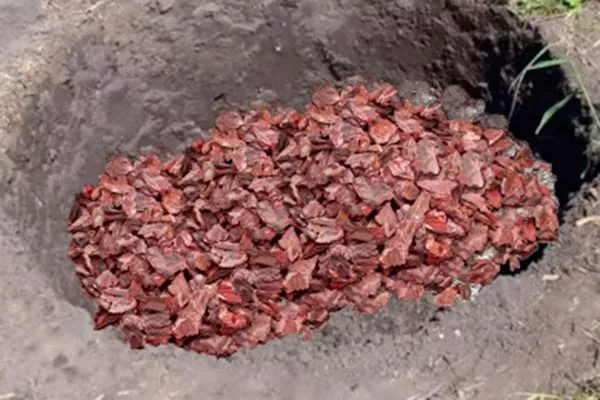
- Place a drainage material layer of 15-20 cm on the bottom.
- Prepare a fertility-boosting mixture. To do this, take 1 kg each of lime (reduces acidity and disinfects) and wood ash, add about 6-7 kg of humus or rotted manure, 70-80 g each of potassium salt and superphosphate.
- Mix thoroughly and add 1/3 of the soil from the hole (preferably the top layer).
- Mix again and place into the hole.
- Pour in 20 liters of warm water and cover with plastic wrap.
- Two weeks before planting, carry out deep digging of the area to a depth of 40-50 cm.
- Add organic fertilizers at a rate of 10 kg per 1 m².
- Test the soil for acidity and add lime if necessary to adjust the pH.
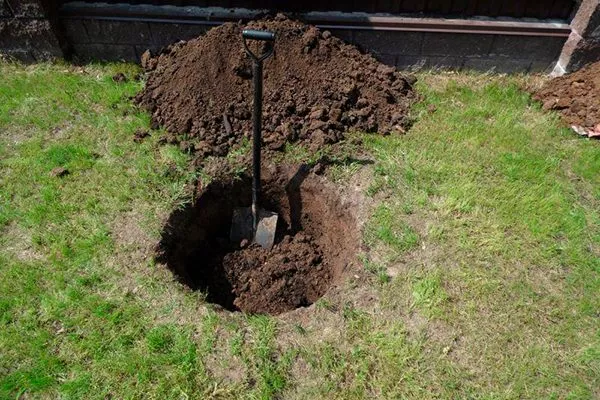
In 2-3 weeks the soil will settle and become saturated with useful elements.
From the bone
For seed planting, it's important to select high-quality seeds from fully ripened fruits. These should be the largest specimens with a distinct apricot aroma. The planting process is as follows:
- Rinse the seeds under running water.
- Dry them and put them away for storage until December.
- In winter, place the planting material in warm water for 24 hours.
- Then soak the seeds in regular hydrogen peroxide or a pink potassium permanganate solution for 5-7 minutes. This will disinfect the seeds.
- Place the seeds on the bottom of a plastic cup, which should be covered with polyethylene or cling film.
- Place the seedlings in the refrigerator. However, keep in mind that mold may form during storage, so check the seeds periodically and, if necessary, soak them in hydrogen peroxide again.
- Around April, prepare a fertile, loose substrate. By this time, small sprouts should appear in the seeds. You can use a general-purpose store-bought soil or create one from equal parts topsoil, sand, and humus.
- Place the soil mixture into containers and water.
- Plant the seeds deep and cover the pots with plastic.
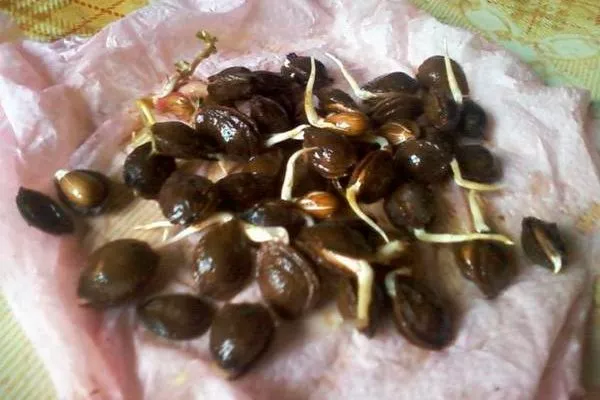
In the fall or a couple of months later, you can plant them outdoors. However, during this period, monitor the soil's moisture level and open the plastic film for ventilation.
From a seedling
Planting seedlings is much simpler. Follow these instructions:
- Remove the cover from the planting hole.
- Remove the soil that was laid.
- Mix thoroughly and pour some into the hole, making a mound in the center.
- Place a wooden peg almost in the center.
- There is a sapling nearby.
- Spread the roots to the sides.
- Fill with the remaining substrate and compact the surface.
- Tie to a support and water generously.
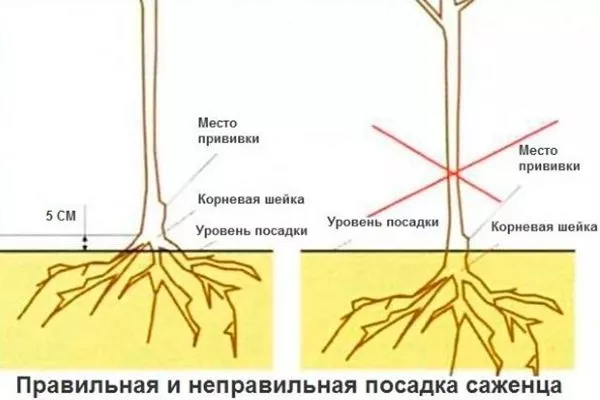
It is advisable to lay down a mulching material that will retain heat and the moisture level necessary for the young tree.
Care Features
The Shalah apricot variety is easy to care for, so even a novice gardener can handle it. Simply monitor the soil moisture, fertilize regularly, and prune the trees regularly.
Pruning and crown shaping
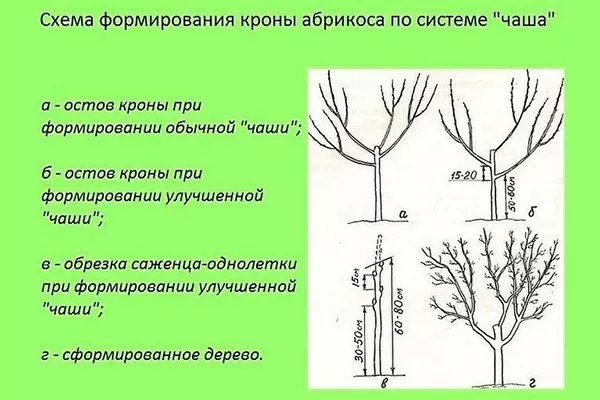
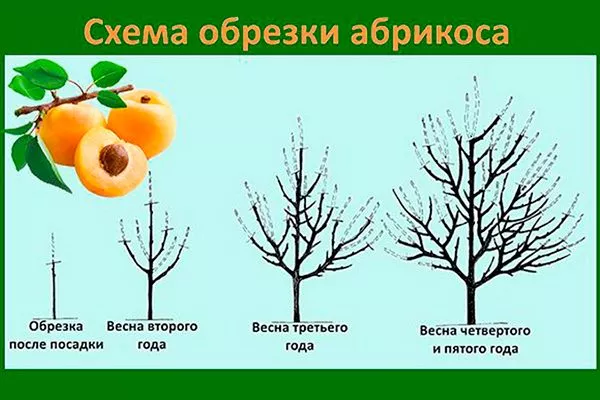
First and foremost, sanitary pruning is performed twice a year, removing branches that are too thin or damaged. Branches that have dried out over the summer or rotted over the winter should not be left. Proper tree shaping is also important, and this is done during the first five years according to the following schedule:
- The following year after planting, you should prune back last year's growth—slow-growing branches by 1/3, and fast-growing branches by 1/2. Alternatively, you can prune the shoots completely, leaving only the four strongest and healthiest ones.
- In the third year in the spring, the same formation is carried out, but on the second tier.
- In the summer or at the end of May each year, pinching (pinching) is carried out, for which the upper shoots of this year are shortened by 20 cm.
Watering
If the summer is very dry, you'll need to water the trees 3-4 times a month, and twice a week in the year of planting. Under normal weather conditions, watering four times a year is sufficient:
- during flowering;
- when activating shoot growth;
- 10 days before fruiting;
- before wintering.
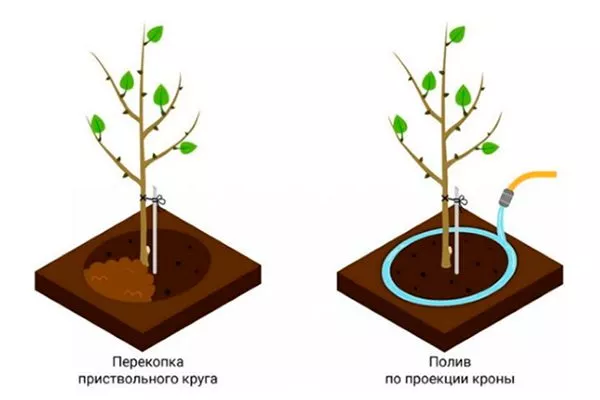
Typically, young trees require about 10-20 liters of water, and mature trees require 40-5 liters. Particular attention should be paid to the final watering, which is a moisture-recharging watering. Keep the following points in mind:
- 20 liters of water are added under a young tree;
- for adults – from 120 to 200 liters.
Moisture charging is necessary to shift the timing of sap flow and eliminate the risk of damage to the bark.
Whitewash
Whitewashing is done twice a season—in early spring and fall. The application of lime and other solutions prevents tree infections and prevents insects from moving along the trunk. It's important to cover a significant section of the trunk—right up to the beginning of skeletal shoot growth.
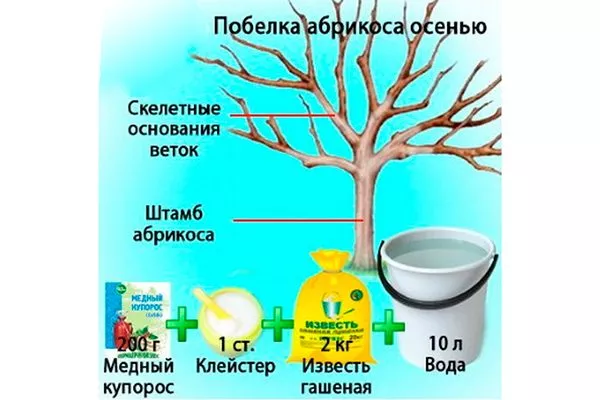
Whitewashing rules:
- First, clean the trunk, removing any overgrown moss, old peeling bark, and lichen.
- Afterwards, treat the soil with iron or copper sulfate (3%) and repair any damage. You can use special gardening compounds or regular clay for this purpose.
- Make a lime mortar by mixing lime or chalk with water. Add wallpaper glue (50-60 g) or silicate glue (350-400 g) to 10 liters of the mixture.
The trunks need to be whitewashed with a soft, special brush. Try to get into all the cracks, especially the large ones.
Top dressing
Without additional fertilizer, the trees' immune system is significantly weakened, causing them to become ill. However, during the first year of planting, apricots should not be fertilized; after that, follow these steps:
- in early spring, use 2 tablespoons of urea per 10 liters of water;
- in autumn – 7-9 kg of humus or other organic matter will be required per 1 sq. m.
You can purchase special mineral complexes and use them according to the instructions.
Preparing for winter
Preparatory procedures are standard: sanitary pruning, moisture replenishment, fertilizing, and whitewashing are necessary. However, organic mulching is also necessary. Young seedlings (up to 4 years old) need to be covered, as they are not yet fully established. Spunbond, agrofibre, and similar materials are used for this purpose.
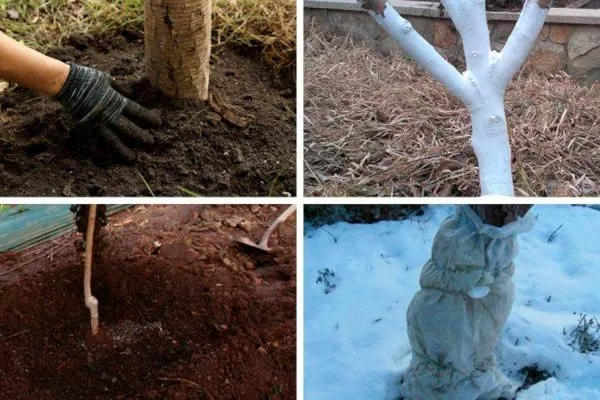
In harsh climates, mature trees are covered with spruce branches or wrapped in non-woven fabric. To protect against various rodents, chain-link fencing is installed around the trunk.
Diseases, pests and their control
Shalakh apricot trees are extremely rarely affected by pests and diseases—only in the presence of nearby infected crops and poor agricultural practices. What might happen:
| Problem | Signs | Methods of control or treatment | Prevention |
| Leaf roller | Fruits, leaves, and buds become deformed. Web-like threads are found on the foliage. | Insects are removed manually, and trees are treated with Fitoverm or Bitoxybacillin. Chemical treatments include chitin inhibitors and pyrethroids. | It is important to remove old bark in the fall, whitewash, and use Profilaktin when the buds open. |
| Verticillium wilt | The leaves on the lower tiers of trees are affected, resulting in the death of the leaf blades and the development of infectious chlorosis. | It is necessary to spray with 3% Bordeaux mixture. | The soil should not be over-watered; pruning is necessary to prevent the crown from becoming too dense. |
| Valsa's mushroom | Orange growths form on the trunk and the tree withers. | Spraying is carried out with Champion or Switch. | It is important to avoid soil drying out and water stagnation; it is important to prune and loosen the soil. |
| Plum sawfly | Fruits and seeds become deformed and their development stops. | Damaged ovaries and fruits are cut off, the tree is sprayed with pyrethroids, biological pesticides, and organophosphorus fertilizers are added. | Whitewashing with copper sulfate and digging up the tree trunk circle in the fall are required. |
| Pest | Biological method | Chemical method |
|---|---|---|
| Leaf roller | Fitoverm, 2 ml per 10 liters of water | Pyrethroid-based insecticides |
| Plum sawfly | Bitoxybacillin, 50 g per 10 liters of water | Organophosphorus compounds |
Tips and recommendations for growing
Shalakh has been popular around the world for many years, so gardeners strive to make caring for the plant easier. They're happy to share their tips:
- To prevent rodents from gnawing the bark, a bridge-type graft must be made;
- If young seedlings have not yet become woody by autumn, additional feeding with potassium monophosphate (on the leaves) is carried out;
- In autumn, it is better to remove mulching materials from the root collar and treat it with varnish mastic - this will prevent moisture from accumulating and the tree from rotting.
The Shalakh apricot variety not only boasts unique flavor but also boasts a very high yield. It's easy to transport over long distances, but only if the fruits are harvested before they're fully ripe. In Eastern countries, dried apricots and dried plums are made from these fruits. The key is proper care and avoiding mistakes in farming practices.