
Growing the Saratov Rubin apricot is a successful and promising activity for gardeners in various regions, from warm southern climates to moderately cold central Russia. This variety boasts high yields, excellent frost resistance, and resistance to fungal diseases.
Breeding history
The Saratov Rubin apricot is the result of the work of breeder A. M. Golubev. The cross was a hybrid of the Manchzhursky variety and the Pharaoh apricot.
Description of the variety
The Saratov Rubin apricot has gained popularity not only among experienced gardeners but also among those just beginning to grow fruit trees. This is due to the excellent characteristics inherited from its "parents."
Characteristics of fruits and trees
| Name | Disease resistance | Ripening period | Fruit size |
|---|---|---|---|
| Saratov Rubin | High | Mid-early | 40-50 g |
| Golubev's Dessert | Average | Early | 30-40 g |
| Sweet tooth | High | Average | 35-45 g |
The growing plant exhibits vigorous growth, reaching a height of 4-5 m. The tree's crown is spherical, spreading, and not too dense.
Detailed characteristics of apricot:
- The bark is brown, rough to the touch. The straight branches are tan-brown and hairless.
- The leaves are small, broadly rounded, concave and pointed at the tips, shiny and smooth. The leaves are dark green, and the edges of the leaf blade form a serrated outline.
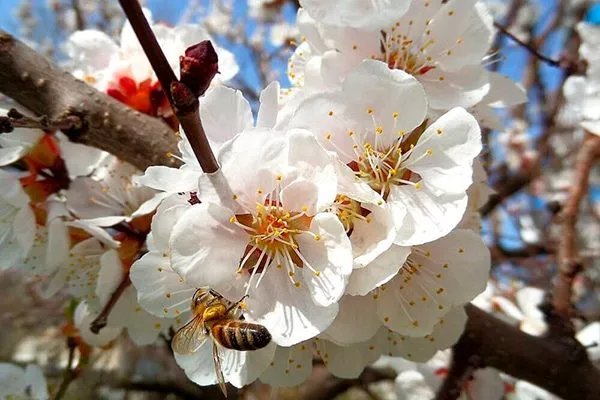
- The flowers are white and presented as single specimens.
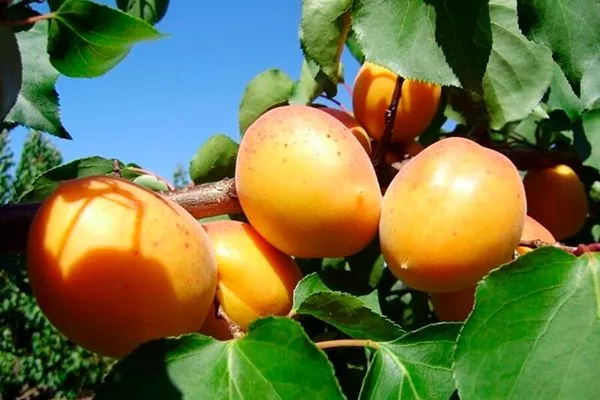
- The average apricot weighs 40-50 grams, although some can reach up to 70 grams. The fruit is elliptical in shape, with a vibrant orange hue and a distinctive carmine blush. The skin is not too rough, velvety and pubescent, peels easily, and is resistant to cracking.
- The apricot flesh is orange, juicy and tender, and has a distinctive aroma. The pit is small and easily separated.
Taste qualities
Saratov Rubin boasts a harmonious flavor, combining tart and sweet notes. The fruit's sugar content is 8.5%, imparting a pleasant sweetness. Fruit acids, at 1.5%, add a refreshing tartness.
The pectin content reaches 1.3%, which can contribute to the good structure of the fruit.
Each apricot contains 12.3 mg of ascorbic acid per 100 g, highlighting its nutritional properties. Experts rate this apricot variety's taste at 4.3 points.
Flowering period and pollinating varieties for the Saratov Rubin apricot
This stone fruit tree is partially self-fertile, so it's recommended to grow apricots of other varieties nearby as pollinators. To ensure a bountiful annual harvest, it's recommended to plant nearby apricots of the Dessertny Golubeva and Lakomka varieties, which can serve as pollinators.
Ripening and fruiting
The plant begins to produce fruit 3-4 years after planting. It belongs to the mid-early ripening category, with apricots reaching full maturity in mid-July. Harvesting begins slightly earlier, in the second ten days of July, when the fruit reaches optimal harvesting maturity.
Productivity
The Saratov Rubin fruit tree yields approximately 120 kg of fruit per tree. These trees yield an impressive yield of up to 338 centners per hectare. This demonstrates the variety's high productivity and commercial viability.
Growing regions
Apricots are suitable for growing in the temperate latitudes of Russia and other regions with similar climates. They are especially popular in the Saratov, Astrakhan, and Volgograd regions, as well as in Kalmykia and the North Caucasus.
Application of fruits
The resulting harvest is suitable for various purposes: it can be eaten fresh, or used to make preserves for the winter, such as jam, preserves, compotes, pastilles, and dried apricots.
Pros and cons of the Saratov Rubin variety
As a result of long-term research, scientists from Saratov succeeded in producing a strong, fruit-bearing plant with a number of advantages.
Landing rules
Planting a fruit tree isn't particularly difficult. Even a novice gardener can handle the process.
Location and soil requirements
To ensure full development and abundant fruiting, provide the plant with sufficient space. This variety should be at least 4 meters away from tall trees. Saratov Rubin thrives in a variety of soil types, but prefer light, breathable soils with a neutral or slightly alkaline pH.
For heavy soils, add sand; for poor soils, add humus; and for acidic soils, add lime or chalk. Wood ash is a universal fertilizer. When choosing a planting site, choose a sunny, open area, well protected from strong winds.
- ✓ The soil pH level should be strictly within 6.5-7.5 for optimal nutrient absorption.
- ✓ The depth of groundwater is at least 2 meters to prevent rotting of the root system.
Planting dates for Saratov Rubin apricot
In areas with cold winters, plant seedlings in early spring, as soon as the snow melts and the soil warms above 13°C (55°F), provided that sap flow has not yet begun. In southern Russia, it is preferable to plant in the fall, after all the leaves have fallen, approximately 30 days before the first frost. This will give the young trees time to root and establish themselves before winter sets in.
Good and bad neighbors for apricot
The active development and fruiting of apricot trees is closely linked to the surrounding vegetation. The influence of neighboring plants can have a beneficial effect on the overall health of this stone fruit and its yield.
Undesirable neighbors for apricot include:
- cherries;
- peaches;
- apples;
- pears;
- walnuts;
- raspberry and currant bushes.
Consider spring flowers such as primroses, tulips, or daffodils as favorable neighbors for apricots. Perennial grasses grow well in the shade of the tree's canopy.
How to select and prepare planting material
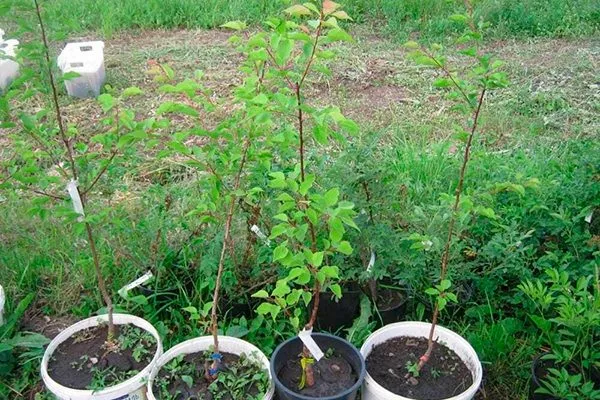
For planting, use one- or two-year-old grafted seedlings. Purchase them from reputable specialist stores to avoid the risk of receiving a wild plant instead of the desired one.
When choosing plants, consider the following criteria:
- Root system: healthy, strong, without damage or signs of rot.
- Bark: absence of visible damage, cracks, signs of disease or presence of pests on the main stem and shoots.
- Height: It is optimal to choose seedlings up to 80-90 cm in height.
To prevent damage to the root system during transport, wrap it in damp moss or peat. Immediately before planting, soak the root system of the seedlings in a mixture of loam and cow manure, allow the mixture to dry, and then proceed with planting.
Planting diagram
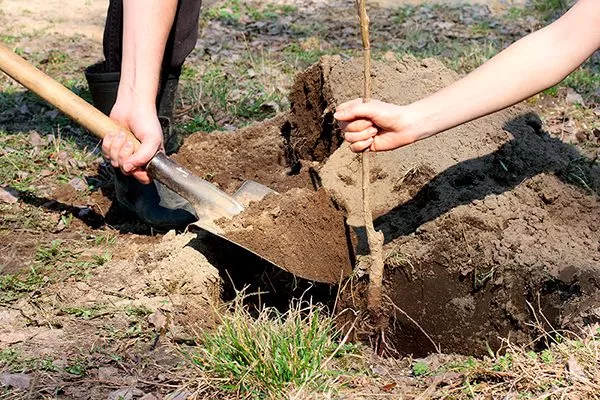
Preparing a hole for planting apricots in the fall involves digging a 70x80 cm hole. Then follow these instructions:
- Place a 5-6 cm thick drainage layer at the bottom of the hole, using fine crushed stone or gravel.
- Prepare a fertile substrate, including garden soil and compost in a 2:1 ratio. Add 2 kg of wood soil and 500 g of superphosphate. Mix all ingredients, and spread some of the resulting substrate evenly in the prepared hole, forming a small mound.
- Place the seedling, carefully spreading out the roots.
- Two weeks before planting, carry out deep digging of the area to a depth of 40-50 cm.
- Add organic fertilizers (humus or compost) at a rate of 10 kg per 1 m².
- Test the soil pH and adjust if necessary.
Further care of the Saratov Rubin apricot
To effectively care for apricot trees, it's essential to follow traditional methods. Regularly performing simple agronomic procedures is essential to ensure good fruit production and healthy growth.
Watering
Apricot trees have a strong root system, making them resilient to prolonged periods of drought. Adequate moisture is essential during key growing seasons, but the trees do not tolerate excessive moisture.

During dry summer months, water at least 4-5 times per season:
- If late winter and spring are dry, water the plants for the first time approximately two weeks before flowering. If natural moisture is abundant, watering is not necessary.
- Water again 10-14 days after flowering.
- Water the trees 2-3 weeks before the onset of autumn.
- Provide adequate water a few weeks after harvesting.
The last watering of apricots should be done in preparation for winter.
Feeding scheme
Ensuring adequate soil nutrients is key to fruit formation and foliage growth. Apricot trees respond well to a variety of fertilizing methods, including dry fertilizers, liquid fertilizing, and spraying.
Saratov Rubin feeding schedule:
- Before the buds begin to swell, spray the crown with a urea solution.
- Before flowering, evenly distribute 50 g of nitrogen and 70 g of ammonium nitrate around the trunk in the soil.
- In summer, apply foliar feeding to the leaves using a solution of complex mineral fertilizer.
- After harvesting, replenish potassium, nitrogen and phosphorus lost during the season.
Pruning and crown shaping
One of the key aspects of caring for apricot trees is pruning and crown shaping. Rapid tree growth leads to intensive development of foliage and shoots. Excessively dense foliage can reduce fruit size and unevenly illuminate the crown, which can lead to disease.
In summer, remove some of the young shoots to ensure the remaining branches produce a bountiful and better harvest. Perform this procedure in June, before the fruit begins to ripen.
In the first 3-4 years, young trees require crown shaping, which is carried out before the start of active sap growth:
- The following year after planting, shorten the main stem by a third, selecting 3-6 lateral shoots, which become the basis of the crown.
- With each subsequent formative pruning, shorten horizontal shoots by a third to stimulate growth, and cut vertical shoots by a quarter.
- At the same time, remove old, diseased, damaged shoots and branches with signs of disease and pests.
Subject mature trees to rejuvenating pruning, removing old fruit-bearing shoots to stimulate the formation of new young branches on which fruit will form.
Winter hardiness and need for shelter
The tree exhibits high winter resistance: fruit buds can withstand temperatures down to -36°C, and the wood remains strong even at -40°C. The plant is protected from winter thaws and spring frosts thanks to the late bud break and long dormancy period.
Towards the end of winter, treat the trunks and stems with lime to prevent sunburn. This variety is considered drought-resistant and can withstand extended periods without irrigation or rain.
Control of apricot diseases and pests
Saratov Rubin has excellent immunity and robust health, rarely suffering from disease. However, to avoid problems, preventative measures are necessary to prevent fruit drop and plant diseases.
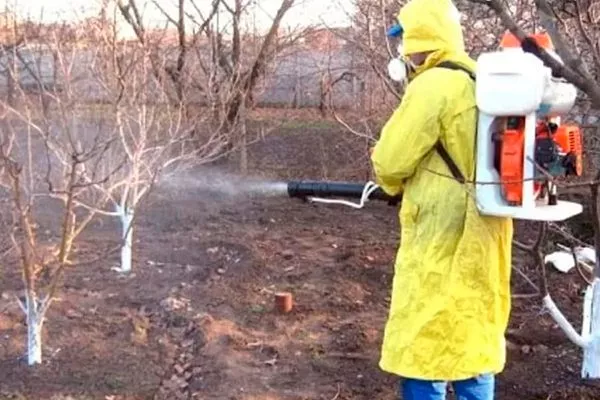
This apricot variety is distinguished by its resistance to fungal infections, even in high humidity. This characteristic reduces the incidence of diseases such as cluster spot and moniliosis, minimizing the use of chemical treatments.
Follow the recommendations:
- Spring processing. A solution of copper sulfate or Bordeaux mixture is commonly used. It prevents the development of coccomycosis, moniliosis, spotting, and clusteriosporiosis. Simultaneously, treat the crown with a urea solution. For preventative purposes, spray the apricot with Zircon.
- Treatment during the flowering period. Use fungicides to control overwintering insects and leaf-feeding pests. Colloidal sulfur-based products, Kinmix, and Ridomil are effective.
- Treatment during the period of growth and ripening of fruits. Apply Horus or sulfur-based products. This step is aimed at preventing the development of coccomycosis and powdery mildew.
- Autumn processing. The final treatment should be carried out with a concentrated urea solution after all the leaves have fallen.
- Late autumn processing. At this stage, treat the trees with a urea solution.
Harvesting and storage
The fruits ripen simultaneously, making it easy to harvest almost the entire crop at once. The process typically occurs in two stages: the harvested fruits are sifted, unsuitable ones are discarded, and the selected ripe apricots are used for food, while firm and slightly unripe specimens are preserved.
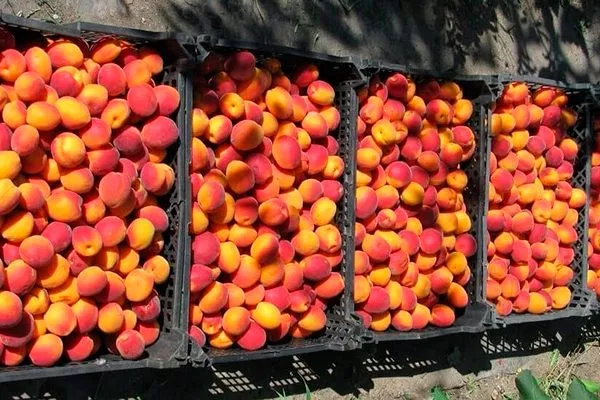
If the harvest needs to be transported over long distances, harvest apricots at the technical ripeness stage. For food and home canning, prioritize the ripeness of the fruit.
For long-term storage, use a room with a temperature of around 15°C and humidity of approximately 70%. Ventilated plastic or wooden crates are suitable storage containers. Wrap each fruit in paper. Apricots can be stored this way for up to two weeks.
Review of reviews
Modern breeders are working diligently to create new plants with improved characteristics. As a result of their efforts, the Saratov Rubin apricot variety has been developed, which is heat-loving and high-yielding. It exhibits high yields and a strong immune system when properly cared for.