
The Mira Ambassador is a mid-season peach variety that has won the hearts of Russian gardeners thanks to its high-quality fruit and resistance to spring frosts and powdery mildew. It is suitable not only for home gardening but also for commercial cultivation due to its excellent yield and low maintenance requirements.
Breeding history
This variety is an achievement of Crimean breeding. It was developed in the Nikitsky Botanical Garden thanks to the efforts of staff from the National Scientific Center of the Russian Academy of Sciences. The following scientists are credited with the development:
- V.K. Smykov;
- V. P. Orekhova;
- Z. N. Perfileva.
Description of the tree
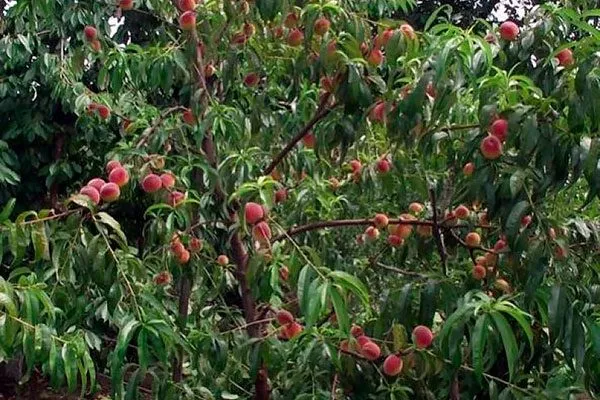
This peach variety is characterized by rapid growth. It begins bearing fruit in its third year. It is distinguished by the following characteristics:
- medium height (the tree reaches 3.5 m in height);
- spreading crown, moderately dense, having a rounded shape;
- leaves: medium-sized, lanceolate with a short pointed tip, green in color, with a shiny surface;
- Flowers: bell-shaped, consisting of 5 pink petals.
Characteristics of fruits
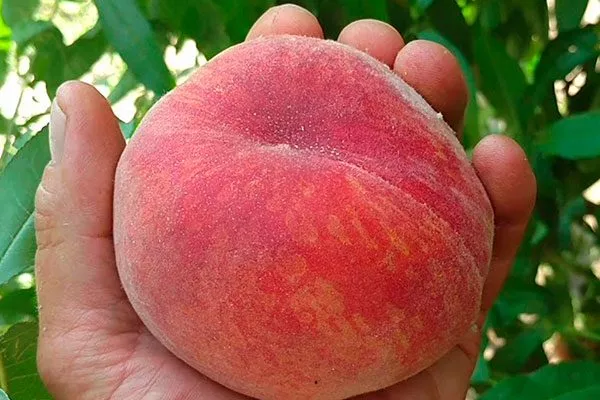
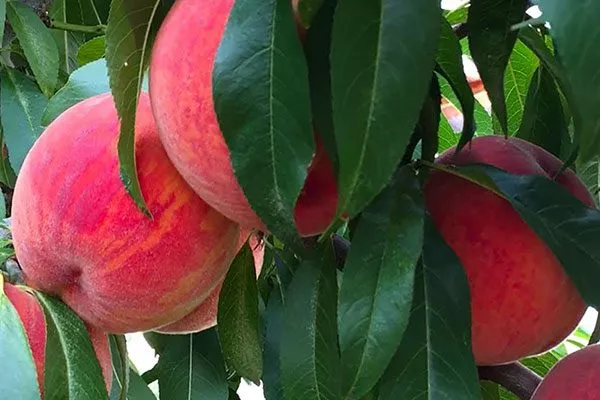
Ambassador of Peace is a large-fruited variety of the fruit crop. Its fruits are distinguished by their large size and marketable appearance. They have the following characteristics:
- weight - 220 g (the figure can vary from 180 g to 250 g);
- rounded shape;
- yellow in color with an extensive dark red blush, occupying up to 80% of the fruit surface;
- medium-thick skin with velvety fluff (it is easy to remove from an overripe peach);
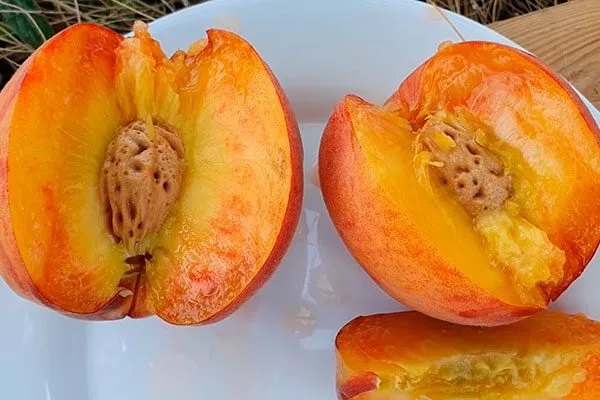
- pulp: yellow, dense, fibrous, juicy and aromatic;
- with a large stone that is difficult to separate from the pulp.
Taste qualities
The peaches have a pleasant, harmonious flavor. It's predominantly sweet, with a refreshing hint of tartness. This is due to the pulp's sugar content, reaching 12.1%, and acidity, 0.92%. The variety received a tasting score of 4.8 out of 5.
The Ambassador of Peace harvest is versatile in its uses. The fruits are eaten fresh and used in various delicacies:
- jam;
- jam;
- candied fruits;
- marmalade.
Housewives process them into juice and puree, preserve them, freeze them and dry them.
Vitamin composition and benefits
The fruits of the Ambassador of Peace are not only juicy and delicious, but also healthy. They are distinguished by their high content of vitamins A, E, K, C, and B. Their pulp is especially rich in ascorbic acid (9.2% of the total content).
Peaches are also rich in other valuable substances:
- pectins;
- essential oils;
- organic acids;
- macro- and microelements.
By eating fresh fruits, you'll get the maximum benefit. They offer numerous healing properties:
- strengthening the immune system;
- improving the condition of skin and hair;
- increasing vitality;
- anxiety relief;
- improved mood.
Ripening and fruiting
This garden crop is characterized by a medium ripening period. Buds appear late on the trees and bloom for a long time, ensuring abundant flower bud production. The first fruits ripen in the south in early August. The mass peach harvest occurs mid-month.
Productivity
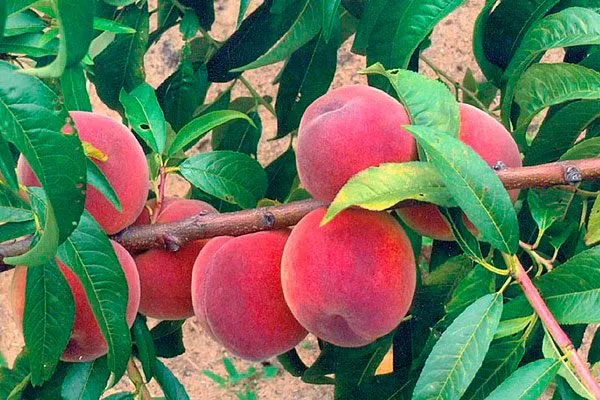
The variety is considered high-yielding. Its trees reach peak productivity at six years of age. The Ambassador of Peace's yield figures are as follows:
- One peach tree that is 6 years old yields 50-60 kg;
- Farmers harvest 8,000–10,000 kg from 1 hectare of planting.
Self-fertility and the need for pollinators
This variety is beloved by domestic farmers for its self-fertility. It doesn't require the presence of pollinators to produce abundant fruit. Planting a couple of Ambassador of Peace peach trees in your garden is enough to reap a decent harvest every year (you can find other excellent peach varieties here). here).
Rules and terms of planting
Plant peach trees in spring or fall. The chances of a successful transplant are high if there's no longer a threat of frost and the weather is consistently warm (above 10°C).
The most optimal timing for the procedure:
- end of spring;
- mid-autumn.
Choosing a suitable location
Find a suitable spot in your garden for planting a peach tree. It thrives in areas with the following characteristics:
- sun-drenched;
- protected from the winds;
- with loamy or sandy loam soil, light, loose, neutral or slightly alkaline;
- not swampy, with groundwater level of 1.5 m;
- located on the southern or southwestern side of the garden.
Do not plant peach trees near garden inhabitants:
- cherries;
- cherries;
- pear;
- walnut.
Preparation of planting material
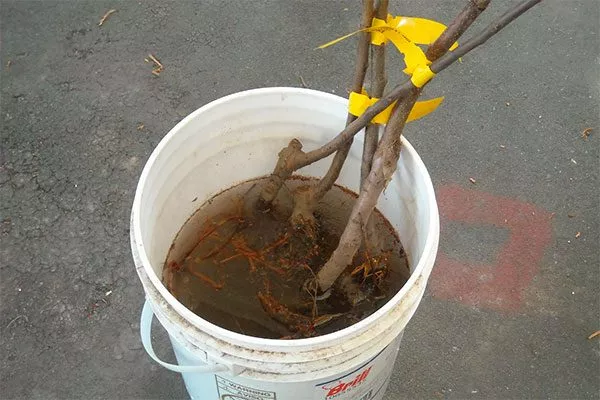
Choose your seedling carefully. Choose a specimen that meets the following requirements:
- healthy;
- without dry branches;
- with strong roots that are free from rot;
- two-year-old;
- with 3-5 branches.
Landing algorithm
Plant the Ambassador of Peace peach tree by following these step-by-step instructions:
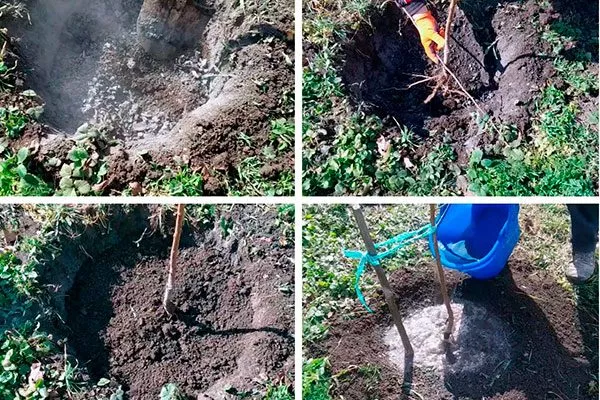
- Prepare a hole (depth – 0.6 m, diameter – 0.6 m). Line the bottom with a drainage layer of pebbles or crushed stone.
- Add humus (15 kg) mixed with potassium chloride (100 g), superphosphate (200 g), and wood ash (450 g). Add sand to heavy soil.
- Place a stake in the hole to support the seedling.
- Form a mound of soil mixture in the center.
- Place a seedling on top of the pot. Spread the roots outward and downward.
- Fill the hole and roots with soil. Firm the soil around the plant's trunk. When planting, ensure the root collar of the seedling is 3-5 cm above the ground.
- Tie the peach to a stake.
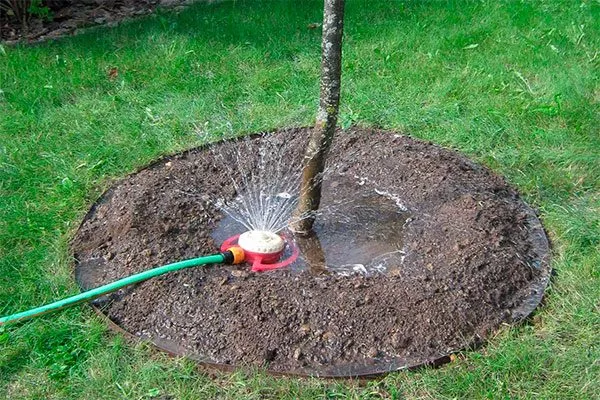
- Water the tree. Water consumption per tree is 20-30 liters.
- The next day, loosen the soil around the tree trunk and mulch it with peat. Apply a 6-8 cm layer of mulch.
Aftercare for peach
Provide your Ambassador of Peace seedling with quality care so it can thrive in your garden, grow, and delight you with a bountiful harvest of fruit. The peach requires the following care:
- GlazeThis garden plant loves moisture. Trees under 5 years old should be watered once every 7-10 days. The recommended rate is 15-20 liters of water per plant. Mature trees should be watered less frequently—once every two weeks. The recommended rate is 30-40 liters per tree.

- Loosening the soilThis measure will prevent the formation of an air-impermeable soil crust. Loosen the soil after watering the peach tree and after rainfall. Be sure to mulch it to retain moisture. Use sawdust, hay, grass clippings, or peat.
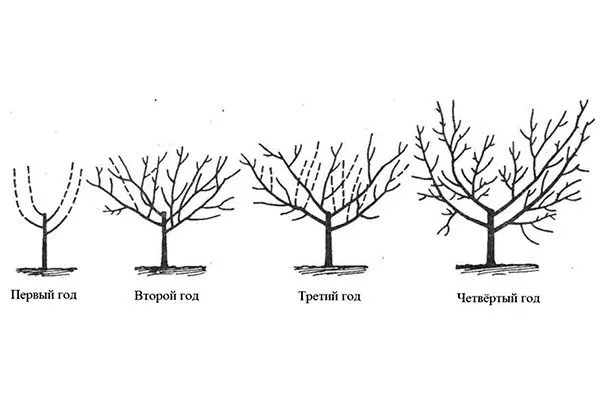
- TrimmingsThe tree requires crown shaping. This increases its yield. After planting, prune the lateral branches of the seedling, leaving 3-4 main branches spaced 10-20 cm apart. Regularly perform sanitary pruning, removing damaged, dry, and diseased shoots.
- Top dressingIf you grow garden crops on podzolized soil, periodically apply organic, phosphorus, nitrogen, and potassium fertilizers; on sod-podzolic soil, apply complex mineral compounds and organic matter.
If you planted your peach tree in well-fertilized soil, begin fertilizing it in its second or third year. Apply ammonium nitrate (75-80 g) or urea (50-60 g) in the spring. In September, fertilize the tree with superphosphate (45-55 g) and potassium chloride (60-70 g). - Protection from rodents during the cold seasonBefore winter, whitewash the peach tree trunk. To protect it from hares and mice, use roofing felt, agrofibre, or burlap. Wrap the peach tree in these materials.
Frost resistance and the need for shelter
The Ambassador of Peace is renowned for its winter hardiness. Its trees can withstand temperatures down to -23-28°C. They are resistant to spring frosts. Hardiness zone 5.
Thanks to its excellent cold tolerance and moderate drought resistance, this variety is suitable for cultivation in virtually any climate zone in the country. However, in regions with cold winters, it is necessary to insulate the plant's roots by hilling them up. It would also be a good idea to cover the area around the trunk with mulch.
A peach seedling requires more careful protection. Prepare it for winter after most of its leaves have fallen, following these steps:
- Mulch the tree trunk area with fresh organic matter (humus, manure). Apply a layer at least 10 cm thick.
- Whitewash the trunk.
- Wrap it in several layers of covering material.
Resistance to diseases and pests
Ambassador of Peace is resistant to powdery mildew and other diseases. If cultivation practices are not followed and the weather is unfavorable, it may become susceptible to mild cases. Preventative measures can help prevent this problem:
- in the spring before the buds open, treat the peach with Horus or Bordeaux mixture;
- After the tree has finished flowering, apply combination preparations;
- in the fall, spray the plantings with a fungicide or sulfur solution;
- When the leaves have finished falling, use urea or copper sulfate.
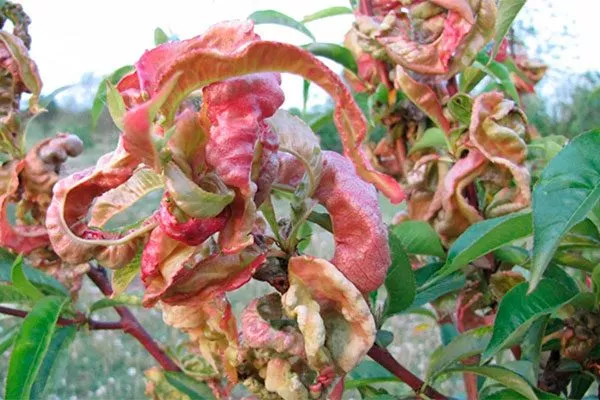
If the tree is affected by leaf curl, use the following preparations to treat it:
- Fast;
- Topsin-M;
- copper sulfate;
- Bordeaux mixture.
Peaches also require protection from pests, particularly aphids. In the spring, when the buds begin to swell, spray the tree with an insecticide such as Aktara, Decis, Iskra, or Confidor Maxi. Repeat the treatment several times throughout the season.
Advantages and disadvantages
The variety has won the love of domestic gardeners thanks to its advantages:
The Ambassador of Peace also has several disadvantages:
Reviews
The Ambassador of Peace peach deserves the attention of gardeners due to its low maintenance, strong immunity, large fruits, and excellent flavor. Simply follow standard cultivation practices to reap a bountiful harvest.