
The Ambassador of Peace peach is a good choice for those seeking high quality and reliability in gardening. This variety boasts excellent flavor, disease resistance, and excellent yields. Proper care is essential to maximize productivity and build a strong immune system.
Introduction to the variety and characteristics
This variety stands out for its large fruits, excellent flavor, versatility, and ease of care. However, some drawbacks should be considered: the branches are quite fragile, and strict pruning guidelines are essential.
Information about origin
It was developed by plant breeders from the National Research Center of the Russian Academy of Sciences, Z. Perfileva, V. Orekhova and V. Smykov, who combined the best qualities of several subspecies.
Officially registered in the State Register at the end of 2014, it is successfully cultivated in both southern and northern regions.
The appearance of the tree
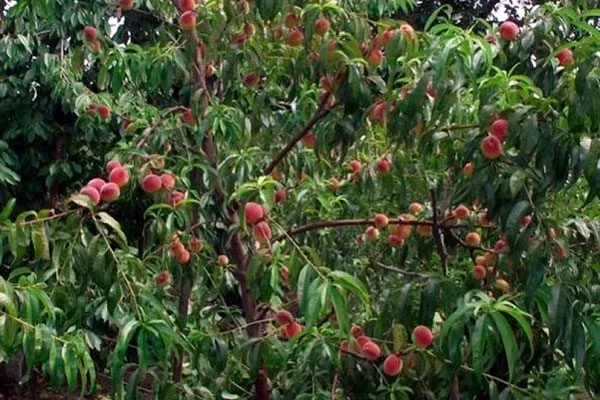
The plant is medium-sized, reaching up to 6 m in height. It has a rounded, spreading crown. The branches are covered with grayish-brown bark. The shoots are densely covered with small, lanceolate leaves, tinted green. The foliage has a glossy surface and a pointed tip.
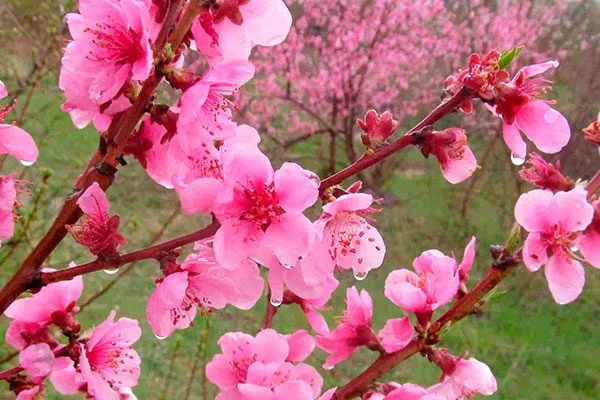
This variety is characterized by a long flowering period, with buds forming on almost every branch. The flowers are single, with five bright pink petals resembling a bell. The root system is moderately developed, allowing mature trees to successfully withstand snowstorms, heavy rains, and winds.
Fruits and their taste characteristics
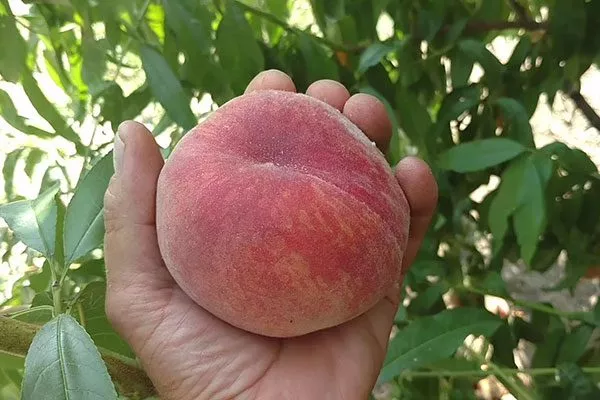
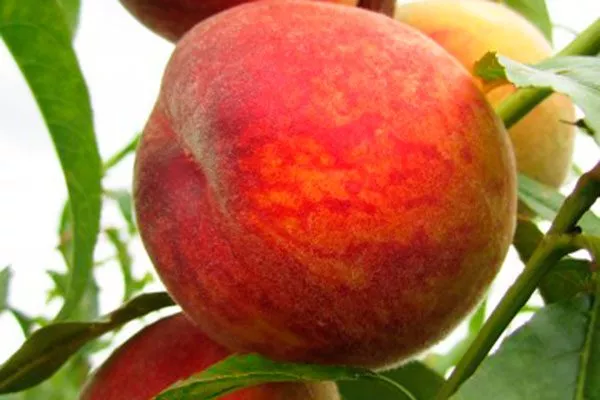
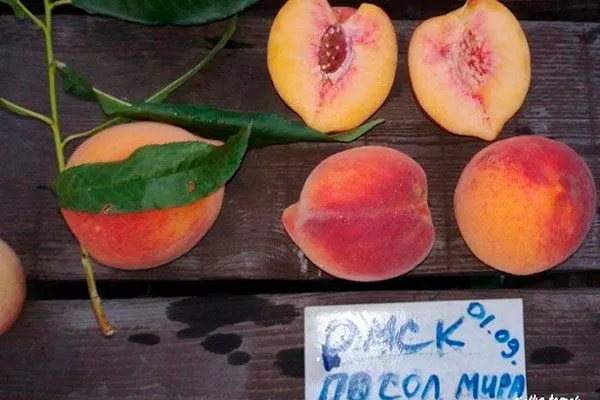
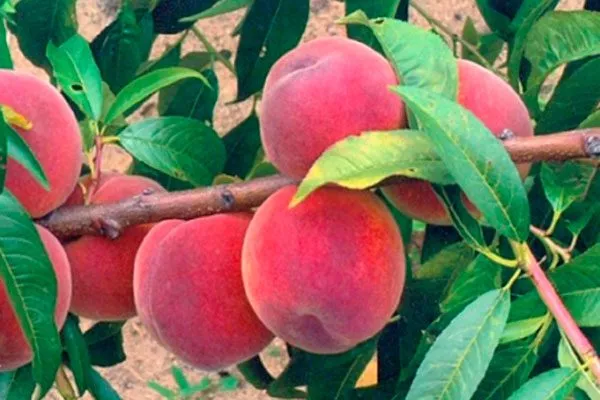
The Mira Ambassador reaches technical maturity fairly early. Its fruits are large, weighing up to 250 g, round, and yellow. The skin is velvety, with localized pubescence and a slight pinkish blush. When ripe, the skin peels off easily. The flesh is juicy, fibrous, dense, and moderately sweet.
Ripening period, self-fertility and yield
The crop is characterized by rapid ripening and abundant fruiting. The first fruits appear on the tree in the fourth to fifth year of life, reaching technical maturity in midsummer. Trees over six years old yield up to 50 kg of ripe fruit, and the yield per hectare is 80-100 centners. The yield increases with age.
Subtleties of cultivating the variety
Growing peaches doesn't require any special knowledge or skills, so even a novice gardener can handle it. The key is to follow these helpful tips.
Rules and terms of planting
Plant the seedling outdoors in the spring, having carefully checked the weather forecast for the month ahead. Plant at temperatures no lower than 5°C, during the period of active sap flow. Autumn planting is also acceptable, as the plant requires less energy, minerals, and water to grow.
Basic rules of planting:
- choosing the optimal location for growing peaches;
- preparation of planting material, holes and soil;
- correct planting of seedlings in compliance with agricultural requirements.
You can achieve high yields and strong immunity by observing these points.
Buying seedlings
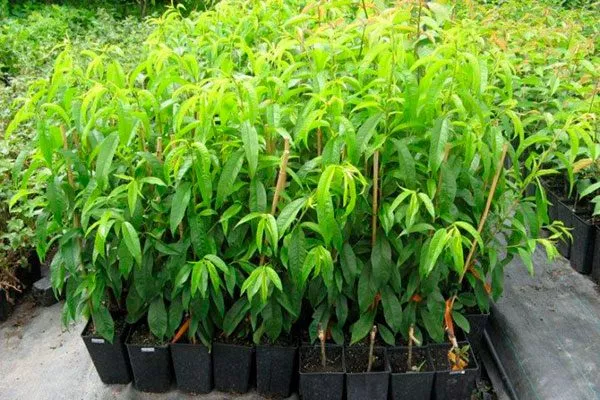
Choose high-quality planting material. Buy seedlings from trusted suppliers or nurseries.
- ✓ Check that the supplier has a quality certificate.
- ✓ Pay attention to the condition of the root system: it should be well developed, without signs of disease.
Basic rules for selection:
- Carefully inspect the root system. The main and adventitious roots should be strong and healthy, with no signs of pests, mold, or rot.
- To check the root's viability, perform a simple test: make a small cut on any shoot and inspect the cut. The core should be white, and the fusion should be smooth.
Preparing the landing site
Carry out preparatory work approximately six months before planting. Dig planting holes measuring 80 x 100 cm, using a 4 x 5 m pattern. Fill the bottom of the holes with a mixture of black soil and humus (11-15 kg) with the addition of superphosphate (250-350 g). Form a special mound in the hole for the subsequent planting of the seedling.
Planting diagram and process
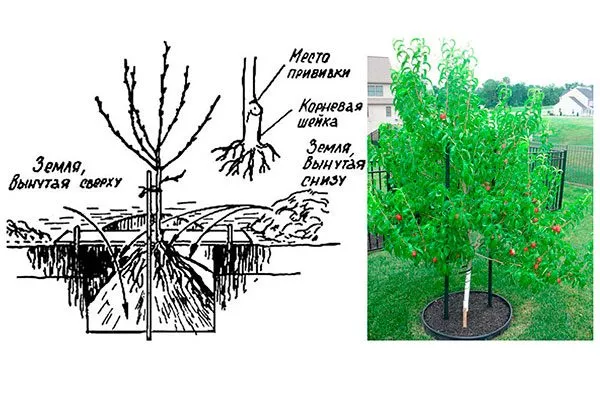
Place drainage material, such as broken brick or crushed stone, into the prepared hole. Cover with a thin layer of soil and make a small mound at the bottom.
Then follow the instructions:
- Place the seedling, carefully spreading its roots along the bottom.
- Fill the hole with the remaining soil, placing a wooden or metal stake next to the seedling to support it. The stake should be approximately 1.1 m high.
- Compact the soil.
- Make a hole with low sides around the trunk.
- Water the soil generously, using 15-20 liters of water per tree.
- After the moisture has been absorbed, tie the seedling to the support with twine to protect it from the wind and direct its growth.
Dig and mulch the soil using manure, sawdust, or peat, to a layer about 10 cm thick. A few days after planting, re-water the plant.
Further care of the peach
The Ambassador of Peace peach doesn't require complex care. However, to ensure healthy growth, sustainable development, and long-term, high-quality fruiting, certain conditions must be created.
Watering mode
Provide the tree with regular and abundant watering to ensure a high yield and excellent fruit quality. During the active growth period, water the tree approximately 3-4 times a month in the summer. Increase the watering volume 4-5 weeks before harvest to improve fruit weight while maintaining flavor.
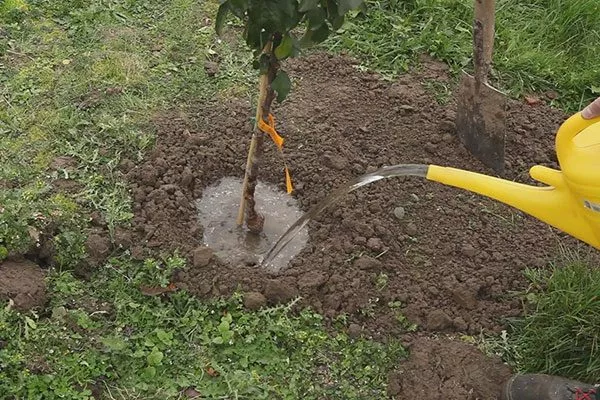
Irrigation before harvest is not recommended, as it can make the peaches watery and less sweet. If rainfall is low in spring and winter, provide additional water in the summer. A mature peach tree requires 20-40 liters of water, moistening the soil to a depth of 70 cm to ensure moisture reaches the roots.
Tree fertilizing
To ensure the full development and fruiting of the crop, it is important to properly feed it. Basic feeding recommendations:
- Early spring (late March - early April) Fertilize with nitrogen fertilizers. This will promote active growth of shoots and leaves. Urea- or ammonium nitrate-based fertilizers are suitable. Approximate dosage: 20-30 g per 1 sq. m.
- Before flowering begins (late April - early May) Apply phosphorus-potassium fertilizers. They promote the formation of flower buds and improve fruit quality. Use complex fertilizers or superphosphate and potassium salt. Dosage: 30-40 g per 1 sq. m.
- After flowering (at the beginning of June) Apply potassium fertilizer. This is important for strengthening the fruit and increasing its sugar content. Potassium salt or potassium sulfate are suitable. Dosage: 20-30 g per 1 sq. m.
- In the middle of summer Use a complex fertilizer containing nitrogen, phosphorus, and potassium. This will help maintain plant health and improve yield. Use universal complex formulations.
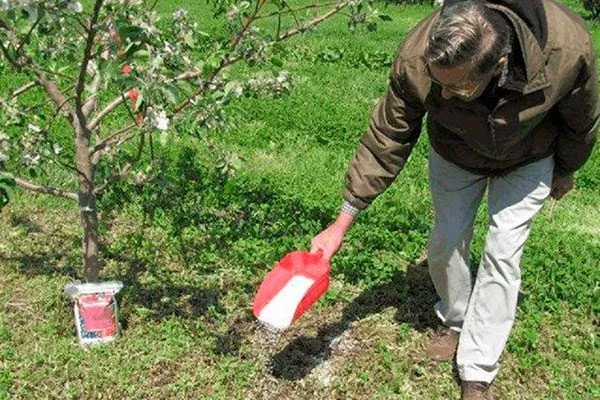
After harvesting (in September), apply a final fertilizer with phosphorus and potassium. This will help prepare the plant for winter and improve root development. Approximate dosage: 30-40 g per square meter.
Features of pruning
This is a mandatory procedure to protect the tree from pests and diseases and to shape the crown, which facilitates development and harvesting. Provide minimal pruning for young trees: remove excess branches and green leaves in the fall. Perform this procedure in warm, sunny weather.
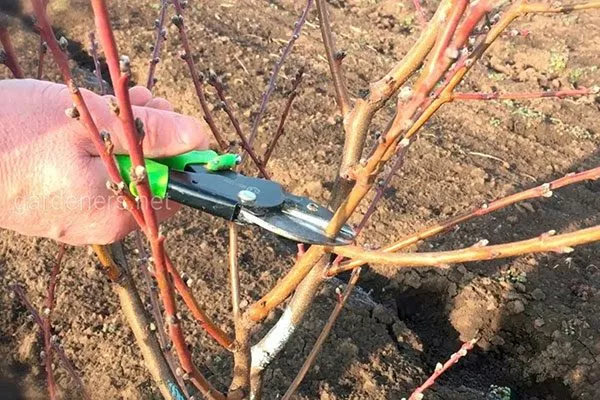
Formative pruning involves several stages:
- 2 years. Stimulating lateral branch growth. Trim the tops of the main stems so that the ends are level. Cut above outward-facing buds. Cutting above inward-facing buds will change the direction of branch growth.
- 3 years. Establishing semi-skeletal branches. Identify the strongest secondary shoots and shorten them to 45 cm, leaving a distance of 50 cm from the skeletal branch.
- 4 years. Planting the top pair of second-order branches. Leave the growing branches 15 cm from the top second-order branches. Shorten the remaining shoots, removing 8 groups of flower buds.
In subsequent years, continue regular pruning to maintain a well-formed crown and improve fruiting. Shorten young shoots to 10 cm and remove competing, weak, and spent branches.
Specifics of wintering
Despite the plant's high frost resistance, insulating the roots is important, especially in cooler regions. Use standard methods: straw, sawdust, burlap, and agrofibre. The plant is moderately tolerant of drought periods.
Protecting peaches from diseases and pests
The Ambassador of Peace peach can be susceptible to various pests and diseases, especially if the plant has been poorly cared for or if poor-quality seedlings were purchased. Even with good immunity, plants may be susceptible to the following problems:
- Leaf curl. It attacks crops in the spring when fungal spores reach the buds. Initially, the leaves form light green blisters, which eventually turn amber-red or brown. Eventually, the leaves turn black, dry out, and can spread to young branches and buds.
If left untreated, the plant may lose its foliage and die in winter. Immediately remove and burn affected shoots. Treat the plant with a 1% Bordeaux mixture solution, Abiga-Peak, or a 40% copper oxychloride solution, repeating the procedure four times at two-week intervals. - Monoliosis. It spreads rapidly in the spring when bees carry the fungal spores. It attacks shoots and leaves, causing them to wilt.
Remove diseased parts of the plant along with some healthy wood. Use fungicides such as Captan, Cuproxat, or Zineb. If the disease appears in summer, remove fruit and apply biological fungicides such as Fitoflavin or Fitosporin. - Clusterosporiasis. It appears as reddish-brown spots on the leaves, rapidly increasing in size. Without treatment, the disease affects shoots and bark.
Remove and destroy fallen leaves and affected plant parts. Use biological fungicides: Gamair, Mikosan-V, Planriz, Fitovlavin. - Powdery mildew. It appears as a powdery coating on leaves, shoots and fruits, which reduces yield and makes the tree more vulnerable to winter conditions.
Perform sanitary pruning, removing and burning affected parts. Treat with a colloidal sulfur solution (0.8%) when buds begin to swell and then after 2 weeks. Later, reduce the concentration to 0.6% and apply every 2-2.5 weeks. - Aphid. A small insect that sucks tree sap, often appearing alongside ants. Remove small populations mechanically or with a soap solution. If widespread, use systemic insecticides such as Confidor, Aktara, or Tanrek.
- Weevils. These beetles and their larvae damage leaves and buds. Use insecticides such as Decis, Operkot, and Calypso. Take preventative measures: remove fallen leaves, maintain watering frequency, and fertilize plants regularly.
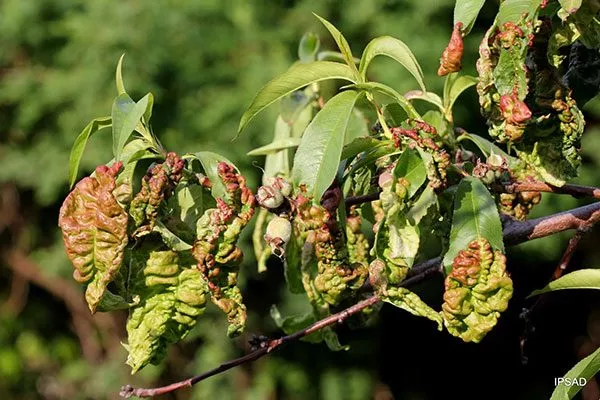
Carefully inspect seedlings for signs of disease and insects to begin treatment in a timely manner.
Harvesting and storage rules
Harvest the fruit when it reaches full ripeness, which usually occurs in late summer or early fall. The fruit should be well-colored and slightly soft to the touch. Avoid picking when it's still hard, as it may not ripen fully after harvesting.
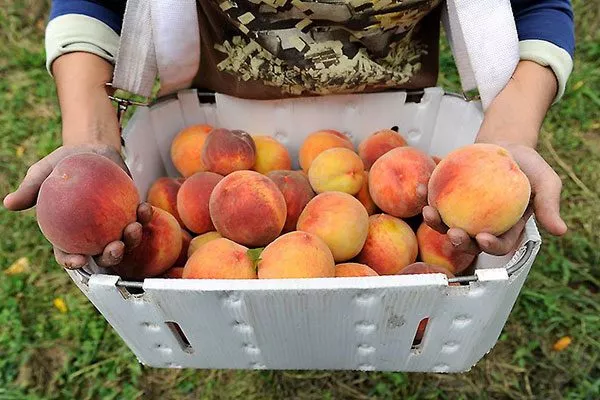
Use a knife or pruning shears to make a careful cut to avoid damage. Handle the fruit carefully to avoid crushing it, as its thin, delicate skin is easily damaged.
Follow storage recommendations:
- Carefully inspect and sort the fruit. Remove any damaged or spoiled fruit, as they can spread rot and disease to healthy fruit.
- Don't wash them before storing, as excess moisture can promote rotting. Store them dry, preferably at 0-4°C. Keeping them cool helps slow down the ripening process and preserve freshness.
- Use ventilated containers or wrap fruit in paper to prevent excess moisture and reduce the risk of rot.
- For short-term storage, place peaches in a plastic bag or container, then refrigerate.
For long-term storage, freeze the fruit. To do this, peel, cut into pieces, and pack in special bags. Use frozen peaches in various dishes and desserts.
Positive and negative qualities
The Ambassador of Peace peach has several advantages and some disadvantages. It's important to consider these before planting a seedling. Its advantages include:
Reviews
The Ambassador of Peace peach is a favorite among many gardeners in our country. This variety attracts even novices due to its low maintenance requirements and minimal care. It will delight you with generous harvests and demonstrate only positive qualities, provided simple cultivation guidelines are followed.