
Planting a peach tree in the fall may seem simple and easy, but in reality, it's not. The tree is very capricious and sensitive, and approaching frosts can be a major deterrent for farmers. However, by following a few simple rules, planting a peach tree in the fall will be easy and hassle-free.
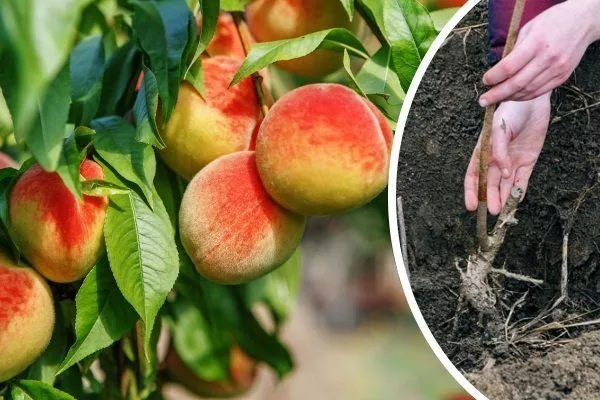
Benefits of Planting Peaches in the Fall
Many farmers swear by spring as the ideal time to plant a peach tree. Of course, if the tree is planted in spring, it will settle in well over the summer and fall, becoming accustomed and rooted, and gradually transitioning into winter dormancy. At the same time, the tree expends a lot of energy on new branches and foliage growth. As a result, root development slows.
One of the main advantages of autumn planting of fruit crops is that the seedlings are free from disease and insect attacks during the winter. The root system is strengthened, and in the spring, the plant quickly transitions to the growing season, beginning active growth and development.
But it's important to remember that if planted too late, the plant simply doesn't have time to adapt to its new location. As a result, it dies when cold weather sets in. That's why it's recommended to plant peach seedlings only in regions with long, warm autumns and mild, short winters.
When the first frosts arrive in October, planting should be abandoned.
Disadvantages of planting peaches in the fall
A serious drawback of planting peach trees in the fall is that it's impossible to accurately determine the timing. In this case, it's necessary to take climate conditions into account and plant well before the onset of frost. It's important to allow the seedlings to establish roots and prepare for frost before winter.
Ideal time for planting
Peach trees can be planted only after they have entered dormancy. Choose varieties that are ideal for the climate typical for your region.
Autumn planting dates for peaches in different regions and countries
It's recommended to plant trees in southern Russia, including northwestern and northeastern Ukraine, between September 5 and 15. Choosing this time also gives the tree enough time to establish roots before frost.
In the Krasnodar Krai, Crimea, and southern Ukraine, including Transcarpathia, planting is recommended no later than October 20. If winter arrives late, planting can be postponed until the first half of November, but no later.
In temperate climates, if a tree survives the winter and survives frost, it will likely not bear fruit in the first year. However, regular and proper care greatly influences this factor. Only trees grown in greenhouses and conservatories are guaranteed to bear fruit.
Selecting a seedling
The success of a peach tree planting directly depends on the quality of the planting material. Trying to cut corners on trees is strictly prohibited. To ensure a high-quality seedling and its successful establishment after transplantation, follow these tips:
- Purchase planting material only from nurseries or experienced suppliers.
- Choose a variety that has been specifically bred to grow in a particular region.
- Inspect the tree carefully to ensure there is no damage.
- Trees aged 2 years are ideal for planting.
- The height of the sprout should be about 1 m, the thickness is approximately 1.4-1.8 cm.
- The seedling should have 4-5 branches and full-fledged buds.
- Strong root system. Avoid buying single-root seedlings, as they may not survive transplantation.
- Do not take seedlings that show signs of root rot or wilted leaves.
- The green layer should be under the bark.
- ✓ The presence of mycorrhiza on the roots indicates good adaptation of the seedling to the soil.
- ✓ No mechanical damage to the bark and root collar.
Buy trees before you plan to plant them. When transporting, be sure to wrap the roots in damp burlap and a layer of plastic. About 24 hours before planting, soak the roots in water.
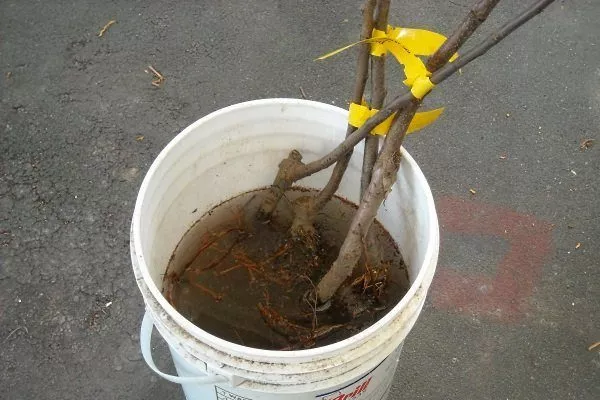
Experienced gardeners pour melted paraffin wax on the lower part of the tree trunk before planting. This provides additional protection for the seedling from rodents, cold, and sun.
Selecting a location on the site
When choosing the right location for planting a peach tree, pay attention to the following recommendations:
- Avoid planting the tree in damp areas or areas with constant cold drafts. Peach trees tolerate heat and short periods of drought very well.
- The southern part of the plot is ideal for planting peaches. It's important that this area isn't shaded by other trees, a fence, or a house. Peaches need plenty of sun, as they bloom before other fruit trees.
- It's best to protect the tree from the north with a fence or wall. Ensure there's plenty of space, as the peach will grow and develop a full crown, so there shouldn't be too many trees nearby.
- Lowlands are not suitable, since it is in such areas that the soil becomes waterlogged and cool air is constantly present.
- Groundwater should not be too close to the surface – at least 1.3-1.6 m. A small hill or elevation located in the south-eastern or eastern part is ideal.
- It is not recommended to plant peach trees near mature fruit trees that have been bearing fruit for several seasons, as they will have a negative impact on the young seedlings. Also unsuitable is an area where fruit trees previously grew, as the soil may contain waste products from their activities and pests that can destroy the young peach tree.
- Avoid planting in soil where nightshades and melons were grown. These plants may suffer from a variety of diseases that can negatively impact the seedlings or cause root rot.
Preparing the planting hole and soil
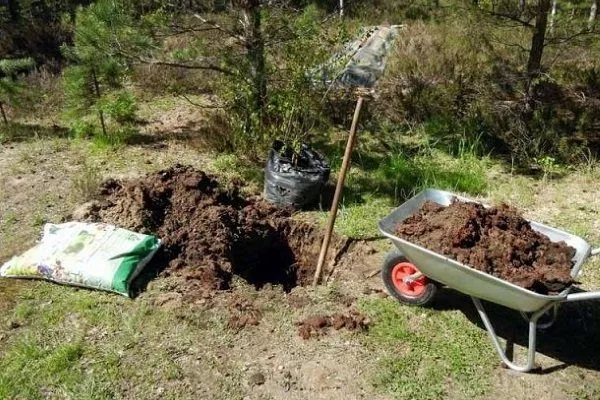
Prepare the site, starting with clearing it – remove all stones and other debris, including fallen leaves, and weed the area, removing any remaining roots and weeds. Do this approximately two months before you plan to plant the tree. Be sure to dig the soil several times, as this simple procedure helps oxygenate the soil.
It's recommended to pre-plant the area with grain crops or perennial grasses, adding various fertilizers to the soil. Do this several years before planting the peach tree. This will enrich the soil with valuable nutrients and minerals and eliminate various harmful elements caused by the decay of other plants.
If you're planting a peach tree in black soil, no additional fertilizer is required. Otherwise, add two buckets of well-rotted compost to the bottom of the planting hole, mixing it with a small amount of black soil beforehand. You can also use the following combination:
- rotted manure – 9 kg;
- potassium fertilizers – 60 g;
- ammonium nitrate – 85 g;
- superphosphates – 145 g;
- the top layer of soil that was removed from the planting hole.
Then add some wood ash and cover with a layer of black soil (at least 10 cm). Prepare planting holes and leave for 10-14 days.
At what distance should they be planted?
The peach tree grows tall and strong, with a spreading crown. Therefore, there should be sufficient space between trees to prevent them from crowding each other.
When planting, ensure there is at least 4 meters between trees and about 5 meters between rows. If you ignore this rule, neighboring trees will begin to crowd out the peach tree, which could ultimately lead to its complete death.
Depth of the planting hole
Prepare a hole at least 0.5 m wide, deep, and long. However, if the seedling is very large, the hole can be made larger.
To prevent future moisture stagnation in the soil, be sure to place a drainage layer at the bottom of the hole—for example, pebbles, expanded clay, or brick pre-cut into small pieces. However, in this case, be sure to increase the hole's depth by 20-30 cm.
Two ways to plant a peach tree
There are several ways to plant a peach tree. There are no specific rules, and you can choose whichever method suits you best.
Plant "on a cone"
This is the easiest and most common method for planting fruit trees. Simply follow these steps:
- pour 2 buckets of plain water into the prepared hole;
- when the liquid is absorbed into the soil, add fertilizer to the bottom;
- Place a seedling on top of the resulting mound, and straighten the roots along the slope so that they are at an angle of approximately 45 degrees;
- fill the hole with soil and compact it slightly;
- make sure that there are no air pockets left near the roots;
- water the tree with 1 bucket of plain water;
- when the water has been absorbed into the soil, mulch the area around the trunk with peat, humus, or crushed bark;
- Secure the seedling near a support so that it does not tilt during soil settling after planting.
Watch the following video about planting a peach tree using the "cone" method:
To plant "in the mud"
Using this method, you can plant a peach tree yourself, without any assistance. Here's what you need to do:
- pour humus (2-2.5 buckets) into the bottom of the planting hole and add plain water (1-1.5 buckets);
- after half of the water has soaked into the soil, add some fruiting soil (1 bucket);
- a liquid must form, into which the tree root is placed;
- the viscous substance independently holds the peach in the desired position;
- gradually fill the hole with soil and periodically pull the seedling up, which will help straighten the roots in the correct position;
- After filling the hole, water the tree again;
- Mulch the tree trunk circle – the thickness of the mulch layer should be at least 6 cm.
In the video below, a gardener provides an overview of planting a peach tree in the fall using the "into the slurry" method:
Possible mistakes when planting a peach tree
When planting peach trees, the following mistakes are most often made:
- Too much mineral fertilizer was added to the planting hole. This kills the beneficial bacteria that convert the fertilizer into a form the plant can absorb.
- Failure to prepare the planting hole in advance will result in the root collar being planted too deep. After planting, the soil will settle excessively, which will slow down the tree's proper development.
- It is important to choose the right one peach variety, which is suitable for growing in a specific climate zone. Such a mismatch could lead to the death of the plant in the future.
- Incorrectly chosen timing for planting a seedling leads to its death.
- Planting a seedling that's over two years old. This will cause the peach tree to take a long time to establish itself in its new location, which will negatively impact its development.
Post-planting care
The peach tree is very sensitive, and to ensure it establishes successfully in its new location, it requires proper and consistent care. The future harvest depends on proper watering, fertilization, and winter preparation.
Watering
During the first year after planting, the tree requires regular and abundant watering. One mature plant requires approximately 50 liters of water. During hot and dry summers, more frequent watering is required.
Monitor the soil regularly, as overwatering and waterlogging can cause the plant to die. Stop watering about 10 days before the fruit fully ripens. During dry weather, sprinkle the crown with water.
In addition to watering, regularly remove weeds and loosen the soil. soil mulching Using straw and sawdust. It's best not to use fallen dry leaves for this purpose, as they can harbor pests.
Fertilizer
Starting in the tree's second year, fertilize it three times per season. Use nitrogen fertilizers in the spring. In the summer and fall, use phosphorus and potassium fertilizers.
Trimming
Perform sanitary pruning, along with formative pruning, in the spring, after the winter cover has been removed. On young trees, remove all excess fruit, otherwise excessive fruit production will cause branch breakage.
Continue pruning in autumn, leaving no more than four shoots on the lower trunk. This procedure will properly prepare the plant for winter.
Covering a seedling for the winter
Be sure to cover the young tree before winter. If the peach tree is small, tie the branches together and bend them toward the ground. Cover the tree with a protective covering. In the spring, once the frost has passed, remove the covering.
Protecting peach trees from diseases and pests
Many peach varieties are characterized by excellent resistance not only to diseases but also to various pests. However, in early spring, preventative measures are recommended:
- when you remove the cover, treat the tree with a 3% solution of Bordeaux mixture;
- when the ovaries are formed, treat with fungicides;
- Whitewashing the peach tree trunk with lime in spring is an effective preventative measure.
Planting a peach tree in the fall requires special attention and proper care. This plant is quite fussy and requires adherence to certain rules; neglecting them can lead to a poor harvest or even the complete death of the tree.