
The Velvet Peach combines a unique flavor and visual appeal, making it undoubtedly one of the most popular and sought-after varieties among our gardeners. This variety not only produces beautiful and delicious fruits, but also boasts excellent agronomic characteristics.
Description of the tree
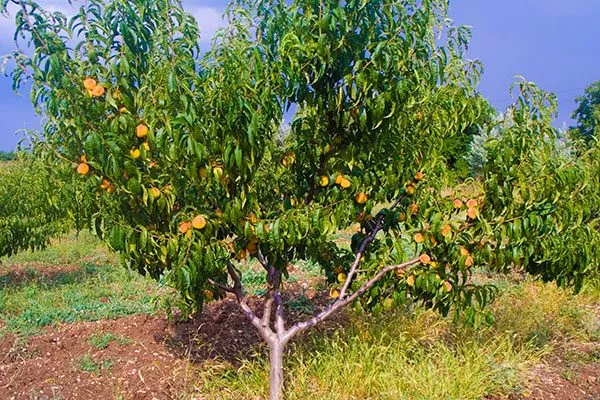
The Velvet Peach tree is medium-sized, reaching 3-4 meters in height. Its crown is dense and compact, with a spherical shape. The branches are horizontal, making the tree easy to prune, spray, and harvest.
Description of fruits, their taste and purpose
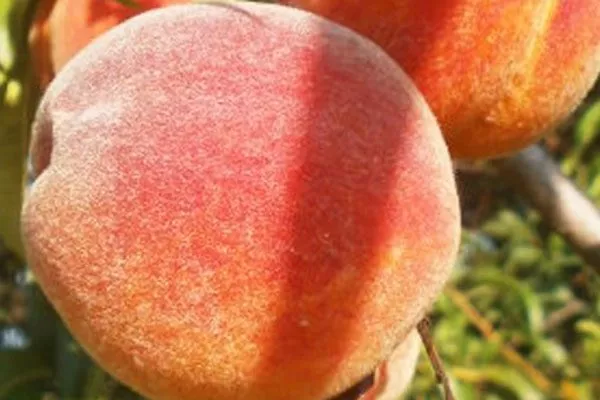
The fruits are round, yellow with a slight blush. They have a satiny, felt-soft skin. The flesh is firm and juicy, golden-yellow in color. It is very sweet and dense, with a sweet, balanced flavor.
- ✓ The leaves have a characteristic velvety hue, which distinguishes it from other varieties.
- ✓ Fruits are highly resistant to cracking when overripe.
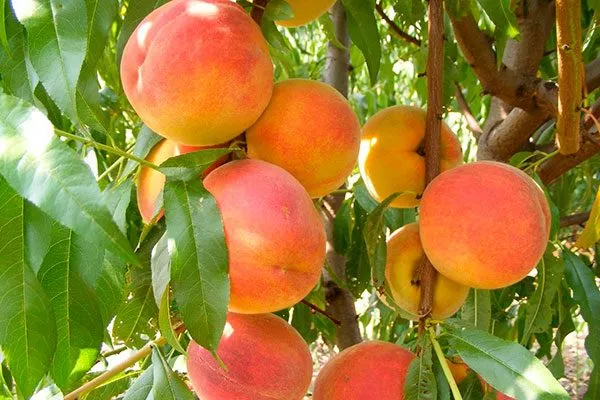
The fruit has a small stone. The aroma is medium-intensity. The fruit is delicious fresh and is also suitable for making various preserves, such as compotes, jams, and so on.
Productivity and ripening time
This peach is a summer-ripening variety. It has moderate frost hardiness and average disease resistance. The seedling survival rate is 99.9%.
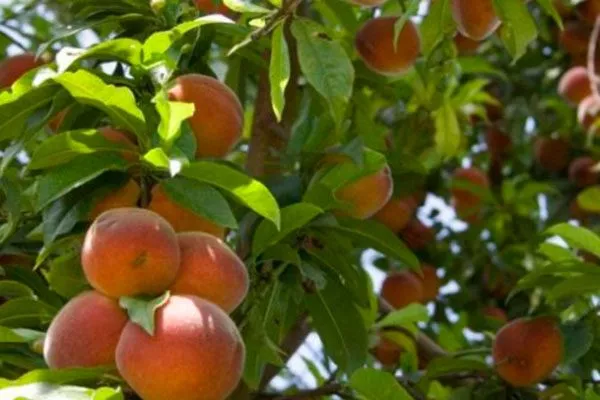
This variety is early-bearing. Fruiting begins in the third year after planting. The tree blooms in May, and the fruits ripen in late July. The yield is 45 kg per tree. It is self-fertile. Pollinators are welcome, as they increase the yield.
Pros and cons
The Velvet variety has many advantages that have already been appreciated by our amateur gardeners and large agricultural producers.
No defects were found in the Velvet peach.
Site requirements
The best location for a peach tree is an area with full sun throughout the day. Insufficient light is unacceptable, especially for a young tree. Avoid planting peach trees near buildings or tall trees. The area should be free of drafts and cold, piercing winds.
- ✓ Soil pH should be between 6.0-7.0 for optimal growth.
- ✓ The depth of the fertile layer is at least 60 cm to provide the root system with the necessary nutrients.
Peach trees can be planted near a fence on the south or east side. The maximum groundwater level is 3 meters. A slightly elevated site is ideal. Waterlogged soils are not recommended. Chernozem and loamy soils with low acidity are preferred; sandy and clayey soils are undesirable.
How to plant correctly?
For the Velvet variety, as with any peach, not only the planting location is important, but also the correct planting technique. A single mistake can cause the tree to grow poorly, or even die.
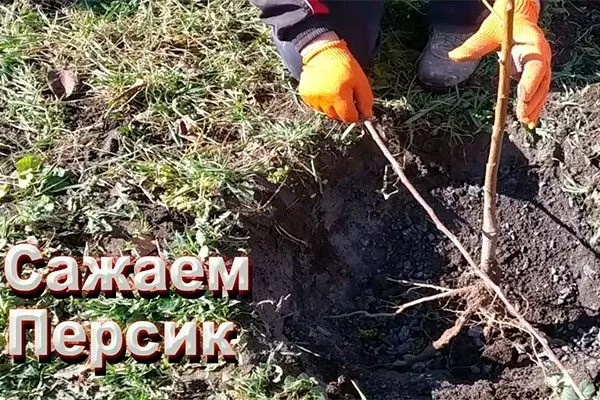
Landing features:
- The hole is prepared in the fall if planting is planned for spring. For fall planting, preparation is done in the spring or summer. The minimum time for hole preparation is 3-5 weeks.
- The hole should be twice as wide as the root system, and three times as deep. Therefore, the recommended size is 1 m in diameter and 60-80 cm deep.
- A month before planting, add fertilizer to the hole. Place humus or compost at the bottom. Top with a mixture of topsoil (obtained when digging the hole), potassium, and phosphorus—100 g each per 10 liters of substrate. Top with fertile soil.
The nutrient-rich soil mixture should fill 1/3 of the hole. If the area has high groundwater, place a 10-15 cm layer of drainage material at the bottom of the hole. - Soak the roots of the seedlings in cool water with Kornevin (a rooting stimulator) dissolved in it for 3-5 hours before planting. Immediately before planting, immerse the roots in a mixture of clay and manure (the mixture should have the consistency of sour cream).
- If planting several trees at once, maintain a distance of 4 m between them. Row widths should be at least 5 m. Close planting will interfere with normal growth and development.
- The seedling is planted so that the root collar is level with the soil surface or even higher—by 3-5 cm. The seedling is tied to a support previously installed in the planting hole. The tree's roots are covered with soil, watered, and once the water has been absorbed, mulched with peat, hay, freshly cut grass, etc.
When planting, it is necessary to pay attention to the location of the grafting site; it should “look” in a southerly direction.
Care and cultivation
For the first two years after planting, a peach tree requires special care to ensure it establishes itself and adapts to its new location. After that, the tree requires standard care, but the key is to do everything regularly and on time.
How to care for a Velvet peach planted in the fall:
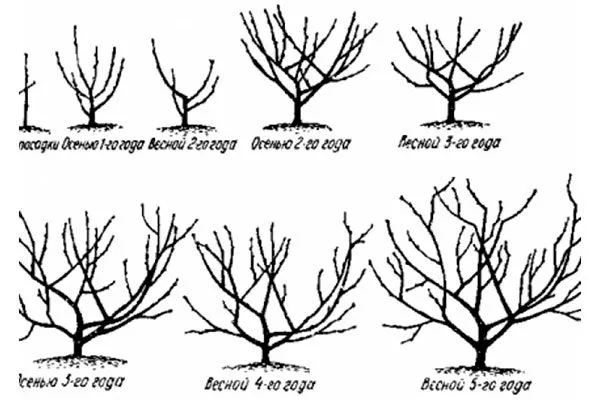
- After two weeks, pruning begins. The tree's crown is shaped into a bowl. The trunk is kept small, with all skeletal branches positioned as close to the ground as possible. At a distance of 35 cm from the graft, all branches are cut back to the ring, leaving four to five of the strongest, multi-directional shoots.

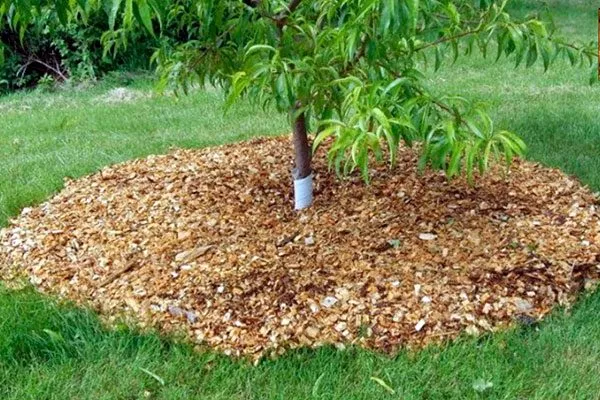
- Before winter, protect the tree from rodents by mulching the area around the trunk and wrapping the trunk with roofing felt, agrofibre, etc. Mulching also helps insulate the root zone. Apply a 10 cm layer. Peat or humus is the best option. Peach trees are heat-loving, so young trees planted in the fall require insulation.
A peach planted in spring requires different care:
- Young trees should be watered thoroughly and regularly, preventing them from drying out. At least once a week. The recommended watering rate is 40-50 liters. However, avoid allowing water to stagnate. Once the plant has established itself, water it once every two weeks.
- The soil around the tree trunk is loosened the next day after watering, while weeding out any weeds.
- In spring, as in autumn, the tree trunk area is mulched to delay moisture evaporation and weed growth.
- Pruning in spring is carried out according to the same scheme as in autumn.
Pest and disease control
The Velvet peach has proven itself to be a disease-resistant variety, resistant to pests. However, with widespread infections and insects, combined with poor agricultural practices and/or adverse weather conditions, the risk of damage increases.
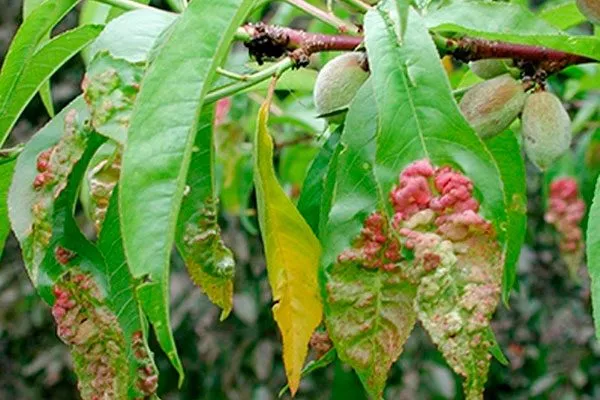
Among the pests that pose a risk are moniliosis, clasterosporium (shot hole spot), and cytosporosis. When signs of disease appear, it is recommended to apply appropriate fungicides. Among the pests, aphids and codling moths pose the greatest threat.
Harvesting and storing fruits
It's important to harvest the fruit when it's technically ripe. Overripe fruit becomes tasteless and crumbles. Generally, harvesting time depends on the intended use of the fruit—consumption, preservation, transportation, sale, or storage.
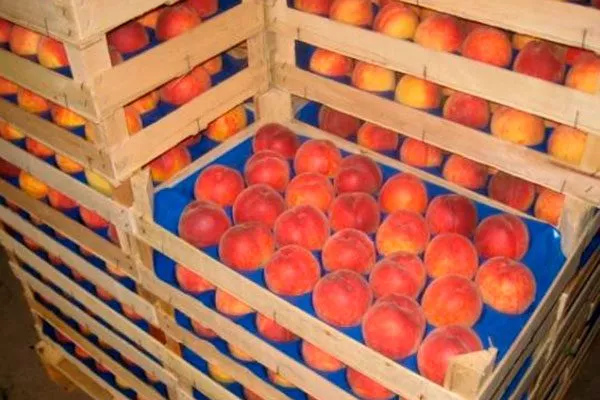
When ripe, the fruits reach their designated size and acquire the appropriate color—yellow with a bright blush—as well as flavor and aroma. If peaches are transported long distances, they are picked 3-4 days before they are fully ripe.
Harvested peaches can be stored in the refrigerator, in the bottom drawer of the fruit drawer. Avoid placing them in plastic bags, as they increase humidity and spoil quickly. The optimal storage temperature for peaches is around 0°C.
Reviews
The Velvet Peach is an excellent choice for lovers of juicy and sweet fruits. This variety has a classic peach flavor and rich aroma, and growing it requires little skill or effort, making it a great choice for any garden or summer cottage.