
The apricot is one of the few trees that cannot regulate its yield. Any fruit tree requires proper pruning, and the sun-loving apricot is no exception.
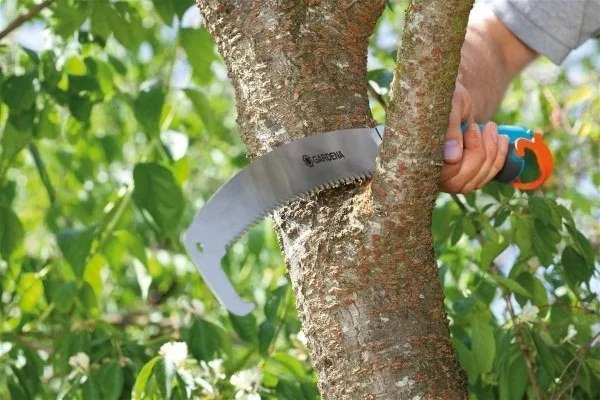
Why do people prune apricot trees?
Apricot pruning follows a specific pattern. It's important to prune branches correctly to avoid damaging the tree. The goals of pruning are:
- Rejuvenation. In spring and autumn, branches are pruned to rejuvenate the tree and shape the crown.
- Harvesting. By preventing crown growth, faster and more massive fruiting is achieved.
- Prevention of branch thickening. To make harvesting easier
If you neglect a tree without pruning it, it will initially produce abundant fruit. But after just a few years, the apricot abundance ends—the crown grows and thickens, while the inner branches quickly age, becoming "bald," and the number of buds they produce sharply declines.
Consequences of crown thickening:
- the fruits become small;
- the quality indicators of fruits are declining;
- fruiting is periodic.
The thick, branched branches of the apricot tree are both flexible and fragile. Without pruning, they become overloaded with fruit. Under the weight of the harvest, the branches break off, preventing new shoots from growing, resulting in a drop in yield. With proper pruning, the apricot tree:
- bears fruit regularly;
- the fruits grow large and juicy;
- the lifespan of the tree increases.
What tools are needed?
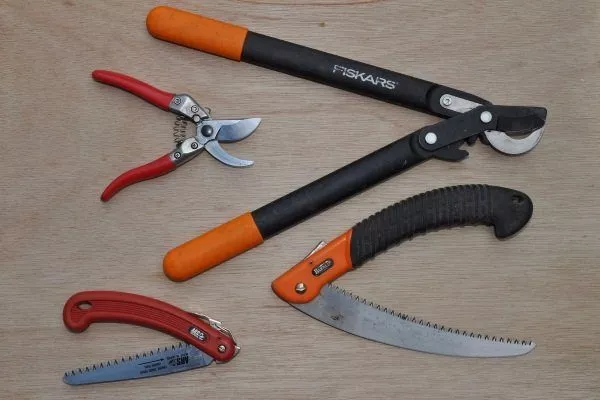
Every amateur gardener should stock up on a whole arsenal of various fruit tree care products:
- pruning shears - manual or air;
- grafting, gardening, copulation and budding knife;
- with a garden saw;
- with a triangular file;
- belt for sharpening and dressing cutting tools;
- with a whetstone and a whetstone;
- twine - you will need it to secure the branches;
- with a chisel - for cleaning wounds;
- garden pitch, paint - to cover up the damage.
Tool preparation checklist
- ✓ Sharpen pruning shears and garden knives at an angle of 30°.
- ✓ Check the bolts on the air pruner for tightness.
- ✓ Prepare 1% CuSO₄ solution for disinfection.
Experienced gardeners are confident that instead of garden pitch and other petroleum products, it is necessary to use materials that are harmless to wood, such as lanolin or beeswax.
You'll also need copper sulfate. Use a 1% solution to disinfect instruments and treat cuts.
How to prepare the tool for work?
Before work, cutting tools are carefully sharpened:
- Chamfering. When sharpening knives—garden, budding, and copulating—the bevel is ground down to create a smooth, even wedge, free of kinks and bends, from tip to back.
- Knives are sharpened on a fine-grained whetstone.
- The knife is sharpened using a whetstone.
During sharpening, the whetstone and stone are wetted with water to remove iron filings, graphite and carborundum.
- The grafting knife should be adjusted on a belt lubricated with a special paste.
A ready-to-use tool is as sharp as a razor blade. A slightly dull garden knife can be sharpened on a whetstone while working. Grafting knives require additional sharpening on a belt.
It's important to ensure the tool doesn't become duller than it should during use. After use, all accessories should be cleaned of dirt and wiped with a dry cloth. If the tool is being stored, its metal parts should be lubricated.
Trimming technology
Pruning is carried out using several standard techniques. The choice of technique depends on the type of branches being pruned and the gardener's objectives.
Cutting branches "on the ring"
This technique is used when an entire shoot needs to be removed without stimulating the growth of others. This technique is used on shoots damaged by disease or frost, as well as to remove suckers.
To make a proper cut, it's important to position it correctly. This task is easier on branches with a clearly defined annular ridge located at the border between adjacent shoots. The cut is made precisely along the top edge of the ridge.
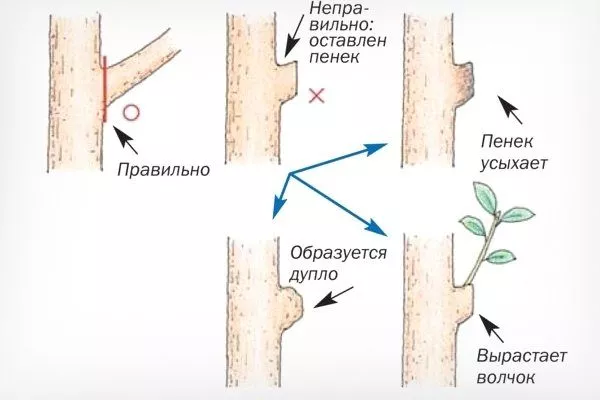
The ring is a swelling containing cells with the ability to rapidly multiply. This property allows the wound to heal faster.
Cutting technique:
- To reduce the pain when pruning thick branches, make a cut from the bottom – 1/3 of the way through. The distance from the trunk should be 10-20 cm.
- Sawing is done from above – the branch is removed.
- The stump must be cut along the ring.
- To make the cut smooth, it is cleaned with a knife for better healing.
- The cut must be disinfected with a 1% solution of copper sulfate.
- Cover the cut with garden pitch, paint, wax or lanolin – gardeners themselves decide which composition is best.
Leaving the stump or cutting off the ring initiates the process of decay. Holes may form in the wound, creating a risk of pest infestation and infection.
If there's no ring, you can make a bevel cut. How do you do this? Draw one imaginary line at the base of the branch, along the trunk. Draw another line from the intersection of the branch and the trunk, at a 90-degree angle. Divide the resulting angle in half and cut the branch.
Pruning to the bud
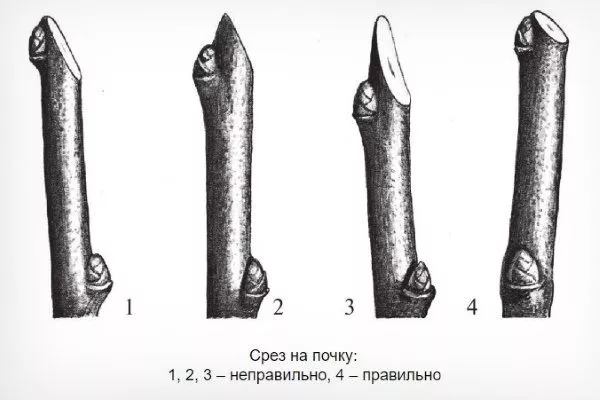
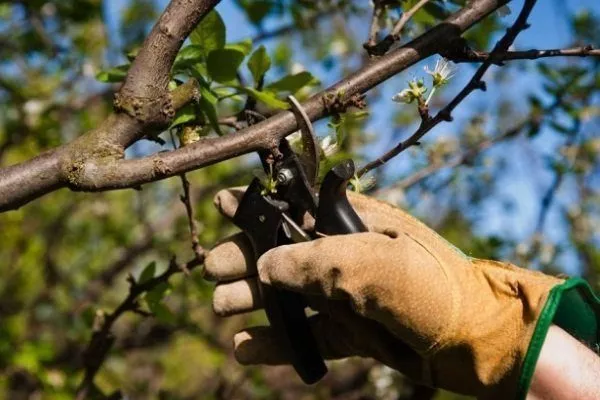
This technique is a formative pruning technique that involves removing the section of a branch above a bud. The cut is at an angle. The top of the cut is positioned half a centimeter above the bud, always on the same side as the bud. This technique allows you to control the direction of shoot growth.
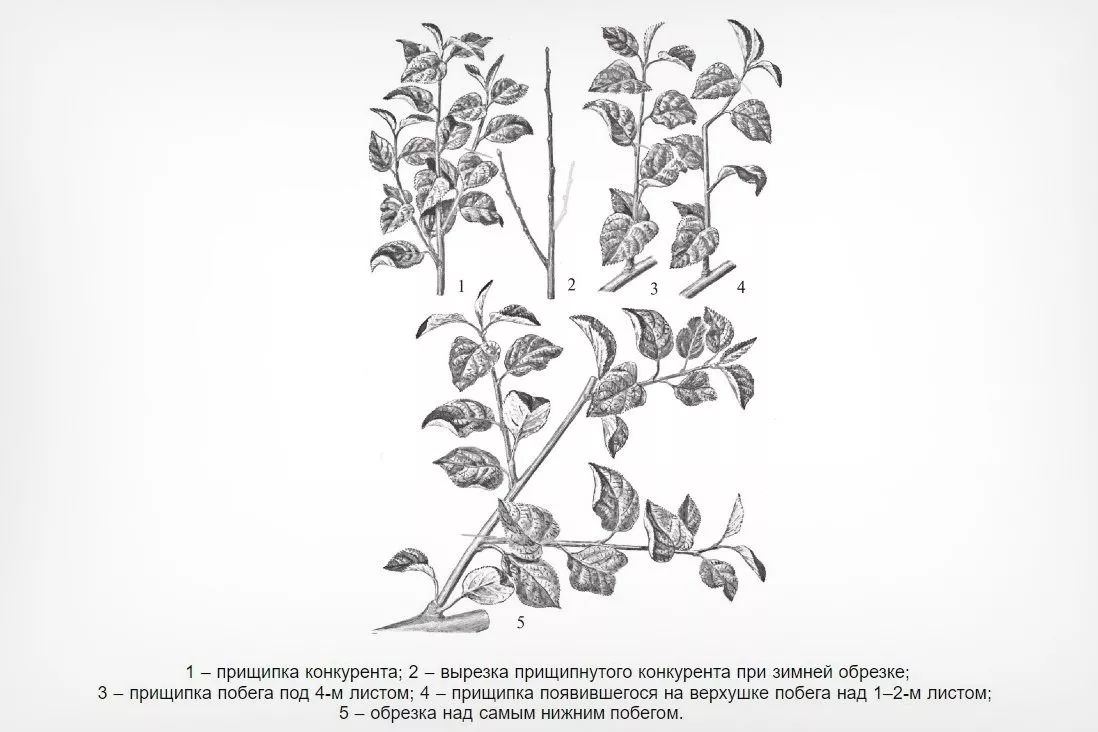
Pinching (pinching) shoots
A pruning technique in which shoots are reduced by 1/3 of their length. This technique accelerates shoot maturation and also stimulates lateral branching.
Kidney blindness
This technique prevents uncontrolled shoot growth. It's the least painful method and is used at the initial stage of shoot development. If an extra branch is noticed, it is pinched off.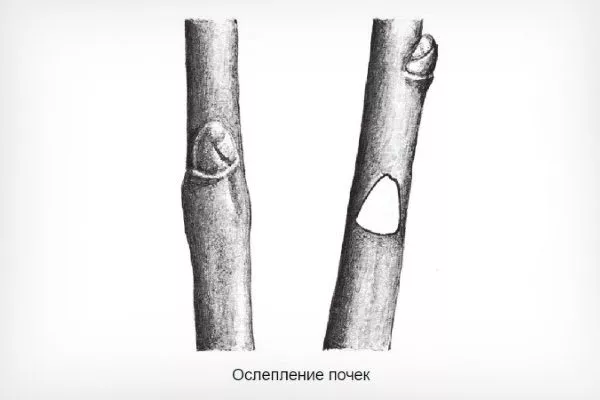
Types of pruning
During one season, apricots undergo five types of pruning:
- Formative. This pruning is necessary for normal branching and the formation of branches on the first tier. It allows you to shape the crown and create a strong skeleton. This pruning is performed on 4-5 year-old seedlings.
- RegulatoryMaintains the crown's shape. The process involves thinning, adjusting, and guiding shoots. Saplings are pruned from 6-7 years old and annually as long as the tree is alive and bearing fruit.
- Sanitary. This involves removing branches affected by pests and diseases. This type of pruning is carried out throughout the plant's life.
- Restorative. For trees with neglected or damaged crowns. Only trees 5-9 years old can be repaired. After this age, only damaged branches can be removed.
- Rejuvenating. Helps restore fruiting to older trees. There comes a time when shoot growth slows—they grow less than 30 cm per season, and fruiting shifts to the periphery of the crown.
Without formative pruning, it's impossible to achieve proper branching; other options are needed to maintain the tree's shape. The plant should:
- be well lit by sunlight;
- have a correct, not overgrown crown;
- produce high yields.
| Type of pruning | Frequency | Optimal time | Volume removed |
|---|---|---|---|
| Formative | 1-5 years | March-April | Up to 30% of the crown |
| Regulatory | Annually | February-March | 10-15% of the crown |
| Sanitary | As needed | All year round | Only damaged branches |
Trees that have survived winter frosts without consequences do not need to be subjected to restorative pruning.
Formation of different types of crowns
By subjecting a young apricot tree to formative pruning, the crown can be shaped to the desired form. The process of shaping, beginning with the tree's planting, lasts 4-5 years. Full crown formation should be complete by the sixth year. Before pruning, the gardener must choose the desired crown type. Let's consider the available options.
Sparsely tiered form
This is the most common crown shape. It is often used for tall trees, as the sparse, layered form helps slow down the plant's growth. Shaping technique:
- A year after planting, the apricot tree has 2-3 branches left on the first tier. The distance between adjacent branches is about 20 cm; these should be shortened by about a third. The remaining branches are cut back to the ring. The central conductor is trimmed so that it is 30-40 cm higher than the top branch.
- After a year or two, the second skeletal tier begins to form. By this point, the skeletal branches will already have second-tier shoots. No more than two or three should be left on a branch, shortened by 30%.
- After another couple of years, the third tier is formed. Then, the central conductor is cut out at the base of the upper branch.
When forming the crown, you need to adhere to the principle of subordination - the branches on the third tier are shorter than the branches on the second tier, and so on.
A specialist explains how to prune a young apricot tree, how to shape its crown, and why lateral branches shouldn't grow higher than the central conductor:
Cup-shaped crown
This crown shape ensures good illumination and ventilation, and also helps control its growth. Technique for forming a cup-shaped crown:
- The first step is pruning when planting a seedling.
- On the trunk, select 3-4 buds (or branches, if it's a two-year-old sapling), spaced about 20 cm apart. The selected buds should be in different directions. The remaining buds should be pruned.
- Sometimes, the crown hasn't been shaped for three or four years after planting. It's not too late to fix it. Select three strong branches, and prune the rest to a ring. Also, cut out the central conductor at the base of the top branch.
- In subsequent years, shoots are pruned so that they are all the same length. If any shoot begins to grow excessively, it will become dominant and become the central leader—this is unacceptable.
- Next, they form the second-tier branches—two at a time. The interval between branches is about 50 cm.
Over time, only adjustment pruning will be necessary – it will be necessary to remove shoots growing inward from the crown.
Transferring a branch to a lateral shoot
This technique can be used with any type of crown formation. Its purpose is to restrict the upward growth of certain branches. To do this, on the branch whose growth you want to restrict, find a bud (shoot) growing in the desired direction. A cut is made at this point. The shoot left to grow will assume a more horizontal position. To enhance the effect, it can be bent and secured for a period of time. The new shoot is then transferred to a lateral branch. There are two types of transfer:
- Pruning is done on an outer bud or shoot. This technique is used if the crown is in a neglected state.
- Pruning to an internal bud or shoot is used when the crown is sparse and needs to be filled.
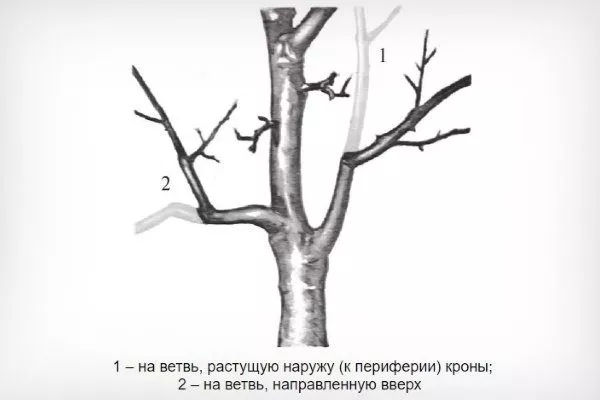
Trimming (shortening) for translation
Tree pruning depending on the season
A gardener always has a lot of work to do—the garden requires care in any season. Apricot pruning can be done at any time of year. Seasonal pruning has its own distinctive features, so let's take a look.
Spring
Pruning begins when March is almost over. The following conditions are required to begin the procedure:
- comfortable ambient temperature;
- lack of active sap flow.
Correctly performed spring pruning is the key to high yields while maintaining the excellent taste characteristics of the fruits.
Spring activities include the following work:
- formation of the correct crown;
- planning of sanitary and support procedures;
- Removing frozen and broken branches – so that the tree’s energy is not wasted on restoring damaged shoots.
Summer
Gardeners perform rejuvenating pruning until June 15th. From mid-May, they begin pruning. All shoots that emerged in the new year are pinched back to 20-25 cm.
Summer pruning isn't performed annually—only once every 3-4 years. The procedure sometimes has to be postponed due to insufficient moisture.
Summer pruning of apricot trees is done for rejuvenation. All young shoots are cut back, leaving no more than 20-30 cm in length. The new shoots that appear after two weeks should be left at no more than 3-4, and all others should be cut off.
Autumn
Autumn maintenance consists of clearing the tree of diseased shoots. All branches are pruned by 30%, leaving only the skeletal branches untouched. Pruning is best done in mid-October. No pruning is performed during rainy weather or frosts. Autumn maintenance helps maintain a balance between fruiting and non-fruiting branches.
Winter
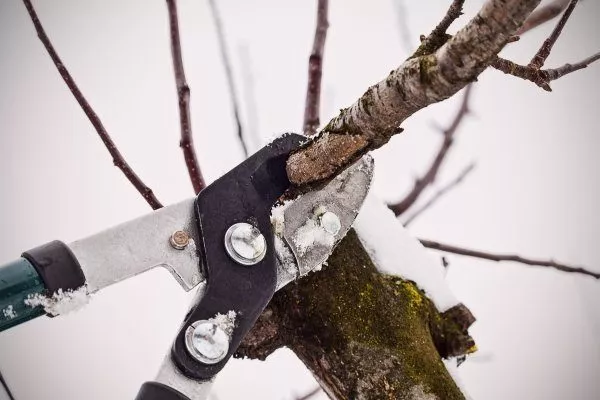
Winter is the ideal time for pruning branches and shaping the crown. At this time, the plant has not yet "awakened," meaning branch removal will be less painful.
In winter, branches should be pruned when temperatures drop below minus 8°C. Severe frosts cause the wood to become brittle, and wound healing time increases.
Winter pruning tasks:
- formation of new shoots;
- maintaining the health of culture.
Benefits of winter activities:
- no foliage – the condition of the crown is clearly visible;
- the plant experiences less stress;
- Frozen wood is easier to saw – no burrs are formed, which usually appear when working with a hacksaw or pruning shears;
- It is easier to install the ladder - there is no risk of damaging neighboring trees.
Seasonal Work Calendar
- February-March: main formative pruning (t ≥ -5°C).
- May-June: pinching young shoots (length 15-20 cm).
- October: sanitary pruning + treatment of cuts with 3% CuSO₄.
Apricot pruning instructions
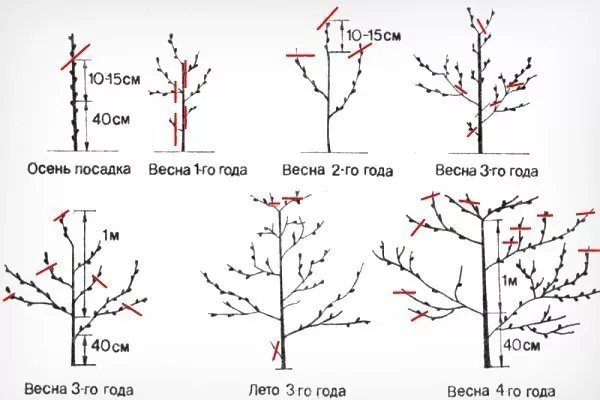
To create a beautiful crown, the tree must be pruned according to a new pattern every year. Crown formation begins in the first year of planting. This is the only way to grow a strong tree that produces abundant harvests. Experienced gardeners prefer to form a sparse, tiered crown, with 5-7 main branches spaced 40 cm apart. This process continues from the first year until the tree is 6-7 years old.
Pruning a seedling
Before crown formation, the seedling is pruned—this is done when planting. During the first few years, branches grow particularly vigorously and need to be pruned to initiate branching. Apricot branches are loosely attached to the central trunk, so individual branches are planted so they branch out at a steep angle.
If the apricot tree is to be grown in climates with unfavorable conditions, it can be grafted onto a frost-resistant rootstock at a height of up to 1.5 meters. In this case, the seedling is pruned above the grafting point, leaving at least 4-5 branches or buds above it.
First year
In the first year of life, after planting, the seedling is pruned—the trunk is cut off at 90 cm above ground level. If there are lateral shoots, two are selected—one located opposite the other. The remaining shoots are cut back to the ring, without stumps. The selected shoots are shortened by 50%, and the main trunk is cut off at a height of 20 cm.
Second year
Several more branches are selected for the skeleton. These should be at least 35 cm from the previous year's shoots. The branches should be evenly spaced along the trunk. Lower-tier branches are pruned, taking into account the characteristics of the variety:
- in tall-growing animals – by 50%;
- in low-growing animals - by 1/3 of the length.
The second tier is shortened so that the branches are 10 cm shorter than the shoots from the lower tier. The main trunk is cut at a height of 40 cm from the upper lateral branches.
Third year
In the third year of the apricot tree's life, a third tier of skeletal branches is established, following the same principles as in the second year. It's important to follow the principle of priority: the strongest and longest branches are at the bottom, followed by branches 10-15 cm shorter than the previous ones. The main conductor is cut directly above the third tier.
Fourth year
Fruiting begins in the fourth year, so drastically reducing shoots is not recommended, as this could affect the fruit. Pruning in the fourth year involves clearing the crown, removing damaged, broken, and crowding branches.
After five years
The next pruning is performed in the tree's 6th or 7th year. Its purpose is to increase yield. To this end, 2-3 shoots are left at the ends of each main branch. The shoots are shortened by a third. A knot is created between the shoots by cutting a strong shoot 10-15 cm from the base. This year, the crown is also cleaned, removing branches that thicken the canopy and block light from reaching the lower tiers.
Old apricot
Old trees require rejuvenation procedures to prolong their life and increase their yield. There are three rejuvenation methods:
- Second-tier branches that have grown from the skeletal branches are pruned to the ring. This encourages active growth of young shoots. The gardener selects those growing horizontally or at a 45-degree angle—these will bear fruit. The remaining shoots are pruned. Until the branches left for fruiting mature, excess growth will appear, which must be thinned regularly.
- Skeletal branches are replaced entirely. One or two branches are selected for replacement and shortened by 20-30 cm from the trunk. When the buds awaken and new shoots begin to grow, the gardener selects one – this will become the skeletal branch. All other shoots are methodically pruned. A shoot growing from the bottom or side of the skeletal branch should be left. If successful, after three years, one or two more branches can be replaced. Avoid pruning multiple thick branches in one year, as this can lead to tree disease.
- The final pruning method is intermediate between the first two. Skeletal branches are not only exposed but also shortened by half. By exposing and shortening skeletal branches, gardeners rejuvenate apricots.
Common mistakes when pruning
Novice gardeners often make mistakes that can harm the tree. These actions can lead to problems:
- Using a dull tool damages the bark and creates burrs, which can lead to wood rot. Tools must be sharpened carefully.
- Failure to properly prune weakens the tree's immunity, making it take a long time for the plant to recover.
- Don't prune skeletal branches "in a ring." If the cut is too close to the main trunk, hollows may form, which can lead to the tree's death.
- Ignoring the principle of priority of tiers leads to a decrease in yield.
- Exceeding the height of the first tier will result in the fruits hanging at a distance of 2 m from the ground, which will complicate harvesting.
Dangerous consequences of pruning
The main danger after pruning is the appearance of viral and fungal infections on freshly cut trees. From localized outbreaks, the disease can spread throughout the tree. This will reduce the plant's yield and eventually lead to its death. For this purpose, the cut trees are disinfected and then sealed with garden pitch or another suitable material. Dangerous apricot diseases:
- monilosis – plant rot during fruit formation;
- holey spot – the foliage is affected;
- verticillium wilt – wilting of foliage and death of the plant;
- Valsa mushroom – violation of the integrity of the tree cover with subsequent rotting;
- cytosporosis – penetration of infection into the wood causes rupture of the surface of the branches.
Rapid shoot growth is a characteristic trait of all apricot trees, leading to a decrease in yield. With proper and timely pruning, gardeners can extend the tree's life and increase the quantity and quality of fruit it produces.