
Peach pruning must be done not only correctly but also in a timely manner. The yield directly depends on this. This article will tell you when and how to do this.
What type of crown should I choose?
Tree pruning should result in a strong, robust crown, enabling the tree to produce a bountiful harvest. The crown shape is influenced by the height of the plant and the trunk.
- ✓ Consider the climate zone: for northern regions, bushy crown shapes with a trunk height of up to 40 cm are preferable.
- ✓ Pay attention to the resistance of the selected crown shape to wind loads in your region.
If the crown shape is low-stemmed, then shape it for plants growing in southern regions. If the trunk height is from 0 to 40 cm, then these are so-called bush or standardless crown shapes. Use these in northern regions.
The branches can also be formed into a bowl shape with a slight dip in the length of the branches in the center or into a bush shape.
Why do you need to prune a peach tree?
The peach is a demanding tree that can produce high yields only with careful care. One factor is proper pruning, or shaping the tree's crown. This helps ensure the plant receives the proper care.
The peach tree will respond to pruning with timely flowering and regular fruiting of large, delicious fruits. Pruning begins at one year of age. Reasons for pruning include:
- the existence of sharp forks in branches;
- a dense crown that prevents sufficient sunlight from reaching all the fruits;
- weakening of the plant due to a large number of buds;
- avoiding premature maturation.
What tools are needed?
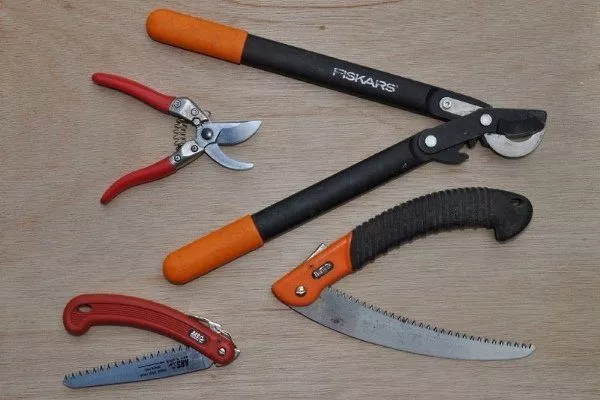
To prune your peach tree efficiently and effectively, you will need the following tools:
- long-handled pruning shears;
- special garden knife;
- a wood saw with a thin, sharp blade;
- paint brush.
To minimize damage to plants, ensure that all tools are sharpened and disinfected to the proper level.
Before starting work, disinfect your tools using alcohol.
Types of pruning
Plants are pruned for various purposes. This type of pruning is divided into the following:
- Pruning – is used to remove dead, dry branches. When pruning, remove branches with damage, such as breaks, bends, cracked bark, and delamination.
- Restorative pruning Perform this if the tree has been damaged by frost. Then restore its crown. This can be accomplished by thoroughly inspecting all branches, identifying any dead or non-viable ones, and removing them.
- Detailed trimming This is used to shorten branches by approximately 1/2 the length of the older branches. You can also thin them out intensively.
- Contour cropping carried out by removing the outer branches of the tree, thereby eliminating their spread in width.
- Restorative and formative pruning Perform this procedure 1 year after the rejuvenation procedure. In this case, shorten the entire branch length by 30-50%.
- Differential pruning Apply only to the upper branches to thin them out.
Formative
The main goal of formative pruning is to stimulate the tree's growth and development. After pruning, the tree's nutritional status is balanced, and the crown acquires an optimal size and shape. Young shoots become more vigorous, which directly impacts the yield and taste of the fruit.
Pruning recommendations:
- When shaping the crown of a mature tree, keep in mind that in the spring, branches are pinched back to a height of no more than 0.4 m. This will result in the plant forming a second wave of shoots.
- Tree shaping should begin as early as two years of age. As the tree grows, leave about 7-8 branches in the crown, which will serve as the main branches. Such a plant should be fully formed by the age of 5, maximum 6 years.
- You can shape the crown into a bush. Prune for the first time immediately after planting. Read about fall planting. HereThen, in the second year, leave only four main branches, including the obligatory central one. These branches will be capable of producing fruit within two years.
- In subsequent years, up until the fifth year, prune the branch approximately at the level of the tree's collar. Each year, the tree should retain approximately five fruit-bearing branches, and an additional two shoots should be left as replacement shoots.
Watch the video to learn how to perform formative pruning of a peach tree:
Restorative
Only perform this type of pruning if the tree has been exposed to severe frost during the winter. Perform this in the spring or fall. It's especially effective for trees that have experienced severe frost or have been damaged by disease.
- ✓ Determine the vitality of branches by the color of the cambium: light green color indicates living tissue.
- ✓ Consider the age of the tree: young trees recover faster after heavy pruning.
Regulatory
Regulatory pruning can be carried out in any season in order to maintain the tree's fruiting and the number of ripening fruits on the branches.
This is necessary because the tree is developing an excessive number of rings. Simply cut off the oldest ones. This procedure will help regulate the period and duration of fruit formation on the tree.
For regular pruning, shorten young branches that reach a length of more than 1/2 m. Choose those that clearly protrude beyond the overall shape of the crown.
Rejuvenating
Perform this type of pruning on a mature tree to rejuvenate it. This prolongs the fruiting process.
During this procedure, remove old branches from the tree and replace them with young ones, 2 to 4 years old at most. It's acceptable to leave the sucker growing from the bottom of the old shoot.
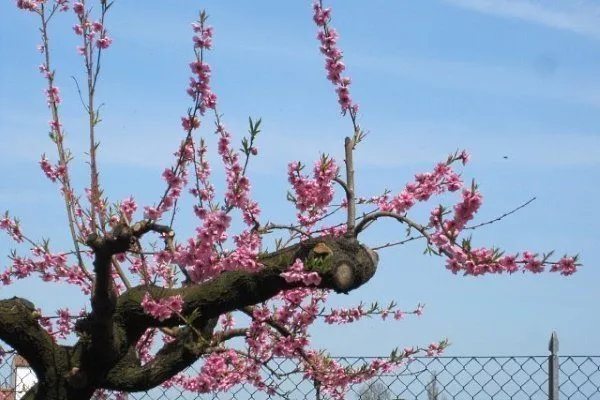
If rejuvenating pruning of an adult tree has not been carried out for a long period of time, then more intensive removal of branches and even possibly part of the tree will be required.
When do you prune a peach tree?
Each type of pruning has its own strictly defined timeframe. These must be adhered to, otherwise it will negatively impact the tree's fruiting and alter its vegetation.
The collection of trimmings can be divided into two types:
- complete cutting of a branch;
- partial pruning.
Spring pruning
Begin spring pruning in late February and continue throughout the spring. At this time, shoots should be shortened to create a wide, branched crown. The procedure should be tailored to the desired crown type.
The basic rule is to prune approximately 1/2 to 1/3 of the branch's annual growth. Also, be sure to keep in mind that first-order branches require more pruning than second-order branches.
When pruning, be sure to preserve as much new growth as possible. After all, branches that are 2-3 years old produce the best fruit and the most abundant ones.
To help the peach tree recover more quickly after pruning, it should be started when the internal sap has not yet begun to move in the tree.
The video below shows how to prune a peach tree in the spring:
Summer pruning
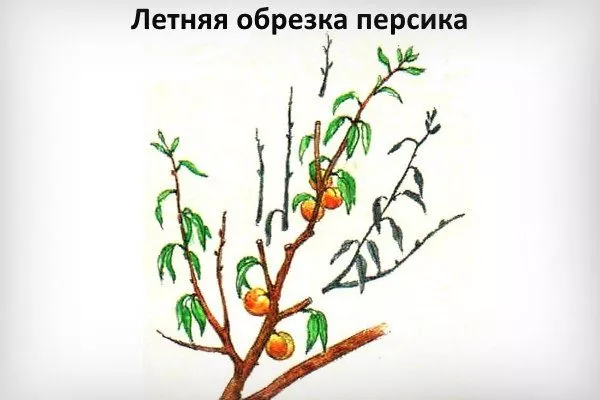
In summer, prune branches that are either completely dry or have begun to dry out. Remove branches that are shedding their blooms. These tend to grow incorrectly, that is, toward the center of the crown.
The basic rule for summer pruning is to do it in June or early July. This is when the seed is formed inside the fruit.
Autumn pruning
Many experienced gardeners recommend pruning peach trees in the fall. This is because the plant will have more time to recover. This allows for more intense flowering and, consequently, fruiting.
Autumn pruning is recommended in regions with warm climates. Autumn is typically warm here, and frosts usually occur early in winter. Therefore, the tree has time to fully recover from the procedure before the first frosts and cold weather arrive.
The main rule for fall pruning is to start it from approximately mid-September to the end of October. By this time, the trees have already harvested their fruit.
Pruning carried out in autumn in warm regions helps speed up the fruit development process.
For fall pruning rules for peaches, watch the following video:
It is important to never do fall pruning in temperate climates, as the tree will likely not survive the winter and will die.
Do you prune peach trees in winter?
Peach trees shouldn't be pruned in winter, as this can kill the plant. The only thing that can be considered winter pruning is that spring pruning can begin as early as mid-February.
In warmer regions, spring arrives much earlier, and by this time the risk of severe frosts has already passed, so pruning can begin.
Pruning by year
When pruning, be sure to consider the tree's age. For a young tree, all pruning efforts should be focused on promoting growth and development. The following year, prune to stimulate fruiting.
For more mature trees, prune to shape the crown, prevent overcrowding, and increase the number of blossoms and, consequently, fruit. For older peach trees, prune to rejuvenate and maintain fruiting at a certain, optimal level.
Immediately after landing
As soon as the young peach tree sapling was planted (it is written about spring planting of peaches here), perform the first pruning. To do this, simply shorten the central shoot, that is, the top of the plant. Also, shorten all remaining lateral branches of the seedling by approximately 1/3.
1 year
Annual plants also require pruning. The main goal is to properly shape the crown of the future mature tree. Ensure that the skeletal branches are positioned correctly and at the proper angle.
At one year of age, shorten the branches by approximately 1/3 of their total length. Make sure to not shorten them to less than 1/4 of their total length.
Before pruning, measure the new growth. If for any reason it's weak, meaning it hasn't grown more than 30 cm, you don't need to prune the young tree.
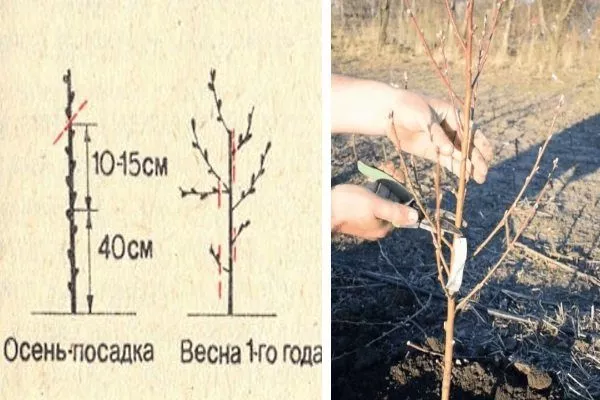
2 years
During the plant's second year, perform the same pruning as the previous year. This is important to properly shape the crown. Repeating this pruning will truly shape the plant's crown and prepare it for abundant fruiting in subsequent years.
A gardener provided a video about pruning a peach tree in its second year:
3rd year
As the plant reaches its third year of growth, it enters a period of active fruiting. Peaches form abundantly only on young branches and those that have been pruned.
Pruning recommendations:
- It's important to ensure the tree doesn't become overgrown or senescent. Each overgrown branch drains the tree's energy, so an uncared-for peach tree will bear less fruit each year.
- From now on, change your tree pruning strategy. The most important thing now is to focus on removing the weakest branches. Also, remove any frozen branches.
- At this point, it's important to ensure the tree's crown doesn't become too dense. To do this, trim excess branches across the entire surface of the tree.
- The main rule in this case is that if new young branches grow longer than 0.5 m, they need to be shortened. This will ultimately lead to accelerated formation of new growth.
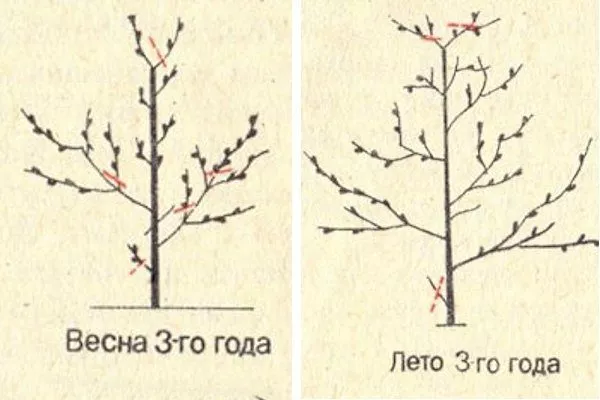
Subsequent years
In all subsequent years, consider both the plant's age and its fruiting activity. While the peach tree is still young, repeat the previous pruning, which is typical for the plant's third year of growth.
When a tree becomes old, it's essential to rejuvenate it. In this case, perform pruning according to the following rules:
- Be sure to shorten the skeletal parts of the branches by 1/3 of their total length;
- Reduce the tops that remain on the tree until approximately 1/2 m remains.
Care after pruning
After pruning a tree, it requires proper care. This will help the plant recover more quickly and prevent it from becoming susceptible to disease or pest attacks.
Read the article about peach diseases and pests.
Here are the basic rules:
- Burn everything cut from plants to prevent the possibility of spreading diseases or fungal infections;
- treat the cuts that formed after pruning, that is, the wounds, with garden pitch;
- treat minor damage to the integrity of the bark caused by cutting with potassium permanganate or boric acid;
- treat the entire tree with a special solution;
- After pruning, water the tree generously;
- In the spring, lay mulch around the trunk (you will learn how to mulch the soil from this article).
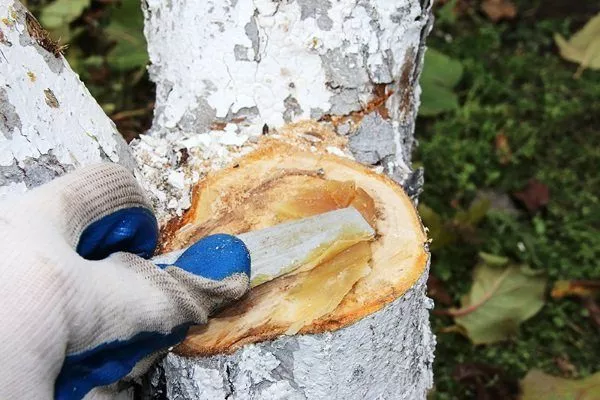
Helpful tips
Here are some helpful tips for beginning gardeners:
- Before you begin pruning, carefully examine the tree for any possible damage from the winter frosts.
- It is necessary to form the crown depending on the region where the plant grows.
- When pruning to a specific length, if you're unsure of the accuracy of your eye, check the branch's dimensions with a measuring tape. It's best to be overly careful, as excessive pruning can lead to stunted tree growth and have the opposite effect from what you'd expect.
- Use high-quality gardening equipment - it will help reduce the wounds on the tree that appear after pruning.
Remember to disinfect your gardening tools regularly—this will help prevent possible contamination of your peach tree from other plants.
Possible errors
If pruning a peach tree incorrectly, it will have very negative consequences. For a young tree, this will result in stunted growth. Meanwhile, a fruiting peach will have trouble forming inflorescences and, subsequently, producing the desired quantity of tasty fruit.
What are the most common errors:
- If you prune a healthy plant excessively, it will delay the formation of flowers and, subsequently, fruit. Overzealous pruning will undoubtedly have a negative impact on the plant.
- Indifference on the part of the plantation owner toward tree pruning also bodes ill. Many believe this procedure can be avoided without any negative consequences.
- Neglect of proper care will result in small, tasteless fruits. They will lack aroma and the desired sugar level. The tree will bear fruit irregularly, become denser as it grows, and age faster.
- It's important to begin pruning peach trees when the plant is two years old. Monitor and measure the angle of the branch relative to the main trunk. It shouldn't be less than 45°. If the angle is less, secure it to a stake.
- Pruning too early in the season can result in branches freezing during early frosts.
Following the above recommendations will help to form a healthy plant with abundant, regular fruiting and slow aging.