
The Moscow Dwarf peach is a great choice for those who want to enjoy delicious and juicy fruits grown in their own garden. Thanks to its excellent characteristics, this variety will not only decorate your garden but also provide a stable harvest for many years. With proper care and attention, this plant will become a true gem in your garden.
The idea of a peach
Flowering begins in April and continues until May. The tree attracts attention with its beautiful single flowers, colored a soft pink.
| Disease | Period of activity | Control measures |
|---|---|---|
| Leaf curl | April-May | Treatment with copper-containing preparations before bud break |
| Powdery mildew | June-August | Spraying with systemic fungicides at the first signs |
Other distinctive characteristics and features:
- It's considered a mid-season variety, as the first fruits begin to ripen in the first weeks of August. The tree begins to bear fruit 3-4 years after planting, and its lifespan ranges from 10 to 20 years.
- The fruiting period usually lasts 8-12 years, which directly depends on the quality of care.
- On average, one plant produces about 30 kg of fruit, although with good care the harvest can be even larger.
- The variety has good winter hardiness, allowing it to withstand temperatures down to -25°C. However, in regions with harsh winters and strong winds, it is recommended to cover young seedlings for the winter.
- The Moscow Dwarf shows average resistance to diseases and pests. It can be susceptible to diseases such as leaf curl, powdery mildew, and moniliosis.
For prevention, regularly apply fungicides and maintain the plant's health with proper watering and fertilizing. Monitor for pests such as aphids and codling moths and apply insecticides as needed.
Information about origin
It was developed by Russian breeders in the late 20th and early 21st centuries. The primary goal was to create a peach capable of surviving in colder climates, where traditional southern varieties failed to thrive or produced low yields.
The appearance of the tree
This medium-sized plant reaches a height of up to 2.5 meters. Its appearance is adorned with flexible, brown shoots. The leaves are lanceolate, wrinkled, and have finely serrated edges. They are colored a light green.
Fruits and their taste characteristics
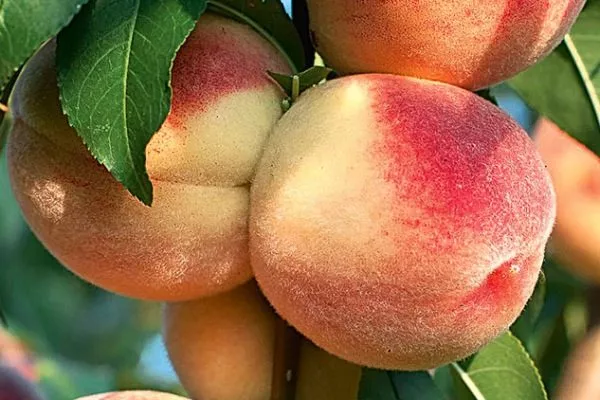
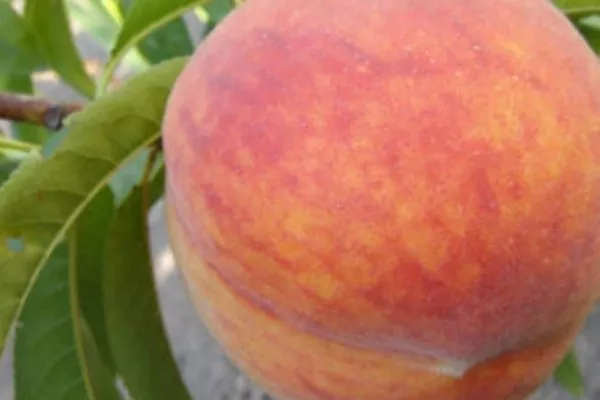
The fruits have a standard round shape, and as they ripen, they noticeably increase in volume, becoming quite large. The average fruit weight ranges from 90 to 120 g.
The skin is bright yellow, with a pink blush developing. The pit is ribbed and easily separated from the flesh. The flesh is juicy, meaty, and very tender.
Care and cultivation
Planting and caring for a peach tree requires careful attention to ensure a healthy tree and a high-quality harvest. Here are some basic recommendations:
- Choose a sunny, wind-protected location. The soil should be light, fertile, and well-drained. Sandy loam or loamy soil with a neutral pH (pH 6.5-7) is best.
- In the fall, dig the area to a depth of 30-40 cm and add organic fertilizers (humus, compost) at a rate of 8-10 kg per 1 sq. m. Add 50-60 g of superphosphate and 40-50 g of potassium salt.
- Choose one- or two-year-old plants with a well-developed root system. The seedling should have a smooth trunk, free from damage and disease.
- Spring planting should be done in April, before the buds open. Fall planting can be done in September or October, but in this case, be sure to cover the young seedlings for the winter.
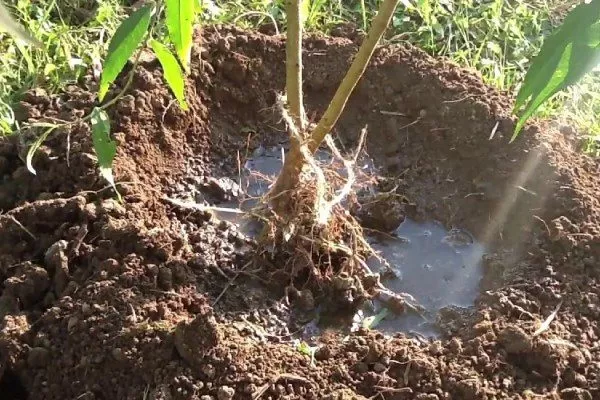
- Prepare the hole 2-3 weeks before cultivation - 60x60x60 cm in size. Place drainage (crushed stone, expanded clay) at the bottom of the hole in a layer of 10-15 cm, then pour in a mixture of fertile soil mixture, humus and mineral fertilizers.
- Place the seedling in the center of the hole, spread the roots, and cover with soil. The root collar should be level with the ground. Water the tree generously (20-30 liters of water) and mulch the soil with peat or compost.
- ✓ The soil pH level should be strictly within 6.5-7, deviations can lead to leaf chlorosis.
- ✓ The distance between seedlings should be at least 3 meters to ensure sufficient feeding area.
To strengthen your immune system and produce high-quality fruit, follow standard agricultural practices:
- Watering. The plant requires regular watering, especially in the first year after planting. During dry periods, water the plant once a week, applying 30-40 liters of water under the tree. After watering, loosen the soil and apply mulch.
- Top dressing. In the first year, fertilize twice a season: in the spring (nitrogen fertilizer) and in the summer (phosphorus and potassium compounds). Starting in the second year, apply nitrogen fertilizer in the spring and phosphorus and potassium fertilizer in the fall.
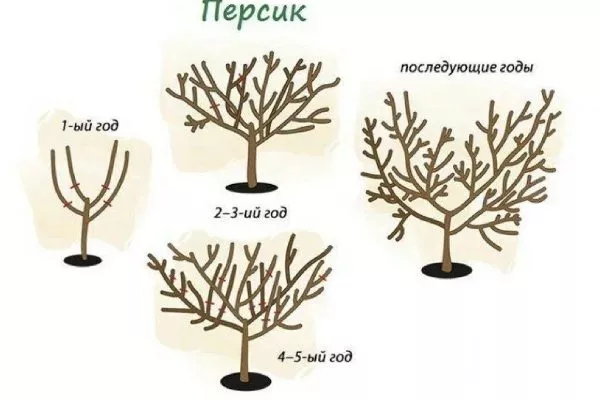
- Trimming. Perform formative pruning in the spring before bud break. Remove damaged, weak, and crown-thickening shoots. Leave 3-4 strong branches that will form the tree's skeleton. In the summer, pinch out young shoots to encourage lateral growth.
- Protection from diseases and pests. The crop is susceptible to leaf curl, powdery mildew, and other diseases. For prevention, spray with fungicides in the spring before bud break and in the summer at the first signs of disease. Use insecticides to control pests.
Positive and negative qualities
Before planting a seedling, carefully consider its pros and cons to avoid potential difficulties in the future. This variety has many advantages:
Among the disadvantages, some gardeners note:
Reviews
The Moscow Dwarf peach is a popular variety, developed specifically for cultivation in central Russia and other temperate regions. Its winter hardiness, compact size, and high yield have earned it the trust of both experienced gardeners and those just beginning their gardening journey. Proper care is essential.