
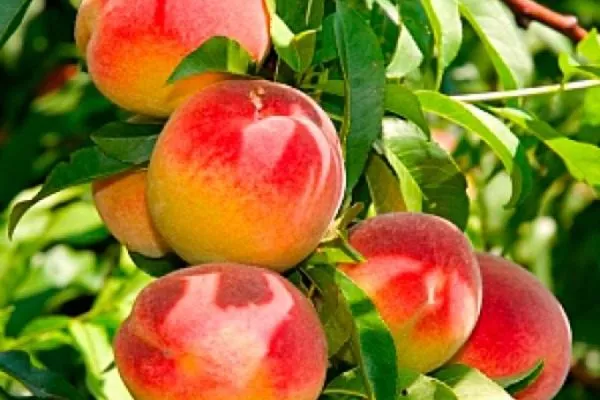
Honey is a bright representative columnar varieties Peach. Its popularity among domestic gardeners is due to its consistently high yield, amazing flavor and juiciness, decorative qualities, and strong immunity. These trees are so compact that even a small plot can accommodate a true peach orchard.
Information about origin
The variety is not listed in the Russian Federation State Register. Information about its origin or creators is lacking. However, it is quite widespread and popular. Its seedlings are available for purchase from many domestic nurseries and agricultural companies.
The appearance of the tree
The Honey Peach, like all representatives of the columnar variety of garden culture, has the following characteristic features:
- compactness;
- height - up to 2-2.5 m;
- the strength of the central trunk, from which numerous short branches extend, capable of withstanding a heavy load;
- vertical orientation of branches;
- narrow pyramidal or elongated oval crown with a diameter of up to 1 m;
- formation of a fruit ovary on the trunk of a tree.
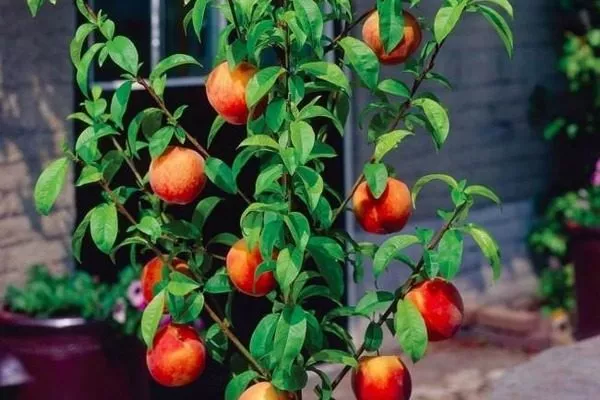
Trees of this variety have the appearance of a living column, covered in foliage and bearing large, attractive fruits. They are characterized by a slow growth rate, reaching their maximum height in their fourth year. They are characterized by the following external features:
- "height" - 1.5-2 m;
- a strong trunk covered with light brown bark;
- oval-elongated crown, not exceeding 1.2 m in diameter;
- dense foliage;
- foliage: drooping, emerald green, glossy;
- with white and pink flowers that densely cover the tree trunk in May and exude a sweet aroma throughout the garden.
This variety's distinctive feature is its exceptional ornamental value. Gardeners grow it not only to harvest delicious and nutritious fruit but also to beautify their gardens. It's also suitable for landscape design and for indoor cultivation in pots (or tubs) on terraces and balconies.
Fruits and their taste characteristics
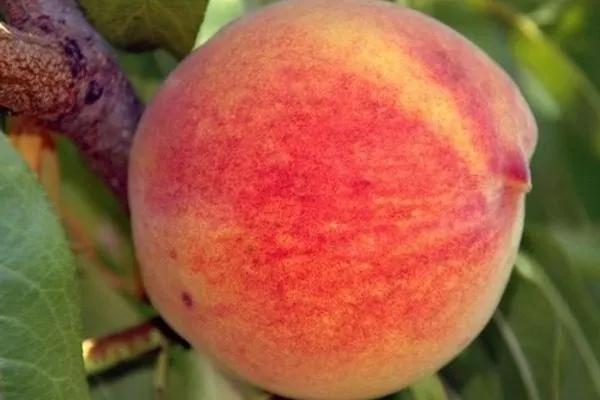
The Honey peach harvest is exceptionally beautiful and delicious. Its fruits possess the following characteristics:
- large size;
- weight - 160-200 g;
- correct, wide-round shape;
- short stalk and close proximity to the trunk;
- rich yellow color with a red blush that occupies half the surface of the fruit;
- pronounced abdominal suture;
- medium-dense skin, not tough, covered with fluff;
- the flesh is white-green in color, quite dense, not tough, very juicy and aromatic;
- a medium-sized stone that easily separates from the pulp.
- ✓ The fruits have a distinct honey flavor with a pineapple note, which is rare among other varieties.
- ✓ The tree retains its decorative appearance even during the dormant period due to the compact shape of its crown.
This peach variety is renowned for its balanced and very sweet flavor, with a hint of honey and pineapple. The rich aroma and incredible juiciness make these fruits a true summer delicacy, highlighting their dessert-like appeal.
These fruits are quite shelf-stable: ripe specimens will keep for one week, while slightly unripe ones will keep for up to half a month in a cool place. They are also distinguished by their transportability. They do not leak or dent during long-distance transport. These qualities have led to the variety being used in commercial cultivation.
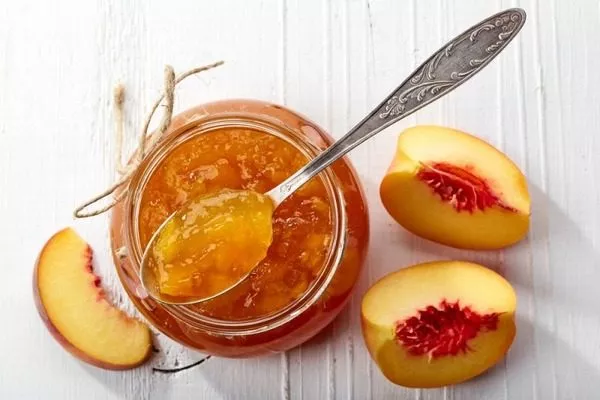
The purpose of the crop is universal:
- fresh consumption;
- home cooking (desserts, fruit salads, jams and jellies, juices, compotes, jellies, marmalade, pie filling);
- canning.
Eating fresh Honey Peach has health benefits. Thanks to the fruit's high vitamin and mineral content, it strengthens the immune system, improves mood, reduces nervous tension and anxiety, increases vitality, and improves skin condition.
Ripening period and yield
The Honey peach variety is characterized by a medium ripening period. Peak fruiting occurs in July. The fruits become ripe in the second half of the month. They ripen uniformly and are not prone to shedding.
Trees of this variety begin to bear fruit in their second to third year. Despite their small size, these plants are highly productive. Their yields range from 8 to 15 kg. They bear fruit for 7 to 10 years.
Self-fertility and pollinators
| Name | Disease resistance | Ripening period | Frost resistance |
|---|---|---|---|
| Harbinger-2 | High | Average | Up to -25°C |
| Ontario | Average | Early | Up to -20°C |
| World Ring | High | Late | Up to -30°C |
| Harrow Diamond | Average | Average | Up to -25°C |
Honey is self-fertile. It produces fruit without cross-pollination with other varieties. It is an excellent neighbor for them, attracting bees with its fragrant blooms. Its trees yield 30% more when paired with other mid-season varieties:
- Harbinger-2;
- Ontario;
- World Ring;
- Harrow Diamond.
Frost resistance and the need for shelter
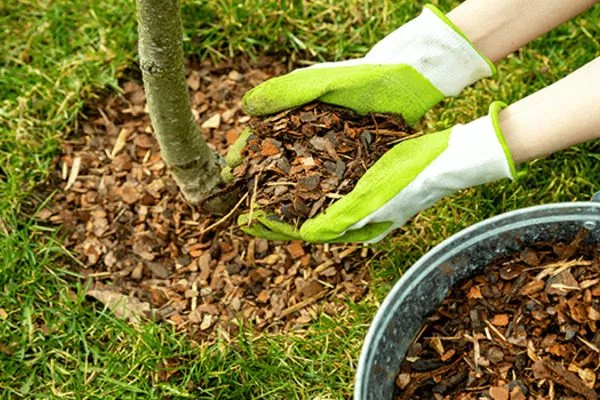
This fruit variety is considered frost-resistant, withstanding temperatures down to -30°C. When grown in regions with harsh winters, peach trees require mulching and covering with a covering material (agrofibre, burlap) before the cold weather sets in. Young plants especially need insulation.
Requirements for soil and climatic conditions
Despite its cold hardiness and ability to withstand adverse weather, the peach tree grows and produces best in warm, mild climates, as well as in temperate areas. It prefers full sun, abundant light, and moisture. Plant it in the southern or southeastern part of the garden.
Fruit crops are quite demanding when it comes to soil conditions. They thrive best in soils with the following characteristics:
- sandy with the addition of humus or black soil;
- loose;
- air and moisture permeable;
- fertile;
- with neutral or low acidity;
- with deep waters.
- ✓ The depth of groundwater must be at least 1.5 m.
- ✓ The optimal soil pH for the Honey peach is 6.0-7.0.
Trees of this cultivar are heat- and drought-resistant. They can easily withstand scorching summers. However, dampness, drafts, and cold winds are detrimental to them.
Resistance to diseases and pests
The Honey Peach is considered a disease-resistant variety. Its trees have good immune defenses. They are rarely affected by powdery mildew. curliness foliage, clasterosporium. They are also of no interest to harmful insects.
How to plant correctly?
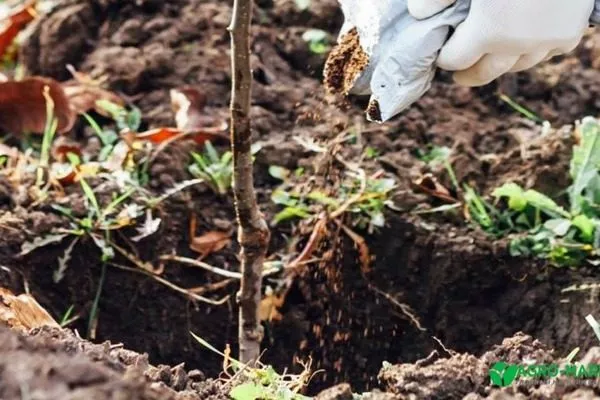
Plant columnar peach trees in March-April or September-October. Maintain a distance of 0.8-1 m between seedlings. Follow these step-by-step instructions:
- Dig a hole 60-70 cm deep. Its diameter is 50 cm.
- Line the bottom of the hole with a drainage layer of expanded clay or broken brick.
- Fill the hole with a mixture of garden soil and humus, enriched with sand and black soil. Form it into a mound.
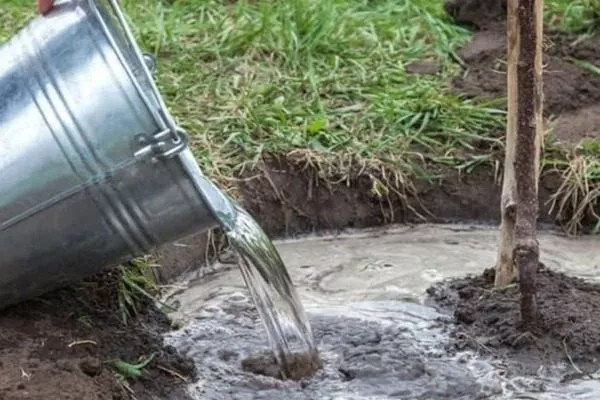
- Pour 5 liters of water into the hole. Drive in a wooden stake. This will serve as support for the seedling.
- Place the tree in the center of the mound. Spread out its roots and cover them with soil.
- Straighten the seedling and tie it to a stake.
- Water the tree again with warm, settled water.
- Mulch the tree trunk circle with non-acidic peat or humus.
Subtleties of care
The Honey peach tree requires standard care for fruit trees, which includes the following procedures:
- watering;
- weeding;
- pruning;
- top dressing;
- treatments against diseases and pests.
Water young trees several times a month for the first three years. They especially need moisture when rainfall is low. A mature peach tree will only need 3-4 waterings per season. Use 30 liters of water per tree. Moisten the soil to a depth of 0.5 m. Perform this procedure in the morning or in the evening after the heat subsides.
In the fall, give your peach tree a deep, moisture-replenishing watering. Use 50 liters of water per tree. Complete this procedure before the cold weather sets in. This will ensure the fruit tree survives the winter successfully.
Feed the young peach tree at least twice during the season:
- During the period of flowering and unfolding of leaves Add a complex mineral composition. The consumption rate is 50 g per 1 plant.
- In August Fertilize the tree with any potassium-phosphorus mixture. Consumption: 50 g per 1 seedling.
A mature, fruiting peach tree requires more nutrients. Increase the fertilizer rate to 150-200 g. Apply at least three fertilizer applications per season. Add foliar sprays with a water-soluble nutrient solution.
Regularly weed the area around the tree trunk. Don't let them grow too large. Weeds are a breeding ground for insects, fungi, and pathogenic bacteria.
Under unfavorable weather conditions and inadequate care, fruit trees can be susceptible to fungal and bacterial infections. Preventative treatments with Bordeaux mixture, performed at the following times, will help prevent peach diseases:
- before the buds open in spring;
- after the leaves fall in autumn.
If you notice signs of moniliosis or leaf curl on your peach tree, spray the crown with systemic fungicides such as Horus.
Features of pruning
To maintain the decorative appearance, health, and productivity of your columnar peach, prune it annually in the spring. During this pruning process, remove all damaged, frost-damaged, and diseased branches.
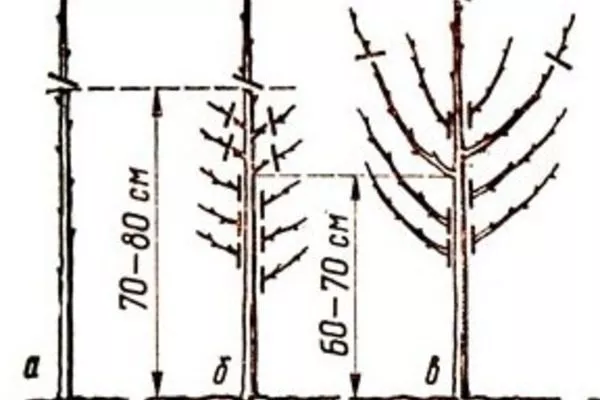
The Honey variety also requires formative pruning. There are several crown shaping options. Gardeners consider a "cup" shape to be the best option. This cup-shaped crown makes it easier to care for and harvest fruit. Perform this procedure one year after planting, following these guidelines:
- in spring, cut all lateral branches on the trunk to a height of 40-50 cm, forming a standard;
- leave 4-7 well-developed lateral shoots (first-order skeletal branches) higher in the tier;
- Finally, trim the main trunk.
Second-order branches will form on the skeletal shoots the following season. In the third year, shorten these, as well as the first-order shoots, by a third. Don't forget to remove any branches growing inward.
Thanks to the formative pruning The crown is open, well-lit, and ventilated. This procedure not only improves the peach tree's appearance but also reduces disease risk and allows the tree to produce more abundant harvests.
Positive and negative qualities
The value of the variety lies in its many advantages:
Summer residents consider the following to be the disadvantages of the Honey peach:
Reviews
Honey is a very popular columnar peach variety. Its fruits are exceptionally tasty and considered a dessert delicacy. In addition to its delicious and abundant harvest, gardeners love this variety for its frost and disease resistance and its high ornamental value.