
The Honey Peach is a columnar variety that attracts gardeners with its compact size and excellent fruit flavor, with distinct hints of honey. This peach is ideal for small gardens, as it is very compact and takes up minimal space.
Who bred the Honey variety?
There is currently no precise or reliable information about the breeding history of the Honey peach. Despite this, the variety is extremely popular among gardeners and is widely sold in fruit nurseries.
The appearance of the tree
This variety is medium-sized, reaching 2 m in height with an oval-shaped crown 1.2 m in diameter. The tree is moderately dense, with glossy, emerald-green leaves. The trunk is robust and light brown. The flowers are medium-sized, light pink, and fragrant.
Description of fruits
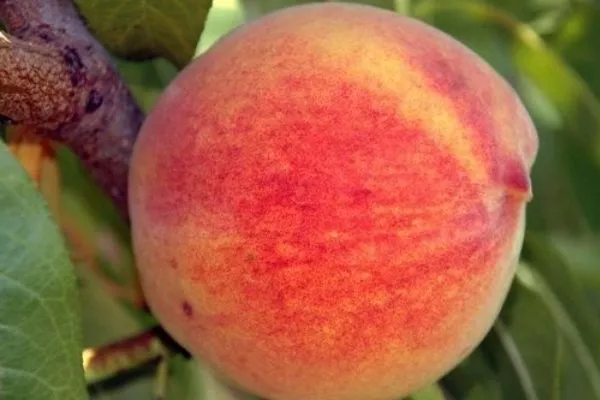
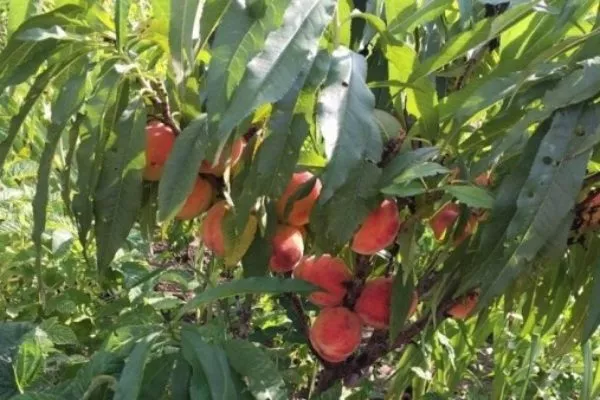
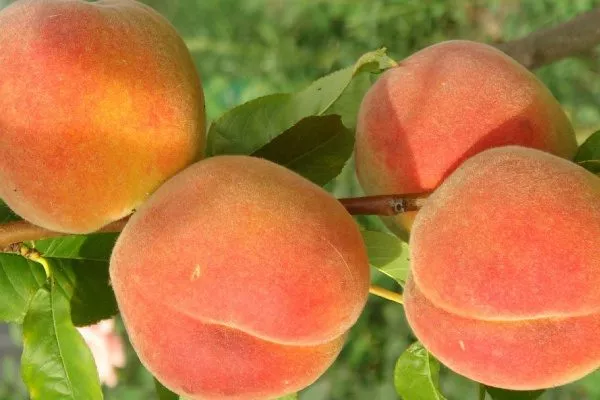
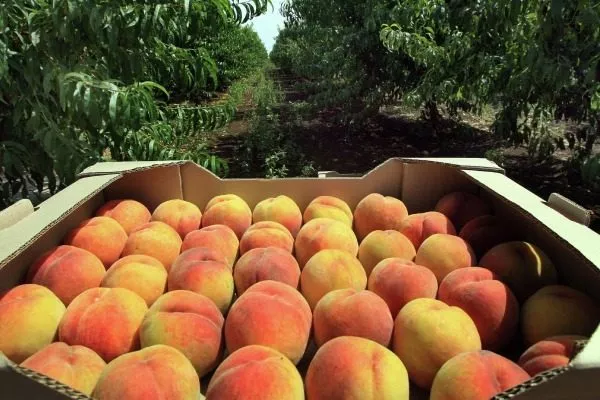
The Honey peach is a large-fruited variety. A fully developed, healthy tree produces and grows fruits weighing at least 150-160 g. With proper care, fruits can reach 200 g. The Honey peach is round, with a slightly velvety surface and thin skin. It has a distinct ventral suture.
When ripe, peaches turn light yellow with a bright red blush, which covers almost 50% of the surface. The flesh is juicy and greenish-white. The pit is medium-sized and separates fairly easily from the flesh.
Taste and application
The Honey Peach has a sweet and slightly cloying honey flavor, with a hint of pineapple and aroma. The skin is soft and completely free of bitterness. The aroma of ripe fruits is light and pleasant.
Ripe peaches are eaten fresh, and are also used in cooking, canning, making jams, preparing various compotes, fillings and desserts, and pickling.
Characteristics of the variety
This variety is early-bearing; the short, compact tree reaches its full height in its fourth year. It blooms in May. Ripening time is average, with the fruits ripening around mid-July, all at the same time. Fruiting begins in the second year after planting. The tree bears fruit for no more than 10 years.
Despite its small size, the tree produces a good harvest. With proper cultivation practices, a single plant can yield 8-12 kg of peaches. The variety is self-fertile, so it doesn't require pollinators. The sweetly scented flowers attract bees and other pollinating insects to the garden.
Pros and cons
Before planting the Honey peach on your plot, it is useful to evaluate all its advantages and disadvantages.
Pros:
Cons:
Site requirements
This variety thrives on warmth, so it's best planted in open, sunny locations, preferably on the south side of the plot. The Honey peach grows best in loose, fertile, and well-drained soils with low acidity. Preference is given to slightly elevated areas with deep groundwater.
Landing features
The peach tree requires specific growing conditions, and planting it correctly is crucial—the tree's entire future life depends on this.
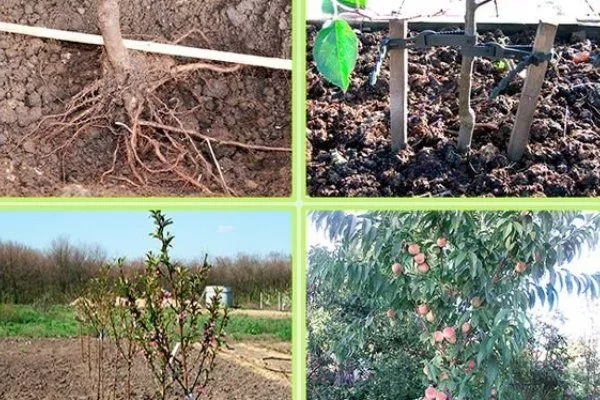
- ✓ The seedling must have a healthy root system without signs of rot or damage.
- ✓ The height of the seedling should correspond to its age, not exceeding 1.5 m for a two-year-old plant.
- ✓ The bark on the trunk and branches should be smooth, without cracks or signs of disease.
Recommendations for planting Honey Peach:
- It is better to plant in the spring - before the sap begins to flow, and in the fall - about a month before the onset of frost.
- The distance between a columnar tree and tall trees should be at least 4 m, so that their crowns do not create a shadow that would negatively affect the growth and fruiting of the crop.
- Prepare a 50x50 cm hole for planting. Add drainage material, such as crushed rock, expanded clay, or broken brick, to the bottom. Make a 10 cm thick layer. Top with fertile soil mixed with humus, wood ash, and mineral fertilizer.
- A long stake is driven into the center of the hole, its height above the ground being at least 1 m. The seedling is tied to the support with rope or twine.
- Planting is carried out using standard technology: the seedling is placed vertically, the roots are covered, compacted, and watered with settled water.
How to properly care for a tree?
To ensure a productive harvest, all the agronomic requirements for growing peaches must be met. These are standard for the Honey variety, making it suitable for any gardener or novice gardener.
Care features:
- Water the tree based on rainfall. During drought, the peach tree needs to be watered weekly. Under normal conditions, the tree only needs to be watered once a month.
- The trunk area is regularly loosened, and weeds are removed so that they do not absorb the nutrients intended for the tree and do not attract insect pests.
- The tree is fertilized 2-3 times per season; in the spring, you can add complex mineral fertilizers, and in the fall, organic fertilizers.
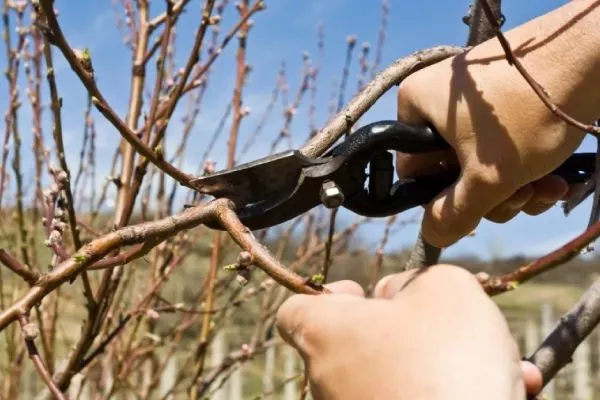
- Pruning is carried out in early spring, before the sap begins to flow. Dead, damaged, old, and diseased branches are removed. At the same time, annual growth is removed—up to 15-20 cm—to maintain the tree's neat crown and decorative appearance. Pruning is repeated in the fall.
- For winter, the tree is insulated with breathable materials. Examples include paper, straw, parchment, dried reeds, and so on.
- ✓ Leaves are uniformly green, without spots or curling.
- ✓ Annual branch growth is at least 20 cm.
- ✓ No gum flow on the trunk and branches.
Diseases and pests
The columnar peach tree, Honey, has a strong immune system that protects it from most diseases. This variety is extremely rarely affected by leaf curl and powdery mildew. The tree is generally not attractive to insect pests.
Despite its resistance to diseases and pests, the Honey peach requires preventative treatment. Bordeaux mixture, copper sulfate, and other disease-preventative agents are used. If pests appear, biological products that are harmless to humans are used.
Harvesting and storage
Peaches are harvested in dry weather when they reach ripeness. Ripe fruits develop a pleasant aroma, the stems separate easily, and the flesh gives back slightly when pressed—ripe fruits are firm and not tough.
Peaches picked slightly underripe can ripen properly if placed in craft paper. Plastic bags should not be used, as they will quickly rot. Alternatively, the peaches can be laid out on a linen cloth with the stem facing down.
Reviews
The Honey Peach is an interesting variety, but not without its flaws. Its strengths certainly include excellent frost resistance and delicious flavor, but it's unlikely to be suitable for those expecting large harvests or planning to grow peaches commercially.