
Crosby is the name of a mid-season peach. It has long been known and loved by Russian gardeners. The variety is prized for its increased winter hardiness, undemanding growing conditions, early fruiting, and attractive harvest. It is renowned not only in our country but throughout the world.
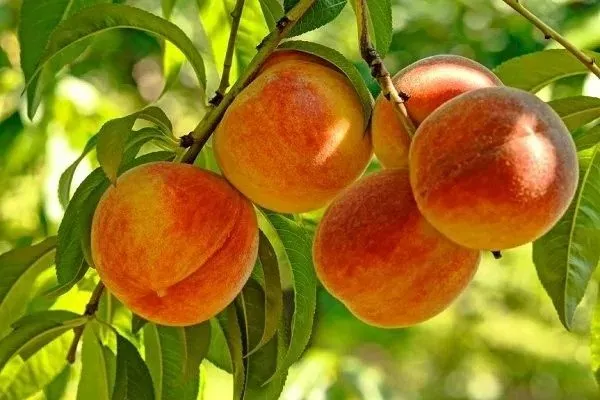
Characteristics of the Canadian peach variety
Crosby is the creation of American (or Canadian) breeders, developed in the first half of the last century. It is grown by domestic gardeners and commercial fruit farmers throughout the country. Its increased winter hardiness makes it one of the best varieties for the Moscow region.
Description of appearance
Crosby is characterized by medium growth vigor. Its trees have the following external characteristics:
- "height" - 2.5-3 m;
- spreading crown;
- leaves: large, dark green;
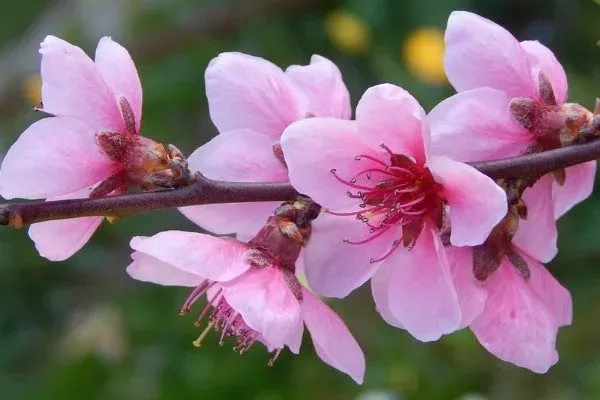
- flowers: large, pink, fragrant, visually similar to bells
A flowering peach tree is decorative thanks to its multitude of fragrant buds. In May, it beautifies any garden plot.
Fruits and their taste characteristics
Peaches of this variety are characterized by the following indicators:
- large size;
- weight - from 180 g to 300 g;
- round-oval shape;
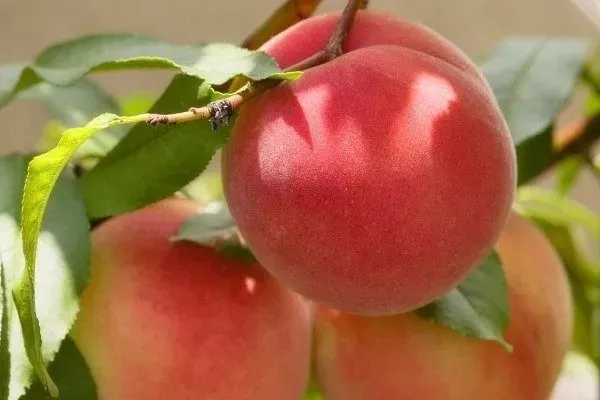
- bright yellow cover color, partially covered with an attractive red blush;
- the presence of a small fluff on the skin;
- yellow flesh, quite dense;
- a small stone that is easily separated from the pulp.
Peaches of this variety have a universal purpose:
- fresh consumption;
- adding to desserts;
- preparation of compote, jam, marmalade, jelly;
- processing into juice, puree;
- conservation;
- freezing.
The fruits are shelf-stable (retain their marketable appearance for 5-9 days) and transportable, making the variety suitable for commercial cultivation.
Self-fertility and pollinators
The Crosby variety of fruit is self-fertile. It doesn't require nearby pollinators to produce abundant fruit.
Ripening period and yield
Trees of this variety begin to bear fruit in their third year. The ripening period is considered average. The first fruits can be enjoyed as early as August 10th. The mass peach harvest occurs in the second half of the month. One tree yields between 20 and 40 kg of fruit.
Winter hardiness
Crosby is frost-resistant:
- its trees can withstand temperatures down to -37°C;
- do not require insulation of the trunk and root zone in regions with snowy winters;
- For young plants to successfully overwinter, it is enough to mulch the trunk circle and cover them with a thick layer of snow.
Pros and cons of the variety
The Crosby peach is famous for its many qualities:
Some gourmets consider the dense, hard flesh of the fruit to be the variety's only significant drawback. Those who enjoy melt-in-the-mouth peaches won't appreciate it.
Planting recommendations
Plant peach trees in spring or fall. In spring, begin planting after the snow has melted and the garden soil has warmed (from mid-March to early May). Plant before the buds swell. The ideal average daily temperature is 7°C.
In the fall, plant the Crosby tree when the daytime temperature reaches +10°C. Do this three weeks before the onset of frost.
Give preference to seedlings with the following characteristics:
- with the presence of a developed main root and 2-3 lateral roots;
- one- or two-year-old;
- height up to 2 m;
- without signs of disease or damage;
- vaccinated.
Set aside a spot in your garden for growing Crosby peach that meets the following requirements:
- sunny;
- windless;
- with deep groundwater;
- with chernozem or loamy soil, characterized by a neutral or low pH.
Prepare the planting hole in advance. Its dimensions are: diameter – 1 m, depth – 0.6-0.8 m. Add fertilizer:
- organic matter such as compost or humus (10-12 kg);
- phosphorus and potassium compounds mixed with garden soil (100 g of each per 10 kg of soil).
If you have purchased several seedlings, plant them according to the following scheme:
- the distance between trees is 4 m;
- between rows - 5 m.
Proper planting of the Crosby peach tree is essential for its rapid establishment and fruitful harvest. Follow these step-by-step instructions:
- Prepare the planting hole in the fall or one month before planting. It should be larger than the root system.
- Add fertilizer to the hole, filling it 1/3 full with ash and manure. Water it.
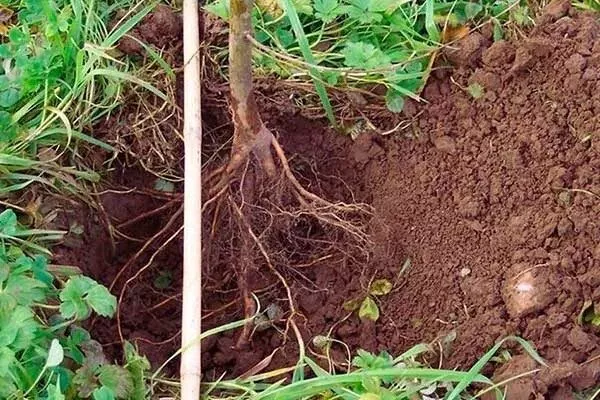
- Place the seedling in the center of the hole. Carefully straighten its roots without damaging them.
- Drive a stake into the ground next to the seedling to secure it.
- Cover the roots with soil. Leave the root collar 3-5 cm above the ground.
- Compact the soil around the tree trunk.
- Tie the plant to a stake.
- Shape the tree's trunk circle. Moisten the area generously.
- Loosen the soil under the seedling. Cover it with a layer of mulch. Use organic matter, such as peat, for this purpose.
Care tips
The Crosby peach tree produces a good harvest with proper care, which includes the following measures:
- WateringMoisten the soil under the tree once every 7 days, using 40 liters of water. A mature tree requires less frequent watering—once every 10-14 days.
- LooseningCarry out this procedure after rain and watering. This will ensure better aeration of the roots and increase the soil's permeability. While loosening the soil, remove weeds to prevent fruit crops from becoming infected and being attacked by pests that thrive in weeds.
- Protection against infections and parasites. Conduct regular inspections of the planting. If you detect symptoms of disease or signs of pest infestation, spray the trees with fungicides/insecticides.
- MulchingTo create a favorable microclimate in the garden soil, mulch the peach tree's trunk circle.
- Top dressingAfter planting the tree in a fertilized hole, you won't need to fertilize it for one year. Spray mature plants with potassium-rich fertilizers on the foliage before harvesting. This will improve the flavor of the harvest and make the fruit sweeter. Apply 2-3 such applications.
Features of pruning
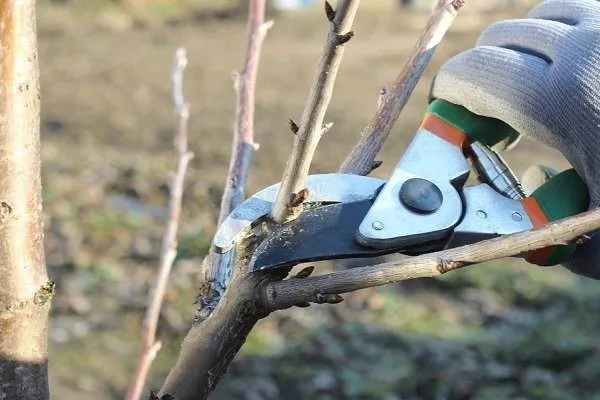
Prune the Crosby peach tree a few weeks after planting it in the garden. Form its crown into a bowl-shaped form. This shape will make the tree easier to care for and harvest. Follow these steps:
- Step back 35 cm from the grafting site to the lateral branch. Cut off all shoots under the ring above the marked section.
- Select 4-5 of the strongest shoots growing in different directions and spaced 10-20 cm apart. Leave them.
- Shorten the remaining branches by 3-4 buds from the ground.
In spring and fall, perform sanitary pruning of the Crosby peach. Remove unproductive branches:
- deformed;
- frozen;
- dry;
- broken;
- sick;
- affected by parasites;
- directed inward towards the crown.
After pruning, be sure to treat all cuts with garden pitch or sprinkle them with crushed charcoal.
Reviews
The Crosby peach is considered a noteworthy variety. Its many excellent characteristics make it attractive to both home gardeners and commercial fruit growers. It delights gardeners with its high yield, marketable appearance, and transportability, as well as its stunning sweet flavor and juiciness.