
The Kremlin peach is a unique plant that has long been popular among gardeners and fruit lovers. It combines an attractive appearance, excellent taste, and high productivity. It can be used not only to enjoy fresh fruits but also to create a variety of preserves for the winter. Proper care is essential.
Information about origin
Created by renowned Soviet breeder Ivan Nikolaevich Ryabov, who developed numerous varieties, his work took place at the Nikitsky Botanical Garden, where for nearly a century, scientists have been striving to develop versatile and easy-to-care-for peach varieties.
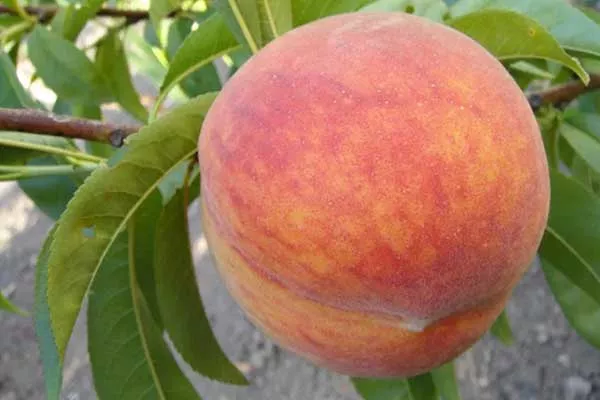
Kremlin was introduced in the 1950s. Two American varieties, Rochester and Elberta, were used in its creation.
The idea of a peach
Before growing this crop, it's important to study its characteristics. This variety is noteworthy for its appearance, early fruiting, high-quality fruit, and strong immunity.
The appearance of the tree
The plant is tall, reaching up to 5 m in height. It grows quite quickly, forming a wide, branched crown with an inverse conical shape.
Fruits and their taste characteristics
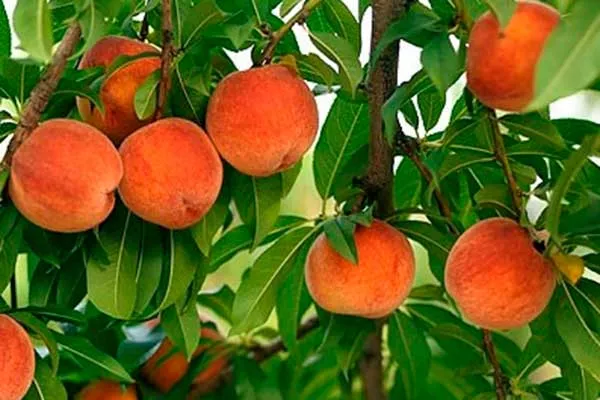
The fruit is round, sometimes slightly oval. Peaches vary in size, weighing between 100 and 200 grams.
Other distinctive features:
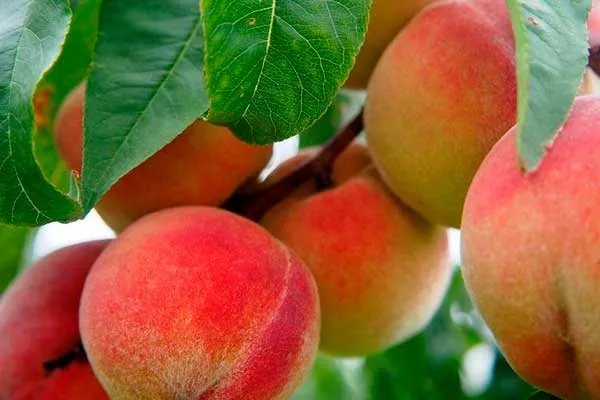
- The skin is covered with velvety fuzz, bright yellow in color, shading to orange in places. As the fruit ripens, it develops a blush and dark red color.
- The pulp is of medium density, elastic, with a delicate fibrous texture, dark yellow in color, and good juiciness.
- The pit is medium-sized, and its detachability depends on the fruit's ripeness. In fully ripe specimens, the pit is easily removed, but in unripe ones, this is more difficult.
- The taste is excellent: juiciness is combined with a rich sweet taste and a slight sourness.
Kremlin peaches are most often eaten fresh, but they can also be used to make juices, preserves, compotes, and jams. Prepare these preserves immediately after harvesting, as the fruit's physical properties deteriorate over time.
Ripening period and yield
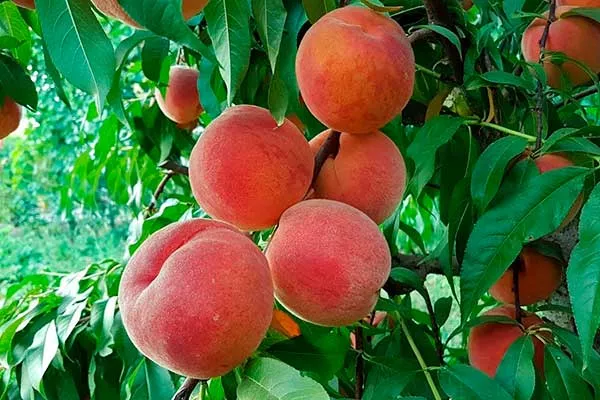
This is an early-bearing variety, with the first harvest appearing as early as 3-4 years after planting. This mid-season tree typically bears fruit between August 11th and 16th, although this period varies depending on weather conditions. A single plant yields approximately 40 kg.
Self-fertility and pollinators
The flowers are highly decorative, rose-shaped. The tree blooms in midsummer, a process that lasts about a week, sometimes extending to 10-12 days. The variety is self-fertile and requires no pollinators.
Frost resistance and the need for shelter
The crop adapts well to various climatic conditions and tolerates temperature fluctuations, including recurrent spring frosts down to -6-7°C. It is grown in private gardens in central Russia, but its winter hardiness is not particularly high: it can withstand temperatures as low as -27°C.
In regions with harsh winters, the tree requires winter shelter. In the fall, mulch the area around the trunk, install a frame of slats around the trunk, bend and tie the crown, and cover the entire structure with burlap or agrofibre. Covering the tree is complicated by its height and spreading crown.
Resistance to diseases and pests
It is characterized by strong immunity and is rarely affected by such common stone fruit diseases as leaf curl. It is resistant to clasterosporium.
Kremlin may be susceptible to pest attacks, but with pruning, mulching, and preventative spraying, you can prevent these problems or minimize the damage caused by insects.
How to plant correctly?
Growing this crop is a simple task that even beginners can handle. However, it's important to follow certain guidelines to ensure the plant thrives and produces fruit.
- ✓ The soil pH level should be strictly within 6.0-7.0 for optimal nutrient absorption.
- ✓ The depth of groundwater is at least 1.5 m to prevent rotting of the root system.
Requirements
Choose a sunny, well-ventilated site protected from northerly winds. Peaches prefer light, fertile soils with a neutral or slightly acidic pH. Loamy or sandy loam soils are ideal.
Suitable timing
The optimal time is late September or early October, about a month before the onset of permanent frost. This allows the tree to establish roots before winter.
Planting is acceptable in early spring, when the soil has thawed but the buds on the trees have not yet opened. This is usually late March or early April.
Preparing a hole for a seedling
Start the procedure early. Follow the instructions:
- Dig a hole 70-80 cm in diameter and 50-60 cm deep.
- Mix the top fertile layer of soil with compost or humus (10-20 kg), add 200 g of superphosphate and 100-150 g of potassium salt.
- If the soil is acidic, add 200-300 g of wood ash.
Landing algorithm
Before planting, soak the seedling's roots in water for 2-3 hours. If they are damaged, trim them back to healthy tissue. Next, follow these steps:
- In the center of the hole, form a small mound of soil mixture and place the seedling on it so that the root collar is 3-5 cm above ground level.
- Spread the roots and carefully fill the hole with the prepared soil mixture, lightly compacting the soil around it.
- Water the seedling generously with 20-30 liters of water. After it's absorbed, cover the soil with mulch (peat, humus, or straw).
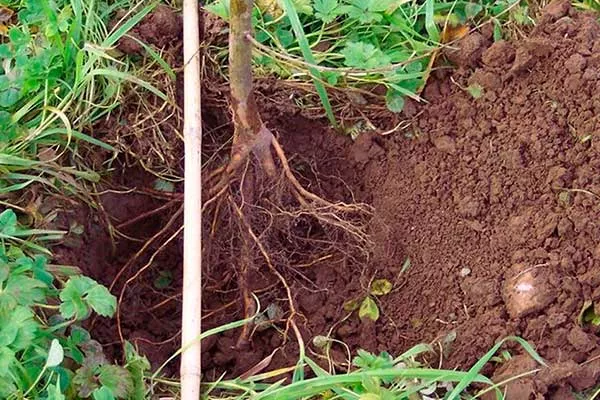
If the seedling is tall and unstable, install a stake nearby and tie the plant with soft twine.
Subtleties of care
The plant requires regular watering, especially during periods of active growth, flowering, and fruit formation. Water the tree every 10-14 days, depending on weather conditions and soil moisture. On average, a mature tree requires 40-50 liters. Young seedlings require about 20-30 liters.
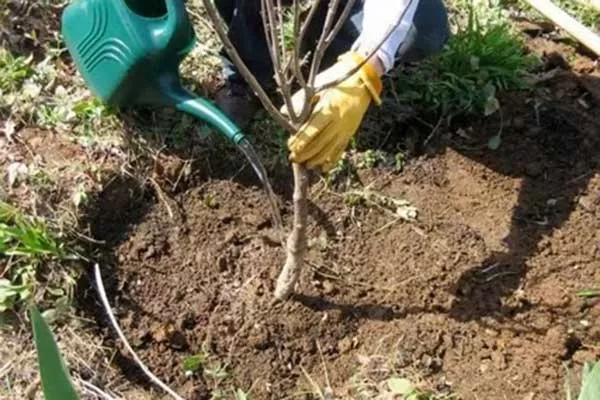
Perform simple agricultural practices:
- Water the peach tree at the base, avoiding water on the trunk and leaves to reduce the risk of disease. Use settled water, preferably warmed in the sun.
- In early spring, before bud break, apply nitrogen fertilizer (such as ammonium nitrate) at a rate of 30-40 g per square meter of the tree's trunk circle. This stimulates shoot growth and development.
- During flowering and fruit set, use complex mineral fertilizers with a high phosphorus and potassium content. These support tree health and improve fruit quality. Superphosphate (20-30 g) and potassium salt (10-15 g) are good choices.
- After harvesting, add organic matter—compost or humus (5-10 kg per tree). This will help restore the tree's strength after fruiting and prepare it for winter.
- To increase yield and disease resistance, use fertilizers with microelements (boron, zinc, magnesium) every 2-3 years.
- Loosen the soil around the peach tree 3-4 times per season, after watering and rainfall. This improves root aeration and helps retain moisture. Work to a depth of 5-7 cm near the trunk and 10-12 cm away from it to avoid damaging the roots.
- At the same time, remove weeds that compete with the tree for moisture and nutrients.
- Use organic materials such as straw, hay, peat, compost, or humus. These procedures help retain moisture, reduce weed growth, and improve soil structure.
Apply a 5-10 cm layer of mulch around the tree trunk, leaving a small space around the trunk to prevent rot. Renew the mulch layer as it decomposes, usually once or twice per season.
Crown formation technology
The Kremlin peach variety is a tall plant and requires timely and competent care. shaping. Please observe certain requirements:
- Formation of a bush crown. This involves removing all but three or four shoots that grow from the lower buds. These reach full strength within two years and bear fruit for about three years. After this, trim them back to the root collar.
Next, leave about seven of the most developed shoots from the summer growth. Create a configuration of five fruiting shoots and three replacement shoots. - Creation of a sparse-tiered crown. This method involves creating a 30-40 cm tall standard tree and preserving 5-6 shoots. The first three shoots, spaced 40 cm apart, form the first tier. Remove the side shoots from the standard tree, but leave the lateral growth of the skeletal branches intact.
- Formation of a cup-shaped crown. This is the most popular variety for home gardening. The standard should be approximately 35 cm tall. Remove the main stem and side branches. Focus on shaping the crown with four main branches spaced 15 cm apart.
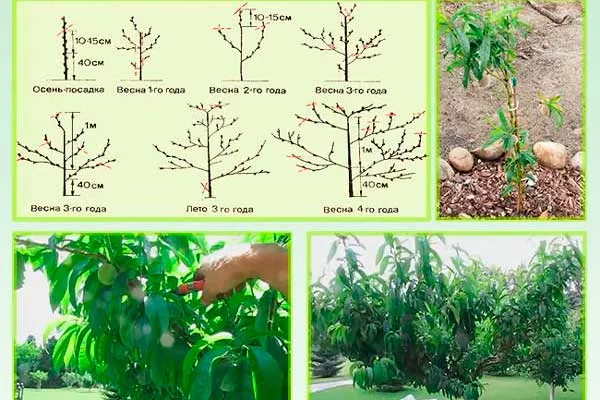
Additional types of pruning:
- Sanitary. Remove dried and diseased shoots, then burn them.
- Rejuvenating. Performed on older trees to renew the crown. This pruning involves cupping the tree.
- Regulatory. It is necessary to maintain the productivity of the tree and involves removing some of the fruit-bearing branches to avoid exposing the skeletal branches.
- Restorative. Use to increase fruiting volumes in case of mechanical damage to the crown.
Regardless of the type of pruning, cover all cut areas with garden pitch.
Harvesting and storage
The fruit ripens in mid-August. Pick the fruit when it's soft to the touch but still firm enough. Fully ripe fruit can quickly become overripe and lose its commercial value, so pay close attention to the timing of harvesting.
- ✓ The appearance of a characteristic aroma, which is absent in unripe fruits.
- ✓ Easy separation of the stalk from the branch with minimal effort.
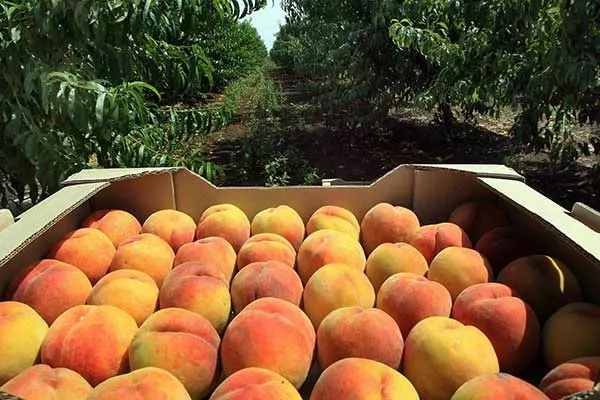
Follow the recommendations:
- Carefully remove the fruit, grasping it with one hand and supporting it from below to avoid damage. Use scissors or pruning shears with a stem. This will help prevent mechanical damage to both the fruit and the tree.
- Because peaches may ripen unevenly, harvest several times at intervals of 4-7 days.
- Carefully inspect the fruit, discarding any damaged or diseased ones. Do not wash them before storing to avoid excess moisture, which can promote rotting.
- Store the harvest at 0-4°C. Under these conditions, it will stay fresh for 1-2 weeks. Refrigerate it to extend its shelf life.
- The optimal humidity level is 90-95%. Place the fruits in plastic containers with ventilation holes or in paper-lined baskets. Avoid overcrowding to prevent the fruits from pressing against each other and becoming damaged.
- Check regularly for signs of rot or damage. Remove damaged specimens to prevent the rot from spreading to others.
- If you plan to store peaches longer, freeze them: wash, dry, and remove the pits. Plunge them in boiling water for 1-2 minutes, then quickly cool them in ice water. This will preserve the flavor and texture.
Place the fruit in a single layer on a tray and freeze until firm. Then pack into airtight containers or freezer bags.
Proper collection and storage of cropsPressing peaches will help preserve their taste and quality, allowing you to enjoy them for a long time.
Positive and negative qualities
Carefully consider the advantages and disadvantages of this variety before growing a seedling in your garden. The Kremlin peach has many advantages:
Some gardeners note the variety's disadvantages as low frost resistance, the need for winter shelter, and uneven fruit size.
Reviews
The Kremlin peach is a great addition to any garden, especially for those who appreciate tasty and juicy fruits. Its many characteristics make it an attractive choice for gardeners of all experience levels. To successfully grow it and obtain a high-quality harvest, it's important to consider its shortcomings. With proper care, it will reward you with bountiful harvests.