
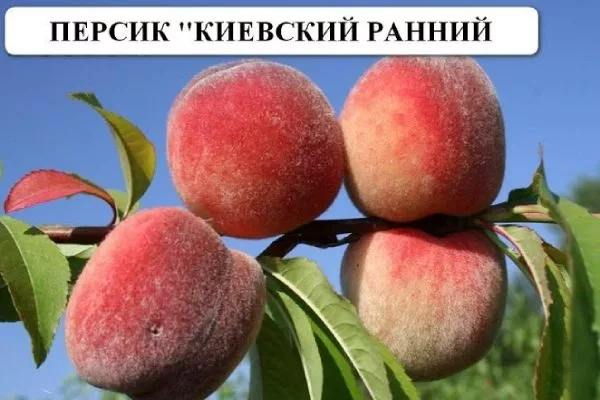
Kyivsky Ranniy is one of the most popular peach varieties not only among Ukrainian gardeners but also among gardeners in Russia and neighboring countries. It produces fruit earlier than other varieties of the fruit tree. It is renowned for its abundant annual fruiting, excellent fruit quality, and adaptability to any climate.
History of variety selection
The variety was developed in 1939 by Ukrainian breeders from the Institute of Horticulture, crossing the Kashchenko 208 peach with the Gross Mignon. Credit goes to:
- B. I. Shablovsky;
- I. A. Sheremet;
- To A. P. Rodionov.
Kyivsky ranniy is suitable for cultivation in all regions of Ukraine. It is successfully cultivated in the central part of Russia and in the northwestern region of the country.
Description and characteristics of the Kyiv Ranniy peach variety
An experienced gardener can easily recognize the variety of this fruit crop by the appearance of its trees and fruit. It grows almost everywhere and is popular with gardeners due to its excellent characteristics.
What do the fruits and the tree look like?
Kyivsky Ranniy is a medium-sized variety. Its trees are not tall but spreading. They are distinguished by the following characteristics:
- height indicator - 3-4 m;
- the splendor of the crown, which has a spherical shape;
- shoots: powerful, thick, light green in color;
- Foliage: large, dark green, lanceolate with a short apical tooth and a serrated edge;
- Flowers: pink, small, fragrant, reminiscent of apple blossoms.
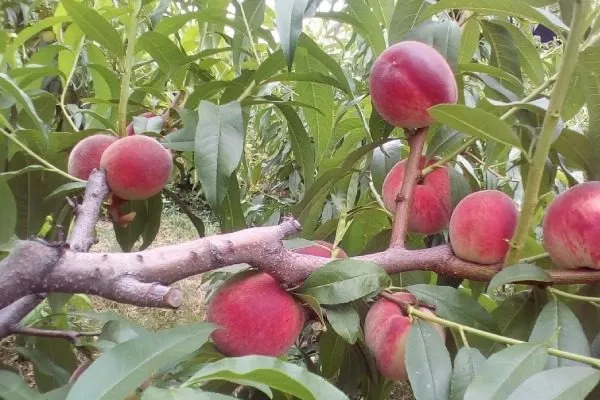
The fruits of this variety have the following characteristics:
- medium size;
- weight - 80-105 g;
- round-oval elongated shape with a spout;
- uniform yellow cover color with a blush red side;
- thin skin with a small fluff on it;
- pulp: greenish-white, fairly dense, medium juiciness;
- an elongated stone with a pointed tip, which is difficult to separate from the pulp (in overripe fruits the stone can be easily separated).
Taste qualities
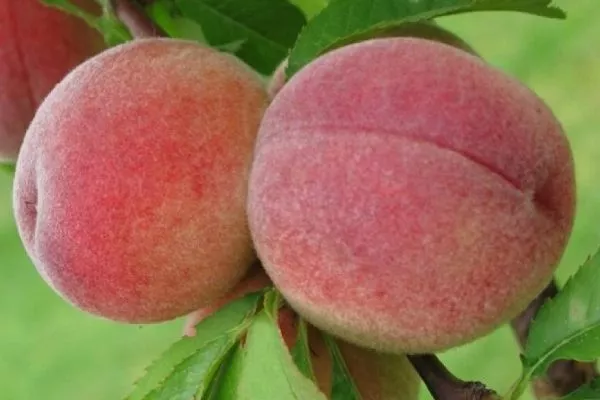
Peaches are not only beautiful but also delicious. Their pulp contains 9.4% sugar and 0.9% acid. Their flavor is harmonious, dominated by a nectar-like sweetness and a subtle, refreshing tartness. Tasting scores range from 4.4 to 4.6.
Unlike southern varieties, the fruits of the Kyiv Early variety don't delight the eater with extra-juicy flesh. Juice doesn't run down your hands as you eat them. They are very aromatic. The rich fruity aroma makes them even more delicious.
Ripening, yield and fruiting
Kyivsky Ranniy is one of the earliest-ripening varieties grown in the central regions of Ukraine. It yields fruit earlier than others. Its flowering and fruit ripening times are as follows:
- buds appear on peach trees in May, their flowering lasts 10-12 days;
- in mid-July the first fruits ripen;
- The second half of the month is when the harvest is mass-produced (when cultivating the variety in a different climate, the fruiting period shifts slightly).
This variety of garden crop is considered high-yielding:
- one adult tree produces 35-50 kg of fruit;
- In case of industrial cultivation, the yield rate is 7300-17400 kg per 1 hectare of peach planting.
Drought resistance, frost resistance
Kyivsky ranny is characterized by good winter hardiness. Its plants can withstand temperatures down to -28°C. They recover easily and quickly if damaged by frost. They are adaptable to any climate. Despite its hardiness, this variety does not tolerate drought well.
Does the variety need pollinators?
This garden variety is self-fertile, producing fruit even without pollinators. However, to maximize the productivity of peach trees and improve the quality of the harvest, experienced gardeners plant two to three trees of a different variety with the same flowering period nearby.
You'll achieve the best results by choosing the following companions for Kyiv Early:
- Redhaven;
- Favorita Moretini;
- Greensboro;
- May flower.
Application of fruits
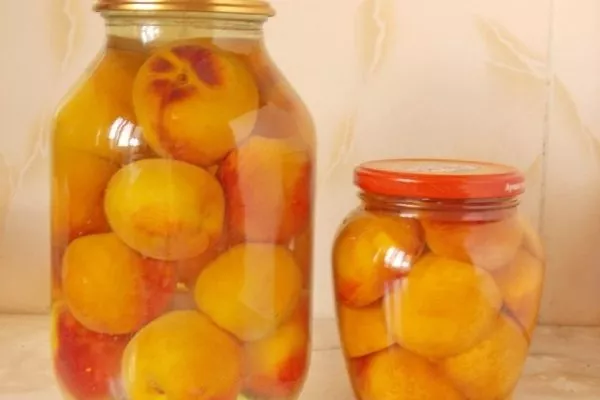
The harvest of this variety is versatile. The fruits are eaten fresh and added to desserts. They are also excellent for jam, compote, and preserves. They are also suitable for canning.
Advantages and disadvantages of the variety
Kyiv ranniy is popular among domestic gardeners due to its numerous advantages:
The variety is not without its disadvantages:
Rules for planting peaches
To plant a peach tree, select a site that meets the following requirements:
- solar;
- protected from cold winds;
- with loamy or sandy loam soil, loose, air- and water-permeable, with neutral acidity;
- with groundwater levels of 1.5-2 m.
- ✓ The soil pH level should be strictly within 6.5-7.0 for optimal nutrient absorption.
- ✓ The depth of the fertile layer is at least 40 cm to provide the root system with the necessary elements.
When purchasing a seedling of the Kyiv Ranniy variety, choose a specimen with the following characteristics:
- without damage, signs of disease and pests;
- two years of age;
- with a well-formed root system;
- with several skeletal and lateral roots (their length is 30–35 cm);
- with 3-5 branches.
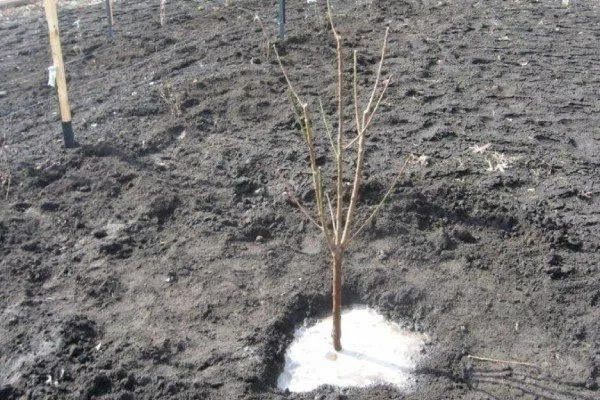
Plant the tree in the fall or spring. Follow these step-by-step instructions carefully:
- Dig a hole 2-3 weeks before planting. It should be 0.6 m deep and 0.6 m in diameter. Fill it with soil mixed with mineral fertilizers and humus.
- Drive in a stake. Its diameter is 3–4 cm, and its length is at least 1.5 m.
- Form a mound of soil mixture at the bottom.
- Place the seedling on it. Carefully straighten the roots, being careful not to damage them.
- Cover the roots with soil and compact it. The grafting site should be 5-7 cm below ground level.
- Tie the seedling to a stake.
- Water the peach tree. The recommended rate is 20-30 liters per seedling.
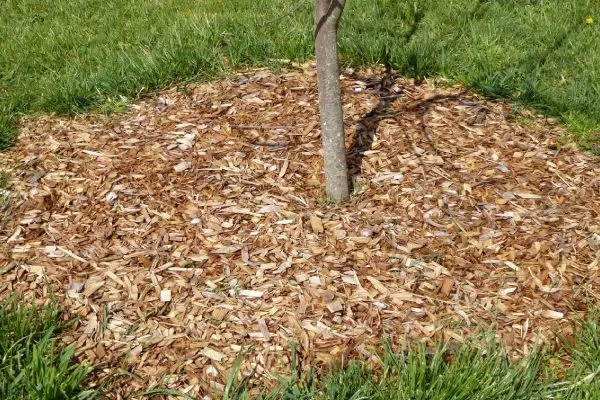
- Mulch the soil under the peach tree with peat or sawdust. Apply a mulch layer 6-8 cm thick.
Aftercare for peach
To ensure abundant fruiting, garden crops require high-quality care, which includes the following procedures:
- WateringKyiv Early peach is a moisture-loving tree with low drought tolerance. During hot periods and when there is no rain, water the planting at least once every 7 days. Water 15–20 liters per tree under five years old. Mature peach trees require more water, using 30–40 liters.
- Loosening the soil, weeding, mulching the tree trunk circleThese measures will ensure air access to the roots, retain soil moisture, and suppress weed growth.
- TrimmingPrune Kyivskiye ranenye trees to shape them. To increase their yield, shape the crown into a bowl-shaped form.
Immediately after planting the seedling, remove all lateral shoots, leaving 3-4 main branches. Prune the main shoot near the base of the upper lateral shoot. For two-year-old peach trees, shorten the primary branches if they exceed 50 cm in length or if they change direction.
Perform rejuvenating pruning from bud swelling until bud formation. Regularly perform sanitation pruning, removing dead and frozen branches. - Top dressingGarden plants need nutrients to produce abundant fruit, grow, and maintain a strong immune system. Feed them regularly.
When planting the tree, add humus (15 kg), potassium chloride (100 g), and superphosphate (200 g) to the hole. It's also a good idea to add wood ash (450 g), mixing it with fertile soil.
During the first 2-3 years after planting, fertilize the peach tree by applying ammonium nitrate (75-80 g) or urea (50-60 g) to the trunk circle in the spring. In September, apply superphosphate (45-55 g) and potassium chloride (60-70 g) as fertilizer.
- The first watering should be carried out immediately after planting, using 20-30 liters of water.
- Subsequent watering should be carried out every 7-10 days, increasing the volume of water to 40-50 liters for adult trees.
Typical diseases and pests for early varieties
Kyivsky ranny is resistant to clasterosporium and powdery mildew, but is susceptible to leaf curl. The disease affects the leaves growing at the tips of shoots. They become rough and deformed, and pink-crimson blisters appear on their surface.
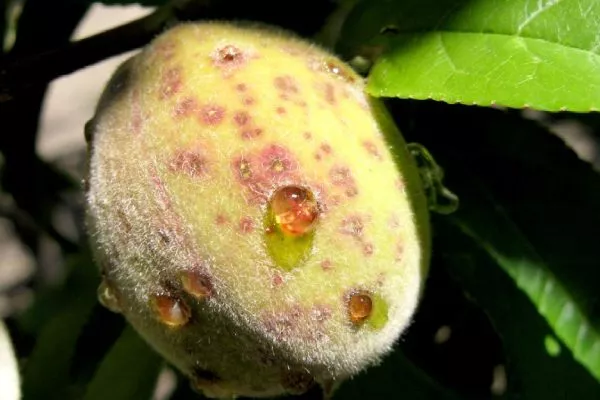
To prevent leaf curl in the spring, apply 2-3 fungicide treatments to your peach tree, leaving 12-15 days between treatments. Use the following products for both preventative and treatment:
- Fast;
- Horus;
- Topsin-M;
- copper sulfate;
- Bordeaux mixture.
Treat your plants with broad-spectrum insecticides:
- Confidor Maxi;
- Spark;
- Commander;
- Mospilan.
Perform the procedure three times per season:
- at the beginning of the growing season;
- during the budding period;
- the end of the growing season.
Collection and storage
Pick peaches by hand in the second half of July or early August. Don't allow them to become overripe. These fruits don't store well, and their flavor leaves much to be desired. If you plan to transport the fruit long distances, pick them from the branches 3-4 days before they're fully ripe.
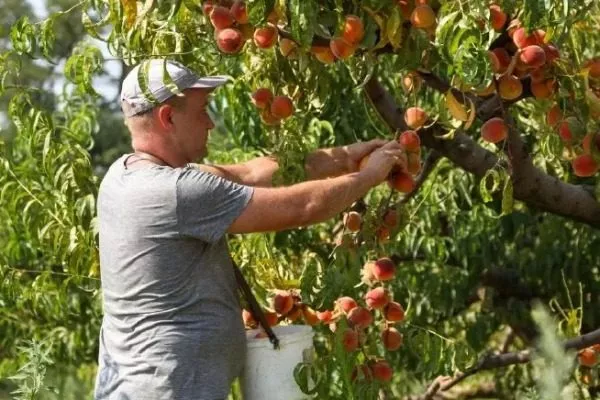
Experienced gardeners water their trees generously four weeks before the expected harvest date and then avoid irrigation until the fruit is harvested. This practice promotes fruit size, juiciness, and sweetness.
Store unwashed peaches under the following conditions:
- in the refrigerator;
- in a clean, dry container.
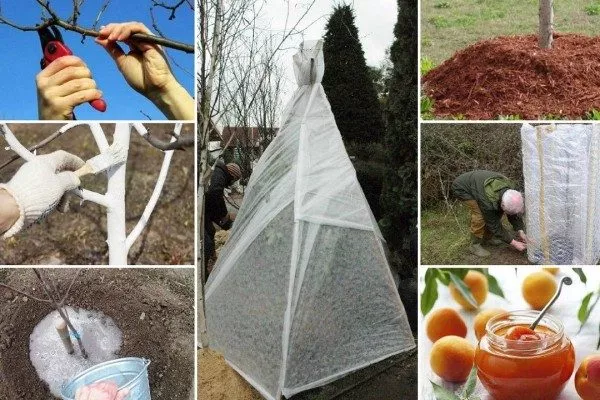
How to cover a peach tree for the winter?
Kyiv early requires preparation for winter when grown in central Russia and in regions with harsh winters. Once most of the leaves have fallen from the tree, consider providing shelter:
- insulate the roots by covering the tree trunk circle with fresh mulch (at least 10 cm thick);
- form a mound of humus near the base of the trunk (height - 25-30 cm);
- whiten the trunk and skeletal branches from below;
- wrap the tree with covering material in 2-3 layers.
Gardeners' reviews
The Kyivsky peach is an early, self-pollinating, and fast-growing variety. Gardeners appreciate it for its excellent fruit flavor, frost resistance, and ability to recover from frost damage, as well as its strong immune system.