
The apricot tree, or apricot, is a unique and delicious fruit. It contains many beneficial elements: phosphorus, magnesium, potassium, provitamin A, and many acids and essential microelements. To grow an apricot tree yourself and reap a bountiful harvest, you need to know how to choose the right seed and how to care for the seedling.
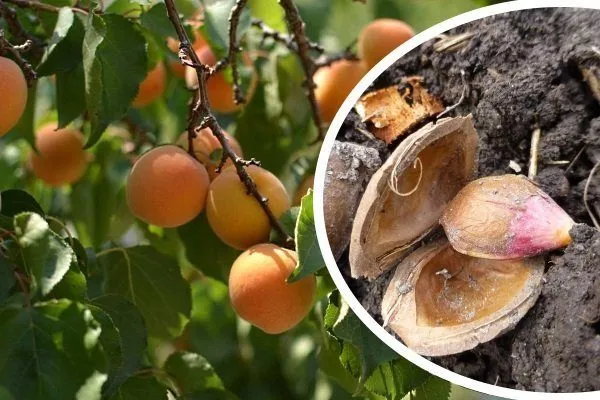
Which apricot kernels are suitable for planting?
A locally grown apricot from the first harvest is suitable as the starting material, meaning one that grows successfully in your region and tolerates all the natural and climatic conditions of your area. Apricots grown outside the local area may not produce a good harvest or may not thrive at all.
- ✓ The seeds must come from fruits that have not been chemically treated to increase shelf life.
- ✓ Give preference to seeds from fruits grown in conditions as close as possible to your climate.
Where can I get a bone?
You buy local, first-ripe apricots from gardeners, checking the variety and flavor characteristics. You eat them with pleasure, but don't throw away the pits. Make sure the pit separates easily from the fruit's flesh—this is a sign that it's ready for planting.
You also need to decide whether you prefer the pit to be sweet or bitter. Both types of seeds are beneficial: both sweet and bitter pits contain large amounts of fatty acids, minerals, and vitamins. Bitter pits, however, contain more vitamin B17.
Seed selection
Selected seeds from ripe fruits are thoroughly washed under running water, dried, and stored in a ventilated area with low humidity. It's best to collect a large number of seeds, as not all of them will germinate in the spring.
Landing time
The best time to plant is late fall, before the first serious frost, or mid-spring. If you decide to plant the seeds closer to mid-fall, there's a high risk of rodents eating them.
Growing in open ground
Planting apricot kernels in a garden or vegetable patch is better than growing the tree indoors, as this process hardens the seedling and it will be able to withstand any weather, while indoor trees may not survive the first frost.
Landing site
The choice of location for planting the future tree isn't critical. It can be anywhere, as you'll have the opportunity to transplant the seedling to another location once it's sufficiently established.
Planting in the ground
Before autumn planting, the seeds undergo a preliminary screening. They are placed in water for about a day. Those that have burst into flames are immediately discarded, as they are empty inside and will not produce anything.
All the selected seeds are placed in a pre-prepared trench 5-6 cm deep. Humus, straw, sand, and black soil are placed at the bottom of the trench, followed by the seeds, which are then sprinkled with the same mixture and topped with soil.
Avoid planting the seeds too shallowly, as this can lead to birds eating them. Planting them too deep is also unacceptable. A relatively medium placement will harden the seeds, preserving the strongest ones for germination.
Spring planting, unlike fall planting, involves several nuances. Seeds undergo stratification, which involves keeping them at a specific temperature for a long time to ensure successful germination. Seeds planted in the fall undergo the same process, only more naturally.
Around the end of January, the seeds are placed in a box with damp sand, which is then lowered into the cellar or refrigerated until April. The storage temperature should be kept at 2°C, and the sand should always be moist.
Alternatively, in early March, the seeds can be soaked in water for three days, changing the water daily and preventing them from becoming soggy. Once the seeds have soaked, they are placed in damp sand, lowered into a cellar, and planted in April using the same method as in the fall.
The following video demonstrates how to grow apricot seedlings from seeds by planting them in open ground:
Caring for seedlings after planting seeds
In the spring, when the first leaves and stems appear, the future trees need to be protected from birds, rodents, cats, and other creatures by creating shelters from trimmed plastic containers, which will serve as a fence for the delicate seedlings.
They don't require much care—watering once every two weeks (or more often depending on the temperature) and loosening the soil around the stem. Over the summer, the seedling will mature, and in the fall, it can be transplanted to another location.
It's important to keep at least two seedlings in the garden to ensure good pollination. They should be planted 3-4 meters apart.
Transplanting a young seedling to a new location
The transplanting site can be any location, but it's best to avoid excessive shade to ensure the fruit ripens better. Dig a hole, fill the bottom with a mixture of humus, black soil, grass, tops, and other organic matter, and cover the bottom with soil. Then, spread the roots of the seedling and fill the hole thoroughly with soil.
In the first year, the tree is pruned in early spring, removing dead branches and shoots. Further care consists of generous watering every couple of weeks during the summer. The root zone is covered with sawdust or grass to prevent drying out. Five years after planting, the tree should produce its first harvest.
Growing at home
The home planting process isn't much different from regular planting, so you already have the information you need for a successful growing experience. However, there are a few nuances that will be covered below.
Soil for apricot
There are no specific requirements for soil selection. You can purchase either regular soil or peat. Before planting, the soil mixture should be thoroughly moistened with settled running water or rainwater.
Planting pot
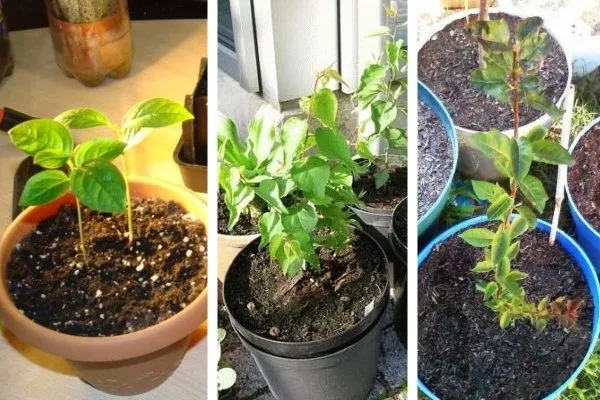
A regular plastic cup will suffice for the first few days, but as the seedling develops, it will need to be transplanted into a deeper pot, as the apricot tree's root system is quite extensive. It's best to choose a pot made of natural, eco-friendly materials. A wooden barrel, clay pot, or stone pot are all good choices.
Planting apricot seeds
To plant, you'll need the required number of plastic cups or special seedbeds, which are available at gardening stores. You'll also need drainage material, which is placed at the very bottom of the cup. Place a moistened soil mixture on top of the drainage material, into which the sprouted seed is planted.
- ✓ Provide sufficient light for the seedlings, but avoid direct sunlight during the first weeks.
- ✓ Maintain room temperature at least +18°C for optimal growth.
Growing sprouts
Seeds for home cultivation also undergo a stratification period lasting approximately 100 days and the same selection process described above. After the hardening period, the sprouted seedlings are planted in plastic cups with a hole in the bottom to allow excess liquid to drain.
In this video, a gardener talks about growing an apricot tree at home:
Caring for an apricot tree
An apricot tree grown indoors requires constant care. Fertilizing and controlling pests and diseases are crucial.
Diseases and pests
| Name | Disease resistance | Ripening period | Fruit size |
|---|---|---|---|
| Plum pox | Low | Early | Average |
| Ringpox | Average | Average | Large |
| Viral wilt | High | Late | Small |
Various diseases and pests can reduce the yield of any tree, including apricots. There are different types of diseases.
Diseases caused by viral or bacterial infections:
- Plum poxFruits and leaves become covered with brown spots, dents, or stripes. Apricots ripen very quickly, but lose their flavor. If you notice smallpox on a nearby plum tree, be aware that it will inevitably spread to the apricot tree, and vice versa.
- RingpoxLeaves change shape, shoots die or grow poorly, and branches die. Brown spots appear on the fruit. The tree may soon die.
- Viral wiltLeaves and inflorescences appear simultaneously, but the leaves are thickened, twisted, and covered in yellow spots. The fruit itself turns brown and loses its flavor. The tree may eventually die.
Diseases caused by fungal infections:
- ClusterosporiasisShot-hole spot. Affects trees in the fall and spring. Brownish-purple spots appear on the leaves, destroying the leaf, thinning it, and then a hole forms where the spot once was. Dark marks appear on the shoots, from which tree resin oozes.
- MoniliosisIt manifests itself as burns and gray mold. It often appears during periods of high spring humidity, when flowering begins. It causes significant yield loss. There's a chance the disease will reappear the following year, as mold spores are highly resistant to environmental factors and treatments.
Prevention and treatment:
- Pruning infected branches and shoots.
- Spraying the buds in spring before they ripen and the leaves in autumn after they fall with Bordeaux mixture 4% for holey spot and 3% for moniliosis.
Beware of the eggs and larvae of pests such as aphids (which deform leaves), codling moths (whose caterpillars nest inside the fruit, eating the flesh, accelerating decay), fruit stripe moths (whose caterpillars eat buds and shoots), and weevils (which damage inflorescences, leaves, and, in summer, fruit). Treatment with a solution of laundry soap and insecticides are effective against these pests.
Fertilizer and feeding
It is best to feed the tree in the fall after the leaves have fallen, so that the soil can be enriched with useful nutrients and be ready for spring.
The best way to apply fertilizer is through root feeding. Wood ash, peat, sawdust with sand, and eggshells are all good options. During the summer, young seedlings benefit from being fed with a nettle infusion mixed with manure.
Transplanting an apricot tree grown from a seed
An apricot tree will require frequent repotting: a young tree should be repotted once a year, while a mature tree should be repotted every four years, with the pot diameter increasing by 10 centimeters each time. Keep in mind that an indoor-grown tree will likely die at the first frost if you decide to transplant it outdoors.
Is it necessary to graft an apricot tree?
You need to know that the seed contains the genetic information of many generations, which is why planting material collected from a tree with large and beautiful fruits may not always produce a tree with a similar harvest.
If you're disappointed that you weren't able to grow a tree with certain characteristics, try grafting it onto a more "successful" specimen. However, to avoid this problem, it's necessary to plant a large number of seeds at once so you can select the best seedling.
Important recommendations
The entire growing process is very exciting and engaging. The main thing is to remember the planting timing, monitor the temperature during stratification, care for the seedlings and mature trees, loosen the soil, whitewash in the fall and spring, and carry out timely pruning apricot and spraying. All preventative measures will help you keep your tree healthy and fruitful.