
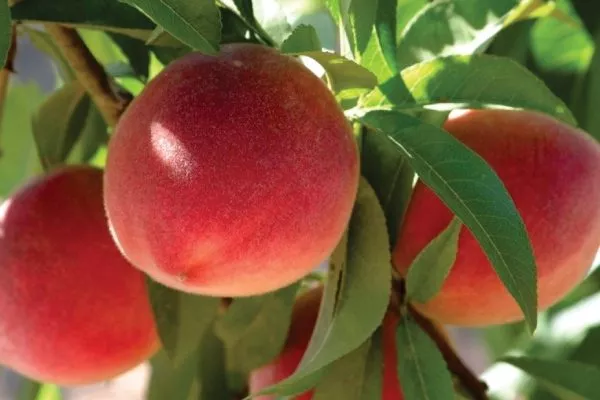
Several varieties of Royal peach are available on the seedling market: Royal V, Royal Lee, and Royal Majestic. All were bred in America and boast a magnificent appearance (the word "roya" translates from English as "royal"). Their large fruits, painted in royal shades of red and purple, are not only beautiful but also truly delicious.
Growing regions
Royal peaches are a late-ripening variety, so they thrive in mild climates. They are best grown in regions with warm winters and long summers, such as the North Caucasus and southern Russia.
- ✓ Check the root system for rot and mechanical damage.
- ✓ Make sure there are live buds on the branches.
Description of Royal group peaches
To avoid confusion about Royal peaches and the seedlings you buy, it's worth considering all the varieties with this name.
| Name | Ripening period | Disease resistance | Tree size |
|---|---|---|---|
| Royal Vi | Late | High | 1.5-1.9 m |
| Royal Lee | Late | Average | Up to 3 m |
| Royal Majestic | Late | High | Up to 5 m |
Royal Vi
The Royal V peach was developed by Canadian breeders. It deserves its pompous name; it truly looks regal. This variety attracts gardeners with its beautiful and delicious fruits, strong, and vigorous growth. It's ideal for fresh eating, transports well, and boasts a high yield—45-50 kg per tree.
This variety has a vigorous tree growing to 1.5-1.9 m tall and produces beautiful, highly marketable peaches. The peaches are bright red, round, and have yellow flesh, which is firm and juicy. Royal V peaches are sweet and sour, with a dessert-like flavor and pineapple aroma. Each fruit weighs between 120 and 160 g. The tasting score is 4.7-4.8.
The Royal V variety is a late-ripening variety, winter-hardy, disease-resistant, and begins bearing fruit in the second year after planting. Fruiting begins in early August. The harvest is eaten fresh, used in compotes, jams, and other preserves.
Royal Lee
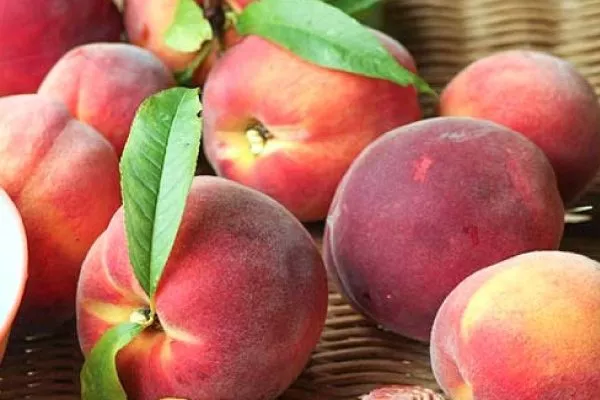
The self-fertile and winter-hardy Royal Lee variety was developed by American breeders and is ideal for fresh consumption, juice production, and various preserves. This peach tree produces 20 kg of fruit annually, which are highly marketable and transportable.
The Royal Lee tree is vigorous, with a broad pyramidal crown, reaching a height of 3 meters. The fruits are spherical, dark red with a purple tint, and the flesh is yellow, juicy, and firm. Ripe peaches weigh between 200 and 300 grams. They have thin skin and very little hair.
Royal Lee peaches are sweet, with virtually no acidity, but a hint of pineapple. The aroma is pleasant, rich, and peachy. The pits separate easily from the flesh.
Royal Majestic
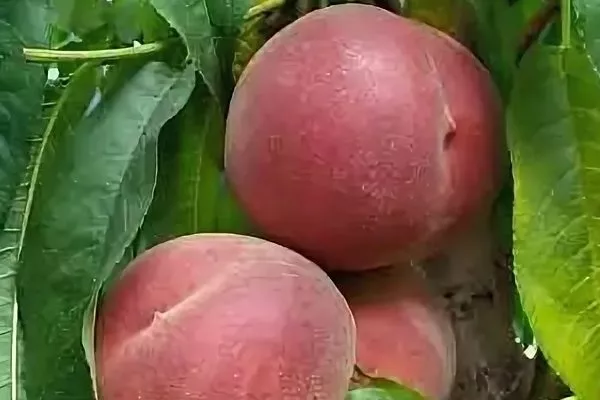
This productive American variety, ideal for all-purpose use, produces up to 50 kg of peaches annually. It transports well and is suitable for eating and juicing. The Royal Majestic tree is vigorous, with a spreading crown, reaching a height of 5 m.
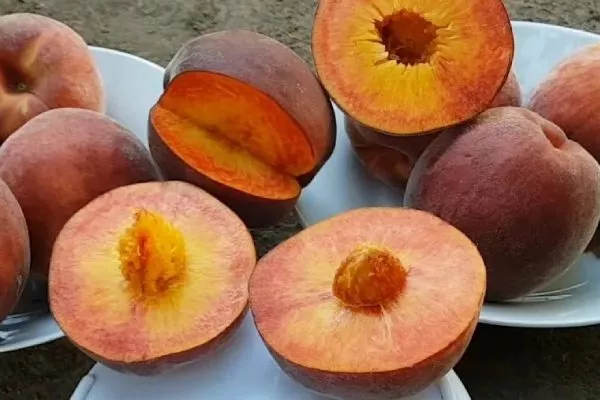
The fruits are bright red, spherical, and can be slightly asymmetrical. The average weight is 200 g. The skin is thin, almost pubescent, and has a distinct ventral suture. The flesh is dark orange, firm, yet juicy. Royal Majestic peaches taste very sweet, with almost no acidity. A downside is that the pit is difficult to separate from the flesh.
Landing features
Royal peaches grow well in warm, open areas, protected from drafts and cold, gusty winds. This is exactly the kind of location you should look for for planting. They prefer loose, fertile, and breathable soil.
Recommended planting pattern for peaches:
- Royal Lee - 3.5x3.5 m.
- Royal V - 3-5x 3-5 m.
- Royal Majestic - 3-5x3-5 m.
How to care?
Royal peaches require certain care for good growth, development and stable fruiting.
- ✓ Watering should be deep, so that the water reaches the root zone (at least 50 cm deep).
- ✓ Between waterings, the soil should dry out slightly to avoid over-watering.
How to care for Royal peaches:
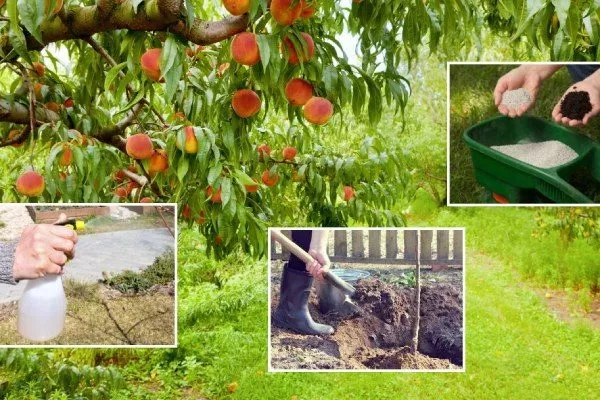
- Before fruiting begins, the tree is fed with superphosphate and potassium; nitrogen fertilizers can be excluded—the plant should focus its energy on fruit formation.
- Water as needed, maintaining optimal soil moisture. Excess water almost always leads to root rot.
Diseases and pests
Royal peaches have good immunity to the main diseases of stone fruit crops. Under unfavorable conditions, trees can be affected by clasterosporium leaf spot and powdery mildew, which are controlled with Horus and Topaz, respectively. There is also a risk of codling moth infestation, which can be controlled with popular insecticides such as Fufanon, Ditox, Actellic, and others.
How to harvest?
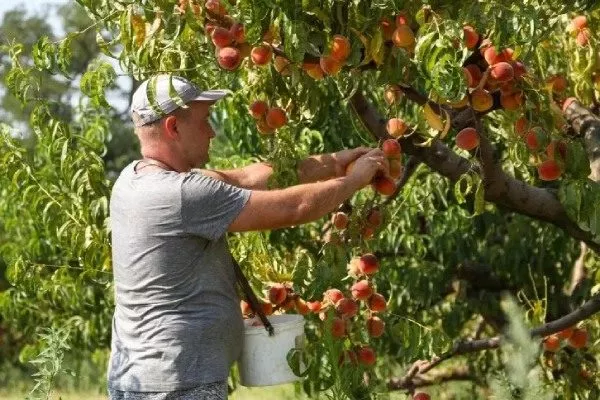
Peaches are picked in dry weather, in the morning or evening—they are at their freshest at this time. They are picked with extreme care to avoid damaging the thin skin. The picked peaches are stored in baskets or crates, ensuring that the fruits do not press against each other.
Reviews
Royal peaches live up to their name—they're vibrant, delicious, and very hardy. These varieties are ideal for southern gardens, while the Royal V variety, with its higher frost resistance, can even be grown in temperate climates.