
One of the most unusual and popular varieties of peach trees is the fig tree. All of them have fruits of an unusual, flattened shape and excellent flavor. Let's learn about the varieties of fig peaches and the conditions needed to grow them.
History of selection
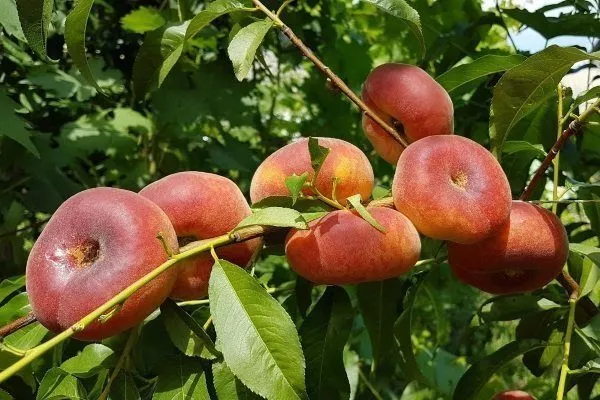
The fig peach has been known to Europeans since the 19th century, brought here from China by missionaries. A little later, this unusual fruit arrived in Russia, where it began to be cultivated in our southern regions in the late 19th century.
There's a misconception that the fig peach is a hybrid. In fact, it's a distinct variety descended from wild Chinese varieties. China is the fig peach's native land.
What makes the fig peach unique?
The fig peach has a unique chemical composition, which gives it a powerful preventative effect. Even the aroma of this low-calorie fruit is beneficial, alleviating depression.
Fruit composition:
- Organic acids.
- Essential oils.
- Pectin.
- Micro- and macroelements (potassium, sodium, calcium, phosphorus, sulfur, magnesium, chlorine, copper, iron, zinc, fluorine, chromium, manganese).
- Vitamins:
- C – strengthens the immune system;
- H – participates in carbohydrate metabolism;
- E – has an antioxidant effect, participates in cell regeneration;
- K – promotes liver function, strengthens capillaries;
- beta-carotene is a preventative measure against cancer;
- B vitamins – normalize the functioning of the nervous and cardiovascular systems, strengthen the immune system, improve bowel function and emotional state.
Caloric content of fig peaches: 100 g – 60 kcal. 100 g of peaches contain:
- proteins – 1 g;
- carbohydrates – 14 g;
- fats – 0 g.
Fig peaches are contraindicated for diabetics and those who are allergic to pink fruits.
General description of the variety
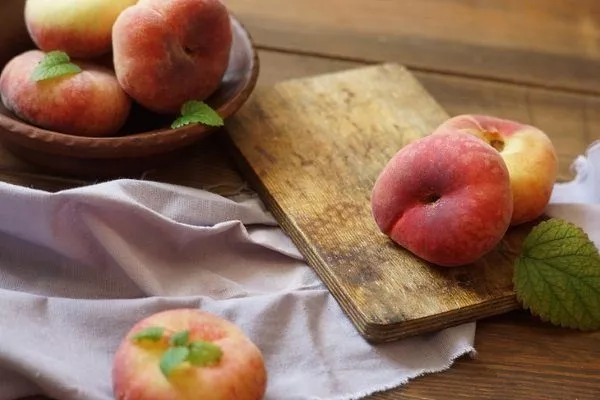
The fig peach is easily recognized by its unusual shape. Unlike other peach varieties, its fruits are not spherical, but rather flattened, resembling either a fig or a turnip. This peach has no botanical relationship with the fig, but it has many interesting and memorable names, including Fergana, saucer-shaped, and Chinese turnip.
In some European countries, the fig peach is called a "donut" due to the round indentation that remains in the middle of the fruit after the pit is removed.
Brief botanical description:
- Tree. Reaches 5 m in height. The crown is spreading.
- Leaves. Lanceolate. The upper surface is dark green, the lower surface is grayish.
- Flowers. The petals are pale pink and resemble rose hips.
- Fruit. Flat in shape. The skin is not as fuzzy as that of regular peaches. The pit is small. Color varies by variety; fruits come in yellow and orange shades. All have a red blush. Weight: 100-200 g. Diameter: up to 7 cm.
Fig peaches have important advantages over regular ones:
- In regular peaches, the closer the flesh gets to the pit, the less intense its flavor. Fig varieties don't have this—the flavor is the same throughout the fruit.
- It has greater frost resistance.
- The stone is smaller – only 3-4 g.
Where do fig peaches grow?
This fruit tree is actively grown in Western China, Central Asia, Transcaucasia, as well as in the eastern regions of Tajikistan, Turkmenistan, and other Asian republics of the former USSR.
What varieties are there?
All subspecies of fig peach are similar not only in shape and size but also in their agronomic characteristics: they are frost-hardy and tolerate recurrent frosts well. Let's learn about the characteristics of several of the most popular varieties.
| Name | Ripening period | Fruit weight (g) | Pulp color |
|---|---|---|---|
| UFO-3 | early ripening | 100-120 | white |
| Nikitsky | mid-season | 120 | cream |
| Vladimir | mid-season | 180 | soft yellow |
| Sweet Cap | early ripening | 150 | white |
| Saturn | mid-season | up to 100 | yellow |
| Columnar "Fig" | early ripening | 150 | deep red |
| Belmondo | late-ripening | 120-140 | yellow |
UFO-3
An early-ripening variety. Fruit weight is 100-120 g. The flesh is white. Almost the entire fruit is covered with a red blush, with only a few soft yellow spots showing through. The pubescence is very light. The variety is winter-hardy, and the fruit is resistant to cracking. It is considered an industrial variety. The flavor has honey notes.
The gardener provided a video review of the UFO-3 fig peach variety:
Nikitsky
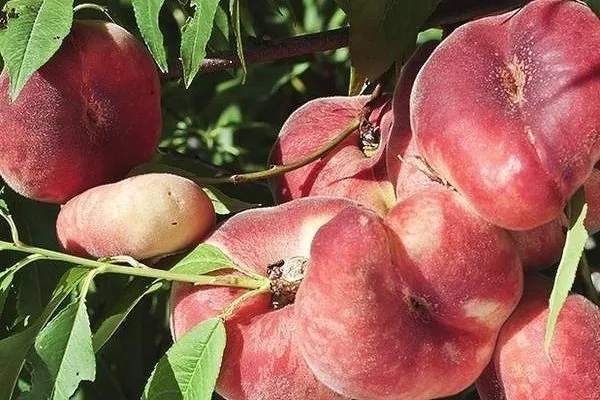
This variety is considered the best for Russia. It's suitable for harsh climates. The fruits have reddish hues and creamy flesh. Weight: 120 g.
Vladimir
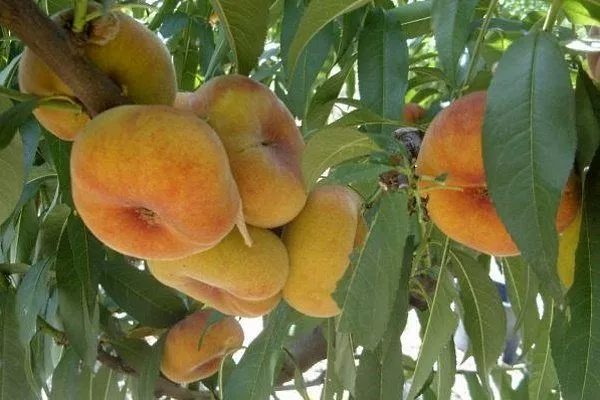
A variety resistant to most peach diseases. The crown is moderately spreading and frost-resistant. The color is soft yellow, with red sides. Weight: 180 g.
Sweet Cap
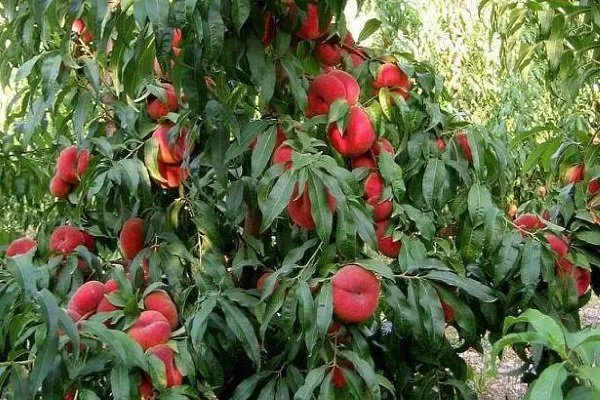
This variety is characterized by its early maturity. Fruit appears in the third or fourth year. Fruiting begins in mid-August. Ripening is uniform. The flavor is sweet and sour. The skin is burgundy, and the flesh is tender and white. Weight: 150 g.
Saturn
The plant is spreading and very beautiful, especially during flowering. The fruits are not very large, weighing up to 100 g. When ripe, the fruits turn yellow, with a light pink blush appearing on the sides. The variety is frost-hardy and transports well. This is one of the most popular varieties among gardeners.
A review of the Saturn fig peach can be seen in the video below:
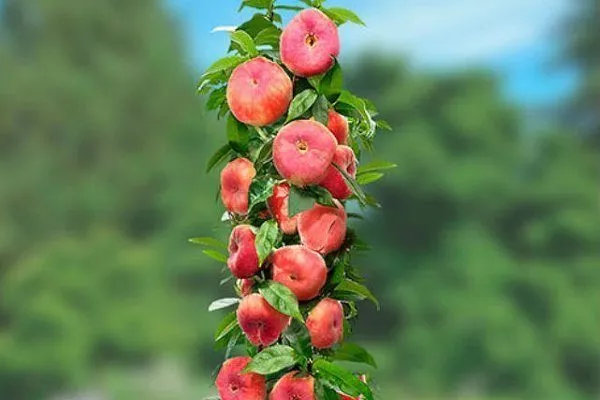
Columnar peach "Fig"
The trees are short, with cylindrical crowns. They have an ornamental appearance and bear fruit early. The fruits are deep red and weigh 150 g.
Belmondo
The tree is short, with a spreading crown. It blooms later than other varieties. Ripens in the second half of August. It has a very good dessert flavor. The yellow fruits are adorned with a red blush. Weight: 120-140 g. The flavor is delicate, the flesh is juicy.
You can see the Belmondo fig peach in the video below:
How to plant a tree correctly?
The health of the future tree, its productivity, and longevity depend on the correct planting of the fig peach and the quality of the planting material.
Selecting a location and preparing the soil
Peach, like most fruit trees, is fussy, so when choosing a planting site, consider its preferences. Site requirements:
- The optimal soil is chernozem and loam.
- Good sunlight. There should be no shadows from other trees.
- Wind protection.
- South side of the garden.
- The groundwater level is low – not less than 3 m.
If a peach tree is shaded, its fruit will be tasteless or may not produce any fruit at all.
The soil is prepared in the fall by adding manure and then covering it with soil to a depth of 20 cm. There are two planting options:
- Spring. In this case, the hole for the seedling is prepared in the fall. Planting takes place in March.
- Autumn. The hole is prepared 2-3 weeks before planting. The seedling is planted in late September or early October.
In regions with a warm climate, peaches are planted in the fall; in regions with a harsher climate, they are planted in the spring.
It's not recommended to plant peaches in areas where strawberries, melons, or nightshades were grown. The site will only be suitable for planting peaches after four years, otherwise the tree risks contracting verticillium wilt.
Selecting a seedling and preparing it for planting
When purchasing a seedling, pay attention to a number of features:
- Acclimatization region. It's important to choose varieties that are suitable for a given area.
- The root system should not have any defects, such as dry or rotten roots.
- Age – 1 year.
- ✓ Check the root system for rot and dry areas.
- ✓ Make sure the seedling is acclimatized to your region.
- ✓ The preferred age of the seedling is 1 year.
Pinch off a small piece of bark - the back side should have a green tint, this is a sign of a healthy seedling.
Peach seedlings are prepared for planting in the same way as any other tree: a few hours before planting, place the roots in water. If desired, add a growth stimulant to the water. If the seedlings were purchased in the fall and planting is planned for spring, they are "preserved" by placing the roots in damp sawdust or another medium and wrapping them in plastic wrap. They are stored buried in the ground, or in a basement, shed, or on a balcony.
Step-by-step landing
Planting a fig peach seedling:
- Dig a small hole. The width should be about 40 cm and the depth should be 55-60 cm.
- If you are planting several seedlings, leave at least 5 m between adjacent holes.
- Mix the fertile soil layer with fertilizers:
- manure, humus or compost – 2 buckets;
- superphosphate – 150-200 g;
- potassium – 100 g;
- wood ash – 800 g.
- Pour the resulting fertile mixture into the hole. Cover it with soil and lower the seedling into it.
- Cover the seedling's roots with soil, shaking it occasionally to prevent voids from forming between the roots.
- The root collar should be 3-5 cm above ground level.
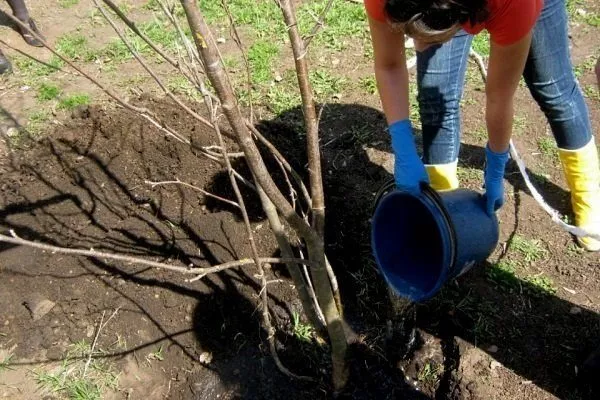
- Water the seedling with water – 2-3 buckets is enough.
- Once the water has been absorbed, sprinkle the tree trunk circle with mulch – a layer of 5-10 cm. Read more about proper soil mulching Here.
- If planting is done in the fall, wrap the seedling in agrofibre to protect it from frost and rodents.
Growing Fig Peach
If the peach tree is planted in the fall, care is postponed until spring. If planted in spring, care begins immediately. The seedling requires standard care: regular watering, feeding, and treatment with fungicides and insecticides. It's also important to loosen the soil regularly and remove weeds from the tree's root area.
Top dressing
It is recommended to feed the fig peach according to the following scheme:
- In spring, 50 g of urea and 75 g of ammonium nitrate are added under each tree.
- In autumn, potassium and phosphorus fertilizers are applied – 50 g and 40 g, respectively.
- Periodically, every 2-3 years, 10 kg of humus or manure are added under the peach trees during autumn digging.
Watering
The fig peach tree is very moisture-loving. It doesn't need to be stingy with water. During the summer heat, the tree should be watered every two weeks with 20-25 liters of water. This water should be slightly warmed by the sun; watering the peach tree with cold water is not recommended.
Pruning and crown shaping
To ensure large, sweet peaches ripen on a tree, every leaf must receive sunlight. To achieve this, gardeners regularly prune:
- Formative. To ensure the tree looks beautiful and neat, and that the fruit-bearing branches receive sufficient light, gardeners shape the crown and then regularly make adjustments to maintain its shape. The recommended shape for a peach tree is a cup-shaped one.
- Sanitary. Its goal is to eliminate all diseased, damaged and weakened shoots.
The best time for pruning is March and early April. Both sanitary and formative pruning can be done simultaneously. All cuts are sealed with garden pitch.
The optimal tree height for a fig peach is 1.5 m.
The procedure for forming a cup-shaped crown:
- Trim all small side shoots – up to 50 cm long.
- Form the standard – the lower part of the trunk up to the first skeletal branches.
- After the trunk, leave 4 to 6 skeletal branches – these will form the base of the crown. These are first-order branches; the trunk should not extend above them.
- From the first order branches, second order branches will grow – 50-60 cm long. Cut all other branches to a ring.
- Fruit-bearing shoots grow on the skeletal branches. They should be 15-20 cm long; any excess is trimmed off.
Diseases and pests
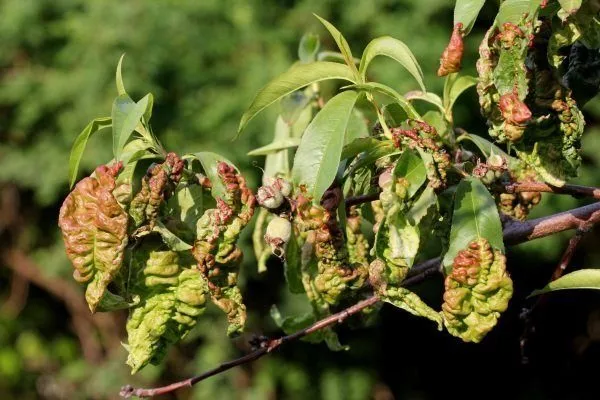
The most common diseases affecting fig peach trees are powdery mildew and leaf curl. As a preventative measure, trees are treated with a copper sulfate solution twice a year – early in the spring and late in the fall.
Diseases of fig peach and their treatment:
| Disease | Symptoms | Treatment and prevention |
| Coccomycosis | This is a fungal disease. Red spots appear on the leaves, which dry out and fall off. | Treatment with fungicides that kill fungi. |
| Powdery mildew | Another fungal disease. A white coating first appears on the leaves. The fruit stops growing, becomes covered with a thick layer of coating, and dies. | Remove affected leaves. Replace the topsoil. Water thoroughly with special preparations. Treat with fungicides such as Vitaros, Fundazol, and others. Preventative measures include spraying with a mustard solution (2 tablespoons of dry mustard per 10 liters of water). |
| Leaf curl | The leaves become warped, a white coating forms on them, they turn brown and die. | Preventive spraying – Horus, Topsin M. The diseased tree is sprayed with Bordeaux mixture. |
| Shot hole (clasterosporium) | Formation of brown spots on leaves, which eventually die. | Remove infected leaves and branches. Treat cuts with a copper/iron sulfate solution. Spray with Bordeaux mixture in the spring. Treat with fungicides. |
Pests of fig peach and measures to control them:
| Pests | Damage caused | Treatment | Prevention |
| Aphid | Sucks juices from leaves and shoots. | At the initial stage, use a decoction or infusion of dandelion, garlic, and onion peels. For severe infestations, spray with 2% Bordeaux mixture (in the fall), and before and after flowering, use 1% Bordeaux mixture and insecticides. | Cutting down root shoots, weeding, manual cleaning, planting onions and nettles. |
| Weevils | The larvae destroy buds, flowers, buds, and leaves. | Treatment with lime milk and whitewashing. Spraying with insecticides before and after flowering. | Autumn digging, installation of trapping belts, planting onion and garlic beds, spraying with soap or mustard solution. |
| Oriental codling moth | A small gray-brown butterfly lays eggs in buds, fruit stalks, and shoot tips. The caterpillars damage fruits and shoots. | During the summer and when the fruit ripens, treat the tree with insecticides, such as Coragen, Tonsin M, Chlorophos, and Karbofos. | Remove fallen leaves and disinfect the soil. Attach pieces of cloth soaked in chlorophos to branches. |
| Fruit moth | Caterpillars are very voracious, eating buds, leaves, even peach pits. | During bud formation, spray with Karbofos or Chlorofos. When the moths lay eggs, treat the tree with products containing fenoxycarb. | Pruning affected branches, removing fallen leaves. |
Where are the fruits used?
How to use fig peaches:
- They are eaten fresh. Peach lovers highly value fig varieties for their sweetness and rich peach flavor.
- In cooking. Add to salads, sauces, baked goods, and confectionery. The flavor of peaches pairs harmoniously with fish and meat. It enhances the flavor of oatmeal, yogurt, and ice cream.
- They are drying. In winter, aromatic compotes are prepared from dried peaches.
- They freeze. When freezing, use ripe, but not soft, peaches. Peel the peaches before freezing. If you don't peel them, they will develop a bitter taste after defrosting. Frozen peaches can be stored for up to six months.
- They preserve it. They make jam, jellies, and preserve them in sugar syrup.
- For cosmetic purposes. Face masks are made from the pulp, grated and mixed with sour cream.
Interesting facts
What you might not know about fig peaches:
- They are useful for flatulence and constipation.
- They help maintain healthy teeth, improve the skeletal system, and prevent the formation of kidney stones.
- They quickly fill you up, so they are recommended for snacks.
- Despite their sweetness, they contain few calories, making them useful for weight loss.
- Unlike most fruits, they do not lose their beneficial properties after heat treatment.
- They have a calming effect. Hungarians, for example, call them "the fruits of calm."
- It was the peach that became the first fruit eaten by American astronauts on the Moon.
Reviews of varieties
Gardeners who have managed to grow fig peaches and harvest their first fruits are sharing their impressions online.
Flat peaches quickly eclipsed regular varieties – consumers are drawn to their flavor, and gardeners are also drawn to the tree's ease of cultivation. Today, thanks to frost-resistant varieties, it's possible to grow peaches with unusual fruits even in central Russia.