
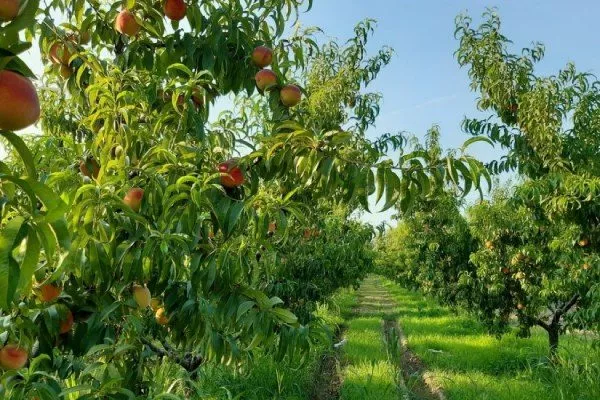
Greensboro is a mid-season peach variety that has been around for over 100 years and is renowned worldwide. It has long been familiar to Russian gardeners. It is prized for its large fruits and excellent flavor, consistently high yields, and good winter hardiness. Despite its unsuitability for commercial cultivation, this imported variety remains popular today.
History of variety selection
Greensboro is a creation of American breeders, born in 1891. It was obtained by pollinating the Connett variety of peach with a mixture of pollen from different varieties.
After numerous trials in Crimea, Krasnodar Krai, Georgia, and Moldova, this foreign variety was added to the USSR State Register in 1947. It was approved for cultivation in the North Caucasus region. Later, the variety began to be grown in the southern and central regions of the Russian Federation and in the Moscow region.
Description of the Greensboro peach variety
This fruit variety is characterized by vigorous growth. Its trees have the following external characteristics:
- tall;
- spreading crown, round in shape, quite dense;
- medium-sized leaves of a rich green color, shaped like a boat and with serrated edges that curl downwards.
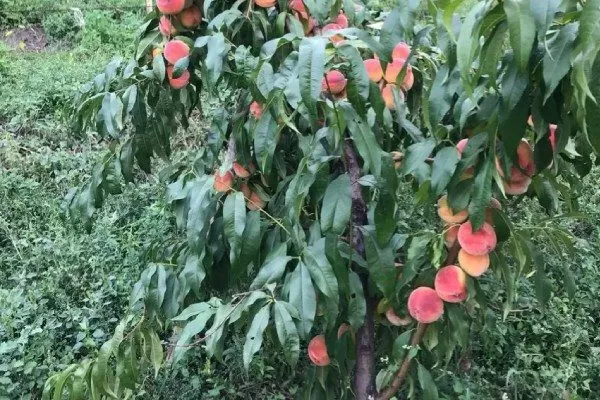
In May, they bloom. The peach trees display numerous large, rose-shaped buds. Their petals are a bright pink.
The Greensboro variety produces an attractive harvest. It produces large, but unevenly sized fruits. Fruit descriptions include:
- weight - from 100 g to 140 g (average weight - 120 g, there are also small fruits weighing 70-90 g);
- diameter - from 5.5 cm;
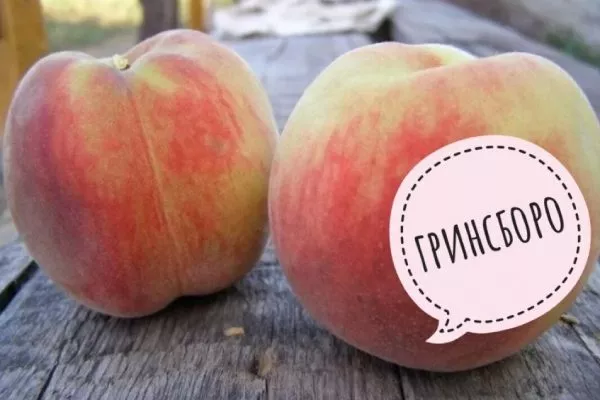
- round-oval shape with a flattened (indented) top;
- the presence of a small abdominal suture;
- greenish-cream skin color with an extensive, blurred dark pink blush on the sunny side of the fruit, occupying about 50% of its surface;
- the presence of thick fluff on the surface of the skin, thick, dense, somewhat rough;
- cream-colored flesh, translucent, consisting of many soft fibers, very juicy and aromatic;
- a small bone that is difficult to separate from the pulp.
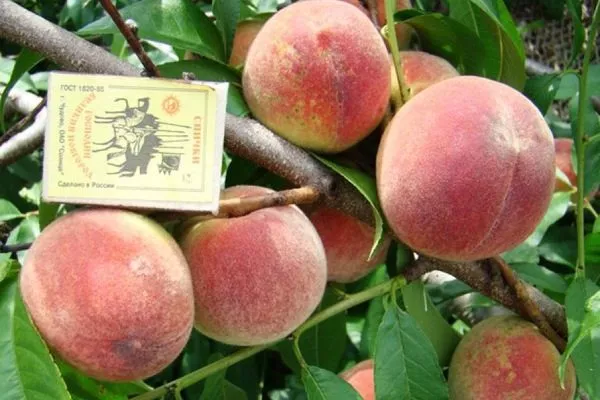
The fruits of this varietal variety have captivated domestic gardeners with their excellent taste. Their flesh is pleasantly sweet with a hint of tartness, full of juice, and fragrant. Despite its fibrous texture, it's not coarse, but tender and melts in the mouth. Tasters rated its remarkable flavor 4.8 out of 5.
Characteristics of the variety
This ancient American peach variety has many excellent characteristics, making it popular among domestic gardeners who grow fruit for private consumption.
Drought and frost resistance
Greensboro is considered a fairly winter-hardy fruit tree. Its trees can withstand temperatures as low as -22°C. However, the frost resistance of the flower buds of this "American" variety is inferior to that of domestic varieties like Kievsky Ranny. To ensure a successful winter in central Russia, provide it with the following conditions:
- Grow peach trees in wind-protected areas to avoid bark freezing;
- Give preference to elevated areas of the garden (lowlands are damp and very cold in winter);
- provide winter shelter for young and mature trees;
- Use snow to provide additional insulation for the crop.
- ✓ The optimal soil acidity for the Greensboro peach should be between pH 6.5 and 7.0. Outside this range, the tree may not thrive.
- ✓ To prevent leaf curl, which is typical for this variety, preventative treatment with copper-containing preparations is necessary in early spring before bud break.
Does the variety need pollinators?
The Greensboro peach is self-fertile. It produces abundant harvests even when planted alone. Growing trees of other varieties with a similar flowering period nearby can increase yields by 30-40%.
Productivity and fruiting
"American" trees begin to bear fruit in their third year. The ripening period is considered early. The first fruits ripen by August 10th. Peak fruiting occurs mid-month. A single peach tree that reaches 10 years of age yields 60-70 kg of fruit. This variety is considered high-yielding.
Application of fruits
The Greensboro harvest is intended for table use. The fruit is primarily consumed fresh. It makes a delicious and healthy summer dessert, sure to satisfy even the most discerning gourmet.
Greensboro peach flesh is not only sweet and juicy, but also healthy. It contains many nutrients that are beneficial to the eater's health:
- pectins;
- essential oils;
- organic acids (malic, tartaric, citric, quinic);
- flavonoids;
- minerals (calcium, iron, phosphorus);
- vitamins (A, E, K, C, B1, B2, B6).
By eating fruits in their fresh, unprocessed form, you can achieve healing effects:
- strengthening the immune system;
- normalization of the digestive process;
- reducing the level of bad cholesterol in the blood;
- rejuvenation of the body due to the abundance of antioxidants in the pulp;
- reducing swelling due to the diuretic effect of fruits;
- increase in hemoglobin in the blood;
- improving mood and relieving anxiety.
The fruits of the American variety are suitable for home cooking. Housewives use them to add to desserts, fruit salads, and smoothies. They also make juice, puree, compote, and various other treats.
- jam;
- jam;
- jelly;
- marmalade.
Resistance to diseases and pests
This fruit variety, bred in the United States over 100 years ago, delights Russian gardeners with its robust immunity. Its trees are extremely rarely affected by infections and pests. The exceptions are clasterosporium (shot hole) and leaf curl. The variety is moderately resistant to these diseases.
Peach propagation
If you need to propagate the Greensboro peach, use one of two methods:
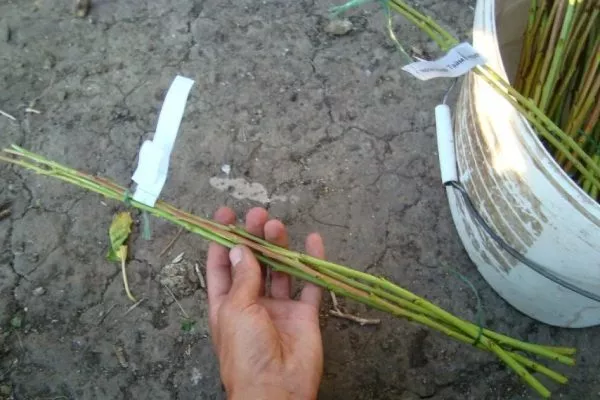
- By cuttingsPruning should be done in the summer, when the peach tree produces many shoots. Take cuttings in the morning or during the day if the weather is cloudy. Cut young, strong branches from the lower part of the crown. They should be up to 60 cm long.
Place the cuttings in water with a rooting stimulant. After 4-5 hours, plant them in moist, fertile soil in partial shade. Cover the cuttings with a bottle. These seedlings will begin to bear fruit in their fourth year.
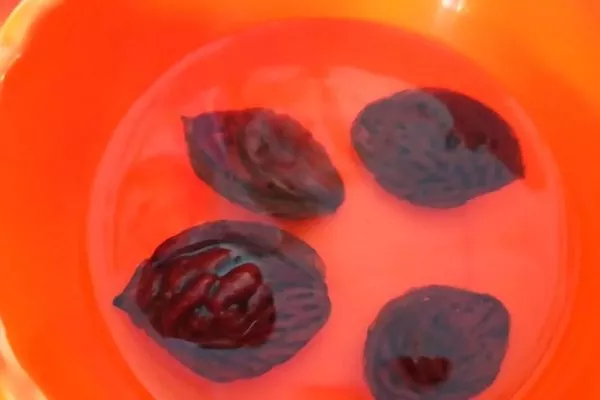
- Germination of the seedThis method produces trees that are resistant to adverse weather conditions and pests. The seeds selected for planting are scarified and soaked for 3 days.
Plant them outdoors in October. Choose a sunny spot in the garden with loose, fertile soil enriched with humus for the seeds to germinate. Plant them 7 cm deep, leaving 8-10 cm between the holes. Seedlings will emerge quickly.
| Reproduction method | Time to first fruiting | Disease resistance |
|---|---|---|
| Cuttings | 4 years | Average |
| Germination of a seed | 5-6 years | High |
Rules for planting peaches
A seedling, whether grown at home or purchased from a nursery, must be planted correctly in your garden. If done correctly, the tree will quickly establish itself in its new location, begin to grow, and within a couple of years, delight you with its first harvest.
Recommended timeframes
You can plant an American peach tree within the following timeframes:
- in the spring before the buds open, when the soil warms up to +15°C - if you plan to grow the crop in the central and northern regions of the Russian Federation (where seedlings planted in the fall risk not surviving the winter);
- in autumn, in September - in southern climates, where spring planting of peaches threatens their death due to early heat.
Choosing a suitable location
Select a sunny, elevated, and wind-free spot in the garden, located in the southern or southeastern part, for the Greensboro peach. Any soil is acceptable. The variety is undemanding. It grows poorly only in very acidic or saline soil.
Selection and preparation of planting material
When choosing a peach seedling from a nursery, choose one with the following characteristics:
- one or two years old;
- having well-developed, healthy and moist roots;
- "height" from 1 to 1.5 m;
- with a trunk diameter of 2 cm;
- with smooth, evenly colored bark that is free of spots, damage, signs of disease or pest infestation.
Place the purchased peach tree in a bucket of water with a little Kornevin added. Leave it overnight. Plant it in the morning.
Landing algorithm
Plant the Greensboro peach in a pre-prepared hole (50 cm deep, 50 cm in diameter) filled with fertilizer:
- compost - 20 kg;
- wood ash - 200-250 g;
- mineral fertilizers rich in potassium and phosphorus - 100 g each.
If you have purchased several seedlings of a varietal variety, dig planting holes for them at a distance of 2.5-4.5 m from each other, exceeding the size of the crown of an adult peach tree.
Plant a peach tree by following these steps:
- Water the planting hole. Place a wooden stake in it to support the seedling.
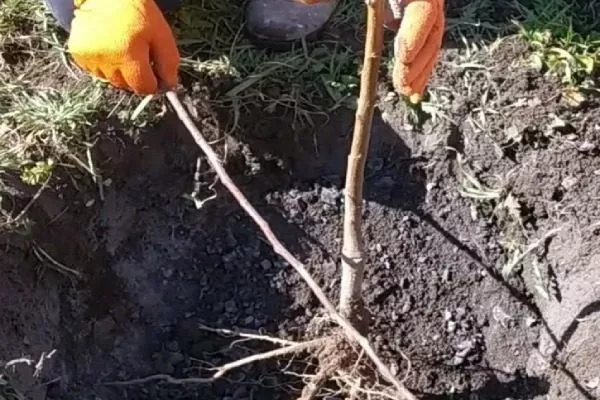
- Place the peach tree in the center of the hole on a mound of fertilizer mixed with garden soil.
- Straighten out its roots.
- Cover them with soil, ensuring that the root collar is 3-4 cm above the ground.
- Compact the soil.
- Water the seedling. Use 20 liters of water per plant.
- Mulch the tree trunk area.
If you planted a peach tree in the spring, immediately prune its branches by a third and shorten the trunk to a height of 90 cm. For a tree planted in the fall, you only need to pluck the leaves.
Greensboro Peach Tree Care
Caring for this peach cultivar is easy. It requires standard agricultural practices. To maintain the tree's health and abundant fruit production, provide it with the following care:
- watering;
- pruning;
- weeding;
- loosening;
- mulching;
- application of fertilizers.
How to properly water peach trees?
Water the fruit tree once every 1-2 weeks. The Greensboro peach thrives in consistently moist conditions. It can also tolerate short-term drought. The ideal watering schedule is once every 7 days. Keep the soil under the tree evenly moist, preventing it from becoming waterlogged.
In spring, when the plant is actively growing, and in summer, water more frequently than during the colder months. A young tree should use 10 liters of water. During drought, increase this to 20 liters. Water mature peach trees more generously, focusing on the area around the trunk.
Caring for a peach tree after watering includes the following procedures:
- WeedingWeeds harbor various diseases, fungi, viruses, and insects that damage fruit crops. Remove them from the tree trunks. Pull them out by the roots and remove them from the garden plot.
- Loosening the soilThis procedure makes the soil lighter, improves its air permeability, and ensures unimpeded access of moisture to the peach tree roots.
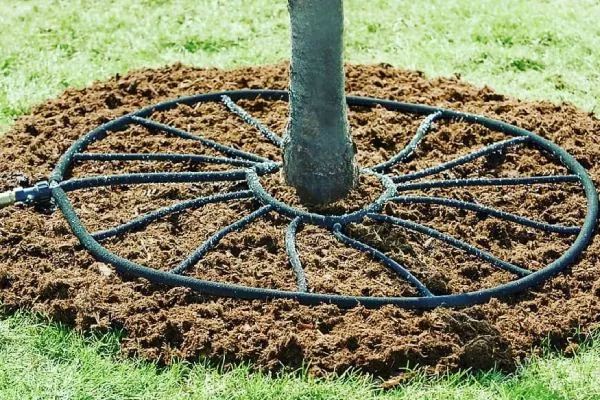
- Mulching the tree trunk areaUsing organic mulch (peat, compost, sawdust, straw) will help ensure an optimal soil microclimate for the plant. Apply a mulch layer 7 cm thick.
Pruning and crown shaping
Prune your peach tree annually:
- SanitaryRemove dried shoots, those with damage and signs of disease.
- FormativeThin out the crown to shape it. This will not only give the tree a well-groomed appearance but also ensure its robust health and make it easier to care for.
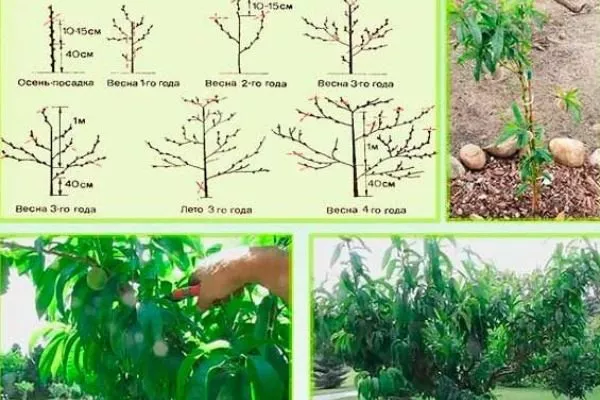
Begin shaping the peach tree's crown in the first year after planting. Prune the main shoot, shortening it to 65 cm. In the summer, after new branches have formed, select 4-5 of the strongest, spaced 15 cm apart. These will become the skeletal branches.
Over the next three years, shorten the branches by 1/3. Leave a distance of 35 cm between second-order shoots. Subsequent pruning should be carried out depending on the location of the buds. If they are close together, prune the crown heavily. If buds are only at the edges, remove any damaged or dead ones.
Fertilizing
To promote healthy growth and abundant fruiting, provide your peach tree with balanced nutrition throughout the season. Apply fertilizer 2-3 times:
- Before the buds open, feed the fruit crop with urea or nitrophoska (consumption rate - 30 g per 1 plant);
- In summer, use potassium sulfate together with superphosphate.
Peaches respond well to foliar feeding. Spray them with liquid fertilizers rich in potassium. This will improve the taste and appearance of the crop.
Preparing Greensboro Peach Trees for Winter
In mild winters, trees of this cultivar do not require shelter. Peaches planted in the central and northern regions require proper preparation for the cold season. This is especially true for young seedlings.
Prepare Greensboro trees for winter by following these steps:
- moisture-charging irrigation;
- mulching the tree trunk circle with organic matter (layer - 10 cm);
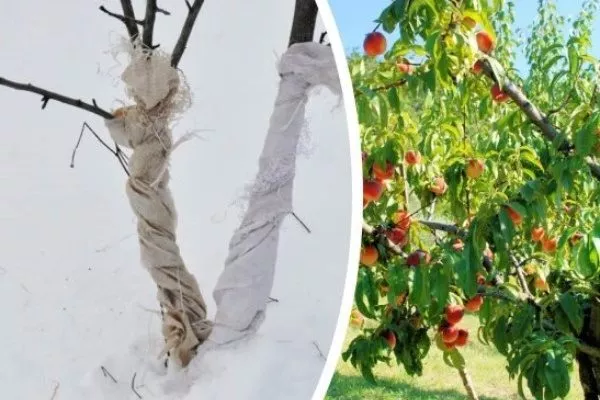
- wrapping the trunk with burlap and then roofing felt on top of it to protect against rodents;
- Insulation of the tree with snow mass in winter, paying special attention to the root zone.
Harvesting and storage
Pick the fruit from the tree as soon as it ripens. Don't leave it on the tree for too long. Harvest carefully, being careful not to break any branches.
These fruits don't keep for long when ripe. Eat them within 3 days before they start to darken and spoil. Refrigerated, they can be stored for up to 1 week. Harvesting them unripe will double their shelf life.
Diseases and pests, methods of control and prevention
This variety is considered resistant to pests and many diseases, particularly powdery mildew. Its trees are moderately resistant to clasterosporium and leaf curl. Under unfavorable growing conditions or poor care, they often suffer from these infections.
Don't neglect preventative measures to prevent peach tree diseases. Take the following steps:
- regularly inspect plantings to detect diseases and pests in a timely manner;
- Prune annually, do not allow the crown to become too dense;
- disinfect the tools you use for sanitary and formative pruning;
- cover the cuts with garden pitch or sprinkle them with crushed coal;
- apply fertilizer;
- weed out weeds in the tree trunk area;
- do not leave plant debris under trees;
- Provide the peach with winter cover if you are not growing it in the south;
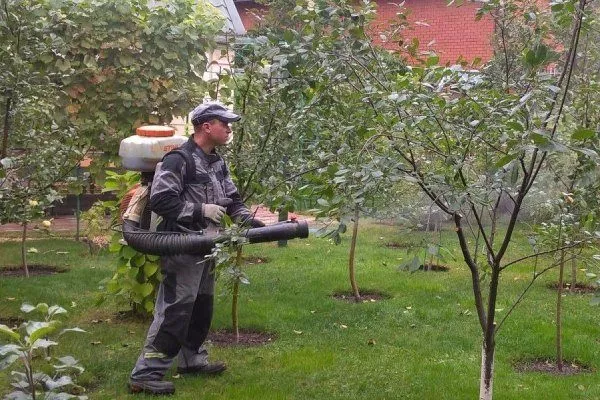
- Preventatively spray the peach tree with a solution of copper sulfate, fungicides such as Skor and Trichodermin, insecticides (Actellic), folk remedies (tobacco or garlic infusion) to protect it from fungi, viral infections, pests (codling moths, weevils, aphids).
How and when to transplant a peach tree correctly?
If you need to replant a mature tree, do so in the fall. Choose a cool, windless day for the transplant. Work in the evening.
Follow the procedure step by step:
- Dig around the tree, being careful not to damage or cut off all its roots. Preserve not only the root mass but also the soil around it. The root ball will help the plant establish itself more easily in its new location.
- Dig a planting hole. It should be the same size as the tree's root system.
- Crush the soil at the bottom of the hole. Add ash (200-300 g), any mineral fertilizer (100 g), and a little fertile soil. Top the hole with compost, forming a 10-15 cm layer.
- Water the hole and place the peach in it.
- Cover the plant's roots with soil. Firm the soil around the trunk.
- Water the plant.
Positive and negative qualities
The American variety has taken root in domestic gardens thanks to its inherent advantages:
The Greensboro peach is not without its drawbacks:
Reviews
Greensboro is an old American variety popular in the south of the country and central Russia. Its fruits have an interesting coloring. They are distinguished by a sweet, slightly tart flavor, incredible juiciness, and a delicate flesh texture. It is the best choice for home gardeners, especially for those who enjoy melt-in-the-mouth peaches.